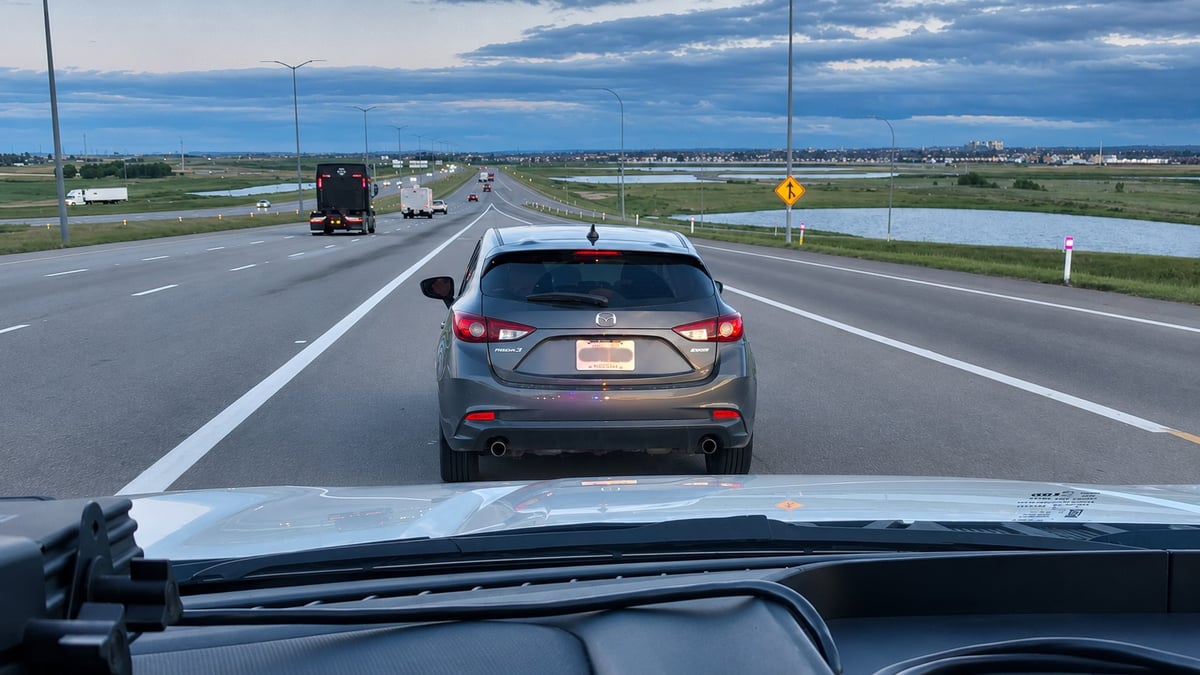
A Calgary driver was clocked at nearly double the speed limit on Stoney Trail, watching a video on his phone, and then failed a roadside alcohol test.
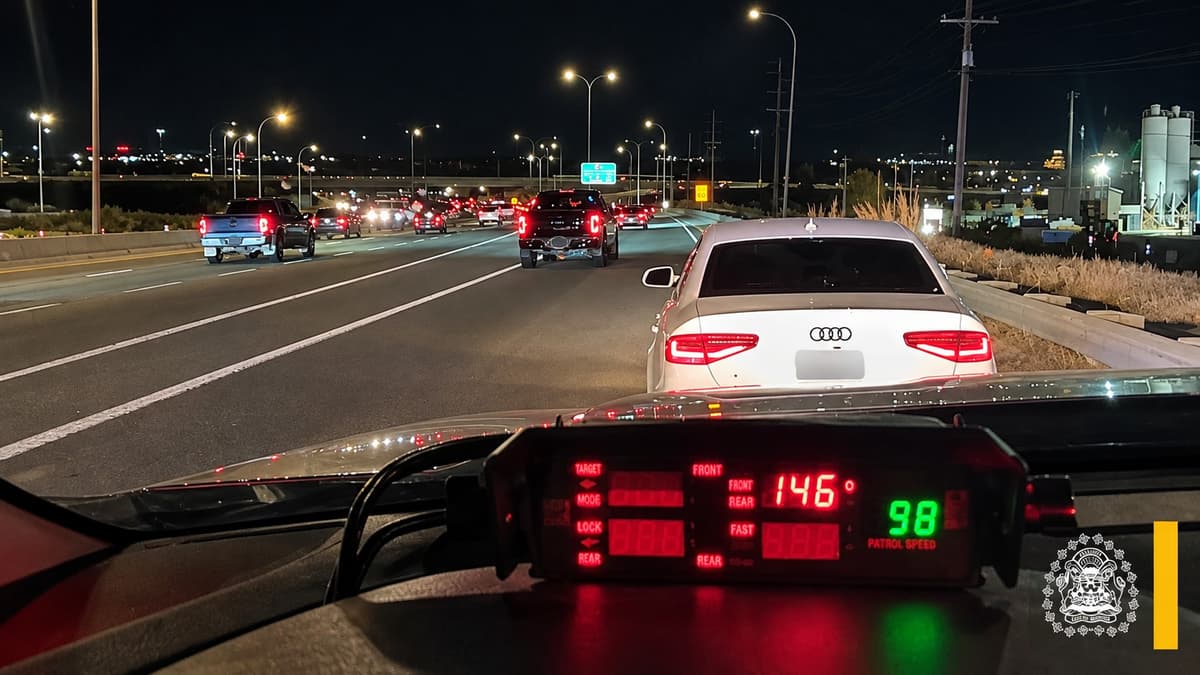
Calgary police say he was going 191 km/h in a 100 km/h zone on southbound Stoney Trail near Glenmore Trail SE. That's 91 kilometres an hour over the limit, on a busy ring road, while looking at a screen instead of the road.
After the stop, he also failed a Mandatory Alcohol Screening test, the breath test officers can now require from any driver they lawfully pull over, no suspicion needed.
What it cost him
The penalties stacked up fast:
A 90-day licence suspension
A 30-day vehicle impound
A $300 fine for having a visible video display while driving
A court summons, where he'll face additional fines
The video-display fine is almost a footnote next to the rest, but it names the thing that makes this so alarming. He wasn't just speeding. He was watching something on his phone while doing it, at 191 km/h.
What the law says about going this fast
Alberta draws a line between "speeding" and what this was, and treats them differently.
A regular speeding ticket is a fine and some demerits. But once you're far enough over the limit, officers can charge you with stunting instead, and that's a different animal. Driving 50 km/h or more over the limit is one of the things Alberta counts as stunting, and this driver was 91 over. Stunting carries a much heavier fine, six demerit points, and the kind of record that follows your insurance around for years.
The impound and suspension here happened on the spot. For extreme speed combined with a failed alcohol screen, police don't need a court date to take your licence and your vehicle, those are immediate roadside sanctions, applied before anyone sees a judge. The court summons stacks on top, not instead.
The part people underestimate is the insurance fallout. A stunting charge and an impaired-related finding are among the fastest ways to make yourself uninsurable at a normal rate. Drivers in that category can end up paying thousands more a year, or get pushed into high-risk insurance, long after the suspension ends. Ninety days off the road is the short-term cost. The premium is the one that lingers.
Three things at once
Any one of these gets you pulled over. Together, they're close to a worst-case combination.
At 191 km/h, a vehicle covers about 53 metres every second. Stopping distance balloons, and a crash becomes far less survivable. Put a phone screen in the mix, pulling the driver's eyes off the road for even a second or two, and the car travels the length of a football field essentially blind. Add alcohol slowing reaction time on top of that, and you've got a driver who is speeding, distracted and impaired all at once. That's the combination that ends with someone not coming home, and the only reason it didn't this time is that police stopped him first.
The timing: Impaired Driving Awareness Month
Calgary police shared the stop as part of July's Impaired Driving Awareness Month, and the message attached to it is blunt.
"If you have been drinking or consuming drugs, don't get behind the wheel," the service said. "Choosing to drive sober, or helping someone else make that choice, can mean the difference between someone coming home safely or not at all."
A note on the mandatory alcohol test
One detail worth understanding, since it's newer than a lot of people realize: police in Canada can now demand a breath sample from any driver they've lawfully stopped, without needing to suspect impairment first.
Mandatory Alcohol Screening became law across Canada at the end of 2018. Before it, an officer needed a reasonable suspicion, a smell of alcohol, slurred speech, before demanding a test. Now it can be required at any lawful stop, which is how a speeding stop turns into an impaired-driving finding. Refusing the test carries the same kind of penalties as failing it.
Getting home a better way
Calgary police pointed drivers to the city's Vision Zero road-safety campaign and its Drive to Zero initiative, at calgary.ca/visionzero, aimed at eliminating traffic deaths and serious injuries.
The practical version is simpler. If you're going out and drinking, sort out how you're getting home before you start, a cab, a rideshare, transit, a designated driver, a night on the couch. It's a decision that's easy to make sober and nearly impossible to make well once you're not.
Sources:
Calgary Police Service, traffic enforcement release, July 2026
Calgary Police Service statement, Impaired Driving Awareness Month
Mandatory Alcohol Screening provisions, Criminal Code of Canada (in force December 2018)
Alberta stunting and immediate roadside sanction provisions, Traffic Safety Act
City of Calgary Vision Zero / Drive to Zero (calgary.ca/visionzero)






Comments
Conversation