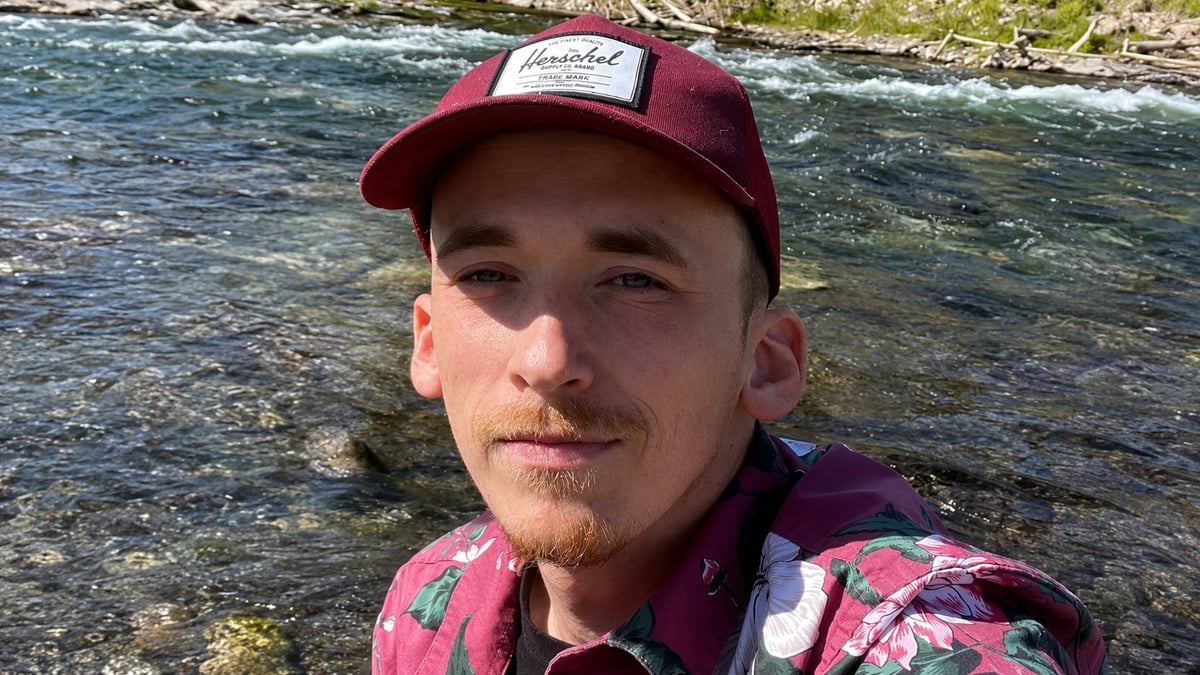
A Calgary plumbing company has been penalized $330,000 for the workplace death of a 27-year-old worker who was buried when a trench collapsed on him three years ago.
Mr. Mike's Plumbing Ltd. pleaded guilty on July 13 in the Calgary Court of Justice to one count under Alberta's Occupational Health and Safety Act, failing to ensure the health and safety of a worker. The company had faced eleven charges. The Crown withdrew the other ten as part of the plea.
The worker was Liam Johnston. He died on June 8, 2023, on a residential water and sewer line job in the northwest community of Charleswood.
The penalty
The court fined the company $115,000, including the victim fine surcharge.
It also ordered a further $215,000 under what Alberta law calls a creative sentence, a provision that allows money which would otherwise go to the Crown as a fine to be redirected to a project that improves workplace safety. In this case the money goes to the Injury Prevention Centre, which will run a province-wide campaign aimed at young workers, teaching them to recognize hazards and speak up about unsafe work.
The company and the Crown have 30 days to appeal.
What happened at the site
The job was to replace sewer and water lines behind a house. The crew was four people: a supervisor, a hydrovac operator, a labourer, and Johnston, working as lead hand.
An average dig to a water and sewer line in Calgary runs about ten feet. This trench was three to six metres deep. The site was on a slope, the lines ran deep, and the crew had been instructed not to damage the homeowner's retaining wall.
Court heard, as reported by CBC News, that the crew supervisor left the site unexpectedly the day before the collapse for a personal matter, leaving Johnston as the senior worker on the job. Johnston contacted the company's owner, Mike Brock, to flag the difficulty of the excavation. The supervisor asked for photographs. He received an image showing another crew member standing in a hazardous position in the excavation. It did not prompt any intervention.
Johnston then climbed down a ladder into the trench. Three or four seconds later, the wall gave way. The ladder broke. He was buried.
Calgary Fire Department crews worked for twelve hours to reach his body. The medical examiner ruled that he died of traumatic asphyxiation.
Court heard the trench was not properly shored. An expert report prepared after the incident found the excavation would have required a slope greater than 45 degrees from its base to be safe, which was not practical, because it would have undermined the house. The court found the company had inadequate supervision at the site that day.
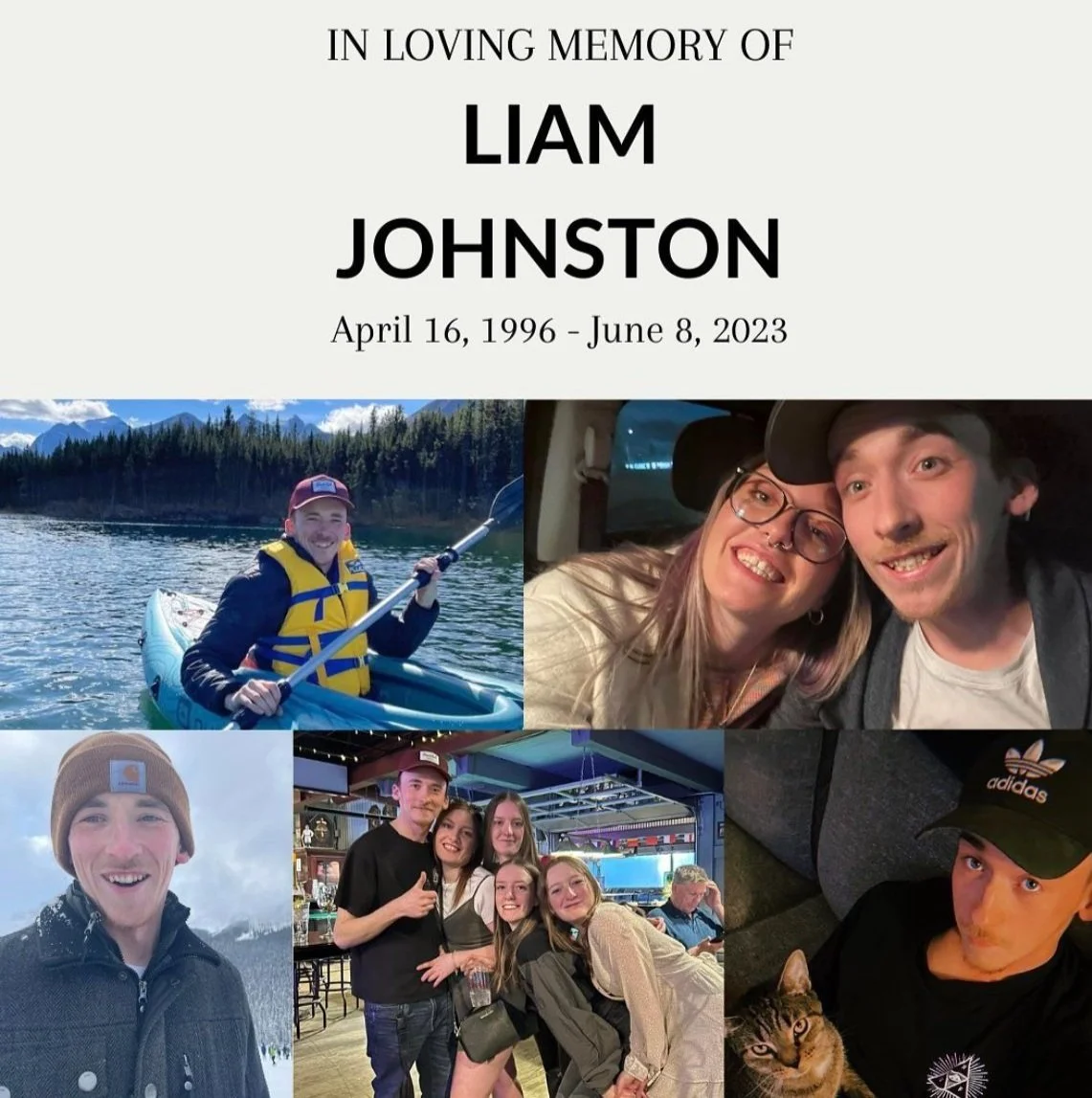
Johnston had flagged the job the night before
The Injury Prevention Centre campaign funded by this sentence is built around encouraging young workers to speak up about unsafe work.
Johnston did. He contacted the owner about the excavation. And in a message to his partner, Emily Gofton, the night before he died, he described the job as a mess, with a lot of unexpected problems on site. His last text to her read: "Tomorrow is going to be a rough day."
The family
Johnston was from Waterloo, Ontario. He had been an apprentice plumber and had paused his apprenticeship to take a better-paying position on the excavation crew. He kayaked, hiked, climbed, played music, and wrote poetry for Gofton, whom he had met while they were both working at Mr. Mike's.
Gofton read a victim impact statement in court.
"I have become painfully aware that coming home safely at the end of the day is not determined only by how hard someone works," she said. "If love could have saved Liam, he would have lived forever. I will spend the rest of my life carrying a love that has nowhere to go."
Brock, the company's owner, also addressed the court. "I know nothing I can say today will lessen the pain and suffering of Liam's family," he said. "We failed as a company to provide the supervision and verification required." He told the court the company has since revised its excavation hazard process, added supervisory oversight, and increased employee training.
No criminal charges were laid
Johnston's family had pushed for a criminal prosecution, not only an OHS one.
In December 2025, Calgary police confirmed that would not happen. "The Calgary Police Service has determined there is not sufficient evidence to support criminal charges after consultation with the Alberta Crown Prosecution Service," the service said in a statement at the time.
Why trench collapses are so often fatal
Trench collapses are among the most lethal hazards in construction, and among the most preventable.
The reason is weight. A single cubic metre of soil weighs roughly 1,500 to 2,000 kilograms, about as much as a small car. When a wall lets go, there is no time to move and no digging out. Death usually comes from compression rather than suffocation in the ordinary sense: the weight of the earth on the chest makes it impossible to draw a breath. That is what traumatic asphyxiation describes.
Alberta's OHS Code requires that any excavation deeper than 1.5 metres that a worker enters be made safe first, by cutting the walls back to a safe slope, by shoring them, or by using a trench box. The rule exists because a worker standing at the bottom of an unprotected trench has no realistic chance if it fails.
What workers can do
Every worker in Alberta has the legal right to refuse dangerous work. You cannot lawfully be fired or disciplined for refusing work you reasonably believe is a danger to you or to someone else. The concern goes to your supervisor or employer, and they are required to investigate and address it.
Before entering a trench, the questions worth asking out loud are basic ones. Is it shored, boxed, or properly sloped? How deep is it? Who inspected it, and when? Is there a safe way out within reach?
Safety concerns can be reported to Alberta OHS at 1-866-415-8690, including anonymously.
Sources:
Government of Alberta, "Company sentenced for workplace fatality," July 14, 2026 (alberta.ca)
Calgary Court of Justice, sentencing proceedings, July 13, 2026, as reported by CBC News
Calgary Police Service statement on criminal charges, December 2025
Alberta Occupational Health and Safety Act and OHS Code, Part 32 (excavating and tunnelling)
Injury Prevention Centre








Comments
Conversation