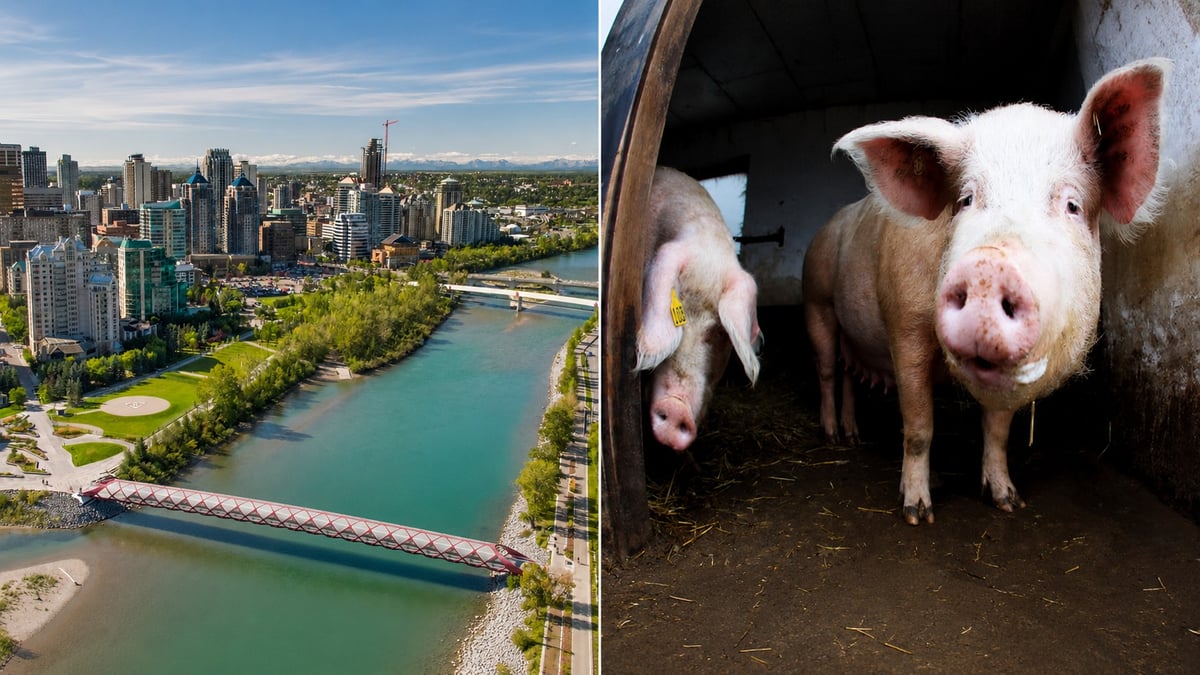
If you're along the Bow River in the coming weeks and notice unusual equipment near the water, leave it alone. Calgary Police are asking the public not to approach or disturb any research gear because a study is underway that investigators say could change how they find human remains in the river for years to come.
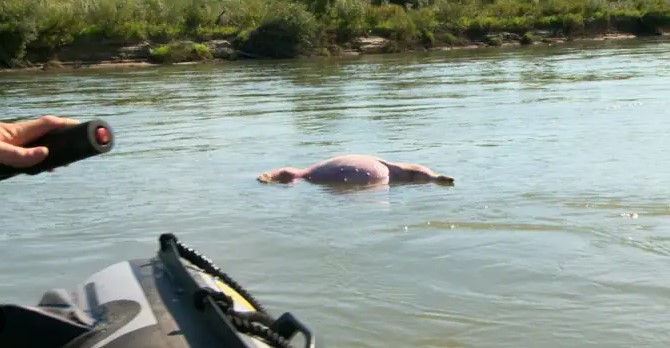
The Calgary Police Service has partnered with researchers from the University of Saskatchewan and the University of Windsor on a study that places pig cadavers fitted with GPS tracking devices into the Bow River. The devices record depth, water temperature, and distance travelled as each cadaver moves through the current. Researchers monitor them remotely until they become buoyant, at which point trained personnel conduct a controlled recovery.
Pig cadavers are a standard tool in forensic science. Their physiological makeup is close enough to human remains that they are widely accepted by researchers as a proxy allowing scientists to study decomposition and movement in water in ways that would otherwise be ethically and practically impossible.

What investigators don't know about the Bow
Bodies enter the Bow River every year. Some are accidents. Some are homicides. Some are people who fell or entered the water and were carried downstream before anyone knew they were missing. In nearly every case, search teams are working blind with no reliable data on how remains move through the Bow specifically, how far they travel, or where and when they are most likely to surface.
Water temperature, flow speed, river depth, and the stage of decomposition all affect how a body moves through a river system and those variables interact differently in the Bow than they would in any other waterway. The project involves researchers with expertise in both scavenging and aquatic ecology, two factors that significantly shape where remains end up. Fish and other aquatic animals affect decomposition and disperse material. The ecology of a river determines where organic matter accumulates over time. Understanding both is essential to building a model that actually works.
Right now, no such model exists for the Bow. This study is designed to build one.
"This research will give us data we simply don't have right now," said Dr. Iain Phillips, adjunct professor at the University of Saskatchewan and the lead researcher on the project. "By understanding how remains behave in the Bow River how far they travel, where they move and when they surface we can develop evidence-based models that improve recovery efforts. Ultimately, this work is about helping investigators find answers sooner and bringing closure to families."
The Saskatchewan precedent
The project didn't start in Calgary. Earlier phases were carried out in Saskatchewan, where the same team deployed pig cadavers in large northern river systems to study how remains move through cold-water environments with high seasonal variation.
That work contributed directly to solving a homicide. The findings from the Saskatchewan phase helped investigators locate human remains in an active homicide investigation an outcome that would have been significantly harder, or potentially impossible, without the predictive data the research produced. Those findings were published in the Canadian Society of Forensic Science Journal in 2024.
Calgary Police cited that result directly in announcing the Bow River study. "Sadly, it is a tragic reality that past missing persons have entered our city's waterways," CPS said in the release. "This is part of our efforts to ensure every available measure is taken to locate those who go missing."
What to do if you see the equipment
Research activity will be visible along the Bow River in the coming weeks. Calgary Police are specifically asking members of the public not to approach, interfere with, or disturb any research equipment they encounter along the river.
Sources:
Calgary Police Service — Researchers studying movement of submerged remains in the Bow River, May 25, 2026 (newsroom.calgary.ca)
Canadian Society of Forensic Science Journal — Experimental use of pig cadavers to locate homicide victim in a large river, Phillips et al., April 2024







Comments
Conversation