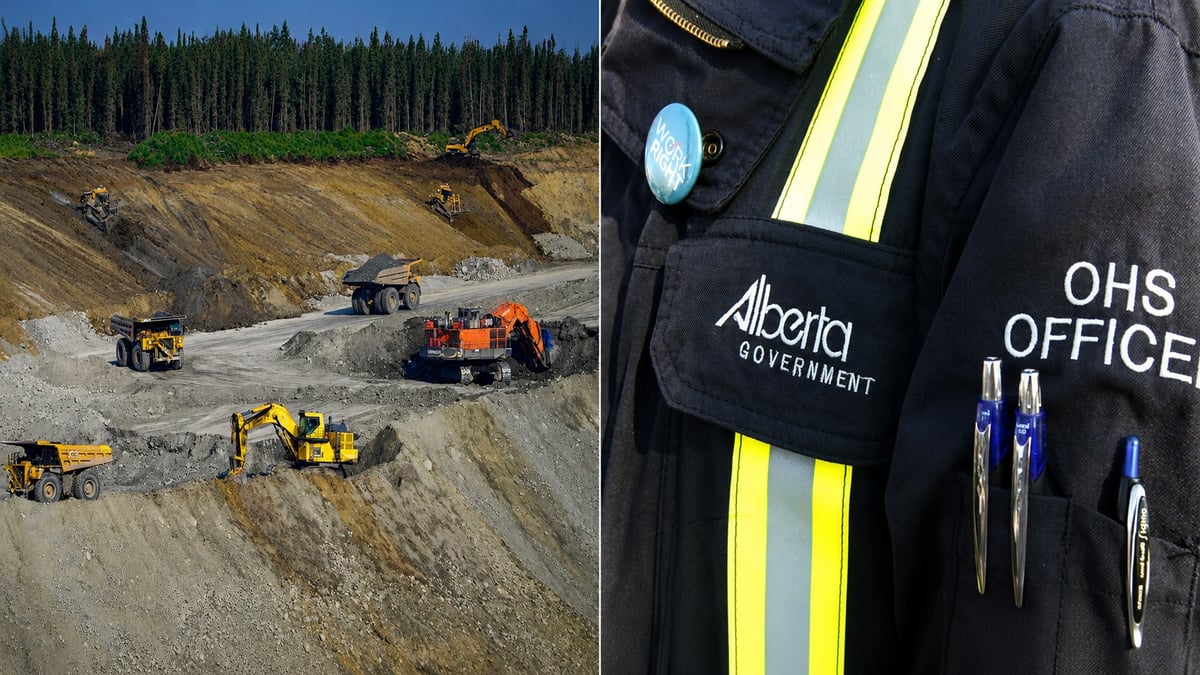
A coal mining company has been penalized $360,000 over the death of a worker at a mine near Warburg, in Leduc County.
Prairie Mines & Royalty ULC pleaded guilty on July 8 in the Leduc Court of Justice to one count under Alberta's Occupational Health and Safety Act: failing to ensure the health and safety of a worker. The company had faced twelve charges. The Crown withdrew the other eleven as part of the plea.
The worker died on November 25, 2023, at the Genesee Mine southwest of Edmonton.
What happened
The task was routine winter maintenance. The worker was removing excess water and clearing ice from piping, the kind of work that comes with running a mine pit through an Alberta winter, when an ice plug dislodged from the pipe.
The plug struck him and caused fatal injuries.
At the time, the company said the worker was experienced, and that he was fatally injured around 11:30 a.m. while trying to clear a frozen line used to pump water out of the bottom of one of the mine's pits. The worker has not been publicly named.
Where the $360,000 goes
There is no fine to the Crown here in the usual sense. Instead, the court used what Alberta law calls a creative sentence, which redirects the money that would otherwise be paid as a fine toward a project meant to improve workplace safety.
In this case, the full $360,000 goes to the Alberta Mine Safety Association, specifically to research the hazard that killed this worker, develop industry best practices, and build a comprehensive training program for water removal operations.
That's the part worth pausing on. The money is aimed directly at the task he was doing when he died, clearing water and ice from mine piping, so that the next worker doing it has guidance and training that apparently weren't adequate before. The company and the Crown have 30 days to appeal.
What this means for the people still working there
For the roughly 200 people who work at Genesee, this sentence isn't an abstraction. It's about a task many of them do.
Clearing water and ice from mine piping is ordinary cold-weather work at an open-pit operation like this one. Pits collect water, the water has to be pumped out, and in an Alberta winter the lines that move it freeze. Someone has to thaw and clear them. That means the hazard that killed this worker isn't a rare one, it's built into the seasonal routine of the place, which is exactly why the training program funded by this penalty is aimed at it rather than at some one-off circumstance.
The people most affected by whether that training works are the ones still doing the job. A guilty plea and a penalty close the legal file, but the practical question for the remaining workforce is whether water-removal work is safer now than it was on the day their coworker died. The Alberta Mine Safety Association's new best practices and training program are meant to answer that, and the workers at Genesee and at similar operations across the province are the ones who will find out.
Why an ice plug is so dangerous
To anyone who hasn't worked around industrial piping, an ice plug striking someone might sound like a freak accident. It isn't, and the physics are worth understanding.
When a section of pipe freezes, the ice plug can act like a cork in a pressurized line. Water or air pressure builds behind it. When the plug finally lets go, it doesn't just melt free, it can launch out of the pipe, or send a burst of pressurized water and ice after it, with tremendous force. Workers thawing or clearing frozen lines have been killed by plugs and fittings turning into projectiles. It is a known and specifically documented hazard in cold-climate industrial work, which is exactly why the training program funded by this sentence exists.
The mine, and where it fits in Alberta
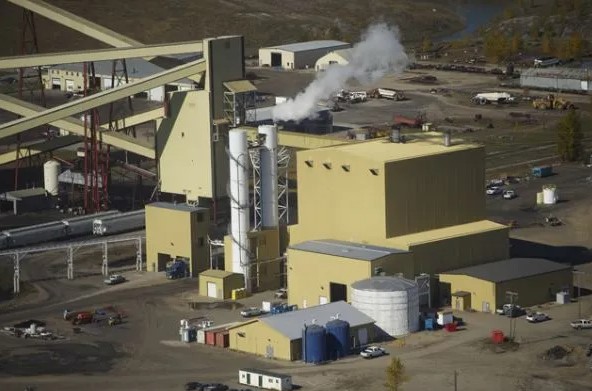
The Genesee Mine sits about 80 kilometres southwest of Edmonton and employs roughly 200 people. It feeds the Genesee generating station, one of the last coal-fired power plants in Alberta.
That plant is on its way out in its current form. Genesee has been undergoing a major conversion from coal to natural gas, part of Alberta's broader move away from coal-fired electricity, with all of the province's remaining coal plants set to be retired by the end of 2029. The mine where this worker died is, in other words, part of an industry in its final chapter in Alberta, which makes the safety questions around its remaining working years no less important.
Why these cases matter
Workplace fatalities in Alberta usually surface publicly twice: once when they happen, and once, often years later, when the case moves through the courts. This one happened in November 2023 and resolved in July 2026, close to three years later.
Alberta's OHS laws set the basic safety rules for workplaces across the province, and charges can be laid when a failure to follow them results in a serious injury or death. A guilty plea like this one is a formal finding that the employer fell short of that standard. What it doesn't do is bring the worker back, which is why the creative sentence, funding training so the same thing doesn't happen again, is the part that carries any forward meaning.
Sources:
Government of Alberta, "Company penalized for a workplace fatality," July 15, 2026 (alberta.ca)
Leduc Court of Justice, guilty plea and sentencing, July 8, 2026
Alberta Occupational Health and Safety Act
Alberta Mine Safety Association (recipient of the creative sentence)
Prairie Mines & Royalty ULC / Westmoreland Mining statement at the time of the incident, November 2023









Comments
Conversation