
Our condolences to her family and loved ones.
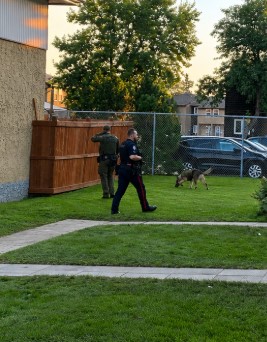
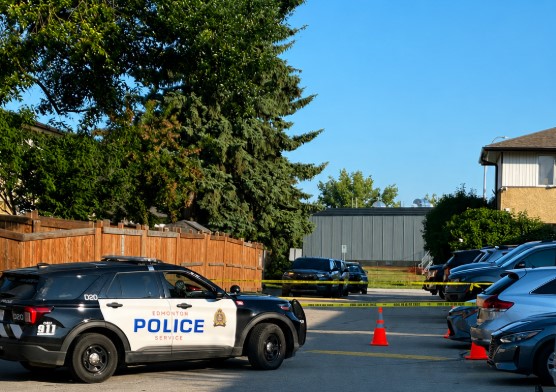
Edmonton police were called to the area of 139 Avenue and 32 Street at around 6:50 a.m. Sunday, August 16, after reports of a shooting.
Officers found a seriously injured 16-year-old girl. She was later pronounced deceased.
The EPS Homicide Section is investigating and is treating the death as suspicious. Police have not released her name.
Her cousins have identified her as Jazmin.

Her family has identified her
Jazmin's cousins have named her publicly and set up a fundraiser to help her mother.
They write that they are doing it with broken hearts as they process what happened, and describe Jazmin as a loved 16-year-old with many dreams ahead of her. She grew up surrounded by many friends, they write, and was very loved by her two younger siblings.
Donations go toward unexpected expenses for her mother and family during what the cousins describe as a difficult time. They are asking people to share the campaign and support Jazmin's loved ones.
The campaign is here: gofundme.com/f/jazmin-our-16-year-old-cousin

What police have said, and what they haven't
Police have said officers responded to reports of a shooting, that they found her seriously injured, and that homicide detectives have the file.
They have not said whether a suspect has been identified, whether anyone has been arrested, what led to the shooting, or whether there is any risk to the public.
Suspicious death is the classification EPS uses before a homicide is formally confirmed, which typically follows an autopsy by the Office of the Chief Medical Examiner. The Homicide Section taking the file from the outset reflects how police are treating it.
Police say additional information will be released as it becomes available.
What it means when a death is reclassified
If an autopsy confirms a homicide, EPS normally issues an update saying so, and the case moves onto the city's homicide count for the year.
That reclassification is procedural rather than a change in how the case is being worked. Detectives from the same section handle it either way.
It does change what police can say publicly. Once a cause of death is confirmed, investigators often release more detail about the circumstances, and that is usually the point at which the public learns whether police believe a suspect is known to the victim.
If you were in the area Sunday morning
Some home security and dash camera systems overwrite older footage automatically, so anyone who recorded that area should check and preserve it as soon as possible.
If you live near 139 Avenue and 32 Street and have a camera facing a street, alley or driveway, look at the footage from roughly 6 a.m. to 7:30 a.m. Sunday and save it. Keep the original file rather than a screen recording, and note the exact device time.
The same applies to dash cam footage if you drove through northeast Edmonton in that window, even if you saw nothing. Vehicles that can be ruled out matter as much as vehicles that can't.
If you find something, contact police rather than posting it. Circulating footage publicly can complicate an investigation and can identify people who have nothing to do with it.
Reporting anonymously
The most common reason people don't call with information is a belief that they'll be identified, interviewed, or called to court.
Crime Stoppers is not the police. It's a registered charity run by a volunteer board, and the Edmonton and Northern Alberta program operates independently of EPS.
The program says tipsters are not asked for their names, addresses or any identifying information, that the lines do not use call display, and that calls are not traced or recorded. Each tipster receives a confidential code number, which is the only way to follow up on a tip or collect a reward. In the file that gets created, the person is referred to as "the tipster" rather than by gender.
Canadian courts have recognized broad informer privilege for Crime Stoppers tips. The Supreme Court of Canada confirmed that protection in R. v. Leipert in 1997. The privilege is broad, but it is not unlimited.
Crime Stoppers says tipsters are not required to provide their names, make a police statement, or appear in court.
How to reach them
Anyone with information can contact EPS directly at 780-423-4567, or #377 from a mobile phone.
To remain anonymous, Crime Stoppers is at 1-800-222-8477, online at p3tips.com, or through the P3 Tips app.
Where to get help
Kids Help Phone is free and confidential, 24 hours a day, at 1-800-668-6868, or text CONNECT to 686868.
Alberta's Mental Health Help Line is 1-877-303-2642, 24 hours.
Schools may have supports in place when classes resume, and families can ask the division directly.
What happens next
The Homicide Section continues to investigate. Police have not indicated a timeline for further updates.
We will update this article as more information is released.
Sources:
Edmonton Police Service, suspicious death media release, August 16, 2026: https://www.edmontonpolice.ca/News/MediaReleases/SuspiciousDeathAug162026
GoFundMe, organized by Jazmin's family: https://www.gofundme.com/f/jazmin-our-16-year-old-cousin
Crime Stoppers Association of Edmonton and Northern Alberta, tip process: https://crimestoppers.ab.ca/edmonton/tip-process/
R. v. Leipert







Comments
Conversation