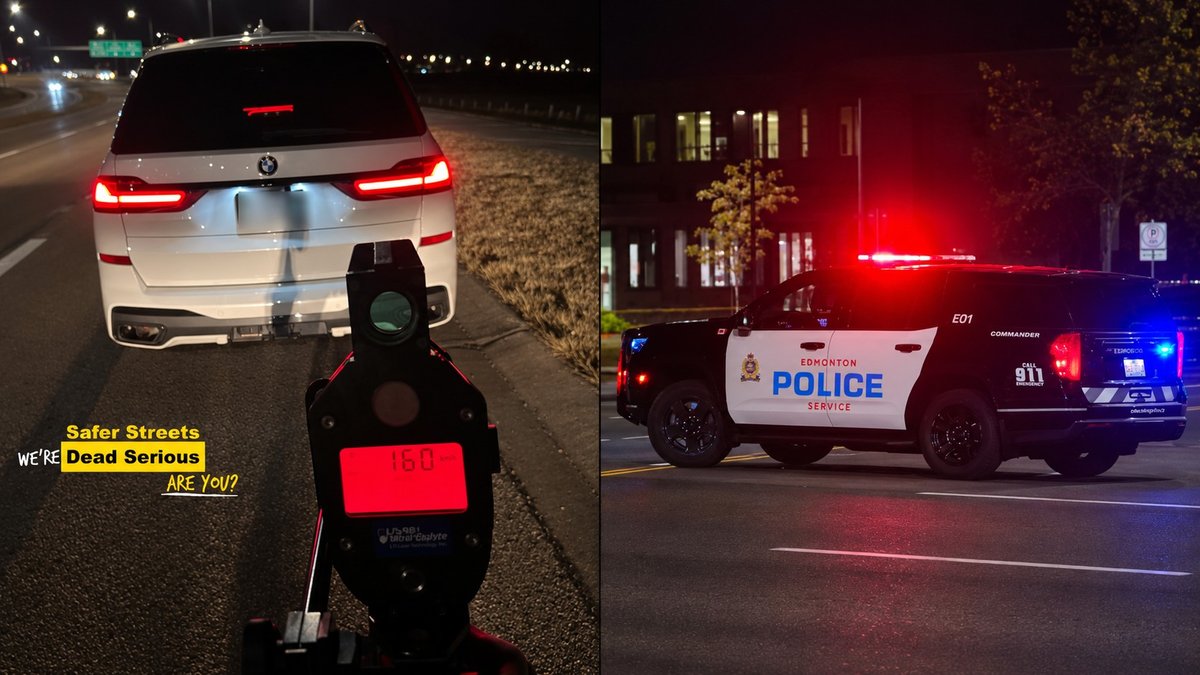
Edmonton police say a 20-year-old driver was clocked at 160 km/h in a 70 km/h zone near Campbell Road and Anthony Henday Drive.
That’s 90 km/h over the limit, more than double the posted speed.
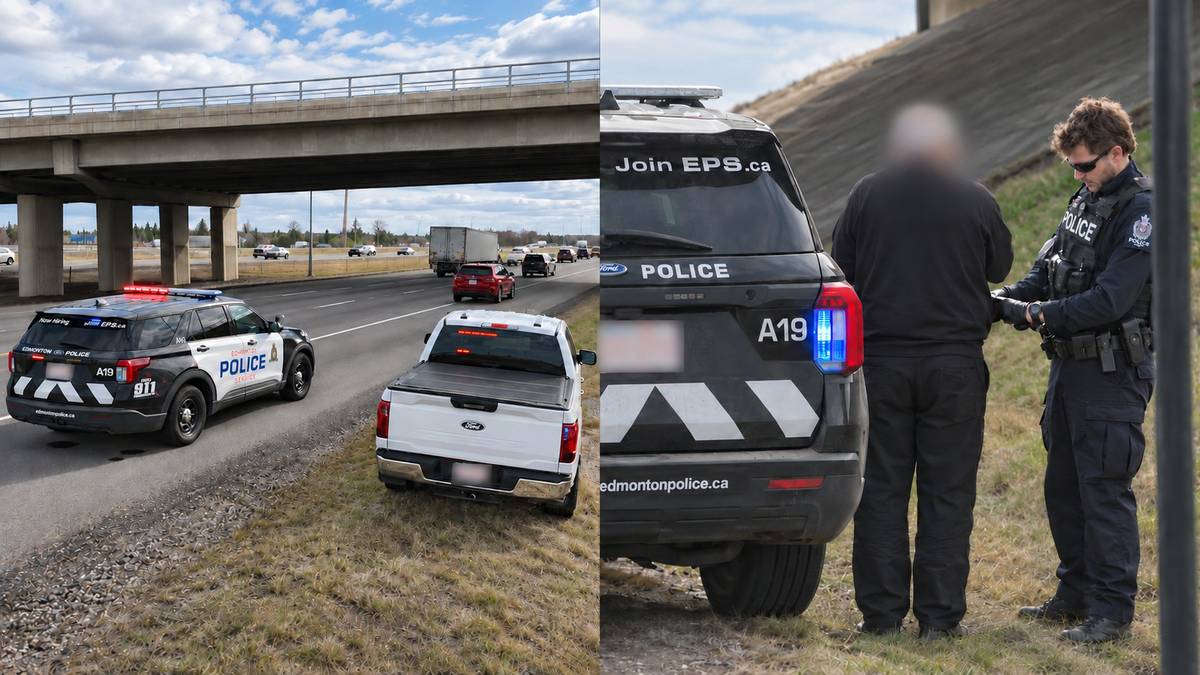
Officers with the Edmonton Police Service Traffic Enforcement Section were doing speed enforcement in the area when they clocked the BMW X7, according to a police post on Tuesday, Nov. 10.
“BMW performance: impressive. 160 km/h in a 70 zone: not so much,” police wrote on X. “Fast car. Bad decision. Slow it down, Edmonton.”
Police haven’t named the driver or said when the stop happened. The charges haven’t been proven in court.
What the driver is facing
The driver got:
A mandatory court summons for speeding
A separate ticket for failing to produce a driver’s licence
That second ticket doesn’t mean the driver was unlicensed or suspended. Police didn’t say either, and they haven’t given the amount of that ticket.
Why 90 over means court
Alberta’s standard speeding fines go up to $744 for driving exactly 50 km/h over the limit.
At 51 km/h over or more, a court appearance is mandatory and the court decides the fine. There’s no preset dollar amount for this driver’s charge.
A conviction for speeding more than 50 km/h over carries six demerit points. The points go on a record after a conviction, not when police issue the summons.
A fully licensed Alberta driver is suspended at 15 points within two years. For graduated licence holders, it’s eight. Police haven’t said what kind of licence this driver holds or whether they already have points.
What 160 km/h looks like
| Speed | Distance in one second | Distance in 1.5 seconds |
|---|---|---|
| 70 km/h | About 19 metres | About 29 metres |
| 160 km/h | About 44 metres | About 67 metres |
Using an illustrative 1.5 seconds between spotting a hazard and starting to brake, a vehicle at 160 km/h covers about 38 metres more than one at the limit, before braking even begins.
For the same vehicle, kinetic energy increases with the square of speed. At 160 km/h, the X7 carries about 5.2 times the energy it would at 70. It’s a full-size, three-row luxury SUV that weighs well over two tonnes.
Police are enforcing the limits. Drivers still have a part to play
Edmonton’s Vision Zero goal is no traffic deaths or serious injuries by 2032. The City’s plan combines safer road design, speed management, education and enforcement. Slower speeds give drivers more time to react, and make the crashes that do happen less severe.
Police keep finding drivers going far over the limit.
During Operation 24 Hours on Oct. 9, EPS and the City’s automated enforcement recorded 634 traffic violations, including 183 for speeding. Six vehicles were clocked at least 50 km/h over the limit.
“We will continue to focus our enforcement efforts on those who put other road users at risk,” Staff Sgt. Mike Wasylyshen said.
The cost is measured in more than tickets. EPS recorded 32 traffic deaths in 2025, up from 26 in 2024. Its annual report says more pedestrian and motorcycle deaths drove the increase, along with speeding, impaired driving and other high-risk driving.
Enforcement only does part of the job. The rest is up to drivers:
Stick to the posted limit
Leave enough room behind the car in front
Put the phone away
Slow down even more when darkness, snow or ice cut your visibility or grip
At 160 km/h, a vehicle covers about 44 metres every second. That gives everyone else on the road less time to see it coming, and gives its driver less room to react to something unexpected.
Other extreme speeding cases around Edmonton
EPS posts cases like this every Friday as part of its “High Flyer” feature. Here are some we’ve covered this fall:
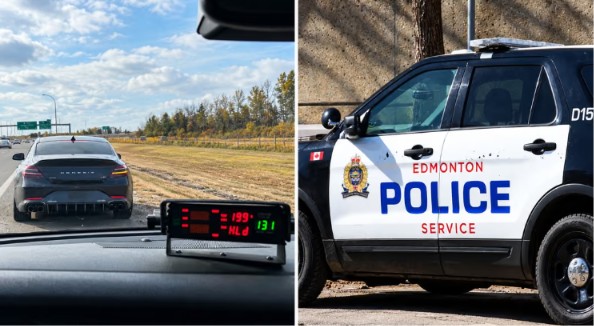
Anthony Henday near Yellowhead Trail: a driver clocked at 199 km/h in a 100 zone
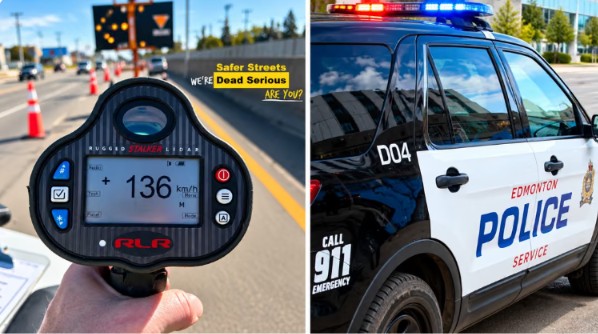
Yellowhead Trail: a 17-year-old at 136 km/h in a 50 km/h construction zone
Dashcam video: a 19-year-old in a white BMW 328i was caught passing cars on the shoulder at 113 km/h in an 80 zone after another driver sent the footage to police. The driver got $859 in tickets.
How to report speeding in Edmonton
If speeding is a regular problem in your area, use the EPS online traffic concerns form. Police review the reports to decide where to send enforcement.
To report a specific driver or vehicle and have charges considered, EPS asks witnesses to give a statement at a police station and to be ready to go to court.
For non-emergencies, call 780-423-4567, or #377 from a mobile phone. If someone is in immediate danger, call 911.
Sources:


Comments