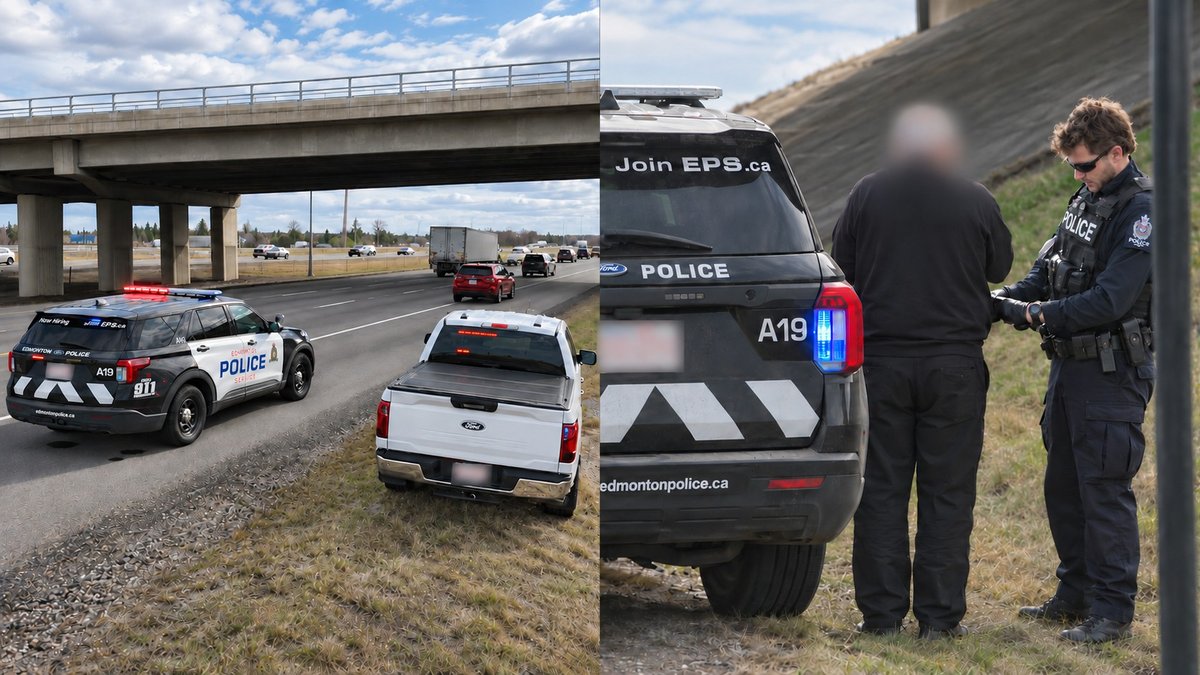
“And that means both of them are going to jail?”
“Yep.”
That exchange, from a video the Edmonton Police Service released this week, comes near the end of a traffic stop that started like any other. A vehicle pulled over. Two people inside. Licence, registration, insurance.
Then officers ran their names. Both came back with outstanding arrest warrants. Both warrants were for the same thing: a $3,000 fine for driving without insurance, never paid. They had been ticketed on the same day.
Both left in handcuffs.
“I’m not trying to be harsh, but driving is a privilege. It isn’t a right,” says Const. Andrew Stevens of the Aggressive Driving Unit. “You have to have a motor vehicle that is registered and insured.”
What the video shows
The clip runs about a minute. It opens with a reminder to keep valid insurance and registration within reach when you are pulled over, then follows officers as they discover the warrants, confirm they are still active and check the amount owing on each. The $3,000 figure is the fine, not a new charge from this stop.
EPS does not give the date or location, does not name either person, and does not say whether the vehicle they were in that day was insured. The arrests were for the warrants, not for anything that happened at the roadside. One officer describes it as unusual because both people in the car are going into custody.
The allegations have not been proven in court.
Why the fine is exactly $3,000
Under section 54 of Alberta’s Traffic Safety Act, driving an uninsured vehicle, or letting someone else drive your uninsured vehicle, carries a minimum fine of $2,500 for a first offence. The maximum is $10,000. Alberta adds a 20 per cent Victims of Crime surcharge to provincial fines.
$2,500 plus 20 per cent is $3,000. Both people in the video got the minimum.
A second offence within five years starts at $5,000 and can reach $20,000. And the Act says that if the fine goes unpaid, the default is jail: 45 days to six months for a first offence.
The vehicle is usually towed on the spot, and the owner pays the impound and the fine before getting it back.
How an unpaid ticket turns into a warrant
Not every unpaid ticket in Alberta ends in a warrant. The difference is the type of ticket.
Most speeding and minor tickets are offence notices. If you ignore one, you get a late fee and a hold on your registry file, which means you cannot renew your licence or registration until you pay. No warrant. Alberta changed the rules in 2017 so that minor bylaw and non-traffic fines work the same way.
No-insurance tickets are different. They are summons tickets, which require a court appearance because of the size of the fine. If you do not show up, or you are convicted and never pay, the court can issue a warrant for your arrest. Then every traffic stop, every call police attend, every time your name gets run, you are getting arrested.
That is what happened here. Two people who could have dealt with a ticket months earlier were taken to jail on a day they probably expected a warning.
What the Aggressive Driving Unit is
EPS launched the Aggressive Driving Unit in September as a pilot targeting road rage, tailgating and dangerous driving on west-end commuter routes. It is intelligence-led, meaning officers go where complaints and collisions cluster rather than sit at random. We covered the launch and its first target, tailgating.
The unit exists because Edmonton’s fatal collisions have climbed three years running: 24 in 2023, 26 in 2024, 32 in 2025.
This video is part of Dead Serious, the EPS road safety campaign built around the three things that kill people on city streets: speed, impairment and distraction. Dead Serious also runs the weekly “High Flyers” list of the worst speeds caught in the city.
What else Edmonton traffic stops have turned up this fall
The insurance warrants are one version of a pattern EPS keeps publishing. A stop for one thing uncovers something bigger.
A 25-year-old on a Kawasaki Ninja was clocked at 134 km/h in a 60 zone on Gateway Boulevard on Oct. 18. Mandatory court summons, plus a ticket for not carrying his licence.
A 32-year-old in a Genesis G70 was caught at 199 km/h on the Anthony Henday, 99 over, and faces speeding and careless driving charges.
A 17-year-old was clocked at 136 km/h in a 50 km/h construction zone on Yellowhead Trail and failed to stop for police.
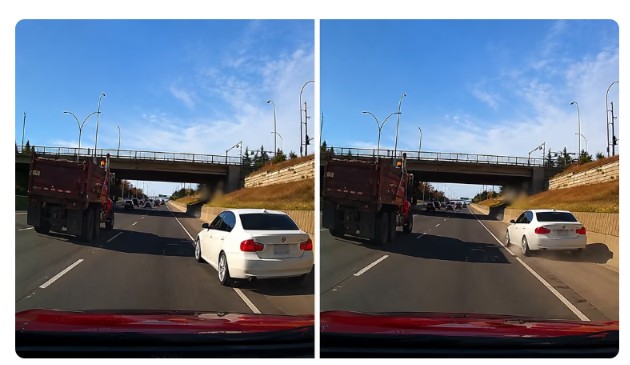
A 19-year-old was caught on dashcam passing on the shoulder at 113 km/h in an 80 zone and got $859 in tickets.
During a single 24-hour blitz in June, officers wrote 668 tickets and arrested two drivers. One had fled a stop in a stolen truck with stolen plates while suspended. The other had no insurance, was under a court-ordered weapons ban, and had an unsecured shotgun and ammunition in the vehicle.
What to do if you have an unpaid ticket
If a no-insurance ticket or any summons ticket is sitting unpaid, deal with it before a traffic stop deals with it for you.
Alberta’s Traffic Tickets Digital Service lets you look up a ticket, pay it, ask for time to pay or start a dispute. If a court already gave you time to pay and you are going to miss the date, go back to that court before the deadline, not after. The Alberta Court of Justice says a request for more time has to come on or before the appearance date.
If you think you already have a warrant, a lawyer or duty counsel can arrange for you to turn yourself in and appear in court rather than being picked up at the roadside.
And if the problem is that you cannot afford insurance: Alberta requires a minimum of $200,000 in third-party liability plus accident benefits. Rates vary a lot by insurer, and a broker can quote several at once. It is cheaper than $3,000 and a night in cells.
If you see dangerous driving
Call 911 if it is safe. Give the location, vehicle and plate. Keep it in sight if you can, but do not follow. Calling 911 from a vehicle to report an impaired driver is allowed under the distracted driving law.
Sources:





Comments