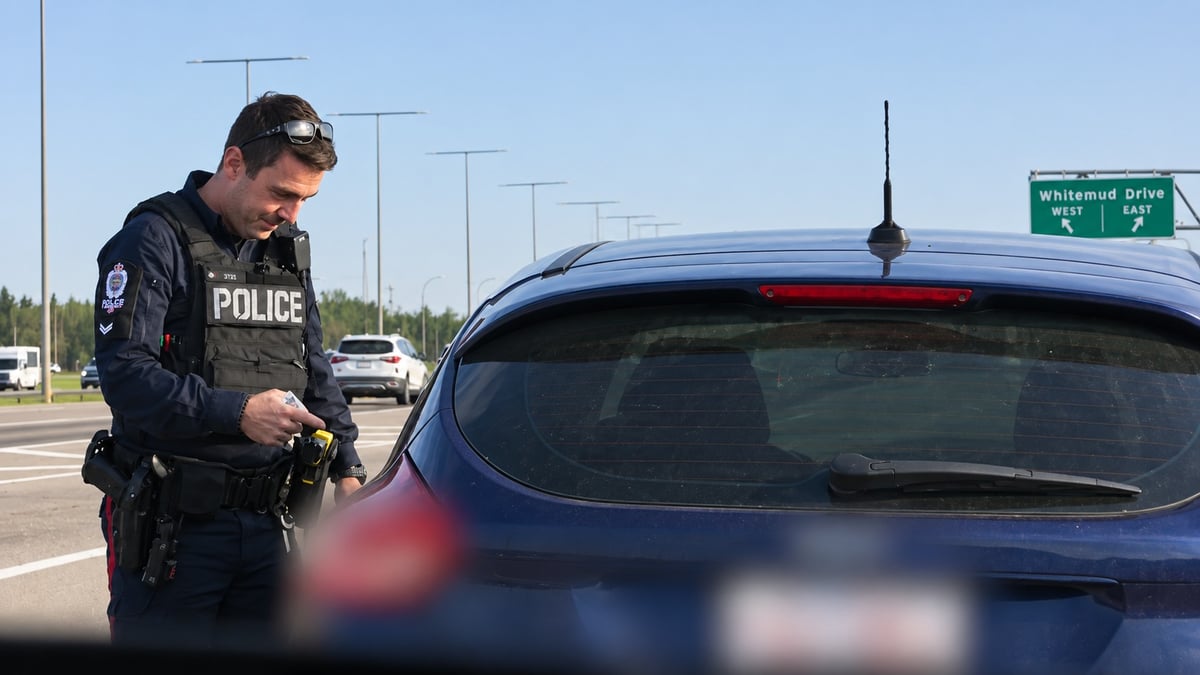
"I wouldn't be able to fit a motorcycle between you two."
That's an Edmonton police officer describing a following distance, and it lands harder than any regulation.
The Edmonton Police Service has launched a new Aggressive Driving Unit, running as a pilot project, targeting road rage on major commuter roads and intersections in the west end. This week, the focus is tailgating.
The numbers behind the unit
EPS recorded 32 fatal collisions on city streets last year, up from 26 in 2024 and 24 in 2023.
A traffic safety report commissioned by the City of Edmonton and released in June found a perception among residents that safety has declined over the past five years, with aggressive driving behaviour and societal stressors blamed.
Narrative Research conducted focus groups and surveyed more than 1,000 residents. They listed speeding, road rage, distracted driving and impaired driving as their major concerns.
Provincially, Alberta RCMP laid 9,419 charges related to dangerous and aggressive driving in 2024.
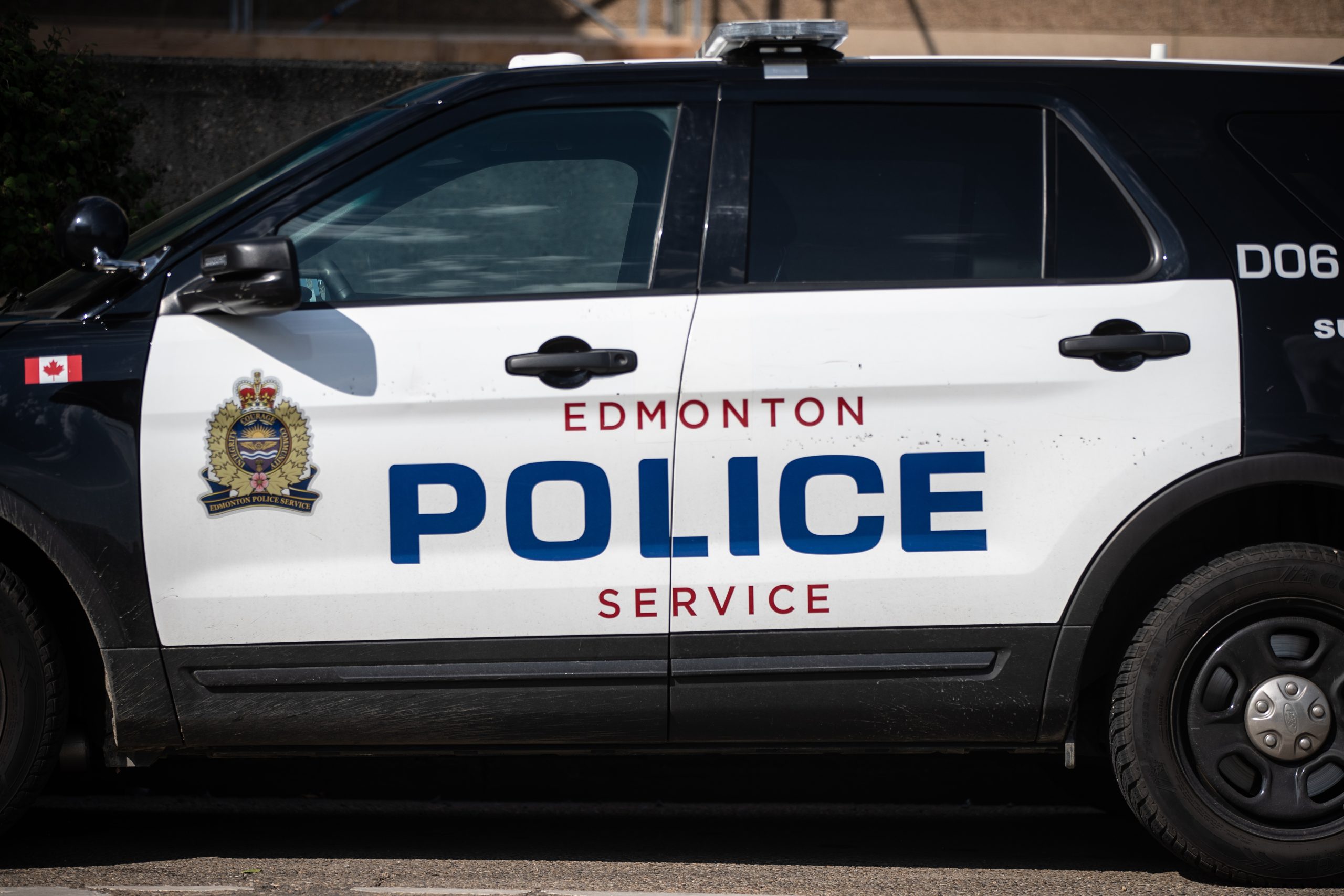
What the unit does
The mandate is intelligence-led enforcement and education to change dangerous driving habits and clamp down on road rage incidents.
Intelligence-led means the unit isn't parked randomly. It's deployed based on where complaints and collisions cluster, which is why the pilot is concentrated on west-end commuter corridors rather than spread across the city.
EPS is documenting the work in a video series, with the current instalment on tailgating available on the service's YouTube channel.
The two-second rule
The standard guidance is simple enough to use tomorrow.
Pick a fixed object ahead, a sign or an overpass. When the vehicle in front passes it, count. If you reach the same object before you finish saying "one one thousand, two one thousand," you're too close.
Two seconds is the minimum in good conditions. Four seconds or more in rain, snow or ice. More again if you're driving something heavy or towing.
The reason it's measured in time rather than car lengths is that the gap scales with speed. At 100 km/h you cover about 28 metres a second, so a two-second gap is roughly 56 metres. Most tailgating happens because drivers judge the space visually and it looks like plenty.
What tailgating removes
Your reaction time.
The average driver takes around 1.5 seconds to perceive a hazard and get a foot onto the brake. That's before the vehicle starts slowing at all.
At highway speed, that reaction period alone consumes roughly 40 metres. If the gap in front of you is shorter than that, no amount of braking skill helps, because you're still processing when you arrive.
The car in front has one advantage you don't. It sees the hazard first.
Where tailgating becomes something else
Following too closely is an offence under Alberta's traffic laws.
Aggressive driving escalates from there. Brake-checking, cutting someone off deliberately, forcing a vehicle off the road, or using a car to intimidate can move a file from a traffic ticket into the Criminal Code, including dangerous operation of a motor vehicle.
EPS has investigated incidents that went well past driving. In one west Edmonton file, police said a road rage encounter on the Whitemud escalated to a driver stopping, exiting and throwing an object at another vehicle.
"It's not just the honking and the tailgating, but stopping, getting out of the vehicle, throwing an object out of the vehicle, approaching the vehicle," an EPS investigator said at the time. "This is not typical driving behaviour."
If someone is tailgating you
Don't brake-check. It's the most common instinct and the one that turns a nuisance into a collision, with you potentially at fault.
Move over if you can. Let them go. Whatever their reason, it isn't worth your afternoon.
Maintain your own following distance. If you're being tailgated you need more room in front, not less, because you may need to slow gradually rather than suddenly.
Don't engage. No gestures, no horn, no eye contact in the mirror. Road rage escalates through response.
If it becomes threatening, call 911 and don't drive home. Drive to a police station or somewhere public and busy.
The other EPS traffic series
This isn't the only enforcement work EPS has been publicizing.
Last month, an officer clocked a 79-year-old driver at 147 km/h in an 80 zone on Whitemud Drive, and explained on camera that past 50 km/h over the limit in Alberta there's no preset fine at all. Mandatory court appearance, penalty set by a judge.
Our coverage of that stop is here.
Reporting aggressive driving
Non-emergency reports go to EPS at 780-423-4567 or #377 from a mobile phone.
If someone's driving is putting people in immediate danger, call 911.
Dash cam footage is genuinely useful. If you have it, save it before your system overwrites, and note the time, location and plate.
Sources
Edmonton Police Service, Aggressive Driving Unit
City of Edmonton traffic safety report, Narrative Research, June 2026
Fatal collision figures and survey findings as reported by CBC News. Alberta RCMP charge totals as reported by the St. Albert Gazette. Prior road rage investigation details as reported by Global News.






Comments
Conversation