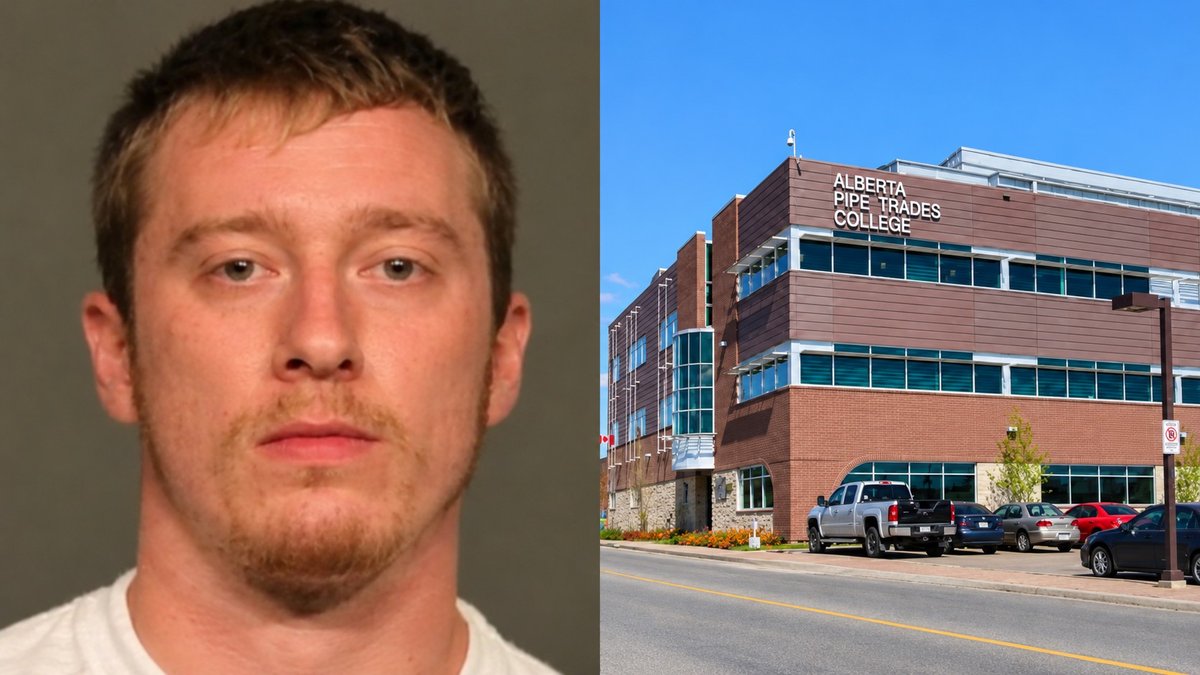
Our condolences go out to Justin Hunt’s family and friends, and to the students and staff who were at the college that morning.
B.C. police strongly recommended Justin Hunt be released outside the province. He moved to Alberta on day parole in April. Less than six months later, he was killed outside Edmonton’s Alberta Pipe Trades College.
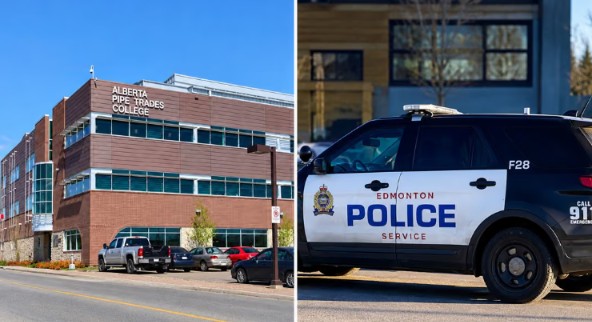
Hunt, 28, died of multiple gunshot wounds after the shooting in the college parking lot near 161 Street and 118 Avenue on the morning of Friday, Oct. 16. Three men face first-degree murder charges in what Edmonton police have called a targeted killing. The charges have not been proven in court.
Parole documents obtained by CBC News explain how concerns about Hunt’s safety helped shape his release to Alberta, and how the board weighed his criminal history against signs he was preparing for a different life.
Who is charged
Edmonton police have charged Wol Akuei, 21, John Morris, 20, and John Ocwalla, 19, with first-degree murder. Ocwalla also faces a charge of accessory after the fact. All three are in custody and, according to CBC, are scheduled to appear in court Monday, Nov. 9.
Police have not said what connection, if any, the accused had to Hunt, and nothing in the parole documents has been linked to the motive.
The arrest on Highway 16
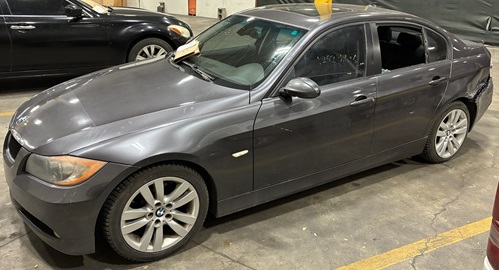
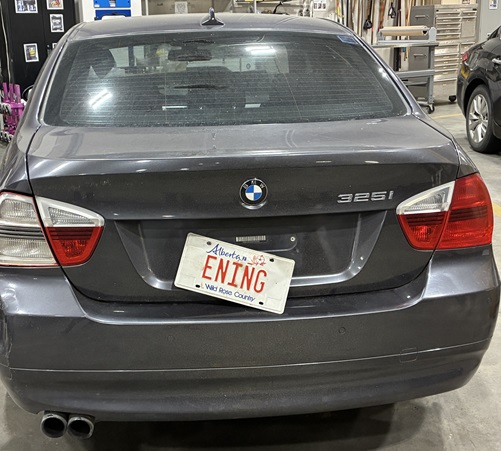
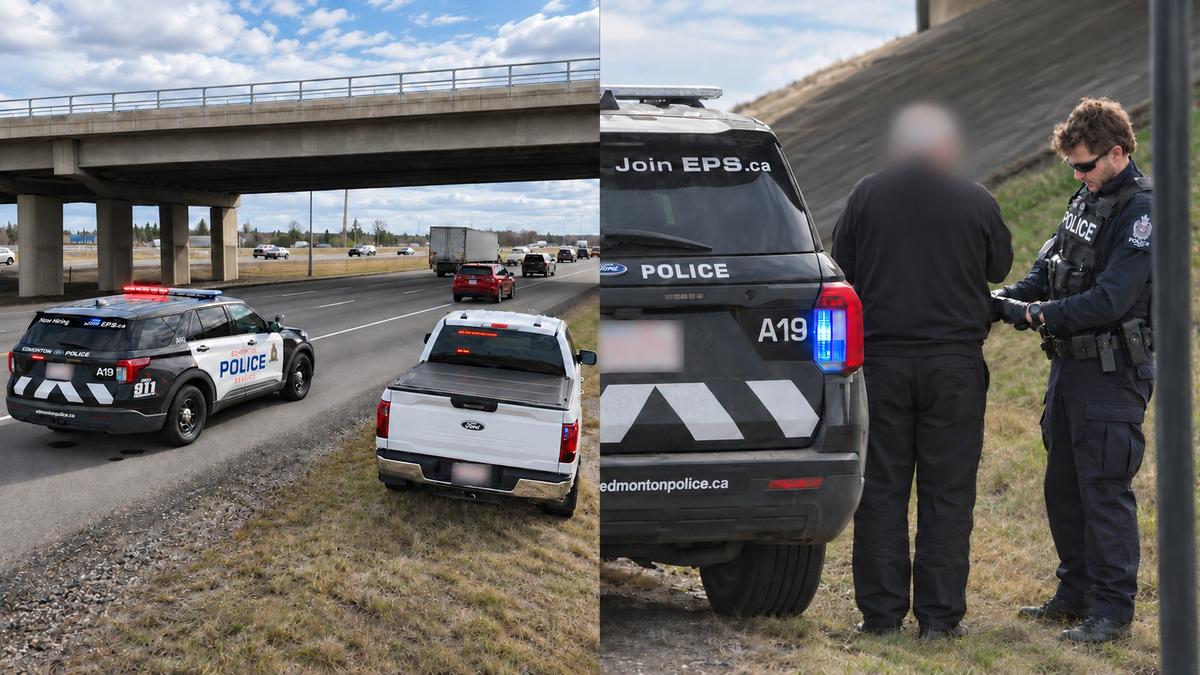
About 15 minutes after the shooting, EPS asked the RCMP for help with what was then a weapons complaint. An EPS helicopter tracked a dark grey BMW 325i west out of the city. The RCMP emergency response team stopped and disabled it on Highway 16 about 37 kilometres west of the college, near the Highway 16 and 16A junction west of Stony Plain.
Three men were arrested. Two were hurt during the stop and treated for non-life-threatening injuries before being handed to EPS. The Alberta Serious Incident Response Team is reviewing those injuries as a Level 1 matter, its category for serious injury, death or serious allegations about officer conduct. The RCMP is also conducting an internal review.
We covered the shooting and the lockdown at the college on Oct. 16, when police were still working out whether the Highway 16 operation was connected.
Why Hunt moved to Alberta
According to CBC’s reporting, B.C. police submitted a letter to the Parole Board of Canada strongly recommending Hunt be released outside the province. The only halfway house willing to take him was outside B.C., in a place where he had strong family support.
On April 22, 2026, the board granted day parole. Hunt had served about 20 months of a four-year sentence that began in 2024, after he pleaded guilty to an armed robbery committed in 2019 and to drug trafficking.
His safety was one consideration. The board also weighed public safety, his release plan and his rehabilitation.
A public warning two years earlier
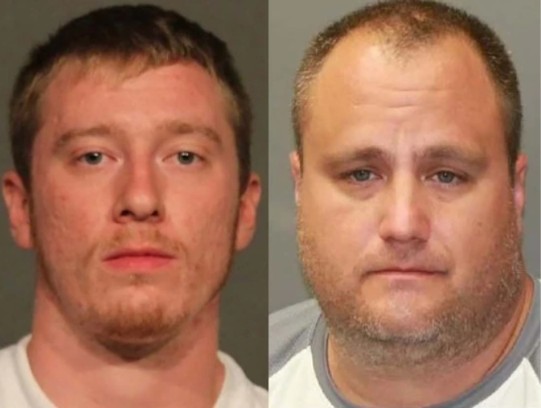
In May 2024, Kamloops RCMP did something police rarely do. After four targeted shootings in four days and a string of arsons, they released the names and photos of two men they said were at the centre of an organized crime conflict and told the public to stay away from them. One was Cameron Ronald Cole, 40. The other was Justin Christopher Hunt, then 25.
Police said both men had been warned of risks to their lives, and that at least one shooting had hit the wrong person. The notice was issued under the RCMP’s duty-to-warn protocol, used when police have credible intelligence of an imminent threat to life.
Three months later, Hunt began his sentence.
What the parole board heard
CBC reported that the board questioned Hunt about the 2024 warning and about a Correctional Service Canada designation that classified him as an associate of a “security threat group” until April 2025.
Hunt denied ever belonging to a gang. He told the board the warning might have stemmed from his old practice of robbing “dial-a-dopers” and carrying guns for protection. He said three assaults in prison, two where he was attacked and one where he was the aggressor, might explain CSC’s label. In one, shortly after he arrived at a medium-security prison, he was stabbed multiple times by three inmates and airlifted to hospital. The board said that could have been “the proverbial eye-opener.”
In his favour, the board noted he had applied for a pipefitting apprenticeship, reconnected with his Indigenous heritage and stayed sober.
The tribunal called the decision “complex and close to the line.” It concluded supervised release would help him reintegrate “as a law-abiding citizen,” and said that if issues tied to the duty-to-warn came up, it was confident CSC and local police would put a safety plan in place.
Those allegations, and Hunt’s denial, are separate from his convictions.
What the agencies have said about his relocation
Correctional Service Canada told CBC it supervised Hunt’s release and described its general process: pre-release planning, a community supervision plan, and sharing relevant information with police. It did not address his death directly.
B.C.’s anti-gang agency, the Combined Forces Special Enforcement Unit, said Hunt was known to its investigators and “had connections to the ongoing gang conflict in British Columbia.” It would not say more because of the Edmonton investigation.
EPS confirmed to CBC that it learned Hunt had moved to Edmonton in the spring of 2026 and has worked with CFSEU since his death.
Those responses do not establish what EPS was told before the shooting, whether a safety plan was in place, or that information was not shared. They also do not establish any link between the B.C. conflict and the men charged.
Hunt’s family declined comment. His lawyer, Chris Johnson, called him respectful and polite. “It’s tragic that his life was taken at a time when he was actually trying to turn things around.”
What happens next
The three accused appear in court Monday. ASIRT’s review of the arrest injuries runs separately.
Anyone with dashcam or security footage of a dark grey BMW 325i in west Edmonton or on Highway 16 on the morning of Oct. 16 is asked to call EPS at 780-423-4567 or Crime Stoppers at 1-800-222-8477.
Sources:




Comments