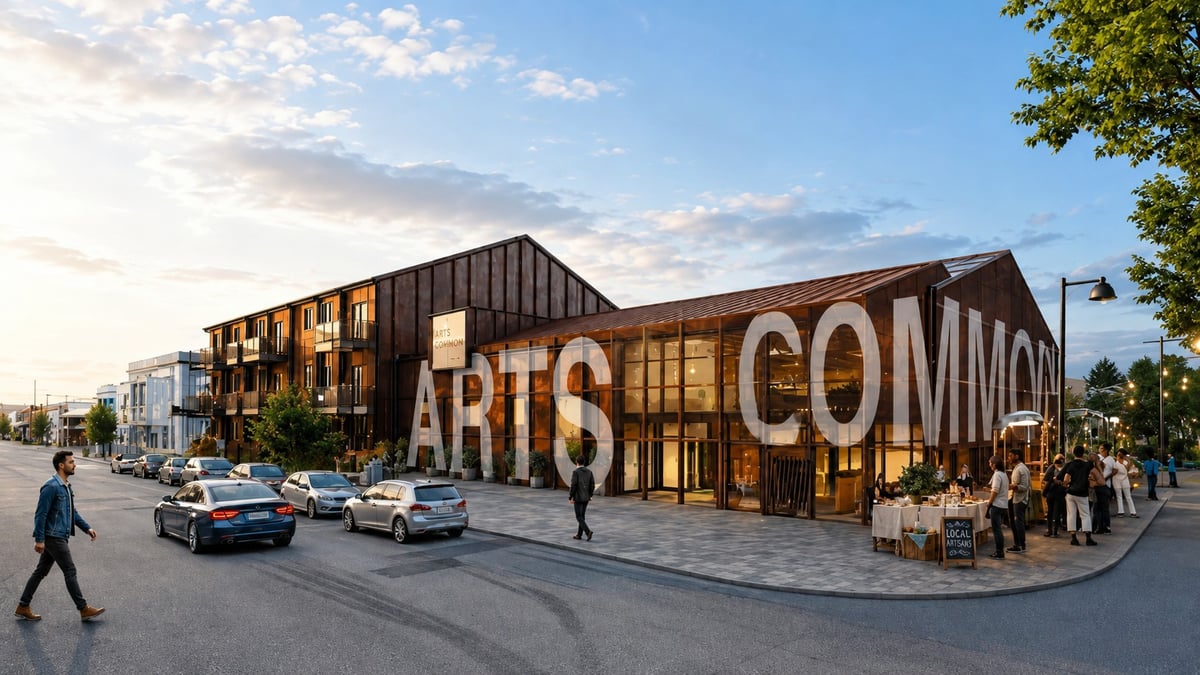
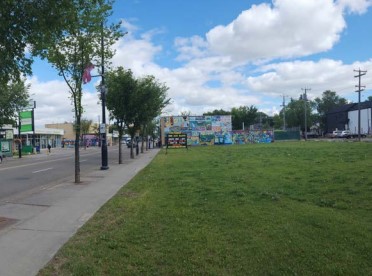
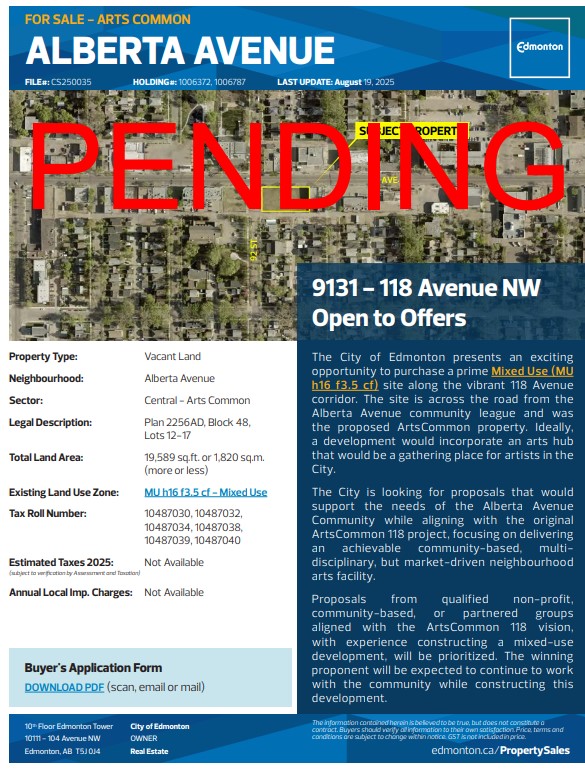
The lot at 92 Street and 118 Avenue has been empty a long time, and not by accident.
The old Alberta Cycle building stood there, city-owned, and the plan was to turn it into an arts centre. Renovation work uncovered problems serious enough that repairing it would have cost about what building new would. The city demolished it and put in a temporary green space while it worked out a long-term plan.
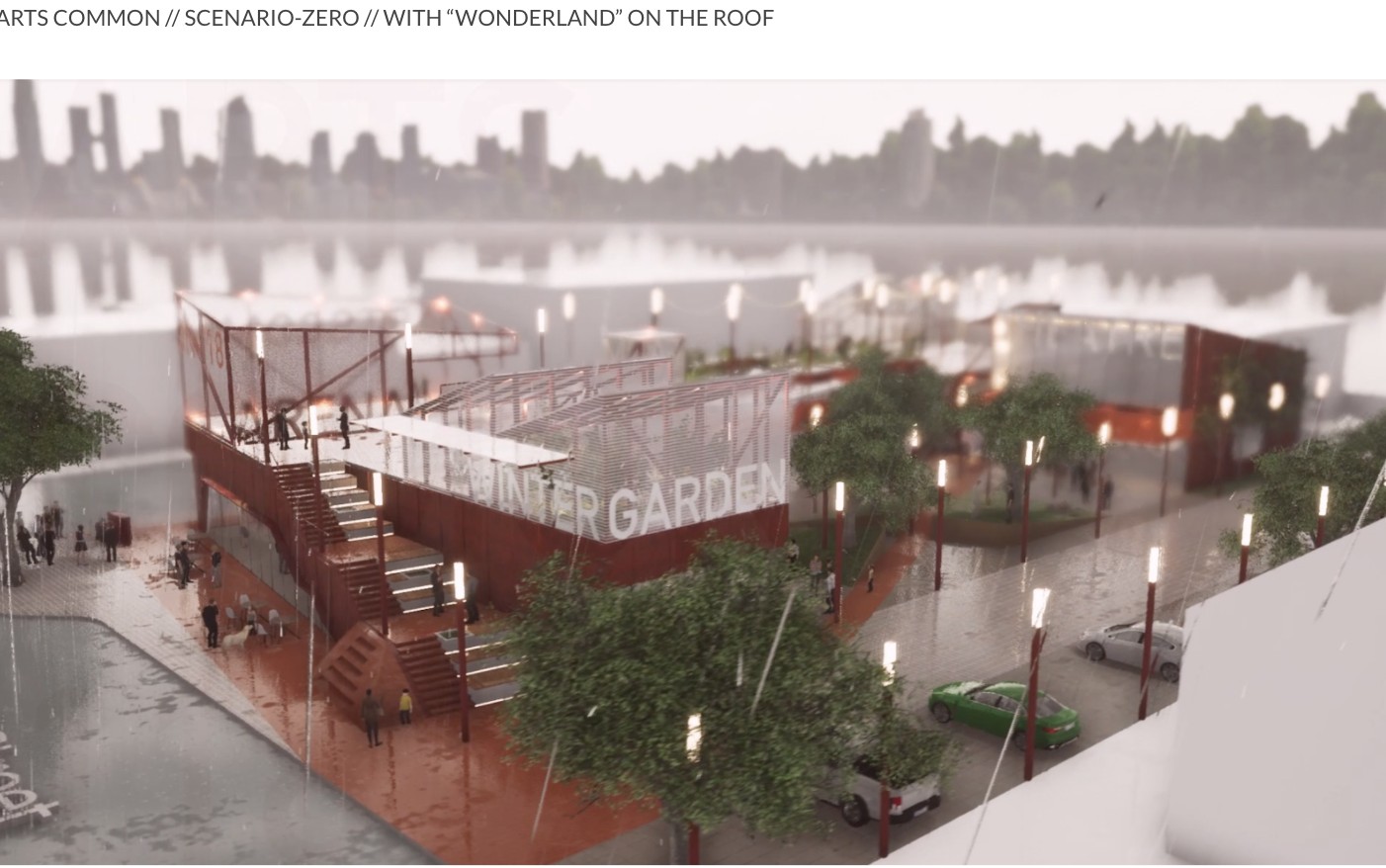
That plan arrived last week. Edmonton city council has approved a $10.4 million arts hub for the same lot, roughly 19 years after the idea was first raised.
What's going in
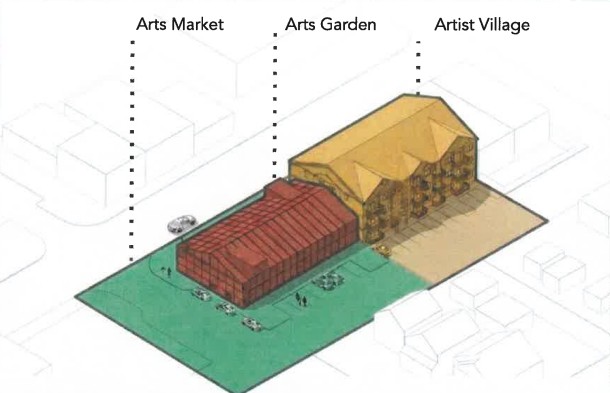
A 200-seat black box theatre. Artist-in-residence space. A marketplace for local businesses. And 24 affordable housing units aimed at artists and creatives.
"It would be a place for makers and creators and artists," said Christy Morin, executive director of Arts on the Ave. "A place for community, and it would also be a part of a safety implementation of the revitalization in the neighbourhood."
Ruth Alexander, a theatre artist who lives in the area, said the housing is what will make it work. "All of those arts meshed together in one hub is going to be pretty unique," she said. "The arts are so concentrated here, with all the artists that live in the community. It's going to be fantastic to have somewhere where we can all gather and meet."
The design comes from Reimagine Architecture, with Qualico Development and Arts on the Ave as partners.
Who's paying
The city is providing the land and $3.3 million. Ward Métis Councillor Ashley Salvador brought the motion securing the funding.
"There've been so many efforts over the last few years by very passionate Edmontonian community members to revitalize and bring new life to this community," Salvador said. "This project is a natural extension of that."
That leaves roughly $7 million to raise against a $10.4 million total. Morin expects shovels in the ground in three years, which is the window to close that gap.
What Arts on the Ave already runs
The organization getting the keys isn't new to this, which matters when a project needs three years and $7 million to reach a shovel.
Arts on the Ave is a registered charity formed by a collective of artists in the early years of the revitalization. It runs the Kaleido Family Arts Festival, which has drawn federal arts funding, and the Carrot Community Arts Coffeehouse, which has an artist-in-residence program and functions as the neighbourhood's living room. Anyone who has been in the Carrot on a weekday morning has seen the version of Alberta Avenue this hub is meant to expand.
That track record is the practical argument for the project. The city isn't handing a lot to a group with an idea. It's handing it to the group that has been programming that street for twenty years, out of borrowed rooms and closed-off blocks.
The open question is scale. Running a festival and a coffeehouse is different from operating a 200-seat theatre and 24 housing units, which carries permanent staffing, maintenance and tenancy obligations that don't stop when the festival ends. That's the piece worth watching as the funding comes together.
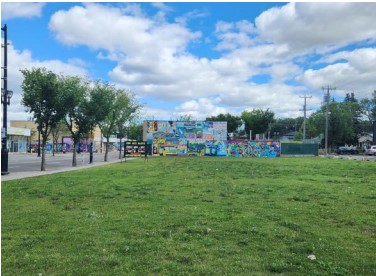
The neighbourhood this is being built into
Morin has lived on Alberta Avenue for 25 years and doesn't soften what the early part was like.
"Those first 10 years were absolutely horrible in many ways, when crime and drugs take over a neighbourhood and no one is stopping it," she told CBC. "It was scary, and when fear takes over there isn't a place for beauty."
The revitalization started in 2005, and it started small. The community asked the city for money to improve street lighting because of safety and crime problems. Since then the city has put close to $40 million in capital funding into the 118 Avenue streetscape between NAIT and Northlands.
Morin's own summary of what changed is modest and specific. "Now you can walk down the avenue, and you see smiles when people are walking by."
She's also clear that it isn't finished. "We're still at that really fragile point."
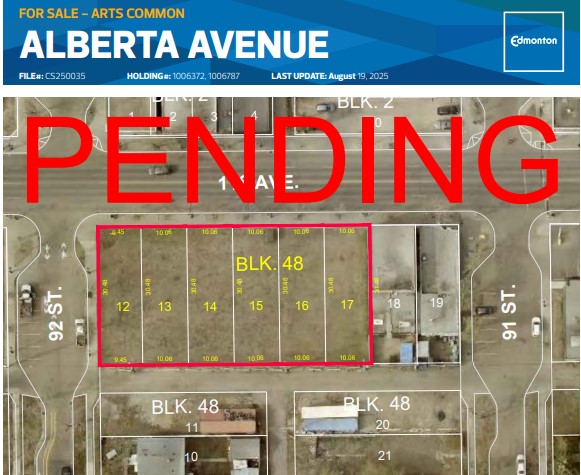
Nineteen years of asking for roughly this
What Morin described wanting when the Alberta Cycle building came down is close to what council just approved.
"I'd love it to become a four storey arts facility, community facility," she said at the time. "People could have weddings, you could do theatre, you could do pottery, really do a mixed-use arts community space."
The version approved last week is that, with housing attached.
Morin's framing of the decision is that it puts the community in a "place of vibrancy as opposed to a place of despair."
What the housing piece actually does
The 24 affordable units are the part that separates this from a standard arts venue.
Artists tend to move into cheap neighbourhoods, make them desirable, and then get priced out of them. It has happened in enough cities that it's the default trajectory. Building the housing into the facility, aimed at the people who did the work, is an attempt to interrupt that on a street where roughly $40 million in public money has already gone into making the area more attractive.
Whether 24 units is enough to matter is a fair question. It's also 24 more than exist there now.
Sources:
City of Edmonton council decision on the Alberta Avenue arts hub, July 2026
Arts on the Ave Edmonton Society: https://www.artsontheave.org
CBC News, Alberta Avenue revitalization feature: https://newsinteractives.cbc.ca/longform/alberta-avenue/
Government of Canada, Building Communities Through Arts and Heritage funding announcement for Kaleido Family Arts Festival



Comments
Conversation