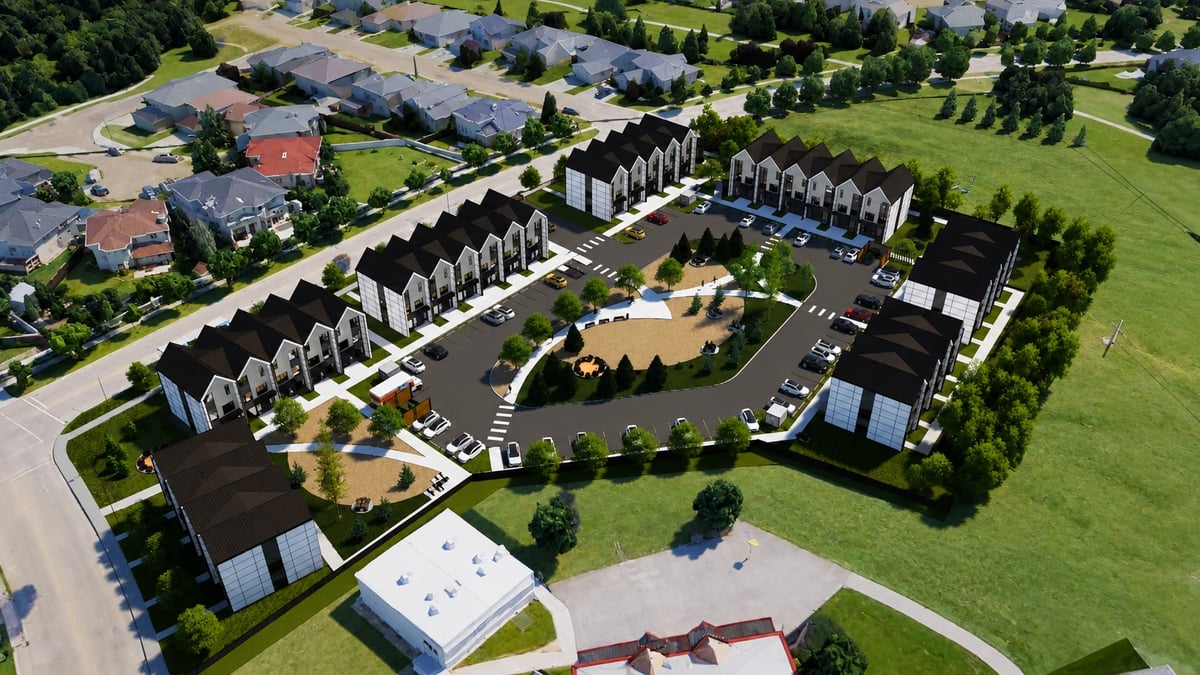
Edmonton has started building 68 affordable homes on a former school site in Mill Woods, the latest piece of a plan to turn nearly a dozen empty city lots into more than a thousand homes.
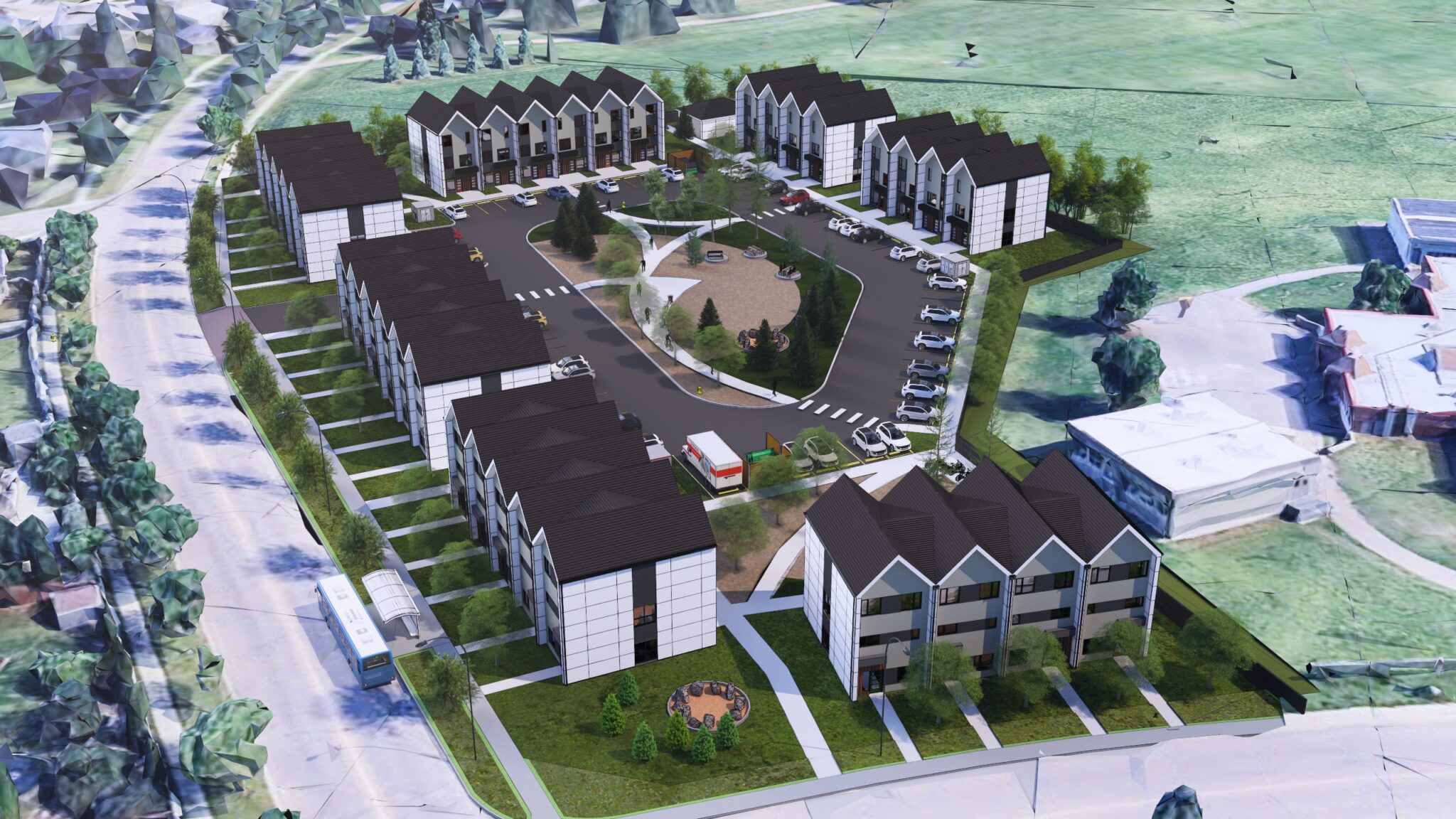
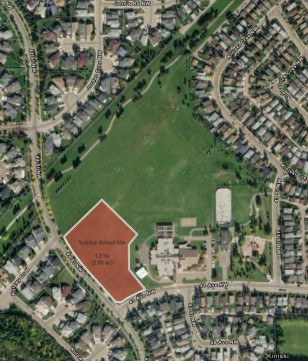
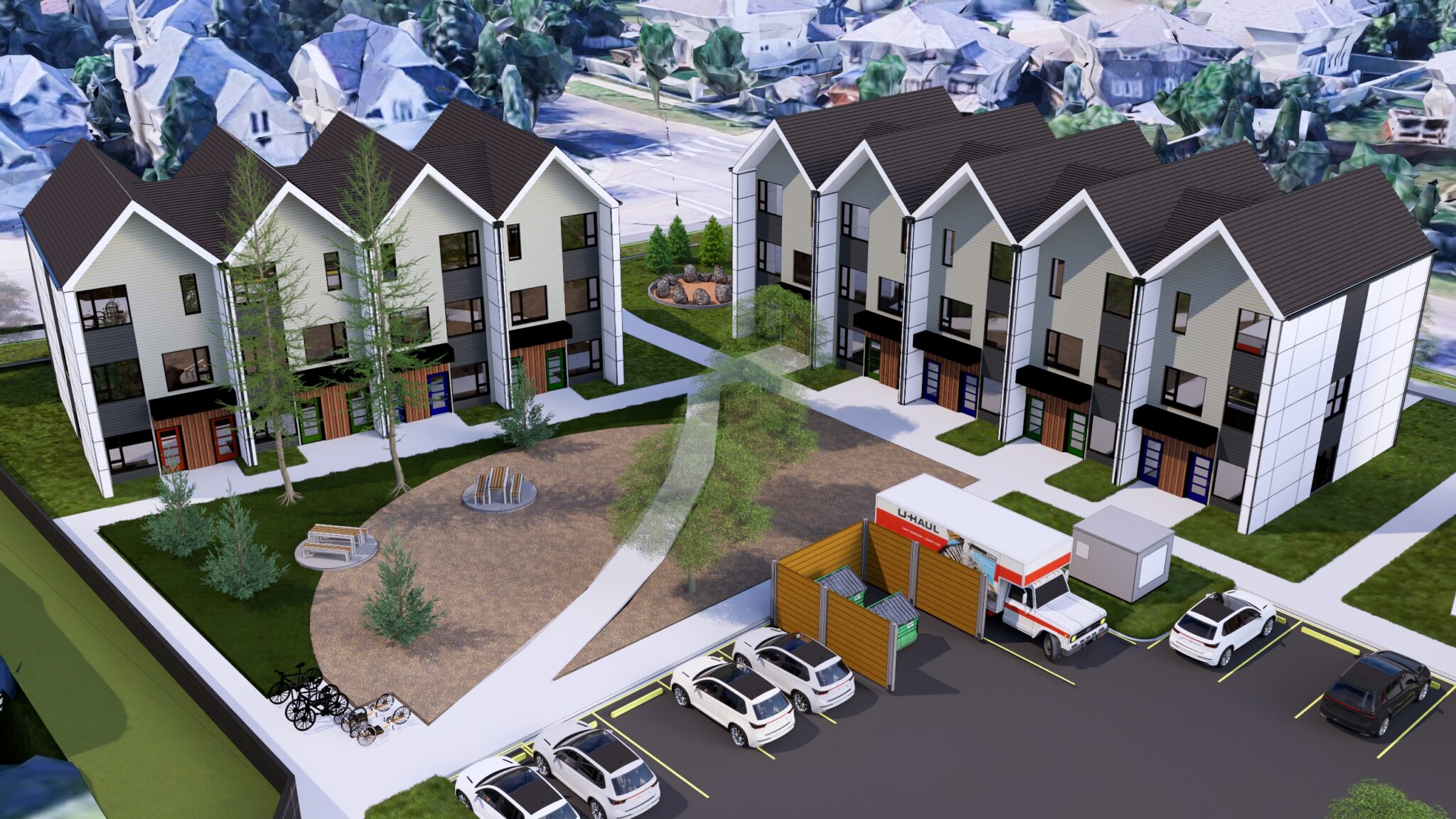
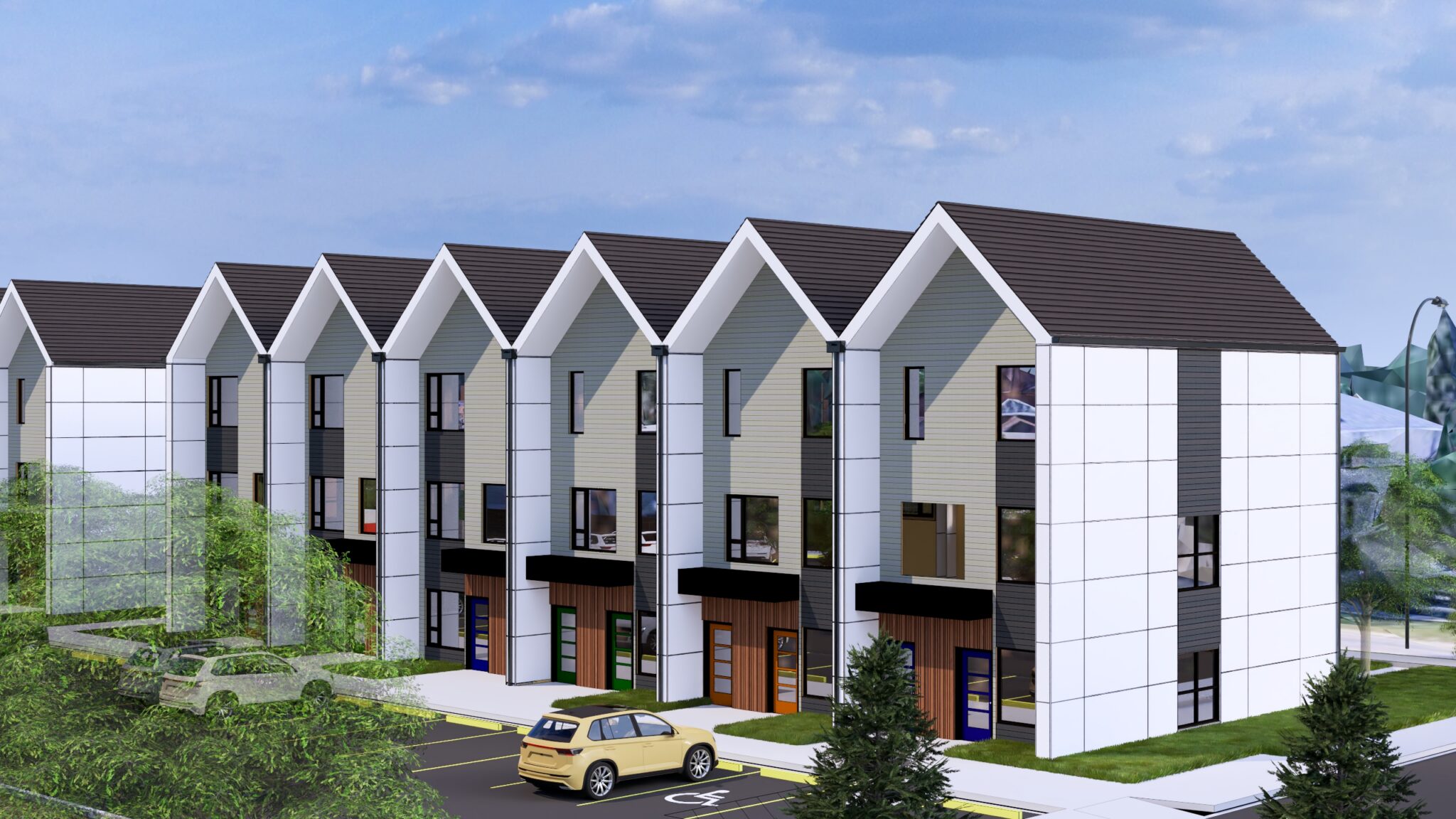
Right at Home Housing Society broke ground July 9 on the development in Kiniski Gardens. It's a townhome community, 34 three-bedroom units and 34 one-bedroom units, on land that was set aside decades ago for a school that never got built. Residents will be within walking distance of transit, schools, parks, and the Mill Creek Ravine.
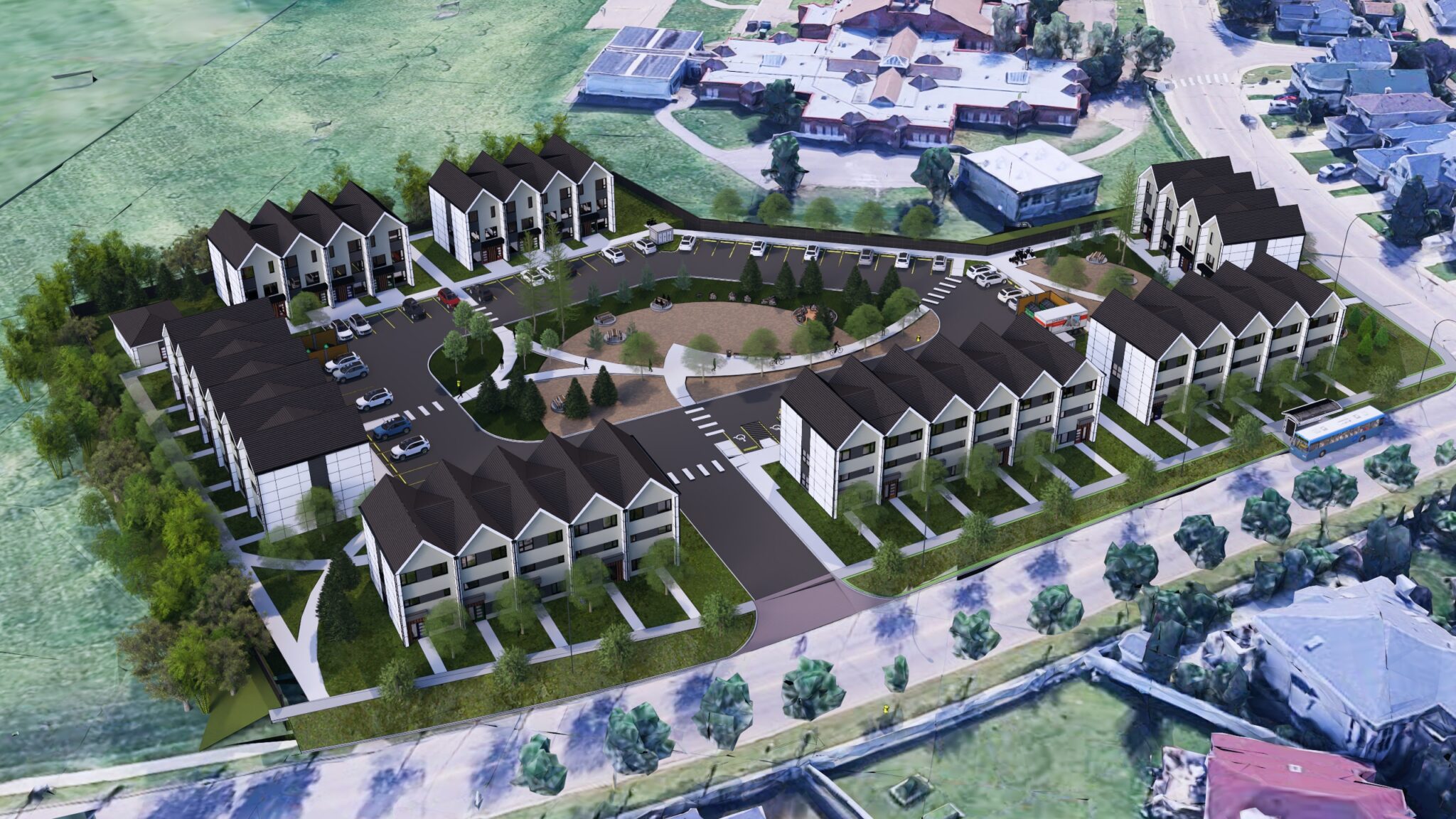
What's being built at Kiniski Gardens
The project is worth $23.6 million. The 34 three-bedroom units are aimed at families; the 34 one-bedroom units at singles and couples. The City is contributing the land, valued at $2.5 million, plus a $3.4-million construction grant through the federal Housing Accelerator Fund. The province added $5 million through its Affordable Housing Partnership Program.
"By investing in affordable housing, we're investing in people, fostering a sense of belonging," said Marisa Redmond, executive director of Right at Home Housing Society, the non-profit that will build and operate the homes.
The homes will stay affordable for at least 40 years, the longest term the City can legally lock in under Alberta's Municipal Government Act.
The bigger plan: 11 school sites, 1,300 homes
Kiniski Gardens is one piece of something much larger. Edmonton is developing 11 surplus school sites, parcels reserved years ago for schools that were never built, and handing them to affordable housing providers. The 11 sites are Belmont, Blue Quill, Caernarvon, Dunluce, Kiniski Gardens, La Perle, Lymburn, Miller, Overlanders, Summerlea, and Wedgewood Heights.
Across all of them, the plan is more than 1,300 new homes, with about 950, roughly 70 percent, on the affordable spectrum, from mixed-market rentals down to deeply subsidized units for low-income families.
The mechanism is simple. The land sat empty, owned by the City, generating nothing. Rather than sell it at full value, Edmonton is selling it to non-profit housing providers for a nominal price and passing the savings to tenants as lower rent. The providers were chosen through a competitive process announced in November 2025.
Where the money comes from
The engine is the federal Housing Accelerator Fund. Edmonton was awarded $175 million to run its housing plan from 2024 to 2026, later topped up to $192 million. Nearly $100 million of that is going to the 11 school sites, for buying and servicing land and for construction grants.
Fronting the land and grants is a deliberate bet. Shovel-ready sites pull in other money, so provincial and private dollars follow the City's. Kiniski Gardens shows it working: the City's land and grant helped unlock the $5 million from the province. Recently, more than $77 million in combined federal and provincial funding was announced for seven of the developments at once.
Not everyone has welcomed it
The program has drawn real opposition, and it's worth saying so plainly. Several of the 11 sites were green space that neighbours had used for years, and some communities fought when their local lot was slated for housing.
Wedgewood Heights, in the west end, pushed back hardest. Residents argued they were losing one of the few parks in a congested, single-access neighbourhood. "There is no other green space in this area," said Coun. Thu Parmar, who tried to stop the sale. "It is a one way in, one way out."
The City moved ahead anyway. Council had declared a housing emergency, and administration warned that revisiting each site individually would blow the federal deadlines and put the funding at risk. The trade-off is blunt: speed over consensus. On the common fear that affordable housing drags down nearby property values, the City points to research showing no consistent link when the housing is well-built and well-managed.
Who the homes are actually for
The 11 sites aren't building one kind of housing. They span the full range, and the mix is the point.
At Kiniski Gardens, it's working families and individuals. At other sites, it goes deeper into need: Win House is building 64 units for women, non-binary people, and children fleeing violence, which its CEO says will let the organization move people out of emergency shelters faster. Other developments target Indigenous families, seniors, and people with disabilities, the groups Edmonton's own housing assessment flags as most at risk of homelessness. That's the case for spreading the sites across established neighbourhoods rather than concentrating them: the need isn't concentrated either.
Why it matters for Edmonton
The City's numbers are stark. It estimates one in four renter households, and one in three Indigenous renter households, are in core housing need, paying too much, living in crowded conditions, or unable to afford somewhere better.
Against that, 68 homes in Mill Woods is a small step. The program behind it is not. Whether all 1,300 homes arrive on schedule depends on the same funding deadlines and construction timelines that govern every build like it. But at Kiniski Gardens, the shovels are in the ground.
Construction is underway. More on the program is at edmonton.ca/AffordableHousing.
Sources:
City of Edmonton, news release on the Kiniski Gardens groundbreaking, July 9, 2026, with statements from Mayor Andrew Knack and Right at Home executive director Marisa Redmond
Federal statement from Minister Eleanor Olszewski; provincial statement from Minister Nathan Neudorf
City of Edmonton council report FCS02729, Surplus School Sites – Sale or Lease of Land Below Market
City of Edmonton, Housing Accelerator Fund program details (edmonton.ca)
Statements from Coun. Thu Parmar and Win House CEO Leslie Allen








Comments
Conversation