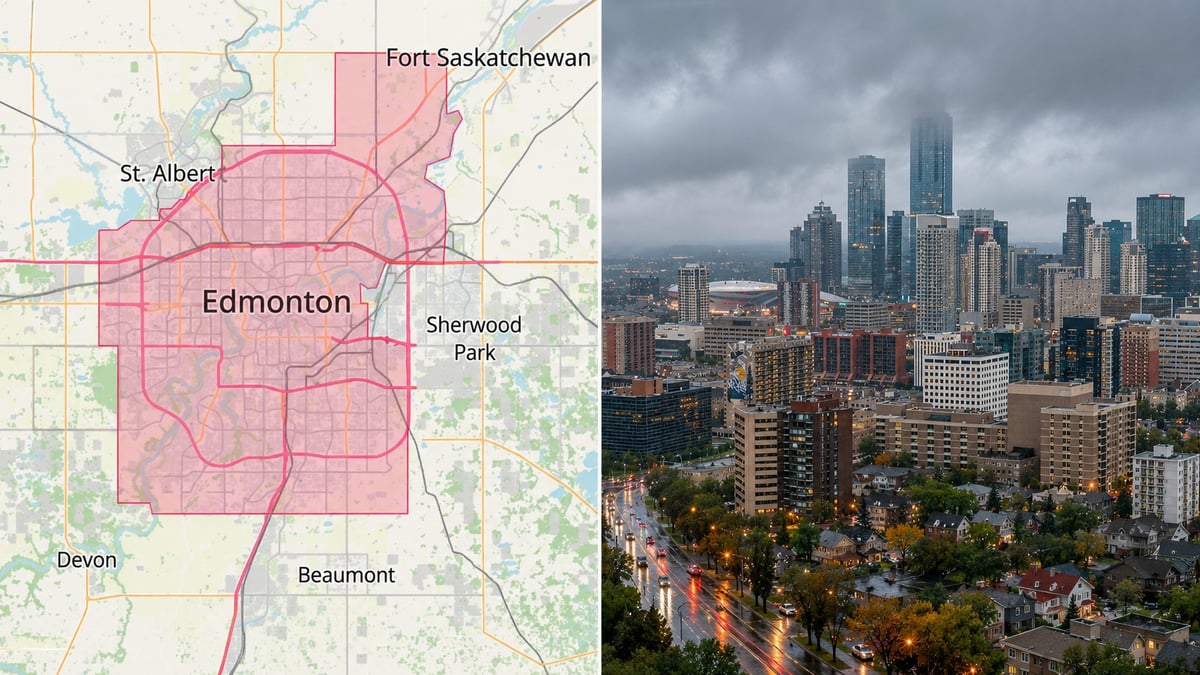
Edmonton got more rain in one weekend than it typically receives in the entire month of June. The region's stormwater system could not keep up and neither could EPCOR's phone lines.
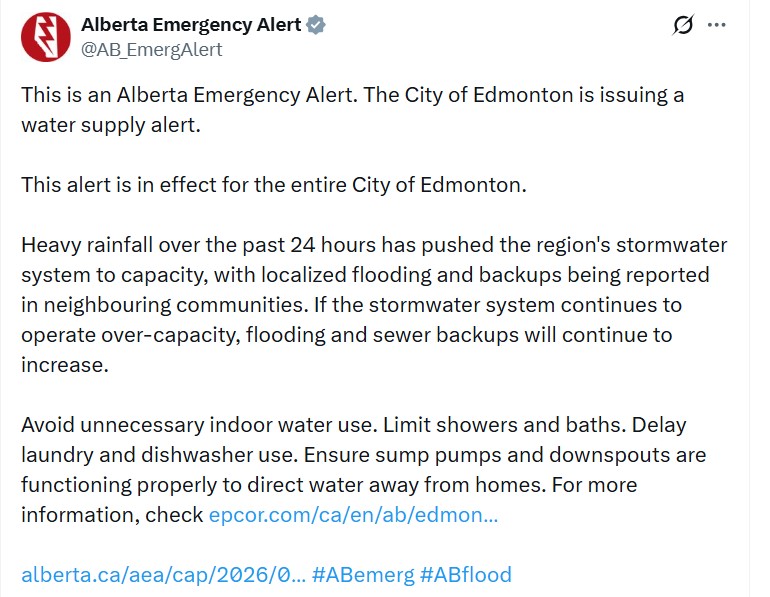
The City of Edmonton issued an Alberta Emergency Alert at 8:55 p.m. Sunday covering the entire city, ordering residents to reduce non-essential water use immediately. The alert is still in effect Monday morning. Environment Canada confirmed an intense weather system brought widespread heavy rainfall across northern and central Alberta on June 20 and 21. Storm totals as of 4 a.m. Monday tell the story: Elk Island National Park received 133 mm. Stony Plain received 123 mm. Edmonton city recorded 95 mm. Villeneuve recorded 95 mm. Edmonton International Airport received 73 mm.
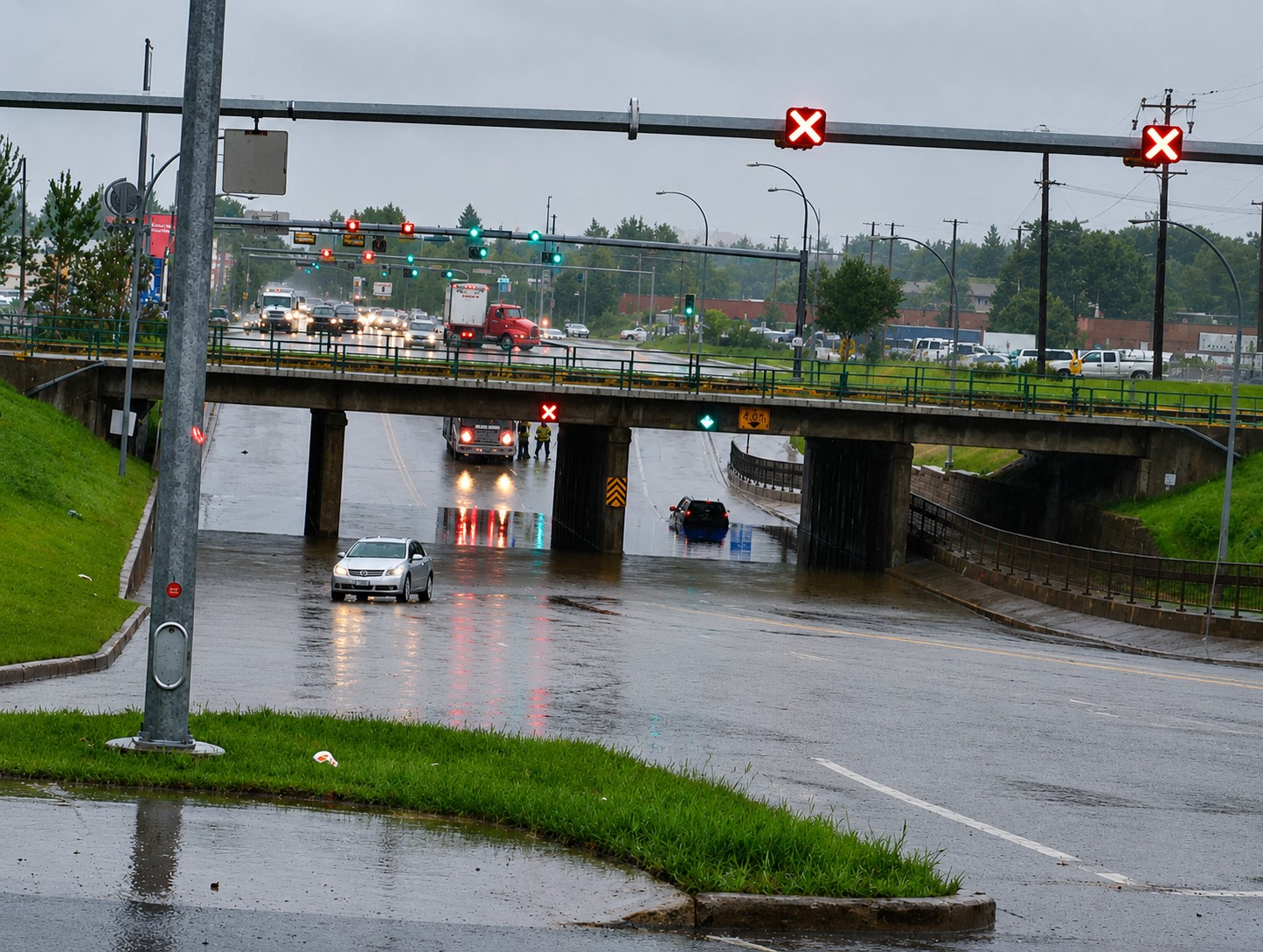
EPCOR received more than 700 calls for service on Sunday alone flooding concerns, water pooling, and sewer backups reported from across the city before the emergency alert had even been issued.
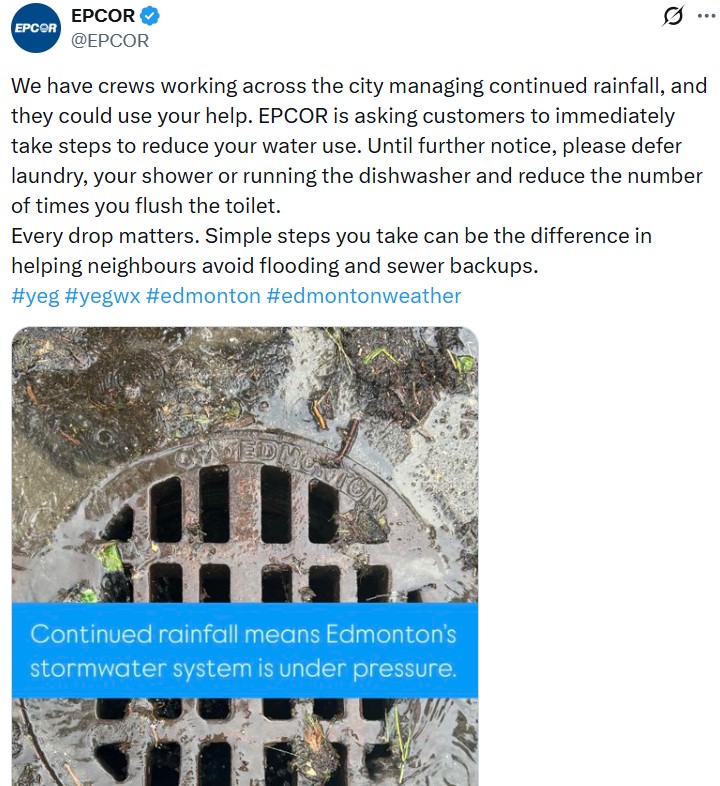
"We have crews working across the city managing continued rainfall, and they could use your help," EPCOR said in a statement Sunday. "Every drop matters. Simple steps you take can be the difference in helping neighbours avoid flooding and sewer backups."
Every community under alert right now
The alert covers more than Edmonton. Nine surrounding communities are under the same or similar advisories:
St. Albert. Leduc. Beaumont. Parkland County. Morinville. Westlock. Stony Plain. Barrhead. Leduc County.
If you live in any of these communities, the instructions below apply to you.
What to stop doing right now
The city's alert is specific:
Avoid unnecessary indoor water use. Limit showers and baths keep them as short as possible if unavoidable. Delay laundry until the alert is lifted. Delay dishwasher use until the alert is lifted. Reduce the number of times you flush the toilet. Ensure sump pumps and downspouts are directing water away from your home.
Every litre that goes down a drain right now enters a system already running past capacity. When the system cannot absorb that volume, it backs up and the path of least resistance is into your home through floor drains, toilets, and basement connections. This is not a precautionary alert. Backups are already being reported across the city.
What is happening to the North Saskatchewan River
The rain's effect extends beyond the storm sewer network. As of noon Monday, the North Saskatchewan River was flowing at approximately 1,050 cubic metres per second through Edmonton roughly double the speed recorded 48 hours earlier. The river also rose approximately 1.5 metres over that same period.
Alberta Environment issued a high streamflow advisory Monday for the North Saskatchewan River and its tributaries between Rocky Mountain House and the Saskatchewan border. Water levels may rise an additional half-metre before the river peaks late Monday or early Tuesday. No river-related flooding was expected at Edmonton as of Monday afternoon, but conditions are being closely monitored.
What the stormwater ponds are doing
Stormwater ponds the retention basins visible throughout Edmonton's newer neighbourhoods are doing exactly what they were designed for right now. Several are visibly overflowing or near capacity, including the pond in southwest Edmonton's Keswick neighbourhood and a facility near Manning Drive in the northeast.
"These ponds are doing their most important job right now, collecting excess rainwater, slowing its entry into the system and improving the quality of water that will eventually enter the North Saskatchewan River," EPCOR said.
The ponds are not malfunctioning. They are full because the rainfall volume is extraordinary. If a stormwater pond near your home is overflowing, do not enter the water or allow children near it stormwater ponds are not safe for any use under any conditions, and the water level and current during an overflow event makes them significantly more dangerous than usual.
What to check around your home right now
Two immediate checks:
Your sump pump. Confirm it is running and discharging properly. If it is overwhelmed or not functioning, water will accumulate around your foundation faster than it can be removed. If your sump pump discharge is running into a storm drain connection that is backed up, redirect the hose to discharge onto your lawn or away from the building.
Your downspouts. Make sure they are directing water away from your home not pooling against the foundation and not discharging into already-backed-up street drains.
If you are already seeing backup signs
Do not wait if you see any of these:
Gurgling sounds from drains or toilets when nothing is running. Slow draining across multiple fixtures simultaneously. A sewage smell coming from floor drains. Water or sewage appearing in a basement floor drain without being used.
Call EPCOR to report basement flooding at 780-412-4500. Do not use any water. Contact your home insurance provider immediately many Alberta home policies include sewer backup coverage, though terms vary by policy. Take photos before cleaning anything. Keep receipts for any emergency repairs.
When will the alert be lifted
The rain is expected to lighten Monday before the system weakens and pulls away from Alberta later in the day. The alert will remain in effect until Edmonton and surrounding communities confirm their stormwater systems have returned to normal operating capacity. Check epcor.com/ca/en/ab/edmonton.html and the Alberta Emergency Alert feed at alberta.ca/alberta-emergency-alert for updates.
For life safety emergencies call 911. For basement flooding call EPCOR at 780-412-4500.
Sources:
Alberta Emergency Alert, City of Edmonton water supply alert, June 21, 2026 at 20:55 HRS (alberta.ca)
EPCOR, Edmonton flooding statement, June 21-22, 2026 (epcor.com)
EPCOR, Basement flooding guidance page (epcor.com/ca/en/ab/edmonton/outages/emergencies/basement-flooding.html)
Environment Canada, storm total rainfall data, June 22, 2026 at 4 a.m. MDT
Alberta Environment, North Saskatchewan River high streamflow advisory, June 22, 2026
CBC News, Deluge of rain leads to flooding, water restrictions in Edmonton and surrounding communities, June 22, 2026 (cbc.ca)
Global News, Emergency alerts across Edmonton area as rainfall pushes stormwater systems to capacity, June 22, 2026 (globalnews.ca)









Comments
Conversation