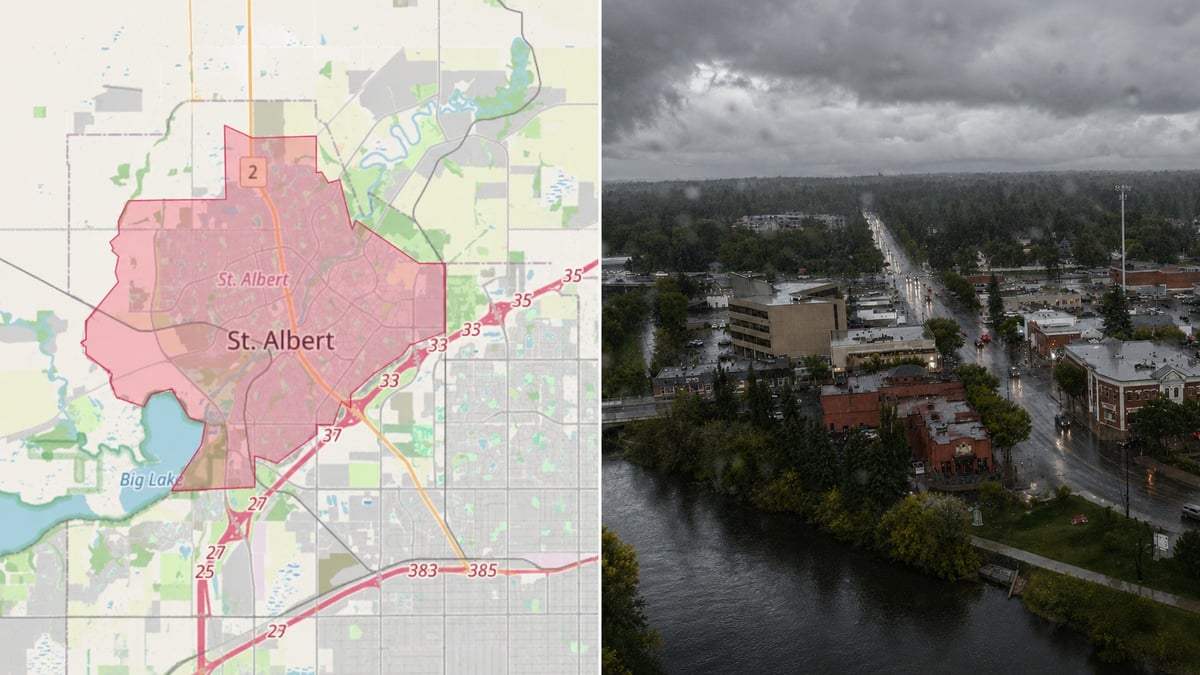
This is not a precaution. St. Albert's wastewater system is at capacity right now and sewer backups are already happening in parts of the city.
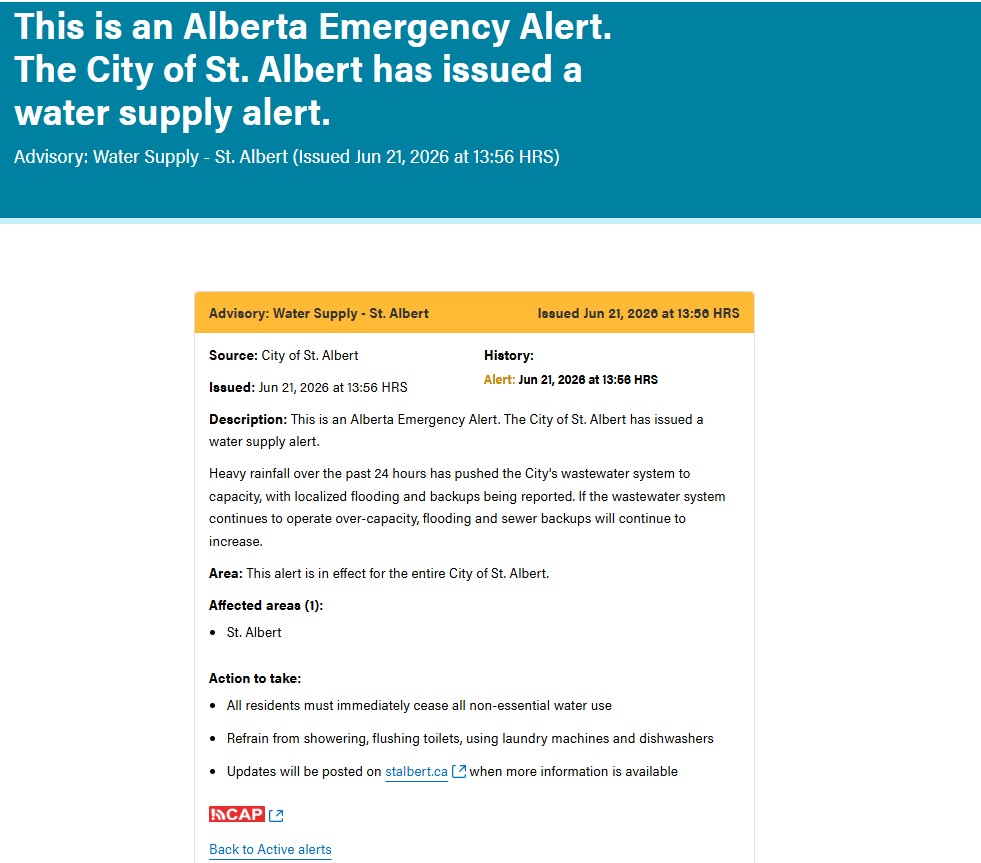
The City of St. Albert issued an Alberta Emergency Alert at 1:56 p.m. on June 21, 2026, ordering every resident in the city to immediately stop all non-essential water use. The alert covers the entire City of St. Albert. It is in effect until further notice.
Beaumont and Leduc County issued identical alerts at the same time all three municipalities were pushed to the same situation by heavy rainfall over the past 24 hours.
What you must stop doing right now
The city's instructions are direct:
Do not shower. Do not flush toilets unless absolutely necessary. Do not run laundry machines. Do not run dishwashers. Do not use any non-essential water.
Every litre of water that goes down a drain in St. Albert right now adds to a wastewater system already running beyond its capacity. When the system is this stressed, backing up is not just a risk it is already happening in parts of the city. The more residents continue using water normally, the more homes are at risk of sewage backing up into their basements and bathrooms.
This is the kind of situation where one extra load of laundry in your neighbourhood genuinely makes things worse for your neighbours.
What is happening to the system
St. Albert's wastewater infrastructure handles everything that goes down every drain in the city nearly 4,000 sewer manholes, 300 kilometres of sewer mains, 9 wastewater lift stations, and connections to more than 19,000 individual properties. All of it flows to the Arrow Utilities Wastewater Treatment Plant.
When heavy rain falls faster than the system can process it, stormwater infiltrates sanitary sewer lines through joints, cracks, and connections — a process called inflow and infiltration. The result is a surge of volume the system's pipes and lift stations cannot handle simultaneously. The city is not dealing with a broken pipe or a failed pump. It is dealing with a system overwhelmed by rainfall volume across the entire network at once.
The longer residents continue using water normally, the more pressure builds in the lines, and the more likely sewage is to find the path of least resistance — which is back into homes through floor drains, toilets, and basement connections.
What a sewer backup actually looks like and what to do
If you are already seeing these signs, do not wait to call:
Gurgling sounds coming from drains or toilets when water is not running. Slow draining fixtures across multiple locations in your home simultaneously. A sewage smell coming from floor drains. Water or sewage appearing in your basement floor drain or toilet without being flushed.
These are early warning signs that sewage is backing up toward your home. If you see any of them, contact St. Albert Public Works at 780-459-1557 immediately. Do not use any water. Do not flush. City crews will assess the mainline upstream and downstream from your home first to determine whether the problem is in the city's lines or your service connection.
If sewage has already entered your home, do not attempt to clean it up without proper protective equipment. Sewage contains bacteria and pathogens. Contact your home insurance provider as soon as possible many Alberta home insurance policies include sewer backup coverage, though coverage varies significantly by policy.
This has happened in St. Albert before
Heavy rainfall overwhelming St. Albert's wastewater system is not a new situation. In June 2024, significant rainfall caused basement flooding and sewer backups across multiple St. Albert neighbourhoods. The Sturgeon Heights, Braeside, and Akinsdale communities saw the heaviest damage and disruption in that event.
The system's vulnerability during intense rainfall reflects a challenge common to older wastewater infrastructure across Alberta systems originally built to handle a smaller city's load, now serving a significantly larger population than they were designed for. St. Albert has grown substantially over the past two decades. The infrastructure has been expanded and maintained, but extreme rainfall events can still push the network beyond its design capacity when the volume hits fast enough.
What you can do to help right now
Beyond stopping non-essential use:
Check that your sump pump is running and discharging properly. Clear any leaves or debris from drain grates and catchbasins near your home. Do not pour anything additional down any drain. If you have a backwater valve installed, confirm it is functioning — a backwater valve is your primary defence against sewage entering your home through the floor drain.
If you do not have a backwater valve and have experienced basement flooding before, contact a licensed plumber about installation after this event passes. The City of St. Albert has historically offered subsidy programs for backwater valve installation check stalbert.ca for current program availability.
How long will this last
No timeline has been given. The alert remains in effect until the city confirms the wastewater system has returned to normal operating capacity. Updates will be posted at stalbert.ca as conditions change.
Check stalbert.ca and the Alberta Emergency Alert feed at alberta.ca/alberta-emergency-alert for the latest updates.
For water-related emergencies and to report sewer backups contact St. Albert Public Works at 780-459-1557.
Sources:
Alberta Emergency Alert, City of St. Albert water supply advisory, June 21, 2026 at 13:56 HRS (alberta.ca/aea/cap/2026/06/21)
City of St. Albert, Wastewater infrastructure page (stalbert.ca/home/utilities/wastewater)
City of St. Albert, Stormwater management page (stalbert.ca/home/utilities/stormwater)
City of St. Albert, Sewer issues page (stalbert.ca/home/utilities/wastewater/sewer-issues)
CBC News, Central Alberta municipalities order stop of non-essential water use, June 21, 2026 (cbc.ca)
St. Albert Gazette, Rainfall in St. Albert floods basements, causes sewer backups, June 2024 (stalbertgazette.com)







Comments
Conversation