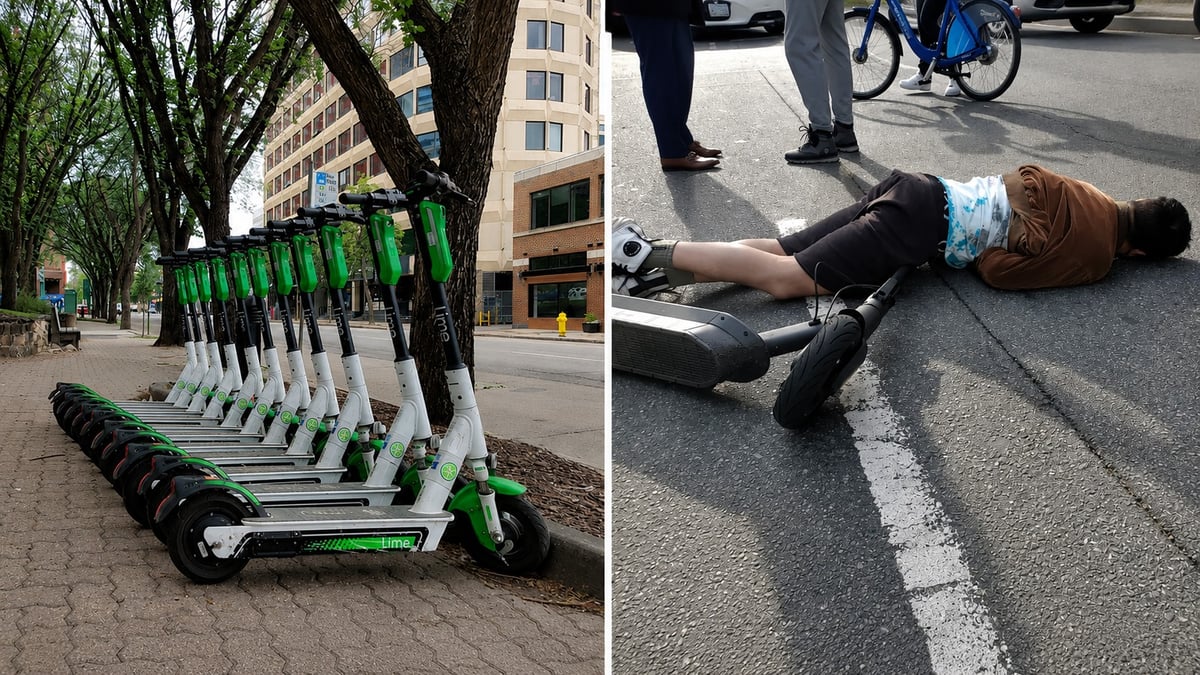
Almost nobody wearing a helmet. A quarter of them impaired. The median age, 28.
That's the profile of the e-scooter injuries filling Alberta emergency rooms, and there are a lot more of them than there used to be.
Alberta Health Services recorded 3,049 emergency room and urgent care visits for e-scooter injuries across the province in the most recent reporting year, up 33 per cent from 2,282 the year before. Edmonton accounted for 1,198 of those, up sharply from 813. The city now leads the province.
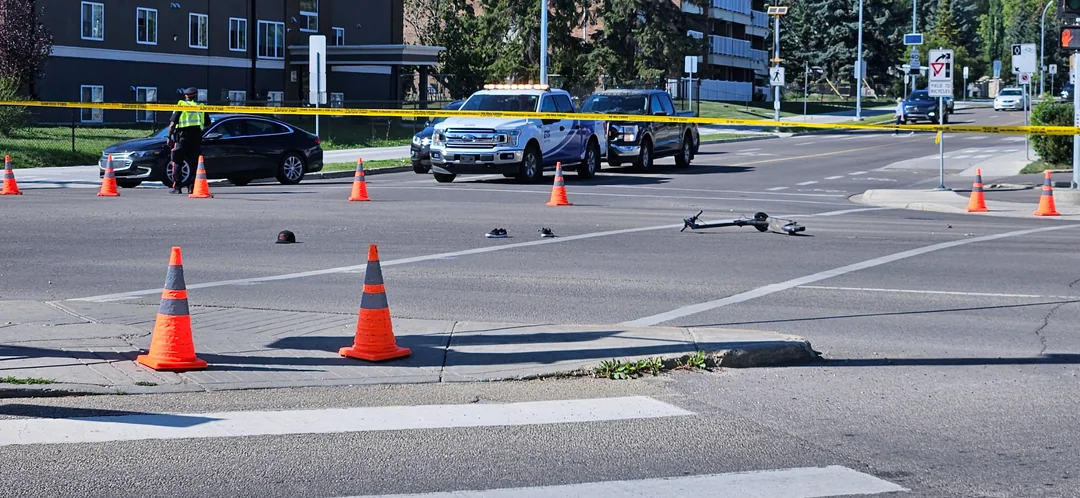
The kids
The steepest increase isn't among adults.
The Stollery Children's Hospital in Edmonton treated 136 kids for e-scooter injuries in the most recent year, more than double the 61 it saw the year before. In both Edmonton and Calgary, you have to be 18 to ride a shared e-scooter.
"The data on the children is really shocking, because it's technically illegal for them to be on them as a driver," said Dr. Brian Rowe, an emergency physician and University of Alberta researcher who has spent two summers doing roadside surveys of e-scooter riders in Edmonton.
Some of those injuries come from a behaviour researchers keep documenting: adults riding with a child on the scooter. A researcher on the Edmonton observational study put it bluntly, saying parents are effectively using their young children as airbags, because when a scooter stops suddenly, the adult's weight comes down on the kid. In Calgary, riding with a child as a passenger carries a $75 fine.
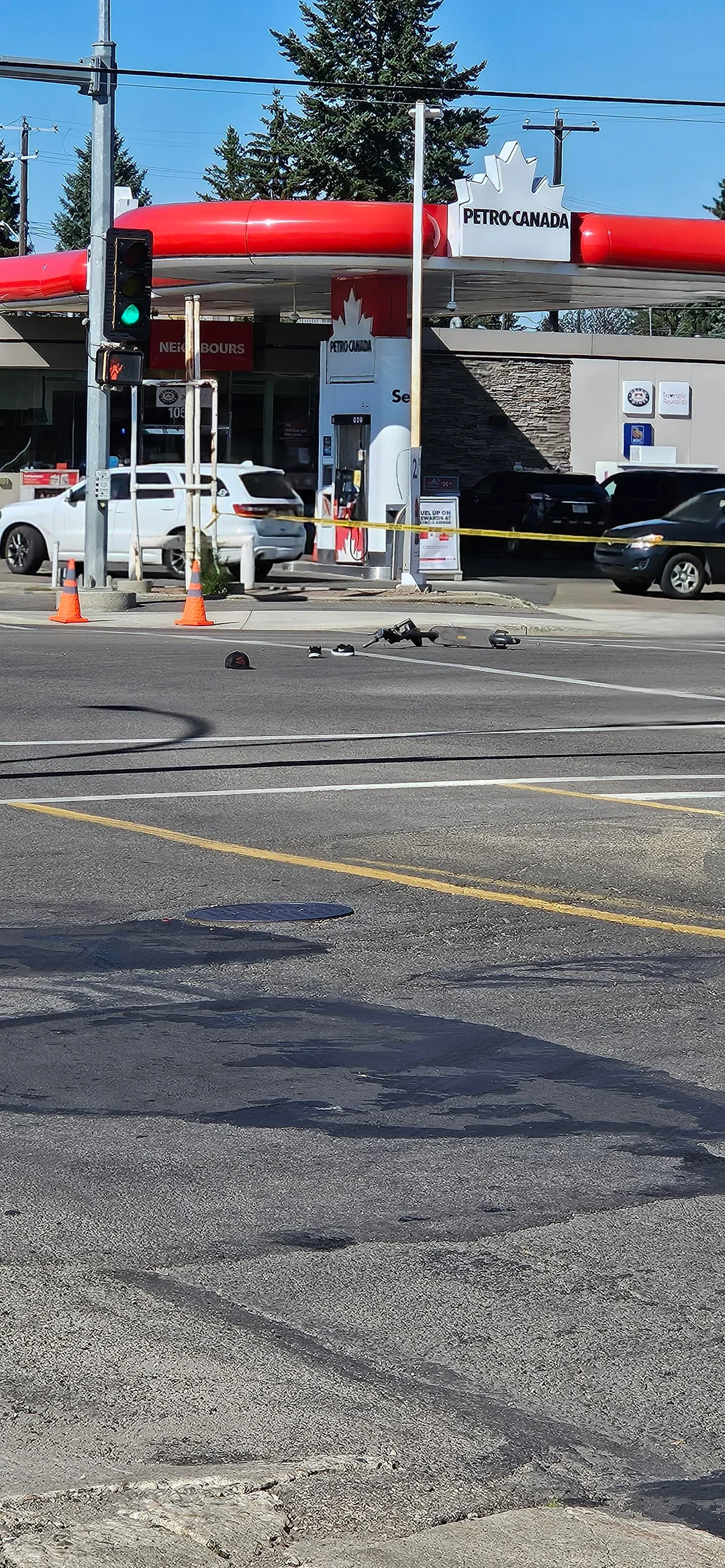
These are not scrapes and bruises
A study published last year in the Canadian Journal of Surgery, co-authored by Rowe and Dr. Erin Bristow, an emergency physician at the University of Alberta Hospital, looked at 759 e-scooter injury presentations in Edmonton over three summers. The findings:
62 per cent of injured riders had more than one injury
32 per cent had fractures
17 per cent had head injuries
20 per cent arrived by ambulance
9 per cent needed surgery within a month
30 per cent required follow-up care
Only 2 per cent were wearing a helmet
More than a quarter were impaired
The median age was 28, with a roughly even split between men and women.
"These are young, young people, sort of prime of their lives, having these injuries," Bristow said. She's not against e-scooters. Her argument is narrower: people don't understand how badly they can be hurt on one. "It's not that I think we cannot use scooters. I think that it's just that we need to do it in a safer manner. Because the injuries that we're seeing with these can be life-changing."
Rowe was blunter. "Speed kills, impairment kills, lack of a helmet kills, riding with somebody else kills," he said. There have been e-scooter deaths in Alberta.
One in five injured riders arrives by ambulance, and that has a cost beyond the person on the stretcher. "We don't have enough ambulances," Bristow said. "We're always waiting for ambulances, so that's a significant burden to the health-care system."
Why Edmonton in particular
Bristow can't say for certain why Edmonton's numbers climbed the way they did. But she points to one likely factor: privately owned e-scooters.
Rental scooters are speed-limited by the companies that run them. Private ones often aren't. "The risk of injury with those is very, very high," she said.
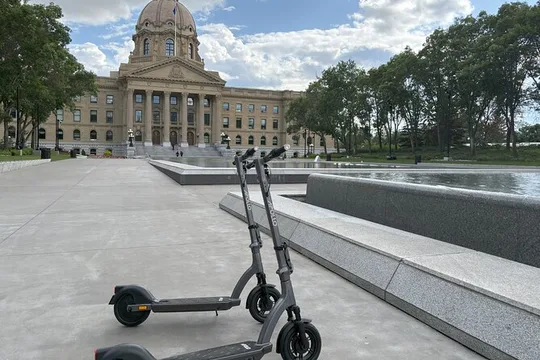
What's actually legal in Alberta
The rules depend on where you are and what you're riding, and most riders don't fully know them.
Privately owned e-scooters are not permitted on sidewalks or roadways under provincial rules, and in Edmonton they remain banned on city property. The scooters legally allowed on Edmonton streets are the shared rentals, which are speed-controlled and geofenced by the operators. Rowe notes private scooters have become more common in surrounding communities like St. Albert and Stony Plain.
For shared e-scooters in Edmonton and Calgary, riders must be 18 or older. Helmets are not mandatory for adults in Alberta, which is a large part of why the helmet number in the study is what it is. The researchers behind the study recommended governments consider legislative changes, including mandatory helmet laws, tighter speed control, and substance-use rules.
If you crash, who pays?
Here's a question most riders never think about until they're in a hospital bed.
Your auto insurance almost certainly doesn't cover you on an e-scooter, because it isn't a motor vehicle under your policy. Home or tenant insurance may cover some liability, but it varies by policy and often won't cover injuries you cause to someone else while riding. Rental operators require you to accept terms of service before your first ride, and those agreements typically place responsibility for injuries on the rider.
That means if you hit a pedestrian, or a driver hits you, the liability picture is murky, and it's the sort of thing that gets sorted out slowly and expensively after the fact. Riding impaired can also void coverage you might otherwise have had, and impairment showed up in more than a quarter of the injured riders in the Edmonton study. Worth a look at your own policy before the next time you tap a scooter awake.
What actually reduces the risk
The University of Alberta's Injury Prevention Centre's advice is short: wear a helmet, ride alone, ride sober.
It's not complicated, and it lines up almost exactly with what doctors are seeing in the data. AHS adds one more, ride away from traffic where you can, since physicians are reporting more collisions between e-scooters and vehicles.
Rowe suspects the real injury count is higher than the numbers show. Plenty of people get hurt and go to a family doctor or a physiotherapist instead of an ER. Those cases never make it into the data.
Sources:
Alberta Health Services, e-scooter injury data, emergency department and urgent care visits by zone and fiscal year
Bristow E, Marin J, Couperthwaite S, Picard C, Yang E, Rowe BH. "Electric scooter injury and trauma in Edmonton: a multicentre prospective and retrospective observational study." Canadian Journal of Surgery, April 2025
Dr. Erin Bristow, emergency physician, University of Alberta Hospital
Dr. Brian Rowe, emergency physician and researcher, University of Alberta
Injury Prevention Centre, University of Alberta
City of Edmonton and City of Calgary e-scooter regulations









Comments
Conversation