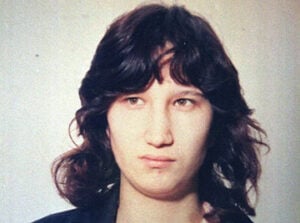
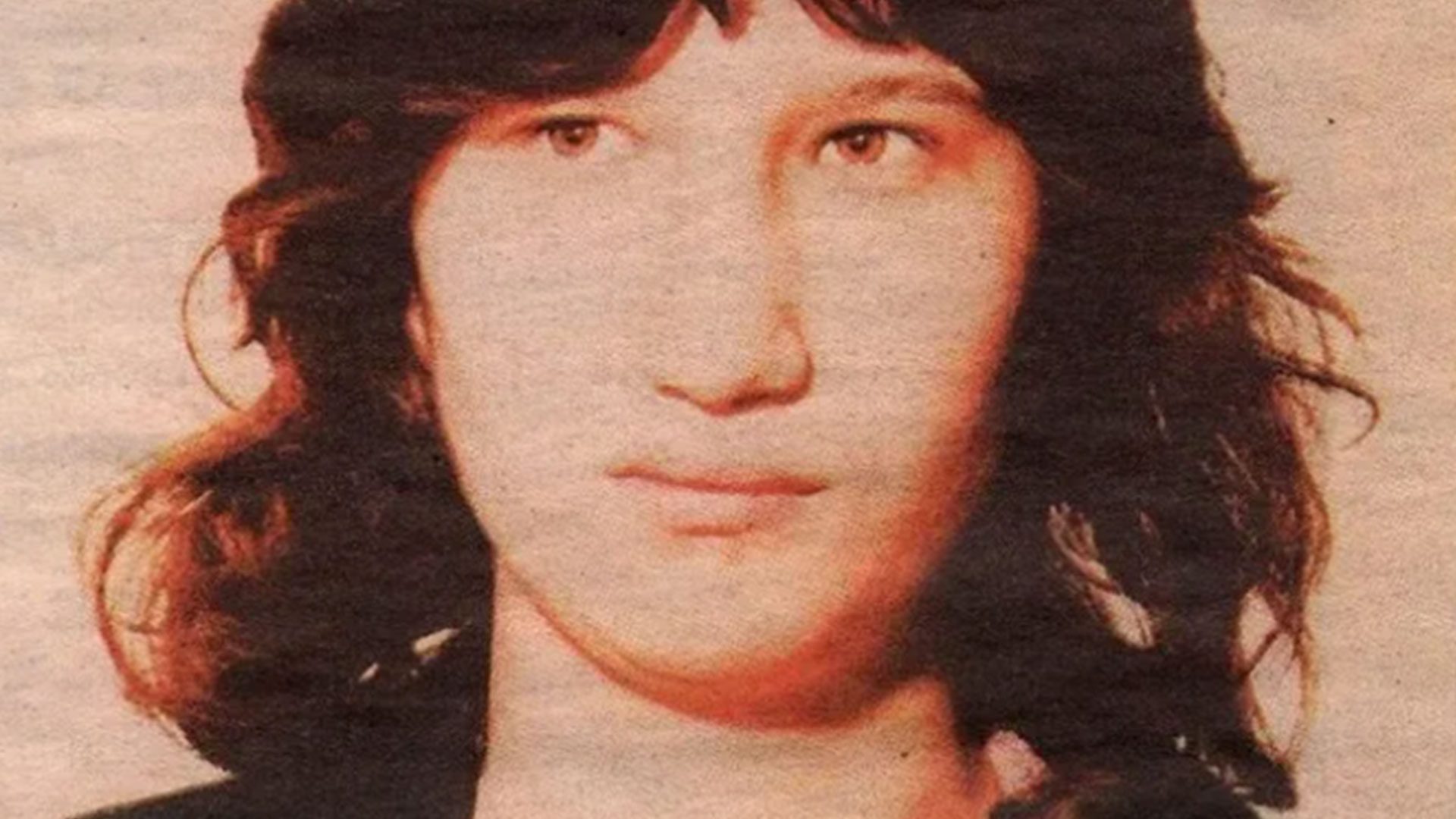
Joanne Ghostkeeper's family couldn't reach her over Christmas 1996. On Christmas Day they called police, who went to her apartment at 34 Street and 119 Avenue and found her body.
She was 24. Cree. A mother of two.
Nearly 30 years later, Brayan Boucher has been sentenced to life in prison with no chance of parole for 25 years.
What the jury found
Boucher was 22 in December 1996. He had met Ghostkeeper once or twice before.
He went to her apartment on December 23. There were no signs of forced entry. Prosecutors said an altercation occurred, and Boucher strangled her with her own bathrobe belt and a shoelace while sexually assaulting her, in the Crown's words violating her sexual integrity. He locked the apartment door behind him when he left.
An autopsy the day after she was found determined she died of ligature strangulation.
A jury found Boucher guilty of first-degree murder. He maintained throughout the trial that he did not kill her. Justice Marta Burns said the verdict meant the Crown had established every element of first-degree murder beyond a reasonable doubt, including intent.
Burns sentenced him on Thursday, July 30, at the Court of King's Bench in Edmonton.
"Sentence cannot repair that kind of loss," Burns said. "The facts are horrific."
The case sat for 26 years
Numerous exhibits were tested forensically over the decades. None produced a match.
On October 22, 2022, the RCMP forensic laboratory re-examined the exhibits and generated a male DNA profile. It was linked to Boucher, and Edmonton police arrested him on June 14, 2023.
"This was a tragic file that has plagued them with grief and unanswered questions for 27 years," Det. Kevin Harrison of the EPS historical crimes section said at the time. He credited the tenacity of the RCMP lab specialists and the EPS investigative team.
Boucher's DNA profile is now in the national data bank and will be referenced against other historical forensic files.
Her mother spent years trying to get someone to look
Mary Willier raised Joanne's son and daughter. They are now in their thirties.
In 2018, more than two decades after the killing, Willier started a GoFundMe to hire a private investigator. She had lost confidence that police would solve it.
"We only want to be able to sleep without dreams tormenting us," she wrote. "I believe that the homicide department has given up on ever solving this mystery, therefore I would like to be able to further the investigation by hiring a private investigator of my own choosing."
Willier, from Sucker Creek First Nation, had long pushed for a national inquiry into missing and murdered Indigenous women and girls.
When Boucher was charged in 2023, she told CBC News she hoped he would stay behind bars.
"I hope he doesn't walk on the other side of the walls again, because he did his 27 years of walking," she said.
"All these Indigenous ladies that are gone. Us Indigenous people, we don't forget our children. We try to keep them as good as we can."
Willier died before the case concluded. So did Ghostkeeper's father and both her brothers.
Her children asked for her name back
A publication ban protected Ghostkeeper's identity throughout the jury trial. It was lifted July 30 at the request of her two children.
Her cousin Sheila Kirsch read a victim impact statement in court.
"This man took away a beautiful mother, a caring mother," she said. "All her children would survive without her." Then, pointing and speaking directly at Boucher, she added: "You had over three decades of being free."
She became too emotional to finish. After leaving the podium she walked past him and called him a loser.
Crown prosecutors read a statement from Ghostkeeper's daughter, Martina, which noted the family stopped celebrating Christmas until 2024.
"I will always remember my mom, and now she will rest in peace," it said.
Burns said the victim impact statements spoke to the grief and lasting collateral damage the murder caused.
What the Gladue report said
The court heard a Gladue report on Boucher's background. Those reports tell a judge about an Indigenous offender's circumstances, including the effects of colonialism.
The report said Boucher was born in Ontario and experienced sexual and physical abuse, poverty, substance abuse, intergenerational trauma and exposure to domestic violence.
Burns said the court recognized those systemic factors but that they neither changed the mandatory sentence nor diminished the gravity of the offence.
Boucher, in an orange jumpsuit, shook his head when Burns asked whether he wished to address the court. Some of his family were in the room. As he was escorted out, a woman shouted "I love you," then, "There's no justice."
The rest of the sentence
A first-degree murder conviction carries a mandatory life sentence with no parole eligibility for 25 years.
Burns ordered Boucher to provide a DNA sample, imposed a lifetime firearms ban, and placed him on the national sex offender registry for life.
He has been in custody since June 2023, so he can apply for parole in June 2048.
The wider count
Statistics Canada data from 2021 shows Indigenous women make up 24 per cent of female homicide victims in Canada, a share that has held roughly steady for a decade.
The Native Women's Association of Canada has documented 1,300 cases of murdered or missing Indigenous women through its tracking map. The earliest suspicious death recorded there is from 1929.
Support
The MMIWG Crisis Line is available 24 hours a day at 1-844-413-6649 for anyone affected by the loss of a missing or murdered Indigenous woman, girl or two-spirit person.
The Hope for Wellness Help Line offers counselling for Indigenous people across Canada at 1-855-242-3310, with support in Cree, Ojibway and Inuktitut on request.
Support for anyone who has been sexually assaulted is available through crisis lines and local services listed on the Government of Canada website and the Ending Violence Association of Canada database. Call 911 if you are in immediate danger.
Sources:
Court of King's Bench of Alberta, sentencing of Brayan Boucher, July 30, 2026
CBC News, "Man sentenced to life in prison for 1996 murder of Cree woman after DNA breakthrough," Jesmeen Gill, July 30, 2026: https://www.cbc.ca/news/canada/edmonton/man-sentenced-to-life-in-prison-for-1996-murder-of-cree-woman-after-dna-breakthrough-9.7291386
Edmonton Police Service news release, June 22, 2023
Statistics Canada, homicide in Canada, 2021
Native Women's Association of Canada, MMIWG tracking data


Comments
Conversation