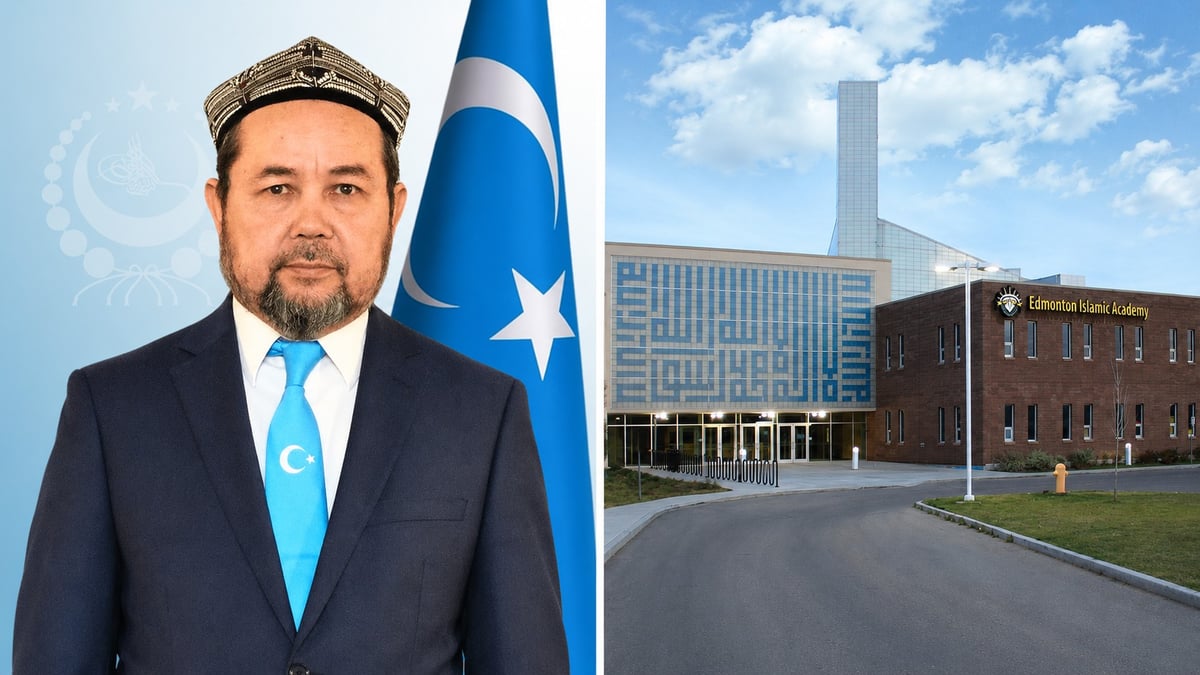
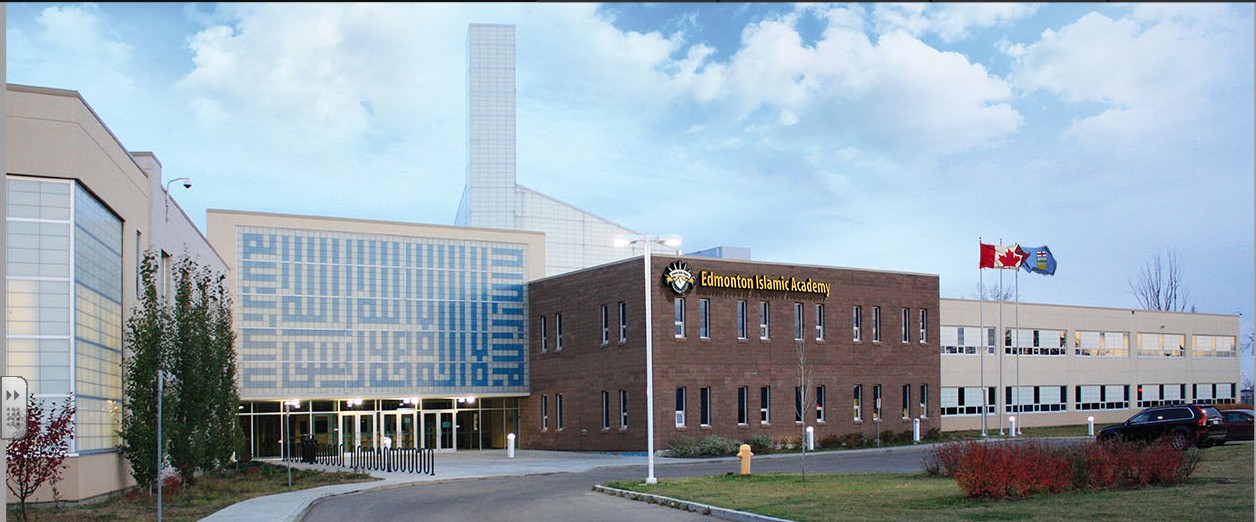
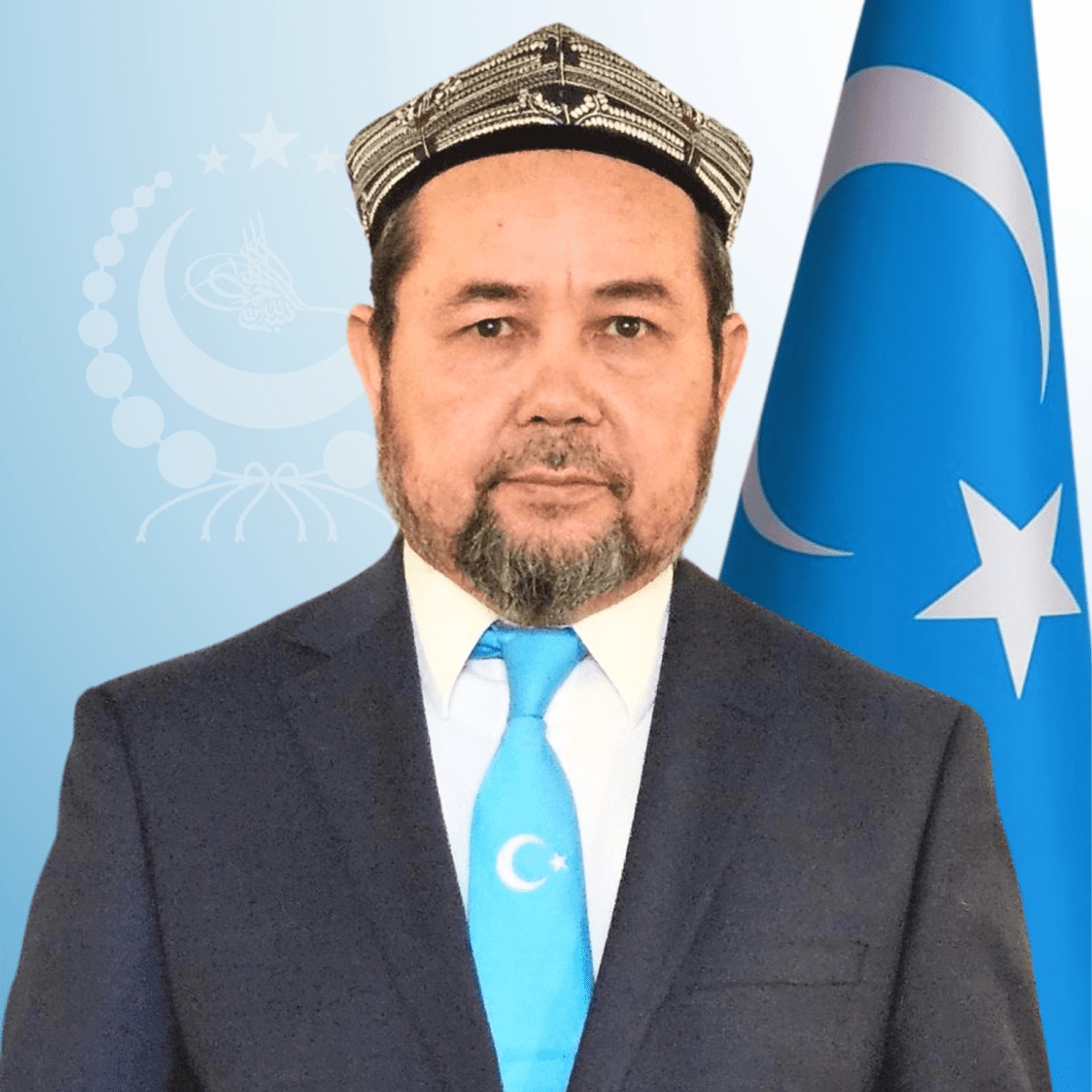
Abdulahat Nur drives children to the Edmonton Islamic Academy every morning. He has done this for more than 20 years. He came to Canada in 2001 from China, via Kyrgyzstan and Turkiye. He and his wife have four daughters in Edmonton.
He is also the Prime Minister of the East Turkistan Government in Exile.
Nur, 58, leads a diaspora political body formed by Uyghur independence advocates who seek self-determination for the region China administers as the Xinjiang Uyghur Autonomous Region. He was elected to the role in November 2023 at a gathering of the Uyghur diaspora in Washington, D.C. He leads from Edmonton.
"Our ultimate goal is independence of East Turkistan," he said. "Because without independence we cannot guarantee our living, we cannot guarantee our basic human rights."
The region
East Turkistan is the name Uyghur independence advocates use for a territory in China's northwest roughly the size of Iran. China absorbed it in 1949 following the communist revolution and administers it today as the Xinjiang Uyghur Autonomous Region.
The Uyghur people a predominantly Muslim Turkic ethnic group have lived there for centuries. The region produces roughly one-tenth of the world's aluminum and is a significant manufacturing base.
China's government says its policies in the region are aimed at combating extremism and improving living standards. Beijing disputes characterizations of its policies as genocide and describes its vocational training centres as voluntary facilities that have reduced terrorism in the region.
Western governments have reached different conclusions. Canada's Parliament recognized China's treatment of Uyghurs as genocide in 2022. The United States did so in 2021. A 2020 Canadian parliamentary subcommittee reported that China has detained Uyghurs in facilities witnesses described as concentration camps, subjected women to systematic sexual violence, separated children from families, forced Uyghurs into factory labour, and used invasive surveillance both inside the region and against diaspora communities abroad.
China has consistently rejected those findings.
Before Edmonton
Nur was born June 10, 1967, in Maralbexi County in what he calls East Turkistan. He became a teacher. In his history classes, he taught students that the region had not always been administered by China that Uyghurs had a distinct language, culture, and history.
He says the Chinese government learned of it. He was jailed multiple times. He described the cells as cramped rooms with 10 to 15 people, bread and water twice a day, no washroom.
"We were told that you are living because of the Chinese Communist Party," he said. "They were always trying to get you to quit your religion, to quit your background, your language."
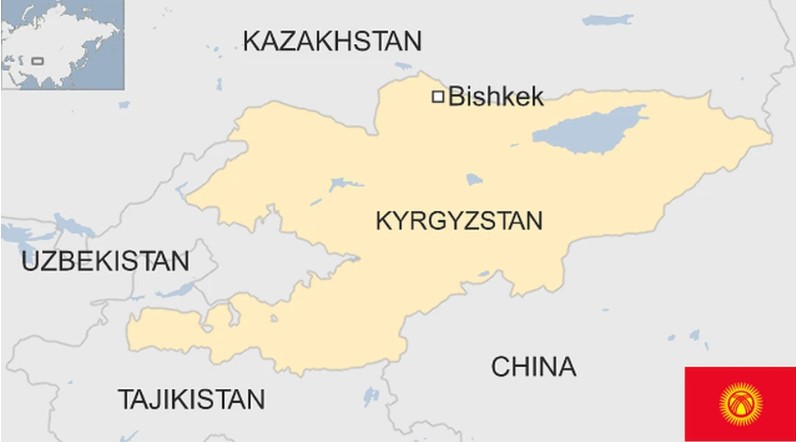
He fled to Kyrgyzstan in 1997. He says Chinese intelligence followed him there and placed his photograph on walls seeking his capture. In 1999 he left for Turkiye. He applied for refugee status through the United Nations in Ankara. It was granted. The UN told him little could be done for family members who remained Chinese citizens inside Chinese borders.
His children
Nur arrived in Canada in 2001. His wife reached Edmonton in 2005 after obtaining identity documents. Their three children remained in Uyghur territory with their maternal grandparents.
In 2006, the three children were found in wells near their grandparents' home. Their 11-year-old daughter survived. Their 10-year-old daughter and eight-year-old son did not.
Nur says a woman came to the grandparents' home presenting herself as an exchange student who could escort the children to Canada. He believes she was sent by Chinese intelligence. No official determination of how the children died has been made public. The couple's eldest child has never left China.
China's government has not publicly responded to Nur's account.
In Edmonton
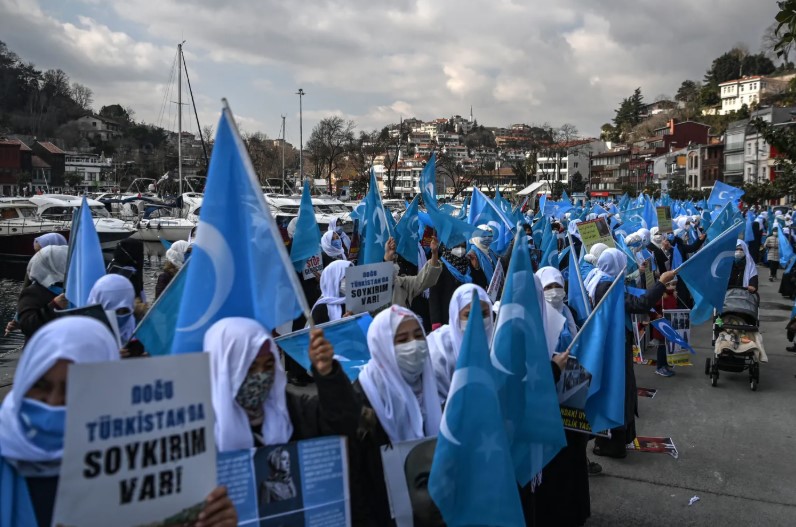
Nur has led the Alberta Uyghur Cultural Society since 2018. He attends international gatherings of the Uyghur diaspora and meets with government officials in North America and Europe. In April 2026, he led a demonstration in Edmonton marking the 36th anniversary of a 1990 uprising in the region.
"Canada must not remain silent while a genocide unfolds," he said that day.
The East Turkistan Government in Exile is currently seeking UN designation of the region as a non-self-governing territory a classification applied to 17 territories including Western Sahara and the Falkland Islands. Such a designation would require the UN to formally acknowledge the territory is not a willing part of the administering state. China holds a permanent seat on the UN Security Council and has consistently opposed international investigations into conditions in Xinjiang.
Asked whether he feels safe in Edmonton, Nur was direct.
"I feel danger. I think Chinese spies are everywhere. Chinese intelligence puts pressure on everybody to destroy Uyghur diaspora, East Turkic diaspora. But I think Canada's intelligence service is stronger than Chinese intelligence in Canada. So, if China did something against me, it would be a big problem for China."
Every morning he drives children to school in north Edmonton.
Sources:
East Turkistan Government in Exile — Edmonton Office (east-turkistan.net)
Wikipedia — Abdulahat Nur
India Tribune — ETGE protest Edmonton, April 6, 2026
American Thinker — Interview with Prime Minister Abdulahat Nur, May 2026
Canadian Parliament — Subcommittee on International Human Rights findings, 2020
U.S. State Department — Secretary Pompeo statement on Uyghur genocide, 2021
Government of Canada — Motion recognizing Uyghur genocide, February 2022






Comments
Conversation