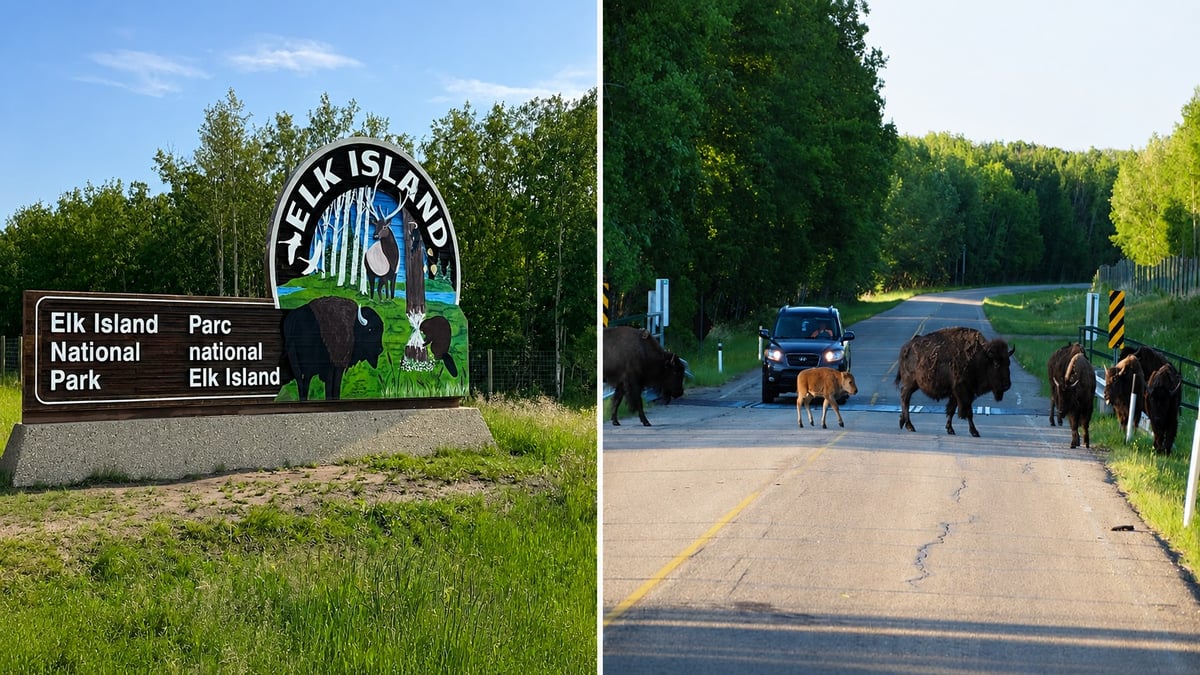
One of the Edmonton area's most popular escapes is off-limits for now.
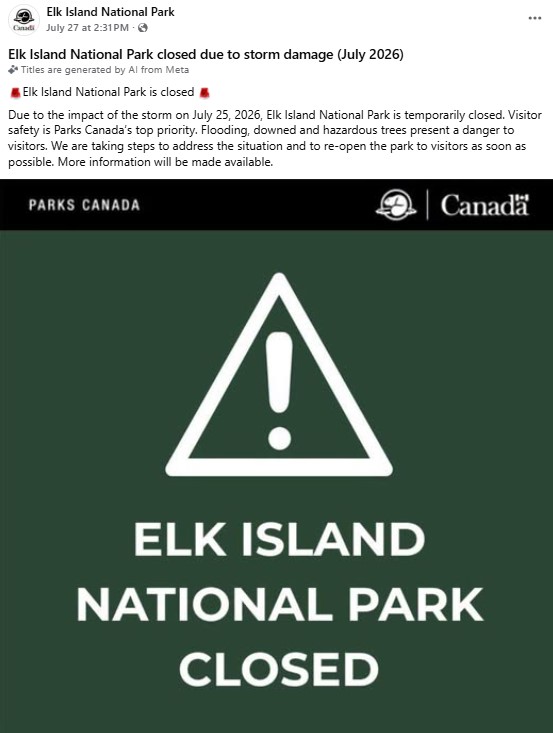
Elk Island National Park, the bison and bird sanctuary about 45 kilometres east of the city, has temporarily closed because of flooding and storm damage. In a notice posted to its website, Parks Canada said the entire park is shut due to flooding, downed trees and other hazardous conditions.
"Visitor safety is Parks Canada's top priority," the notice read. "We are taking steps to address the situation and to reopen the park to visitors as soon as possible." Parks Canada has not set a reopening date.
What closed the park
The damage came from the same storm that battered the Edmonton region on Saturday, July 25, the one that brought destructive winds, heavy rain and flooding across the area and forced the cancellation of Post Malone's concert at Commonwealth Stadium.
Elk Island sits in the Beaver Hills, a rolling landscape of aspen forest, wetlands and shallow lakes. That terrain is beautiful and, in a summer like this one, vulnerable: low-lying, heavily treed and quick to flood when a severe storm dumps rain on already-saturated ground. Downed trees across roads and trails, and water where it shouldn't be, are exactly the hazards that close a park like this until crews can clear and assess it.
The park that saved the bison
Elk Island isn't just another green space near the city. It's one of the most important conservation sites in North America, and the reason bison still roam the continent at all.
Bison once numbered in the tens of millions from Alaska to Mexico, central to the lives of the First Nations peoples of the plains. Within a single human lifetime, hunting drove them to fewer than a thousand animals. When the species was nearly gone, Elk Island became its refuge. In the early 1900s, the Canadian government bought one of the last large herds of plains bison from Montana and shipped them here. A few evaded capture when the rest were moved on, and that remnant herd became the foundation of a rescue. Today the park maintains both plains bison on its north side and rarer wood bison on its south, kept carefully separated by Highway 16 to protect their distinct genetics, and its disease-free animals have been used to rebuild herds across Canada, the United States and Indigenous nations. Most wood bison in Canada today descend from the Elk Island herd.
That's the park currently underwater in places. Its bison, elk, moose and hundreds of bird species are built for this landscape and will ride out the flooding, but it's a reminder that the closed gates are protecting one of the country's genuine conservation treasures, not just a picnic spot.
A summer that keeps breaking records
The closure is one more consequence of a historic wet season. Edmonton has already shattered its summer rainfall record, by a wide margin.
In a normal summer, the Edmonton area gets about 213 to 214 millimetres of rain across June, July and August. This year, Environment and Climate Change Canada says some weather stations have already logged more than 500 millimetres. The previous seasonal record was 417 millimetres, set in 1953, and the city's ten wettest summers on record all fall between roughly 330 and 410 millimetres. This summer has passed all of them, with August still to come.
Why the storms keep coming
There's a reason the rain has fed so many severe storms, and an ECCC meteorologist laid it out plainly. Forecasters use the acronym MIST for the four ingredients a thunderstorm needs: moisture, instability, shear and a trigger. This summer, moisture has been the defining factor.
"Because there's so much water on the ground, you just have more antecedent moisture than you normally would ever have," ECCC meteorologist Jennifer Kowal told Daily Hive. The wet ground helps fuel the very storms that keep making it wetter, the feedback loop behind the region's relentless run of severe weather, flooded roads and, now, a closed national park.
When it might dry out
There's relief in the forecast, though not right away. Kowal said August is typically warmer and drier than June and July, and forecasts suggest conditions should gradually return to something closer to seasonal.
Before that happens, the ground needs time to dry, which is part of what Elk Island's crews are waiting on. A park that closed for flooding can't safely reopen until the water recedes and the hazards are cleared.
If you were planning a visit
Anyone with a trip planned should hold off until Parks Canada gives the all-clear. Day hikes, camping, canoeing on Astotin Lake, the bison-viewing drives and the park's popular dark-sky stargazing are all on hold while it's closed.
The latest status is posted on Elk Island National Park's official Parks Canada page at parks.canada.ca/pn-np/ab/elkisland. Check it before heading out, and give the park the time it needs, a place built around wetlands and forest takes a while to bounce back from a summer like this one.
Sources:
Parks Canada, Elk Island National Park closure notice and bison conservation history: https://parks.canada.ca/pn-np/ab/elkisland







Comments
Conversation