
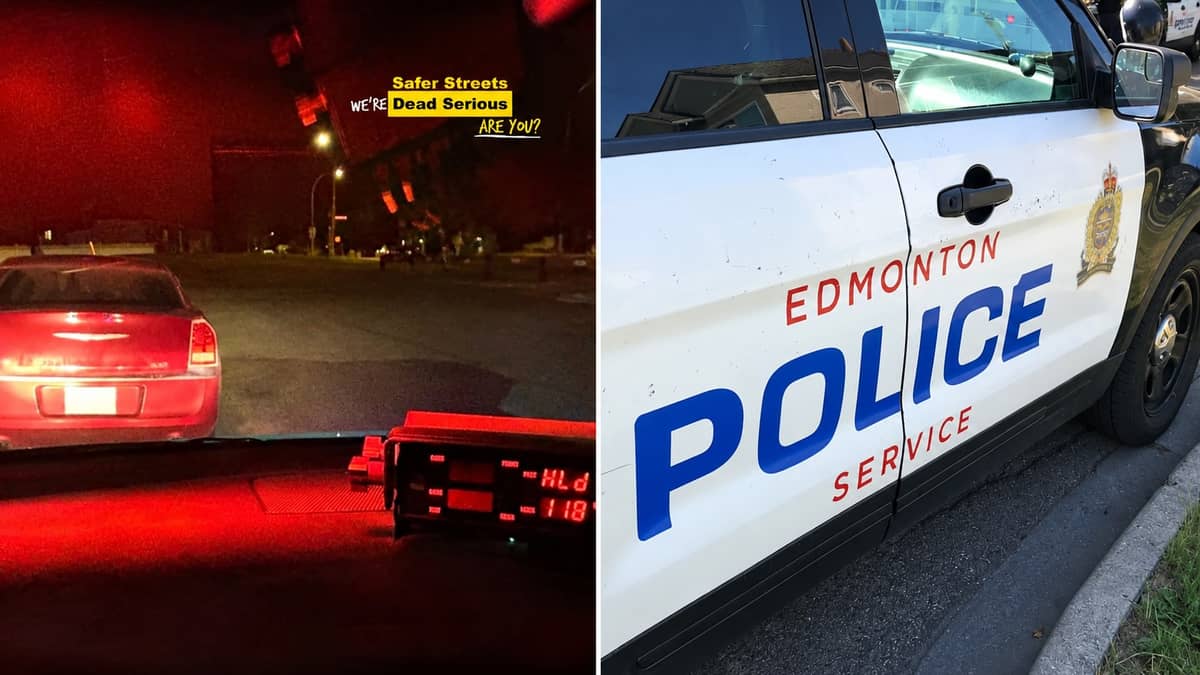
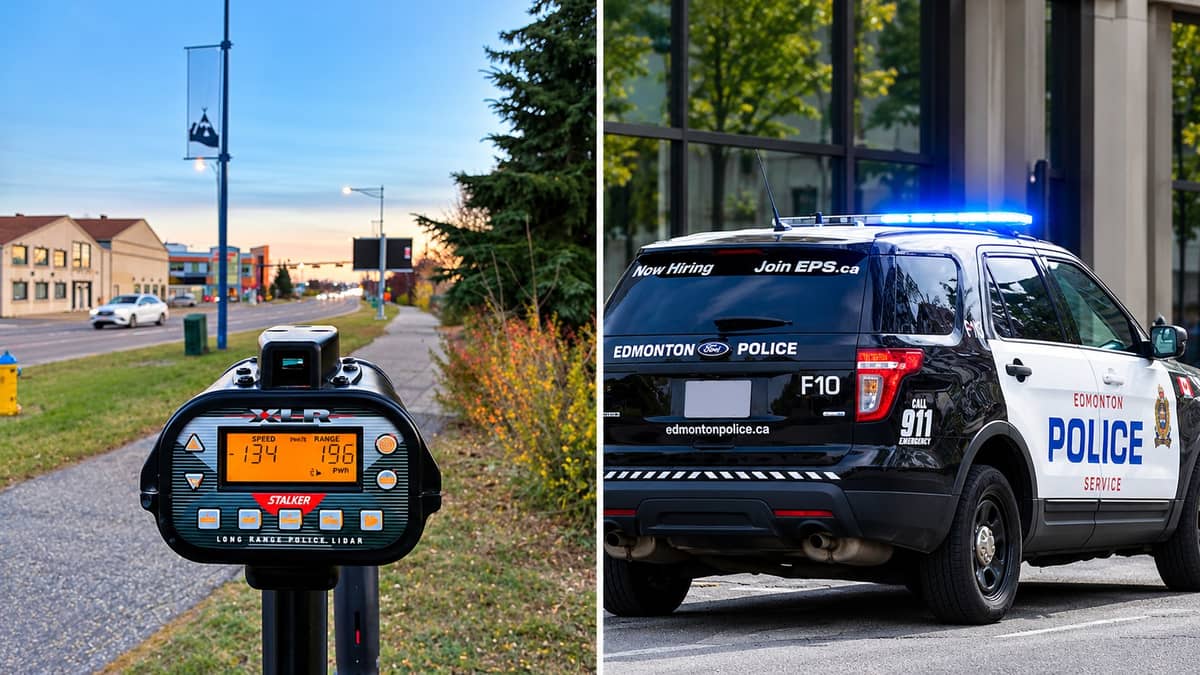
Grande Prairie peace officers set up at 116 Avenue and 96 Street this week and wrote nearly two dozen tickets in one hour.
Grande Prairie Enforcement Services shared that number while reminding drivers to slow down in construction zones across the city. Sgt. Ryan Hoffman said the blitz at that one intersection reflects a wider problem: drivers ignoring posted limits and traffic rules in work zones.
"Speed limits are established to protect both workers and the various hazards present in these areas," Hoffman said. He added that even a small increase in speed sharply reduces a driver's ability to react to the unexpected.
The fines went up in March
These tickets came under Alberta's new fine schedule. On March 13, the province raised Traffic Safety Act fines, most common offences by about 30 per cent and high-risk ones by up to 50.
Construction zone speeding is now $540, up from $499. Going 20 km/h over runs $190. Forty over is $467. Anyone stopped at 116 and 96 this week paid the current rates, not last year's.
Workers present doubles it
Speeding fines double when construction workers are present. It's automatic under the Traffic Safety Act, not a separate charge. An $81 base fine becomes $153, and larger amounts scale up the same way.
The province is clear that the doubling can apply even without a sign reminding you of it. If workers are present, the fine can double. The reduced limit itself holds wherever the construction signs are posted, at any hour, whether or not anyone is working. During a weekday daytime blitz like this one, workers are present and the fines double.
The cost you don't see on the ticket
The fine is the part you notice. The insurance is the part that follows you.
A construction zone speeding ticket carries demerits and, more importantly, becomes a conviction on your driving record, and insurers price off convictions. In Alberta, a single speeding conviction can raise a premium noticeably at renewal, and the increase compounds over the three years the ticket typically stays rateable. Depending on the driver and the offence, that ongoing premium hit can cost more than the fine itself over time, which is the calculation that leads a lot of people to fight a construction zone ticket rather than pay it.
That's also why the March fine increase changed the math on disputing tickets. When the fine was smaller, many drivers just paid. At $540 plus years of higher insurance, the ticket is now worth a harder look for the people who get one.
Why the number was so high
Nearly two dozen tickets in one hour at one intersection isn't a story about unusually reckless drivers. It's a measure of how routine it is to treat a construction limit as optional, especially at a spot on a normal commute where the reduced limit feels like an inconvenience rather than a hazard.
The hazard is real. Work zones put people on foot within a few metres of live traffic, alongside shifting lanes and heavy equipment. Hoffman's point about reaction time is the core of it. At the posted limit, a driver has the extra fraction of a second a sudden merge or a flagger stepping into the lane demands. Over it, they don't, and the person without protection is the one standing on the road.
What GP drivers should take from it
The construction limit applies wherever the signs are up. The fines rose in March. They double when workers are on site, and the insurance consequences outlast the fine.
Grande Prairie isn't the only city writing tickets like this
The blitz fits a wider enforcement push across Alberta this summer. In Lethbridge, police wrote 63 tickets on the first day of a crackdown targeting speeding, street racing and loud exhausts. The pattern is the same city to city: pick a known problem spot, run concentrated enforcement, publicize the number to make the point.
There's a reason these operations cluster in summer. Construction season and long daylight hours put more traffic, more work zones and more speed on the road at once, and enforcement agencies front-load their visible blitzes into exactly these months. For drivers, the practical read is simple. The odds of getting stopped in a construction zone are higher right now than at any other time of year, in every Alberta city, not just Grande Prairie. Our coverage of Lethbridge's crackdown is here: https://www.culturealberta.com/articles/lethbridge-police-crack-down-on-speeding-street-racing-and-loud-exhausts-63-tickets-issued-on-day-on
Sources:
Government of Alberta, speeding fines and roadside worker safety: https://www.alberta.ca/speeding-fines-in-alberta
Government of Alberta, Traffic Safety Act fine increases, effective March 13, 2026





Comments
Conversation