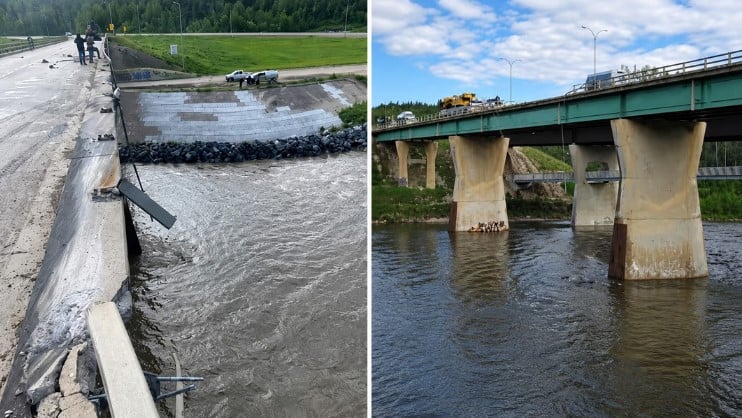
The crane operator who died when his machine went through the Wapiti River Bridge railing has been brought out of the water.
Clairmont RCMP confirmed on July 14 that they have recovered his remains. He had been in the river for four weeks. RCMP say the driver was inside the crane when it went over the bridge on June 16 and became submerged, and they have offered their condolences to his family and friends.
We covered the crash when it happened: https://www.culturealberta.com/articles/a-worker-is-dead-after-a-300-ton-crane-crashed-through-the-wapiti-river-bridge-railing-and-plunged-i
And we covered the start of the recovery operation last week: https://www.culturealberta.com/articles/grande-prairie-crane-recovery-begins-on-highway-40-three-weeks-after-the-fatal-wapiti-river-bridge-c
Why it took four weeks
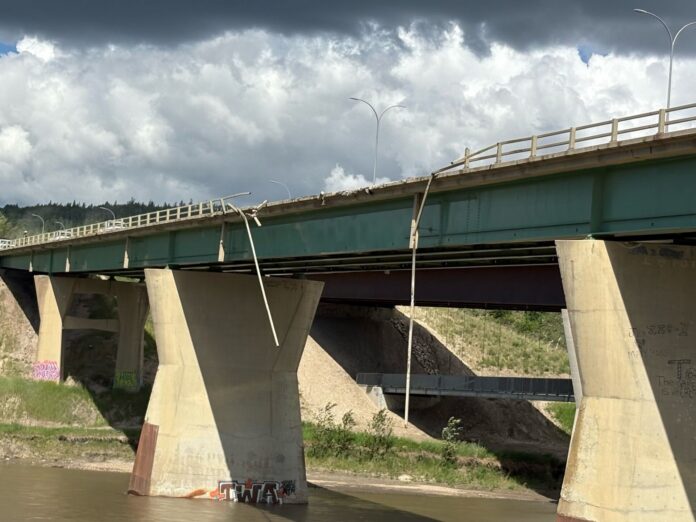
The delay was never about not knowing where he was. It was the river.
The Wapiti ran high and fast for most of a month after the crash, swollen by repeated rainfall across the Peace region. Divers assessed the water in the first days and could not safely go in. "The current is too strong," Cpl. Mathew Howell of K Division RCMP said at the time. Police switched to sonar to locate the crane on the river bottom rather than put people in the water.
Every fresh stretch of rain pushed the recovery further out. It was not until July 7, three weeks after the crash, that conditions steadied enough for crews to begin the operation.
For his family, that meant a month of knowing exactly where he was and being unable to reach him.
What a river recovery actually involves
Recovering a body from a fast river is not a matter of sending divers down whenever someone decides to go.
Underwater recovery teams work by feel more than sight. In a river like the Wapiti after weeks of rain, visibility can drop to nothing, and a diver a metre from an object may not see it. Current is the bigger problem. Moving water pushes a diver constantly, tangles lines, and can pin a person against submerged debris. Add a 300-tonne crane on the bottom, with cables, booms and jagged metal, and you have a site that can trap and kill the people sent to work it.
That is why RCMP switched to sonar early. Sonar let them establish exactly where the crane and the operator were without putting anyone in the water, which is also why police could say with confidence that they knew the location while still being unable to act on it.
The judgment call underneath all of it is a hard one, and it is made in every water recovery in the country: the person in the water cannot be helped anymore, and the people who would go in for him can still be killed. Recovery teams do not take that risk until the water lets them.
The crane is still in the river
The recovery is not finished. RCMP say crews are still working to pull the crane itself out of the water.
Police are asking the public to stay away while that continues. Boats and drones are not permitted in the area.
He still hasn't been named
Four weeks on, RCMP have not publicly identified the man who died.
That is not unusual. Police in Alberta generally do not release the name of a person who dies in a workplace incident unless the family consents or there is an investigative reason to do so. In a case like this, where the death is not suspected to be criminal, the name is treated as the family's to share, not the RCMP's.
The Edmonton Journal reported in the days after the crash that he worked for J.D.A. Ventures, a Grande Prairie crane company, and that the company had described his death as a profound loss and set up an account to collect donations for his family.
What comes next
Recovering the crane is the step both investigations have been waiting on.
RCMP are investigating what caused the machine to leave the road and go through the barrier. Federal occupational health and safety investigators are running a separate workplace fatality investigation. Physical examination of the crane is central to both, which is why nothing has been concluded in the four weeks since the crash. RCMP have said the cause remains unknown.
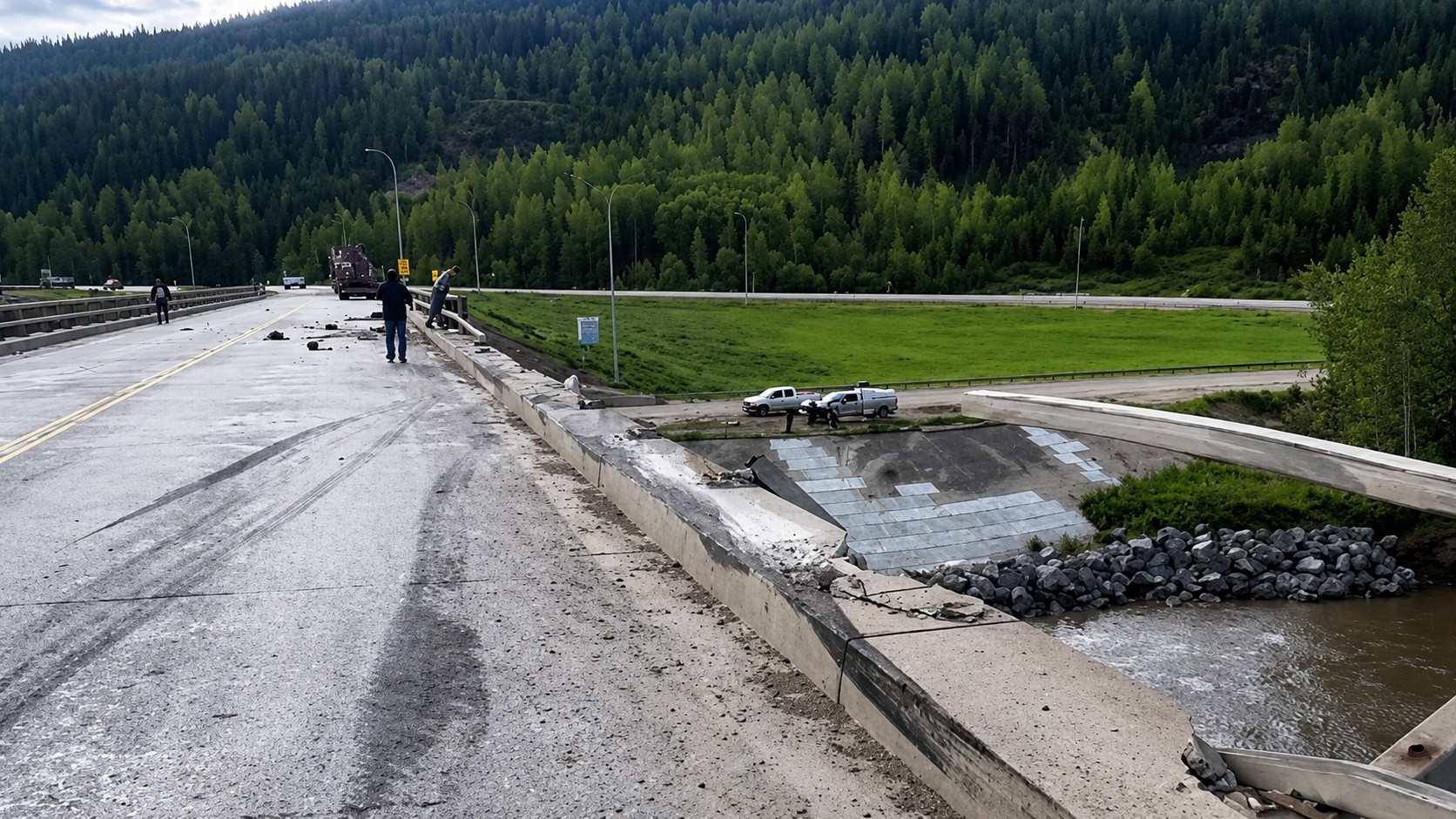
The railing itself remains an open question. The crane went through the barrier of the older southbound span, not the new northbound bridge completed in December 2025 as part of the $168 million Highway 40 upgrade. Why that barrier failed is something investigators will have to answer.
Sources:
Clairmont RCMP, statement on the recovery of the crane operator's remains, July 14, 2026
Alberta RCMP, K Division, statements from Cpl. Mathew Howell, June 2026
Federal occupational health and safety, active workplace fatality investigation
Culture Alberta, original coverage of the June 16 crash and the July 7 start of the recovery operation



Comments
Conversation