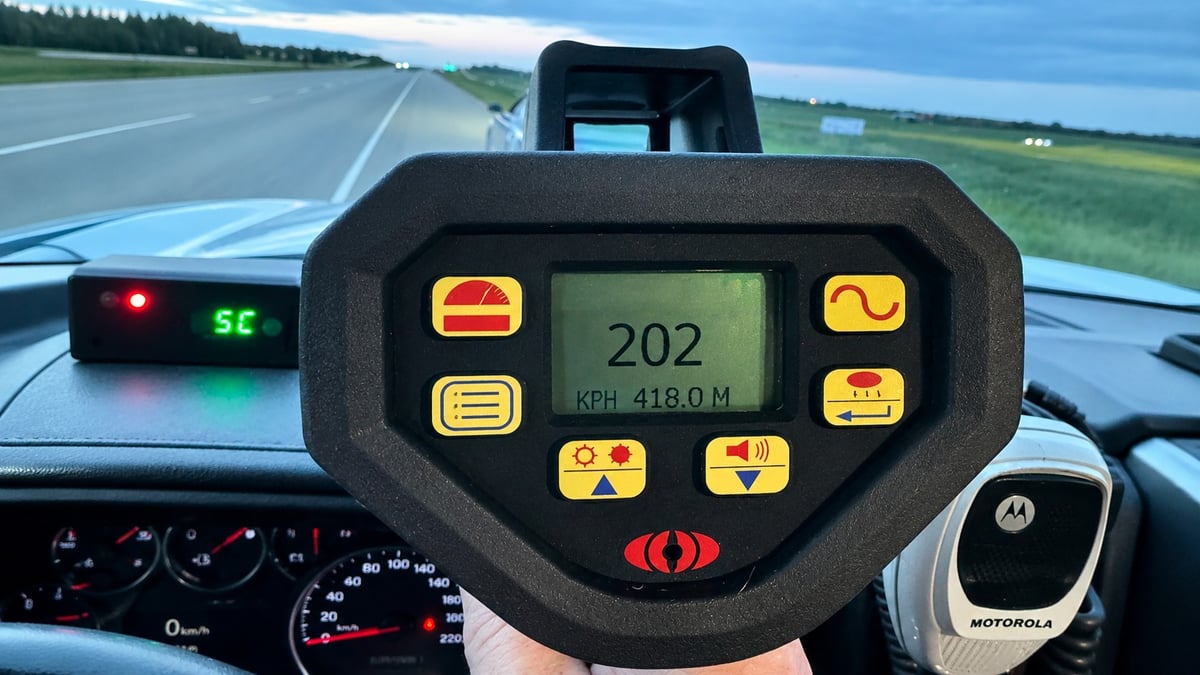
A Grande Prairie driver was caught travelling nearly double the speed limit on Highway 43 late Monday night, RCMP say.
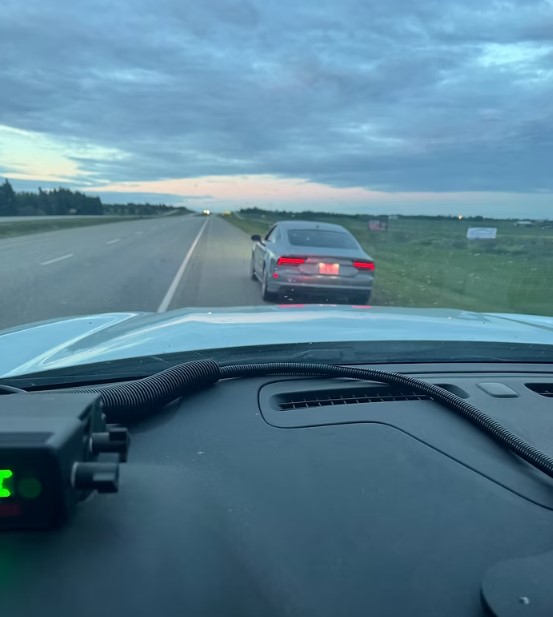
Clairmont RCMP were running laser speed enforcement on Highway 43 between Grande Prairie and Wembley at about 10:40 p.m. on July 6 when they clocked a vehicle doing 202 kilometres per hour. The posted limit on that stretch is 110. The driver, a 46-year-old Grande Prairie resident, was issued a mandatory court summons for speeding and careless driving.
What 202 km/h actually means
The number is easy to skim past, so it's worth putting in real terms. At 202 km/h, a vehicle is covering about 56 metres every second, more than half a football field, in the time it takes to blink and check a mirror.
Stopping distance balloons at that speed. A car that might stop in around 75 metres from 110 km/h needs roughly three times that distance from 200, and that's on dry pavement with good tires and a fully alert driver. At night, on a highway shared with wildlife, farm equipment, and other traffic, the margin for anything going wrong shrinks to almost nothing. That's the reasoning behind the careless driving charge on top of the speeding one: RCMP aren't just alleging he was fast, they're alleging the speed itself endangered others.
Why this stretch of Highway 43 matters
Highway 43 is the main artery through the Peace Country, connecting Grande Prairie to Wembley, Beaverlodge, and points west toward the B.C. border. It carries a heavy mix of commuter, commercial, and industrial traffic day and night, and the section where this happened is a fast, open divided highway, the kind of road where speeds creep up and a driver going 90 over the limit is a genuine danger to everyone around them.
It's also not an isolated case. RCMP across Alberta have been flagging extreme speeders all summer. Just days earlier, Mounties clocked a driver at 222 km/h on a central Alberta highway, and over one May long weekend alone, RCMP handed out more than 1,200 tickets province-wide, the vast majority for speeding.
What a ticket like this can cost
Because the driver got a mandatory court summons rather than a standard roadside ticket, the penalty isn't a fixed number he can just pay, a judge decides. But it's worth understanding where Alberta's speeding fines start, because they climbed sharply in 2026.
Under Alberta's updated fine structure, speeding penalties rise with how far over the limit you go, and the province increased them through an order in council earlier this year. We broke down exactly what the new Alberta traffic fines look like, and how the current amounts compare to the old ones, in a separate guide. For a case like this, the speeding fine is only part of it: careless driving is a separate, more serious offence that carries its own significant fine and demerit points, and a mandatory court date means the outcome, and the total cost, is set in front of a judge.
Could he lose his licence or the car?
A mandatory court summons opens the door to penalties a roadside ticket can't reach, and that's the point of routing a case like this to a judge.
For careless driving, the court can do more than fine him. The charge carries demerit points, and enough points on an Alberta licence triggers a suspension on its own. A judge can also order a driving prohibition as part of the sentence, meaning the penalty for a case like this can be time off the road, not just a payment. Alberta's rules also allow vehicles to be seized in serious cases, though whether that happens depends on the circumstances and what the court decides.
None of that is automatic, and the driver is presumed innocent until the case is dealt with. But it's the reason extreme-speed cases get a court date instead of a ticket handed through the window: at nearly double the limit, the province wants the option of consequences that go beyond a fine.
The bottom line
No one was hurt, and the driver is due in court. RCMP used the case to repeat a message they've made all summer: "speed kills," and drivers going this far over the limit put everyone on the road at risk.
For most drivers the practical takeaway is simpler. Highway 43 is patrolled, RCMP are running laser enforcement at night, and the fines for going well over the limit in Alberta are higher in 2026 than they used to be.
Sources:
Clairmont RCMP, news release on the July 6 Highway 43 traffic stop
Alberta traffic fine structure, Order in Council 35/2026
Culture Alberta, our guide to Alberta's updated traffic fines







Comments
Conversation