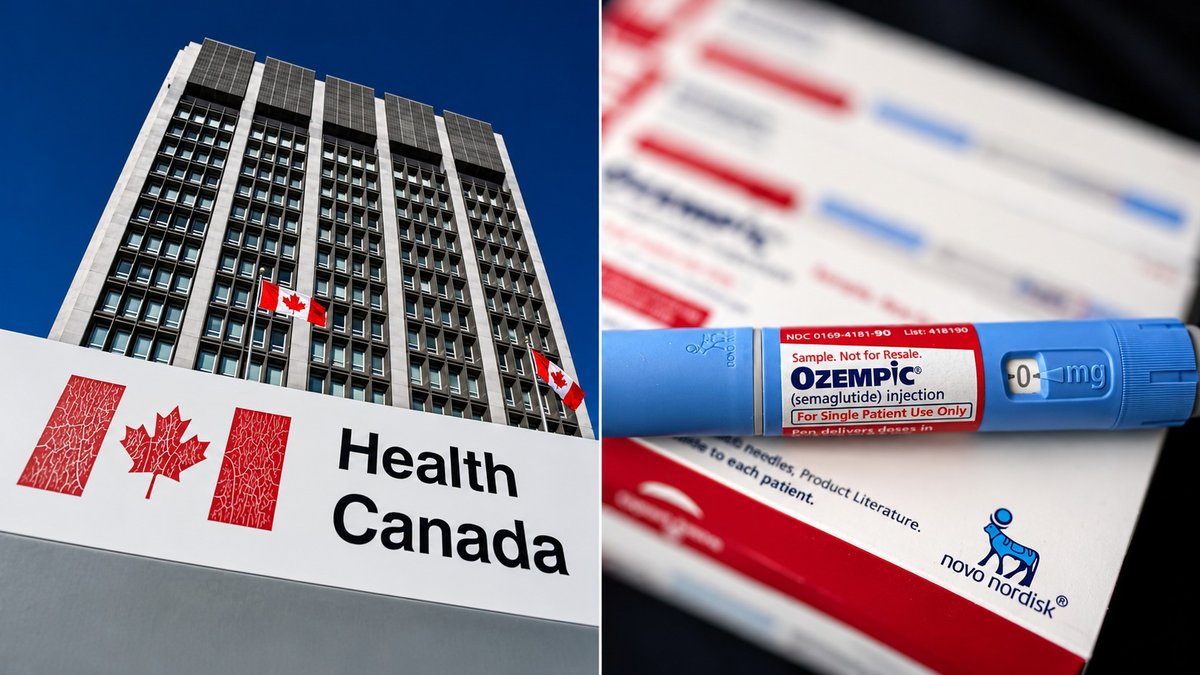
Health Canada says Ozempic, Wegovy and other prescription drugs containing semaglutide may be linked to a very rare eye condition that can cause permanent vision loss.
Its advice is simple. If you suddenly lose vision, or your eyesight gets worse quickly while you're taking one of these drugs, get urgent medical attention, even if there's no pain.
The advisory, issued Wednesday, Nov. 25, follows a safety review that found a possible link between semaglutide and non-arteritic anterior ischemic optic neuropathy, or NAION. Health Canada is working with manufacturers to add the warning to the drugs' Canadian prescribing information.
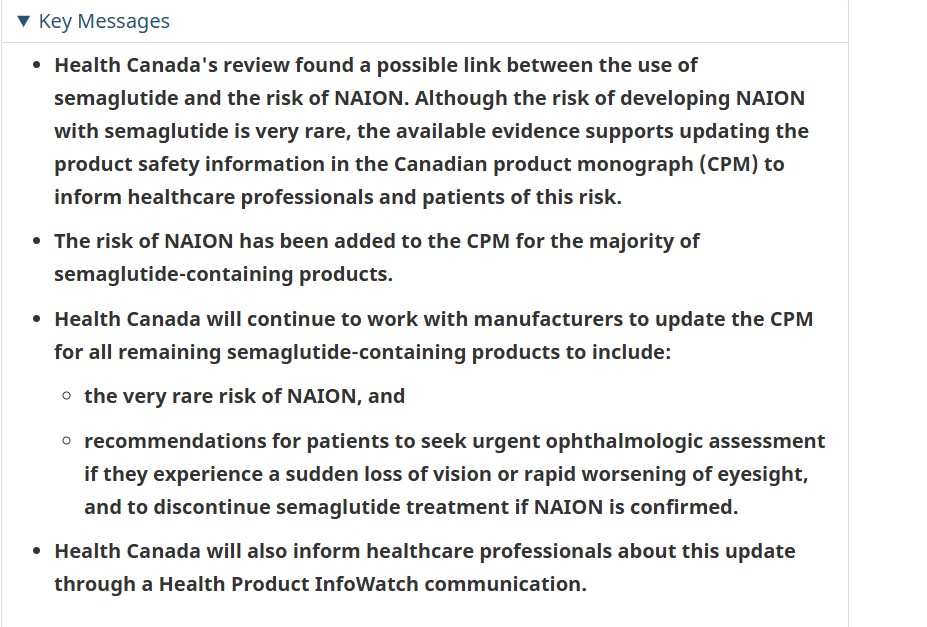
https://dhpp.hpfb-dgpsa.ca/review-documents/resource/SSR1795630406073
What vision changes should you watch for?
NAION happens when blood flow to the optic nerve drops. That's the nerve that carries signals from your eye to your brain.
It usually affects one eye at a time. Many people first notice it when they wake up. Part of their vision looks blurry, cloudy or dim, often in the lower half. Colours can look faded.
The change is usually painless.
NAION is more common in people with diabetes, high blood pressure or high cholesterol. Health Canada says there's no known timeline for when it might develop after someone starts semaglutide.
What to do if you take Ozempic, Wegovy or another semaglutide drug
If your vision suddenly changes or gets worse quickly:
Get urgent medical care, and tell the clinician you take semaglutide.
Health Canada advises an urgent assessment by an eye specialist for any sudden vision loss, even partial loss.
If you can't see an eye specialist quickly, an optometrist or emergency department doctor can make an urgent referral, the Canadian Association of Optometrists says.
If NAION is confirmed, Health Canada's guidance to doctors is to stop semaglutide.
If you just have questions:
Don't change or stop your prescription without talking to your doctor or pharmacist.
In Alberta, Health Link at 811 offers nurse advice 24 hours a day for non-emergency concerns.
You can report a suspected side effect to Health Canada, even if you're not sure the drug caused it.
How rare is the risk?
Very rare.
In June 2025, the European Medicines Agency concluded that NAION is a very rare side effect of semaglutide. That means it may affect up to 1 in 10,000 people who take it.
The U.S. Food and Drug Administration looked at GLP-1 drugs as a whole. Across 126 trials, it found 6.4 probable cases per 100,000 person-years among people taking GLP-1 drugs, compared with 3.8 among people on a placebo or another type of diabetes medication. A person-year is one person followed for one year.
The FDA's number combines several drugs. It can't tell you how the risk for Ozempic compares with the risk for Mounjaro.
The warning matters because so many people take these drugs. Canadian retail pharmacies dispensed about 8.8 million GLP-1 prescriptions in 2024, according to a separate Health Canada review. That count covers the whole drug class and includes refills.
Does Health Canada's warning include Mounjaro?
Not yet.
The Canadian advisory covers all prescription semaglutide products:
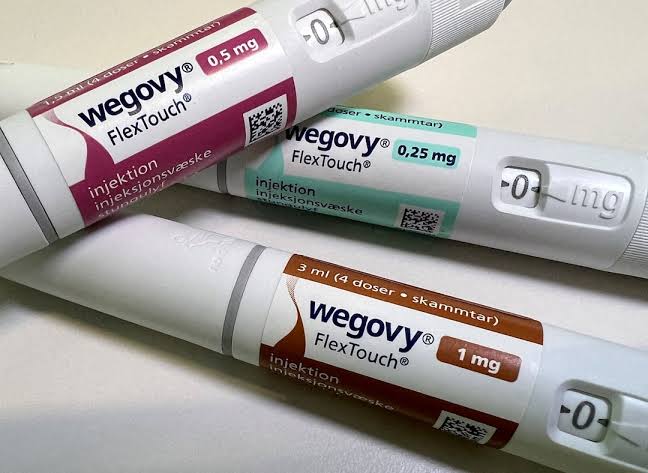
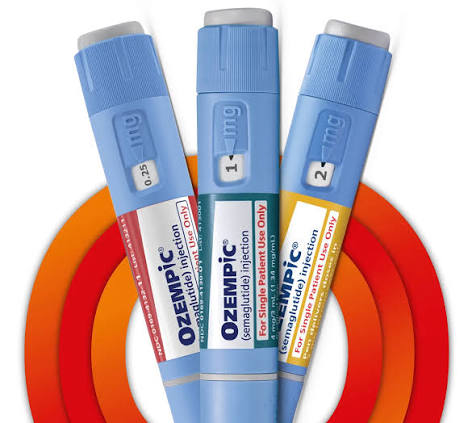
Brand names: Ozempic, Wegovy, Rybelsus, Plosbrio and Poviztra
Generics: Apo-semaglutide injection, Aspen-semaglutide, Dr. Reddy's semaglutide injection, Sandoz semaglutide and Sevmia
Mounjaro and Zepbound contain a different drug, tirzepatide. Health Canada says it's still reviewing the risk with all other GLP-1 drugs.
The U.S. has gone further. On Nov. 9, the FDA required NAION warnings on the labels of every GLP-1 drug, including Mounjaro and Zepbound.
The data so far doesn't show which drug carries a lower risk.
What about the new pills? Earlier this month, Health Canada approved Eli Lilly's GLP-1 pill Foundayo for weight management. It isn't on the market yet, and Wednesday's warning doesn't name it.
How to report a side effect
Health Canada collects reports through the Canada Vigilance Program. You can report:
Online through Health Canada's side effect reporting form
By phone at 1-866-234-2345
Through your doctor or pharmacist, who can report on your behalf
Reports help Health Canada spot safety problems sooner.








Comments