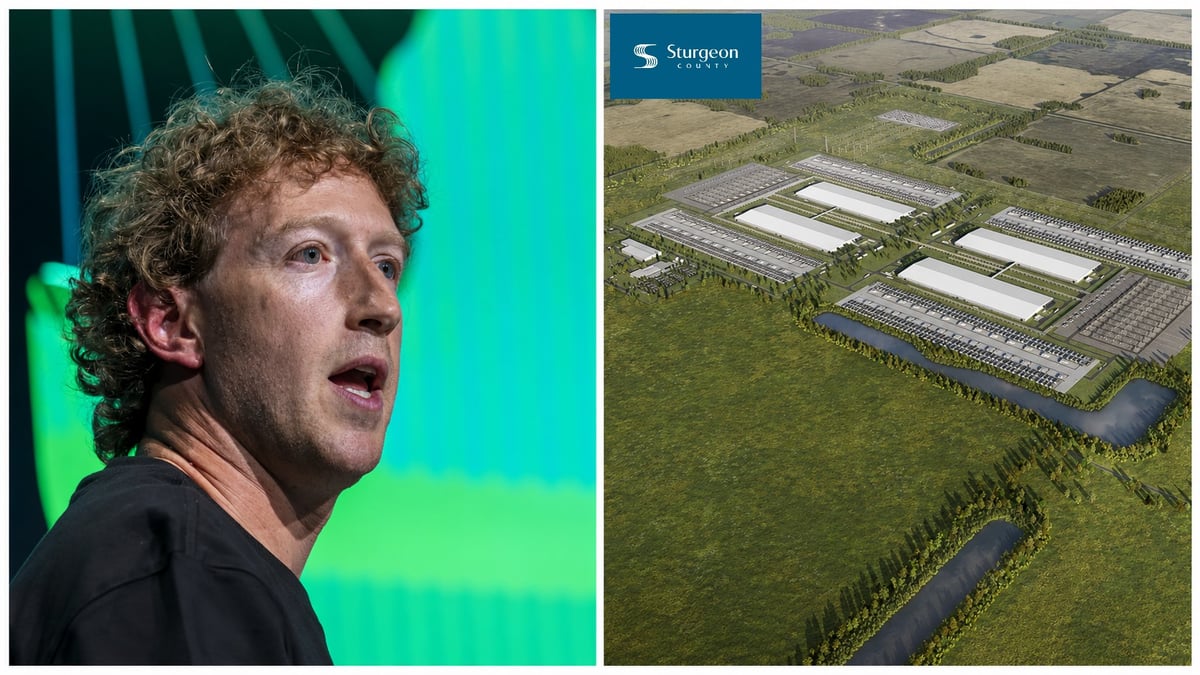
Meta is coming to Alberta, and it's bringing the largest data centre in the country and one of the biggest private investments the province has seen in years.
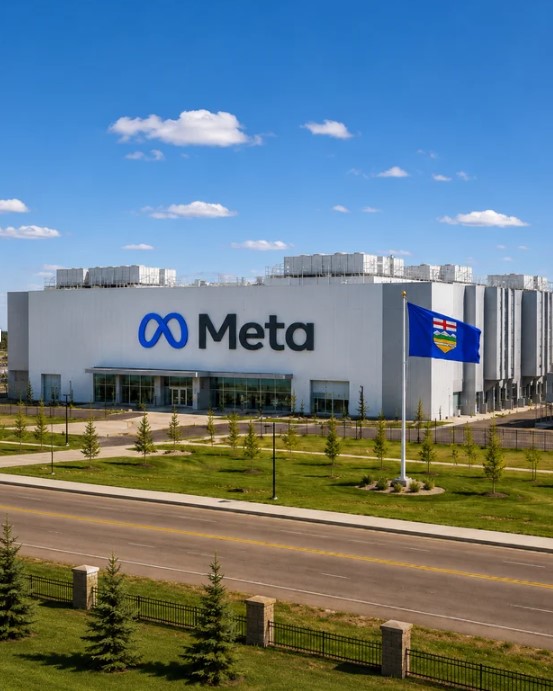
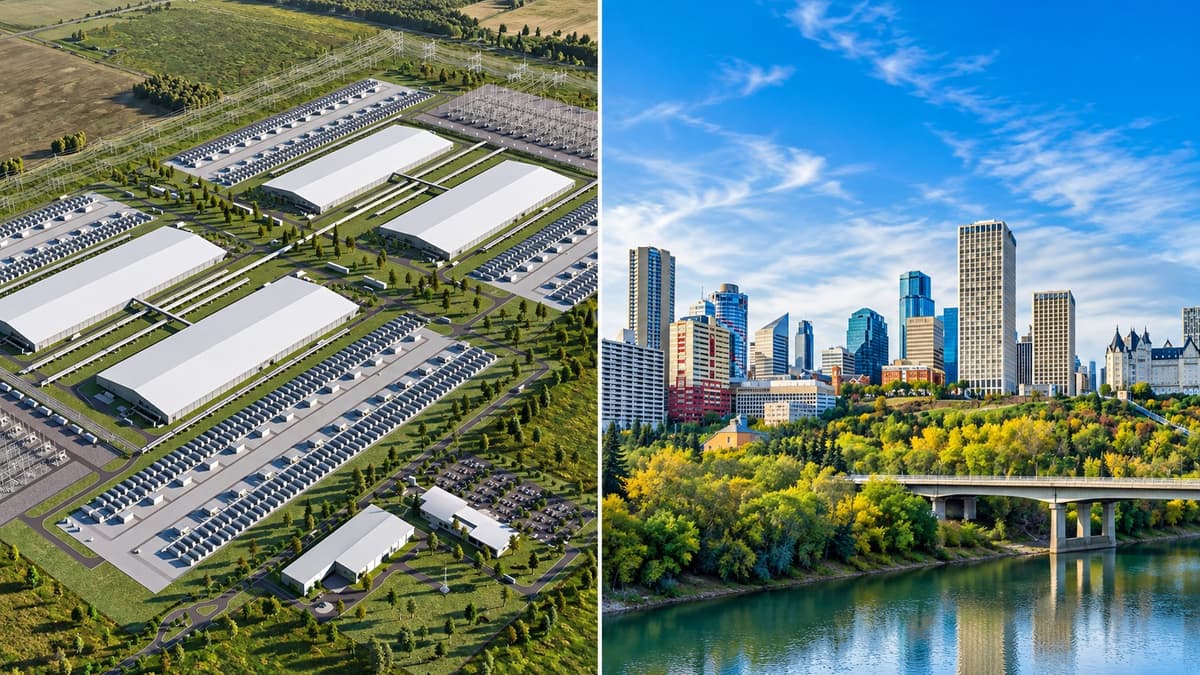
The company behind Facebook, Instagram, and WhatsApp announced on July 8 that it will build a massive AI data centre campus in Sturgeon County, about 35 kilometres north of Edmonton. At more than $13 billion, it is Meta's first data centre in Canada and its 33rd worldwide. Executives made the announcement in Calgary alongside Premier Danielle Smith and provincial officials, capping more than two years of work by Alberta to land a major Silicon Valley investment.
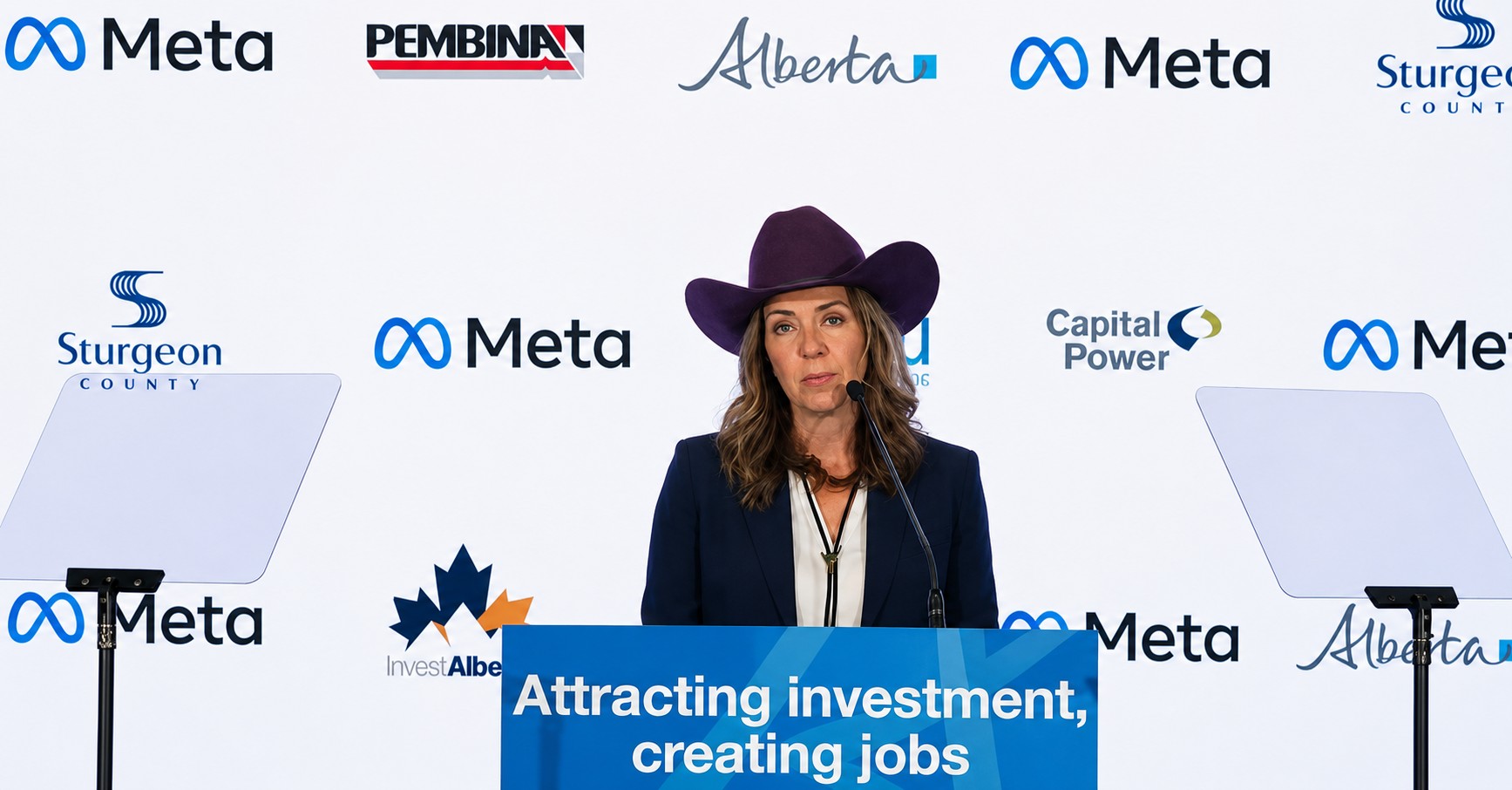
"It's our first in Canada. It's also pretty unique in the sense that it's a pretty large deployment, we're looking at a one gigawatt-scale data centre development," said Gary Demasi, Meta's vice-president of data centre strategy and development. The design, construction, and operation will all be geared specifically toward AI, he said.
It solves last week's mystery
The announcement quietly answered a question that had been hanging over the province for a week.
On July 2, Calgary-based Pembina Pipeline and its partners gave the green light to the Greenlight Electricity Centre, a $4.6 billion natural gas power plant in Sturgeon County built to supply a single "major data centre" customer. At the time, none of the companies would say who that customer was, calling it only "a first of its kind in Canada." Analysts and reporters quickly pointed to Meta. The July 8 announcement confirms it: Meta is the customer that power plant was built for.
That pairing, a tech giant's data centre and a dedicated power plant announced days apart, is the whole story of how Alberta is courting this industry.
How big it actually is
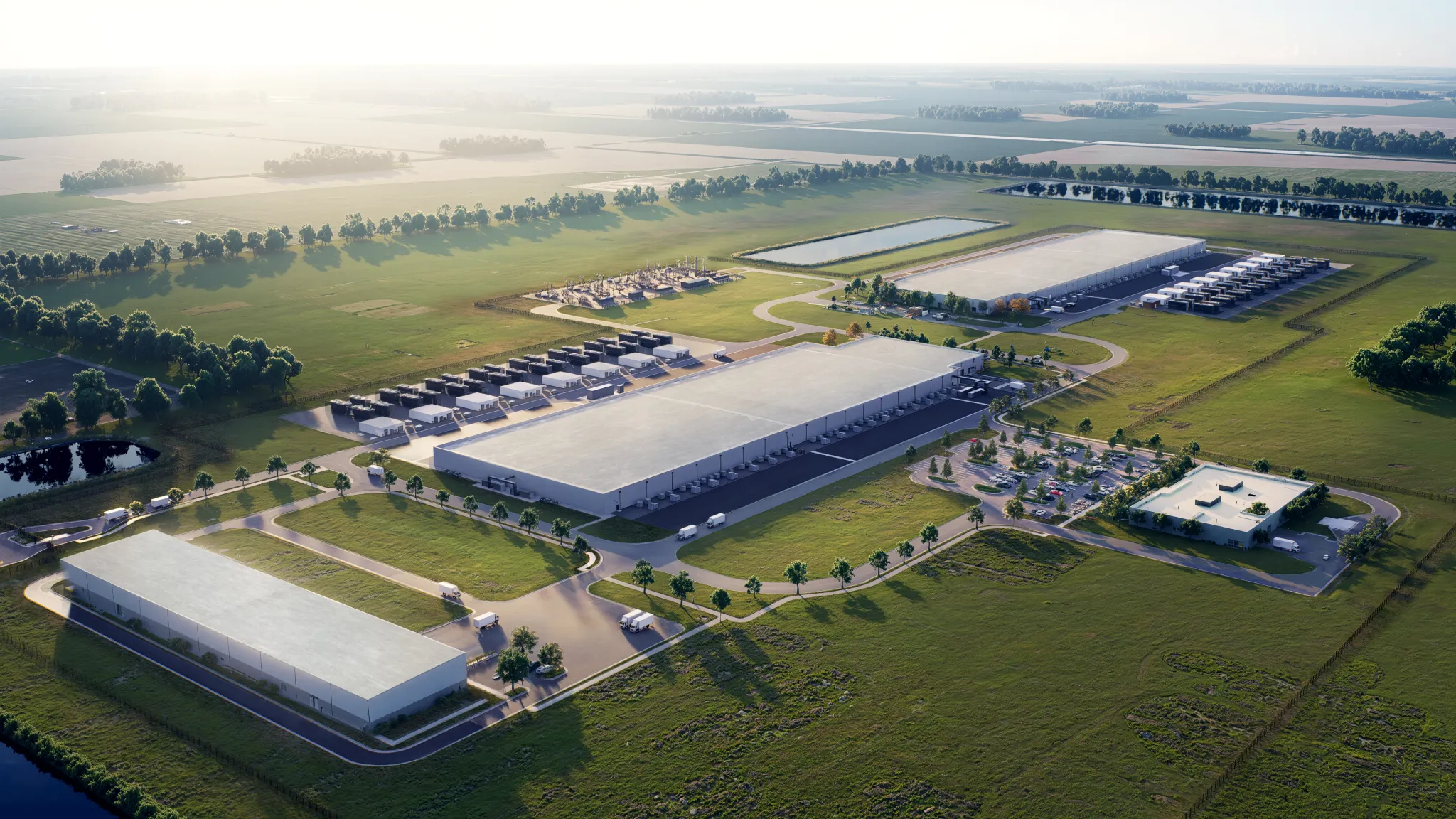
The scale is what sets this apart. The campus will span about 2.9 million square feet, which Demasi said puts it "on par" with the large projects Meta has announced this year in Indiana and Texas. It would be the largest data centre in Canada and the largest capital project in Alberta since Suncor's $17 billion Fort Hills oilsands mine last decade.
And the $13 billion figure is not the full story. Meta's number does not include the high-tech chips that fill an AI data centre, which would push the real spending far higher. One energy analyst, Carson Kearl of Enverus, estimated the project could ultimately drive more than $75 billion in total data-centre-related capital spending over time once chips and networking are counted.
What Alberta gets
The province is putting hard numbers on the payoff. The development is projected to create 3,000 construction jobs and support 300 permanent operating positions, and to generate an estimated $250 million a year in benefits to Alberta through taxes, natural gas royalties tied to the power generation, and industry levies. Meta will also spend about $60 million on local infrastructure improvements.
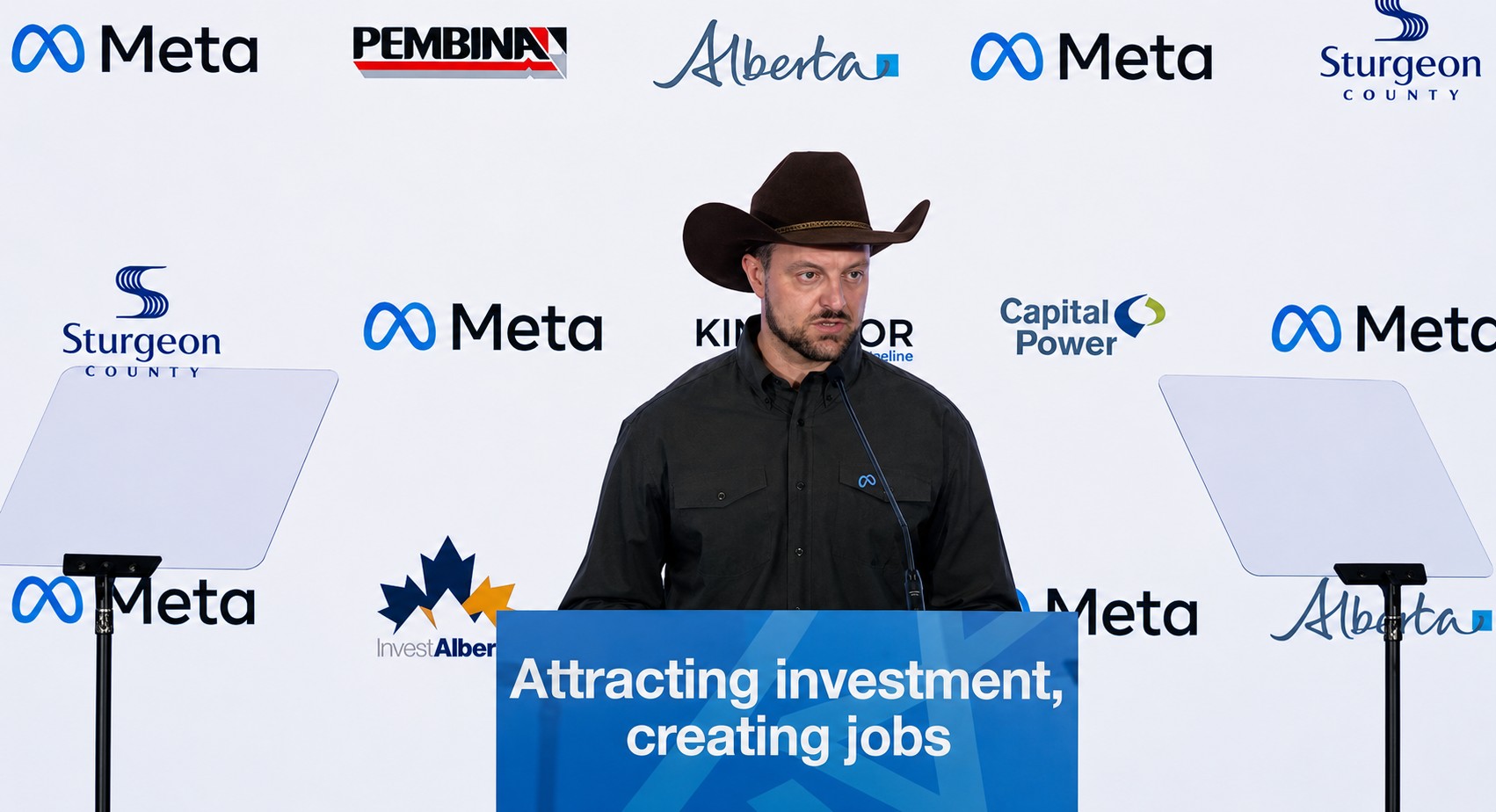
"Meta is committing to build what will be one of the largest data centre campuses in North America," said Alberta Technology Minister Nate Glubish. "It's a vote of confidence to demonstrate that, yes, you can build gigawatt-scale infrastructure in Alberta, and Meta is voting with their wallet." The province says the project is fully funded by Meta.
Who's paying for what, and why Sturgeon County
Two big numbers blur together easily. The $13 billion is Meta's, for the data centre itself. The $4.6 billion Greenlight power plant is a separate deal, owned by Pembina Pipeline, Morgan Stanley Infrastructure Partners, and Kineticor. Meta doesn't own the plant, it buys the power from it.
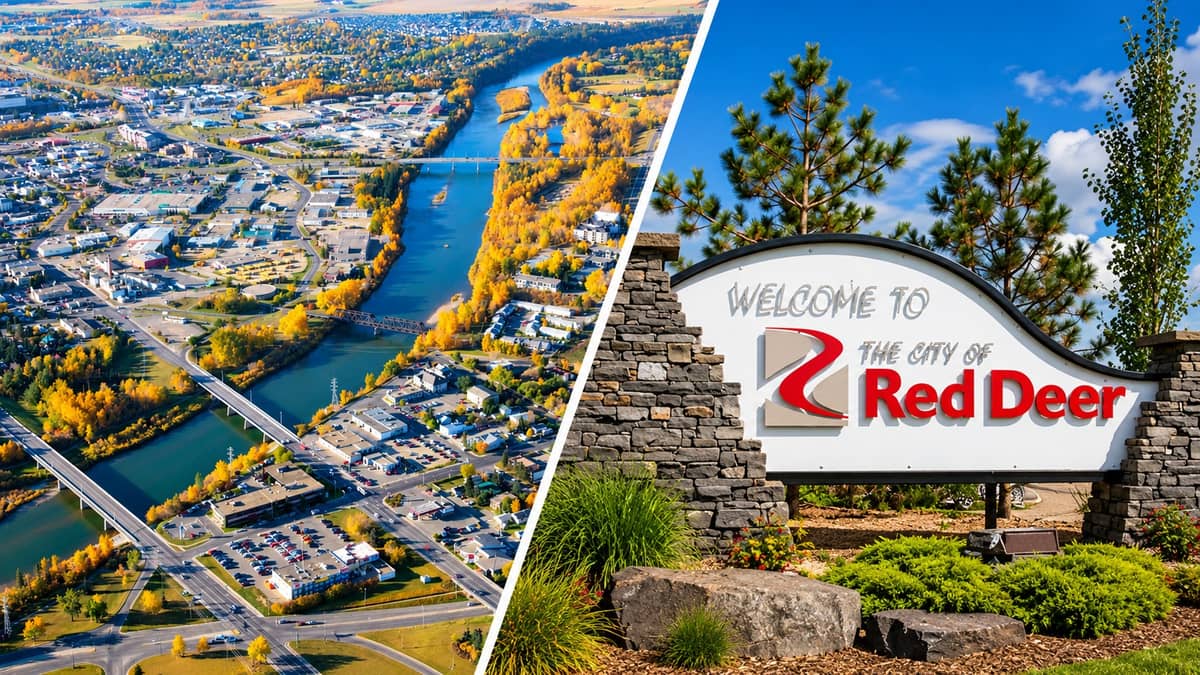
As for why Sturgeon County: it sits in Alberta's Industrial Heartland, a large area zoned for heavy industry, close to power and near the labour and infrastructure a project this size needs. Demasi cited available infrastructure, the power supply, the quality of the local workforce, and partnerships with government as the reasons the location worked. Alberta's low taxes, cold climate for cheaper cooling, and deregulated power market are the province's broader pitch. Meta will also build its own high-speed fibre connections into the United States.

Where the power comes from
Meta, like every large AI company, has a power problem. Running AI models consumes enormous amounts of electricity, and a gigawatt-scale facility like this can need 1,000 megawatts or more for computing and cooling.
Rather than lean entirely on the grid or entirely on its own generation, Meta is doing both. Through its partners it has secured 970 megawatts of grid-connected electricity, and it will pair that with new onsite gas-fired generation that can supply up to 1,800 megawatts at full buildout. The onsite side is the Greenlight plant: Pembina's 932-megawatt gas facility, built with Morgan Stanley Infrastructure Partners and Kineticor, with regulatory approval to double to more than 1,800 megawatts and an in-service target in the second half of 2030.
That appetite for gas is part of the appeal for the province. Alberta has large natural gas reserves, gas provides around-the-clock reliable power, and a plant this size becomes a major new customer for Western Canadian producers.
The emissions and power-price question
The project lands in the middle of a real tension in how Canada wants to grow this industry.
Ottawa's national AI strategy leaned on the idea that Canadian data centres would run on the country's largely clean, renewable-heavy grid. Alberta is the exception. Because the province relies so heavily on natural gas, the emissions intensity of its electricity is far above the national average, and the bulk of data centres planned in Canada are being built here rather than in provinces with cleaner grids. Meta says it aims to match all its energy use with clean power and is screening potential clean-energy projects in the region to offset the centre's consumption.
The sharper fight is over what this does to Albertans' power bills, and the two sides disagree flatly. The Pembina Institute, a clean-energy think tank unrelated to the pipeline company, warned that adding a plant generating enough electricity to power a city two-thirds the size of Calgary will massively increase gas demand, and that "household electricity costs for Albertans will keep rising in the years ahead." The province argues the opposite on transmission specifically: Glubish said Meta will pay roughly $100 million a year in transmission fees, and spreading those costs over a wider base should actually lower other Albertans' transmission charges by up to six per cent.
The water question
Big data centres don't just draw power, they drink, and water use has driven community opposition to projects on both sides of the border. It's a fair question for something this size.
On this one the province was specific: the facility will use a closed-loop, liquid cooling system that recirculates water rather than constantly drawing new supply. Glubish said it will use less water in a year than a typical regional golf course. It sits in an industrial park where data centres run on a process-water system kept separate from residential supply.
Not everyone is saying yes
Alberta's open-arms approach has not gone unchallenged elsewhere in the province. Last September, Rocky View County rejected a large data centre proposal near Calgary after pushback from residents, and a project in Olds has recently faced opposition too. Concerns in those cases have centred on water, land use, noise, and power prices, the same issues that follow these projects wherever they go.
The bottom line
Alberta spent more than two years trying to convince a hyperscaler to build here, and Meta is the result. The province set a target of $100 billion in data centre investment by 2030, and it's betting this is the one that makes the rest follow. Demand is there: the Alberta Electric System Operator now has 41 data centre projects representing 19.5 gigawatts of potential load in its connection queue, up from five gigawatts in early 2024.
"This will be the first domino of many to fall," Glubish said. The open question, the one that will follow every project like it, is what all that gas-fired computing power means for Alberta's emissions and power bills, and whether the payoff justifies it.
Construction on site begins shortly. Meta did not give a firm completion date, but Demasi said projects like this typically take a couple of years to build.
Sources:
Meta, data centre announcement, July 8, 2026, with interview comments from Gary Demasi, Meta's vice-president of data centre strategy and development
Government of Alberta, statements from Technology and Innovation Minister Nate Glubish, July 8, 2026
Pembina Pipeline Corporation, "Positive Final Investment Decision on the Greenlight Electricity Centre" news release, July 2, 2026 (TSX: PPL; NYSE: PBA)
Pembina Institute, statement from David Pickup, electricity program director
Alberta Electric System Operator (AESO), data centre connection queue figures
Enverus, analyst estimate from Carson Kearl



Comments
Conversation