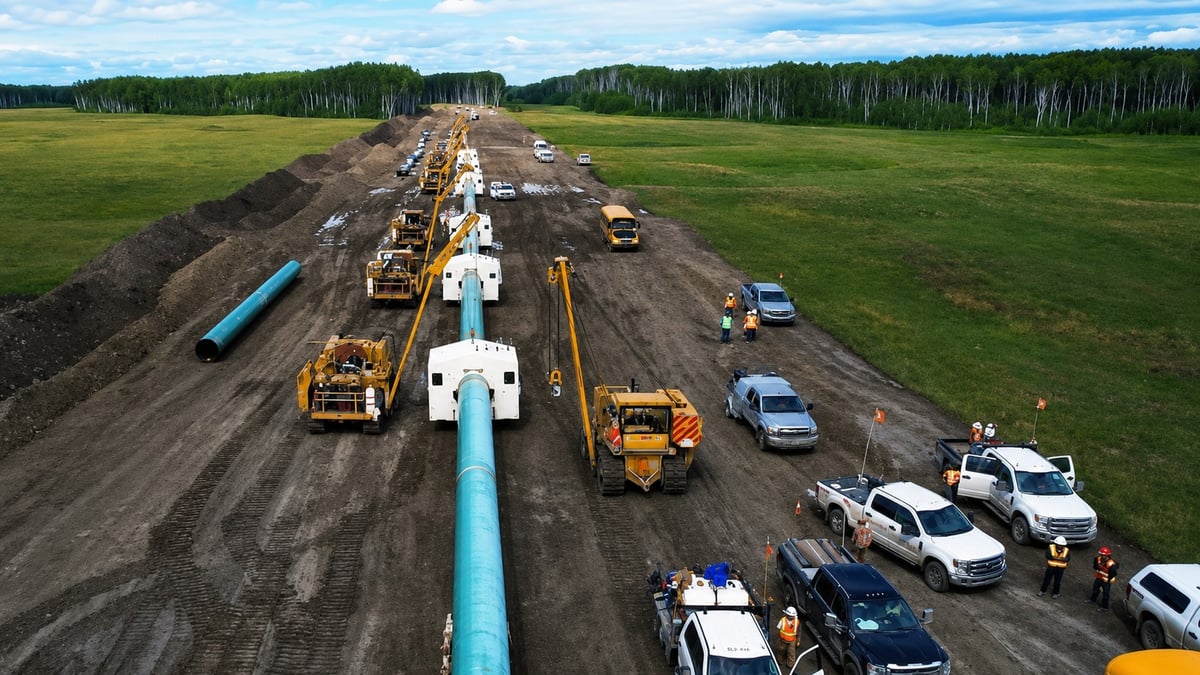
Northwest of Grande Prairie, buried under farmland in Saddle Hills and the County of Grande Prairie, there's now 33 kilometres of new steel pipe wide enough to crawl through. As of this week, it's full of natural gas.
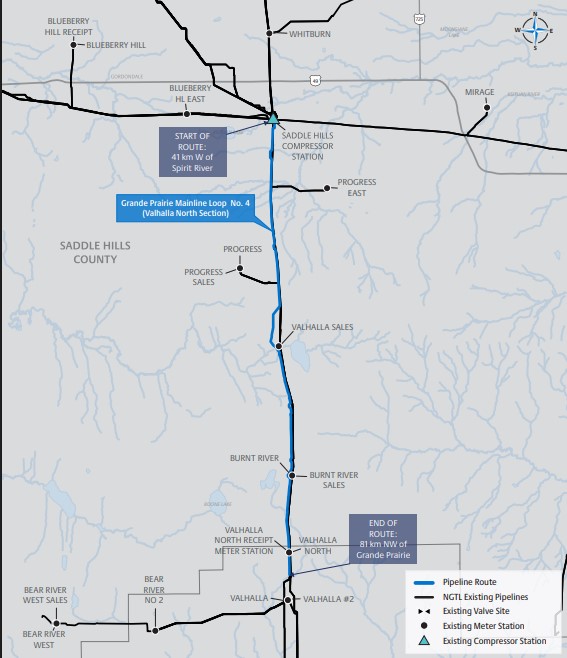
TC Energy's Valhalla North pipeline is officially in service. The line runs from the company's Saddle Hills compressor station, about 81 kilometres northwest of the city, to an existing valve site 54 kilometres out. It's one half of a project the company values at roughly $500 Million, the other half being a new 30-megawatt electric compressor unit at its Berland River station near Edson.
Most people will never see any of it. Here's why it matters anyway.
What "Loop No. 4" actually means
The project's formal name is Grande Prairie Mainline Loop No. 4, and the word doing the work there is loop.
The Grande Prairie Mainline is one of the trunk lines of the NGTL System, TC Energy's 24,000-plus kilometre network that gathers gas from across Alberta and northeast B.C. and moves it to market. Looping means laying new pipe parallel to the existing line along the same corridor, so more gas moves through the same route without cutting a new path across anyone's land. Valhalla North is the fourth section of new pipe added along this stretch.
The Berland River compressor is the other half of the same job, more push behind the gas already flowing. The new unit runs on an electric motor rather than burning gas to move gas, which is where compression has been heading across the industry.
Why it matters in Grande Prairie
In this part of Alberta, pipe capacity is what keeps drilling moving.
The fields around Grande Prairie sit in one of the most productive stretches of the Montney, and the ceiling on activity here has rarely been geology. It's takeaway, whether there's room in the pipes for what gets produced. When capacity fills up, producers slow their drilling programs, and the slowdown doesn't stay in the field. It reaches the service companies first, then the camps and the hotels, then the trades, then eventually the restaurants on 100 Street, because the whole town's economy is downstream of a rig count that is itself downstream of pipe space. New capacity on the mainline is headroom for the next round of activity, and headroom is the thing this region's economy quietly runs on.
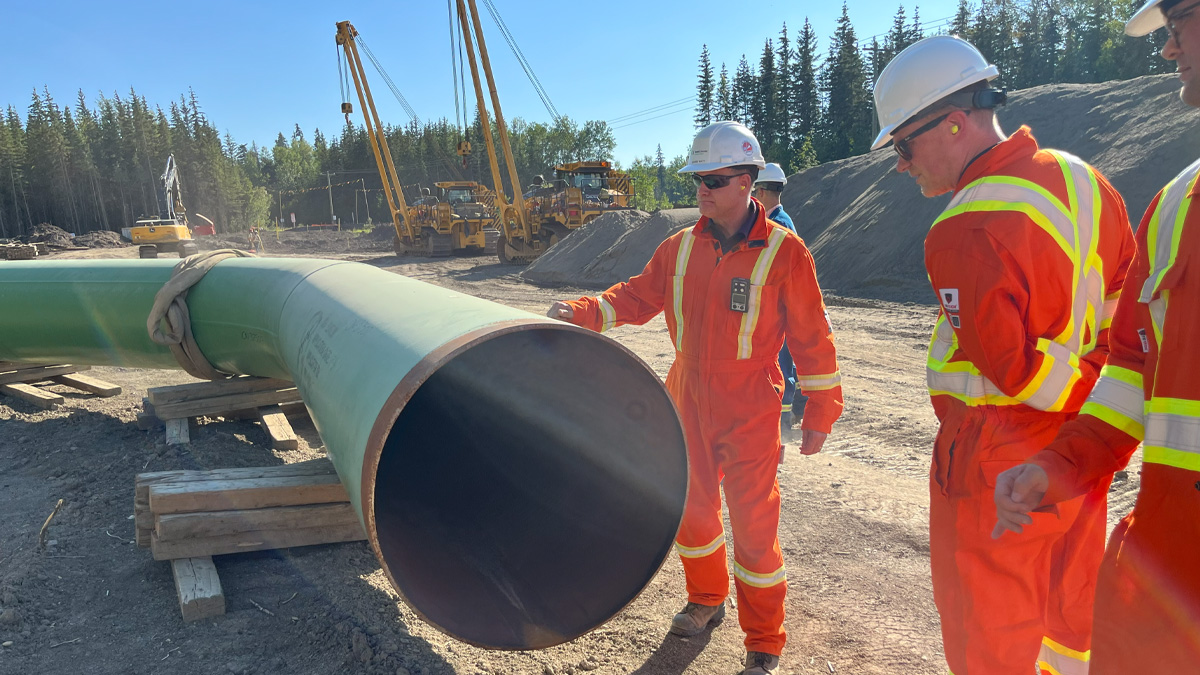
The construction was its own economy while it lasted. TC Energy says the project supported about 775 jobs at peak, and a build like this spends locally on gravel, fuel, equipment and lodging the entire time crews are in the area.
The $24 Million detail worth noticing
TC Energy's announcement includes more than $24 Million in contracts and spending directed to Indigenous businesses. That's procurement, not philanthropy. Earthworks, services and supply contracts went to Indigenous-owned companies in the project area, and that figure has become one of the standard measures of whether a major project actually left benefits in the communities it crossed, rather than just passing through them.
What happens along the route now
For the counties the pipe runs through, in-service is a change of season.
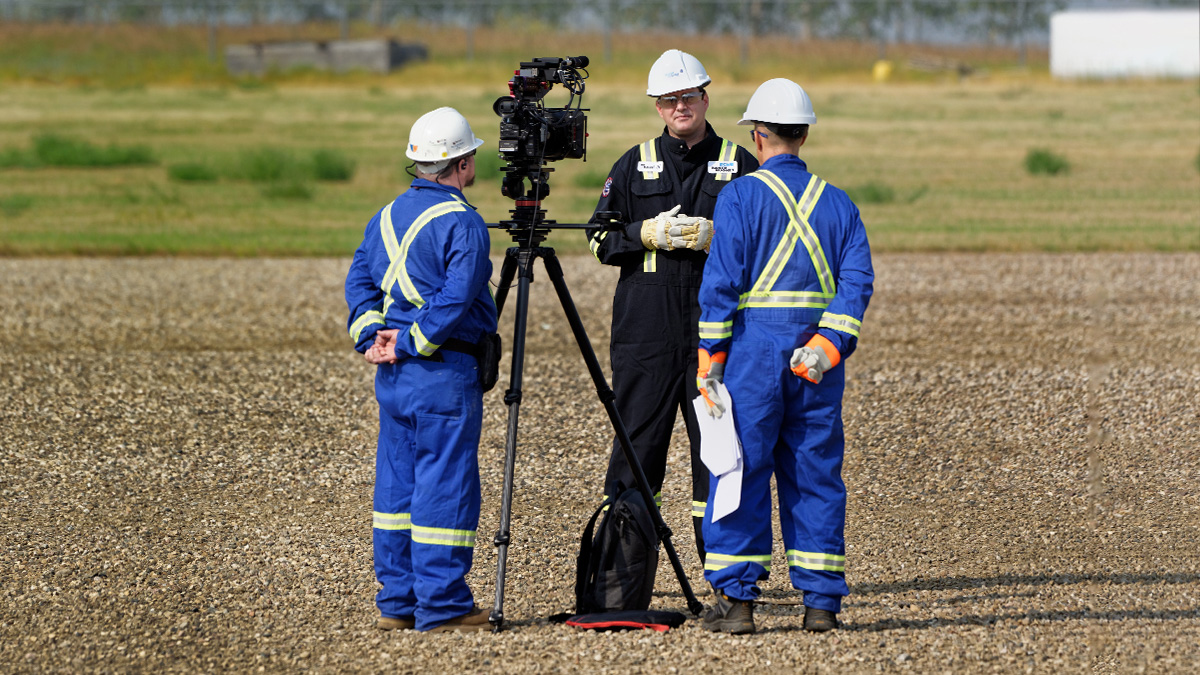
Construction traffic winds down and the right-of-way gets reclaimed, regraded, reseeded and returned to pasture and crop over the top of the buried line. Landowners along the corridor deal with TC Energy's land team on reclamation rather than construction from here, and the compressor stations at either end become the only visible, staffed pieces of the whole project.
The lasting local money is quieter than the construction boom but longer. Linear infrastructure pays municipal property taxes every year it's in the ground, so Saddle Hills County and the County of Grande Prairie No. 1 pick up a permanent addition to the assessment base that funds their roads and services. Rural counties in Alberta's gas country are built on exactly this, which is why councils fight for these routes even when their residents mostly experience them as two summers of truck traffic.
Where the gas goes
Alberta homes, power plants and industry take a share, as they always have. What's changed is the west-facing pull. Since LNG Canada started shipping from Kitimat, gas from this basin has a route to Asian markets it never had before, and demand on the whole system has grown with it. Expansions like Valhalla North are how the network keeps up with where its gas is now being asked to go.
It won't be the last one. TC Energy already has the next loop on this same mainline in development, the Colt Project in Yellowhead County, targeting 2028. The traffic keeps coming, the highway keeps adding lanes, and for a region whose paycheques run on that traffic, quiet infrastructure news is rarely just infrastructure news.
Sources:
TC Energy, Valhalla North and Berland River Project: https://www.tcenergy.com/operations/natural-gas/vnbr/
TC Energy, in-service announcement, July 2026






Comments
Conversation