Our thoughts are with Jon Wells' family, friends and the Blood Tribe (Kainai Nation) community.
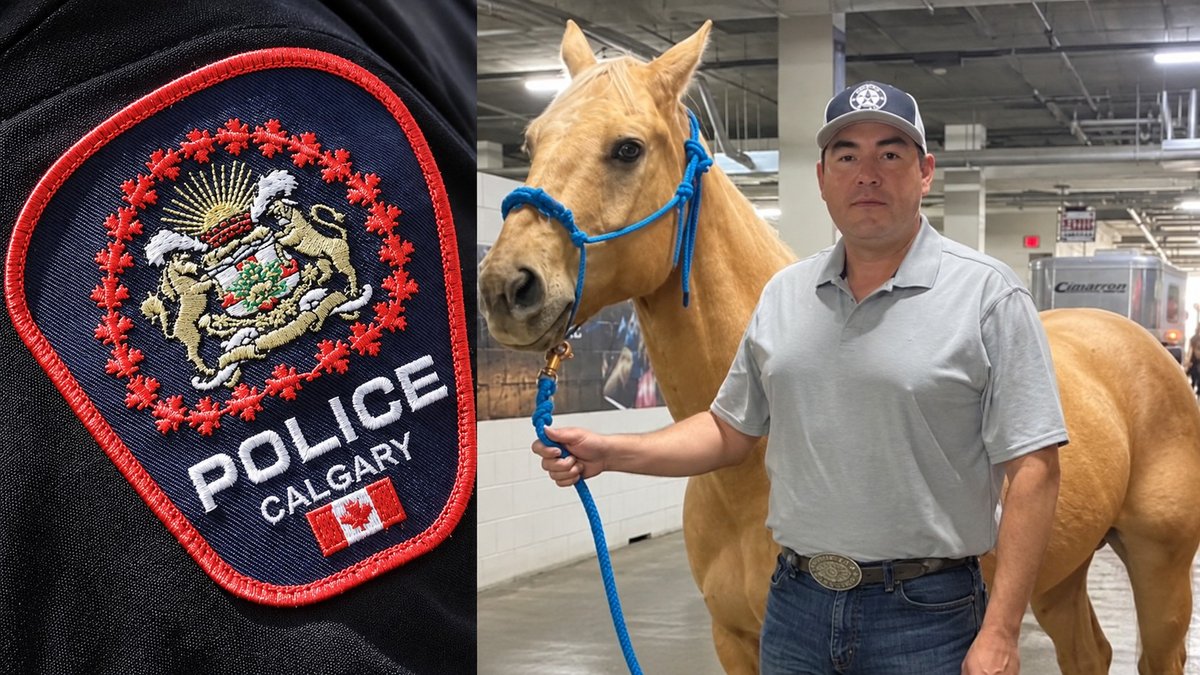
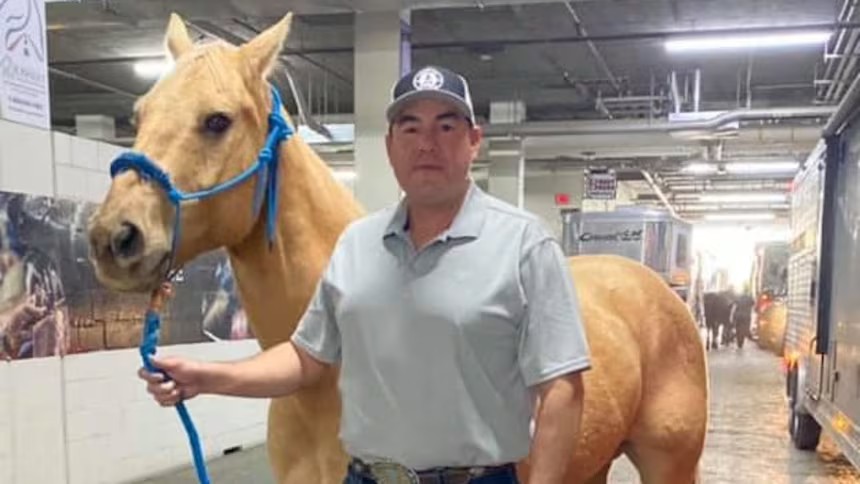
Three Calgary police officers have been charged with manslaughter in the death of Jon Wells, a 42-year-old Blood Tribe member, rodeo champion and father of three.
Wells died in September 2024 after he was tackled, stunned with Tasers and restrained face down in the lobby of a south Calgary hotel.
The Alberta Serious Incident Response Team (ASIRT) announced the charges Monday, Nov. 23, more than two years after his death.
The officers are:
Const. Filip Poskovic, 39
Const. Roy Braun, 53
Const. Vincent Washington, 48
Each faces one count of manslaughter and one count of assault causing bodily harm.
They were charged Monday morning at ASIRT's office and released on undertakings. Their case is scheduled for Jan. 6, 2027, at the Alberta Court of Justice in Calgary.
The Calgary Police Service says all three are relieved from duty with pay.
The charges have not been proven in court. All three officers deny the allegations and are presumed innocent.
Why ASIRT laid charges
ASIRT is Alberta's independent police watchdog. It investigates when someone dies or is seriously hurt in an encounter with police.
ASIRT said its two-year investigation found "reasonable grounds to believe offences were committed." Executive director Matthew Block made the decision to charge the officers, with support from the Alberta Crown Prosecution Service.

What ASIRT says happened in the hotel lobby
About a week after Wells died, ASIRT released a detailed account based on the officers' body-worn camera footage. Here is what it described. None of it has been tested in court.
Just before 1 a.m., Sept. 17, 2024. Staff at the Carriage House Hotel and Conference Centre, at 9030 Macleod Trail S.E., called police for help removing a man from the lobby.
One officer arrived first. ASIRT said Wells was unarmed, with his hands in full view. The officer told him to leave.
Wells seemed confused. He acted "in a confused fashion," ASIRT said, and tried to pick up items from the floor "that were clearly non-existent."
About 30 seconds later, the officer pointed a Taser at him. Wells raised his hands, asked the officer not to shoot and said he would leave.
Walking toward the door with his hands up, Wells said: "I don't want to die." The officer told him to stop talking and kept the Taser pointed at him.
Two more officers arrived. Wells said again that he didn't want to die. The first officer holstered his Taser and tried to grab him.
ASIRT said Wells had never been identified, and was never told he was being detained or arrested.
The struggle. Wells resisted being grabbed, ASIRT said. A second officer tackled him and punched him in the head while they were on the ground. The other two officers fired their Tasers.
About three and a half minutes of what ASIRT called "various uses of force" followed. Officers then put Wells in handcuffs and leg restraints.
Face down, with a spit hood. Wells was vomiting and bleeding from the mouth. Officers pulled a spit hood, a mesh covering meant to stop someone from spitting, over his head as he lay face down.
About seven minutes after he was handcuffed, paramedics gave Wells a sedative. He was still face down.
About three minutes later, someone noticed he was unresponsive. First responders tried to revive him. Wells was pronounced dead in the hotel lobby.
What police said that night
In its first release on Sept. 17, 2024, the Calgary Police Service said officers responded to a man who was "acting erratically" and "not co-operative." Police said he went into medical distress after he was taken into custody.
ASIRT's account, based on the body-camera video, came eight days later.
The officers' lawyers respond
All three officers deny the charges, their lawyers told CBC News:
Cory Wilson, who represents Poskovic, said his client "is presumed innocent and plans to vigorously defend himself at trial."
Shamsher Kothari, who represents Braun, said his client "vehemently denies the charges laid today." He added: "We look forward to his exoneration within the upcoming judicial proceedings."
Don MacLeod, who represents Washington, said his client "maintains his innocence and intends to mount a vigorous defence."
Calgary police: charges are "extremely serious"
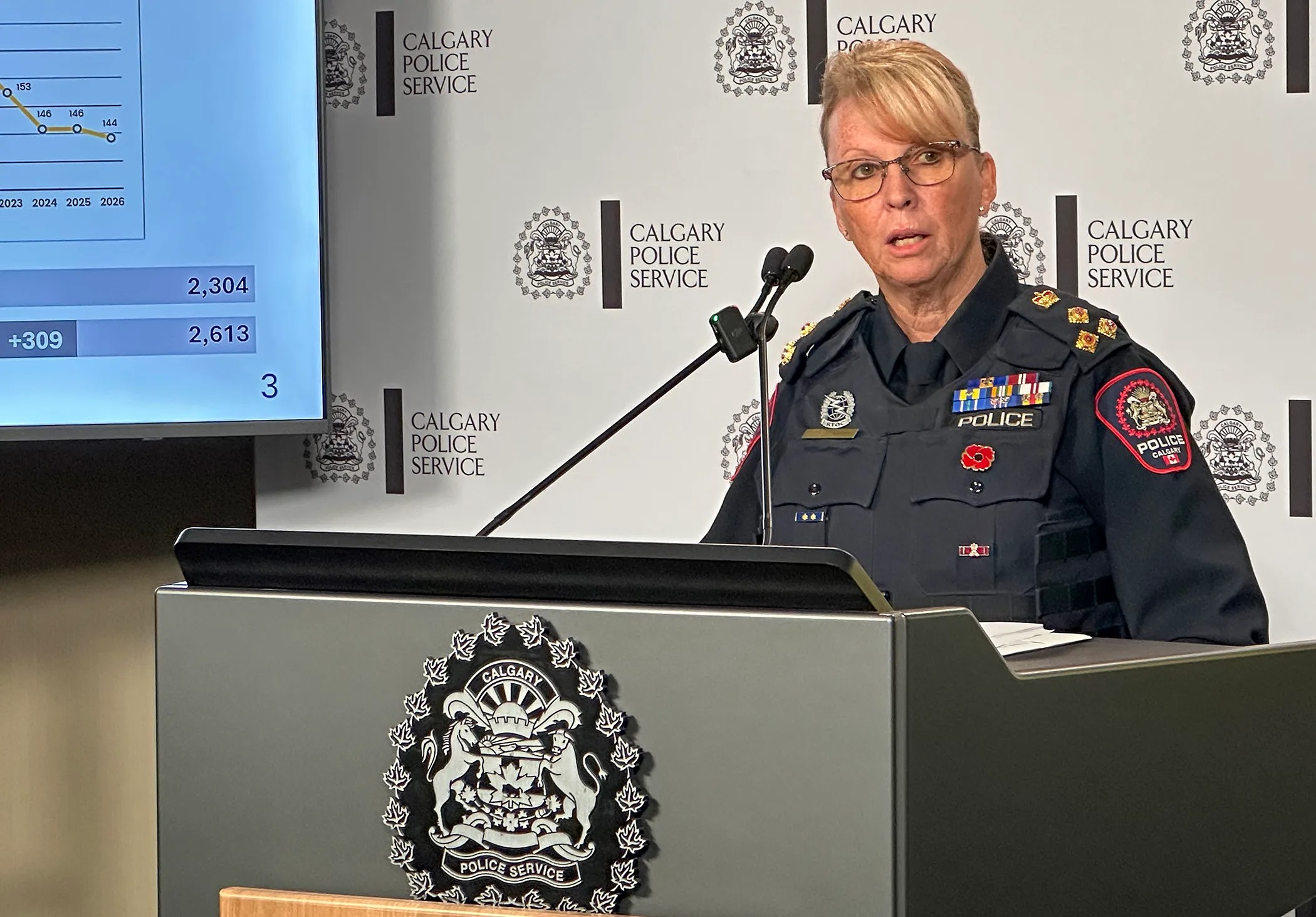
In a statement Monday, the Calgary Police Service called the charges "extremely serious." It said it recognizes the "significant concerns" they raise about police accountability, use of force and public trust.
"We understand that incidents like this can further challenge our relationships with all communities and reinforces the importance of transparency, accountability and meaningful engagement," the statement said.
Police and ASIRT both say they can't comment further now that the case is before the courts.
His mother: "It should be a heavier charge"
Wells' mother, Edith Wells, learned about the charges Monday morning, when she met with ASIRT at the Lethbridge Friendship Centre, APTN News reported.
"It should be a heavier charge," she told APTN.
Who Jon Wells was
Jon Wells was from the Blood Tribe (Kainai Nation) in southern Alberta.
He grew up in a rodeo family. He wrestled steers and rode broncos, and he competed across Canada and the United States. In 2012, he won the Indian National Finals Rodeo tour championship in steer wrestling.
He was the father of three daughters.
When his family spoke to APTN News in 2024, they described him with the Blackfoot word "Kiimaapiipitsin," which APTN translated as kindness and humility.
His father, Larry Fox: "He was kind, a kind man; he helped everybody."
His aunt, Audrey White Quills: "He was always there to help the next person."
His brother-in-law, Grant Crying Head: "My wife and I have been sober 10 years thanks to Jon."
His mother, Edith: "He had so much to do, so much more to do. It wasn't his time."
Hundreds marched for him
On Sept. 30, 2024, the National Day for Truth and Reconciliation, hundreds of people walked from the Carriage House Hotel to a nearby Calgary police station. They stopped along the way for songs and prayers.
The call for a public inquiry
After Wells died, his family and the Blood Tribe called for a public inquiry.
Then-Blood Tribe Chief Roy Fox said the death brought back memories of a 1980s public inquiry, when the Blood Tribe spoke out about unexplained deaths of Indigenous people. That inquiry, Fox said, "underscored the cultural gap" between his community and police.
"It is disheartening that we again find ourselves in a similar situation and we are addressing these issues once again," he said at the time.
In October 2024, the Assembly of First Nations backed the family. Resolution 62/2024 was moved by Chief Fox and approved by the AFN executive committee after a Special Chiefs Assembly held in Calgary. It commits the AFN to support Wells' family and the Blood Tribe "in seeking an adequate public inquiry into the incident."
The resolution also calls on the Alberta and federal governments to:
Screen officers more strictly for racial bias
Require training on First Nations issues and colonization
Require de-escalation techniques
Bring mental health professionals into crisis calls
What happens next
The officers' case is in court Jan. 6, 2027.
Under the Criminal Code, manslaughter means causing a death through an unlawful act, without the intent required for murder. Assault causing bodily harm means an assault that causes an injury more than brief or minor.
We'll update this story as the case goes through the courts.
Sources
Alberta Serious Incident Response Team (ASIRT): News release on charges, Nov. 23, 2026 (add link)
Alberta Serious Incident Response Team (ASIRT): Update on Calgary in-custody death, Sept. 25, 2024 (add link)
Calgary Police Service: Statement on in-custody death, Sept. 17, 2024 (add link)



Comments