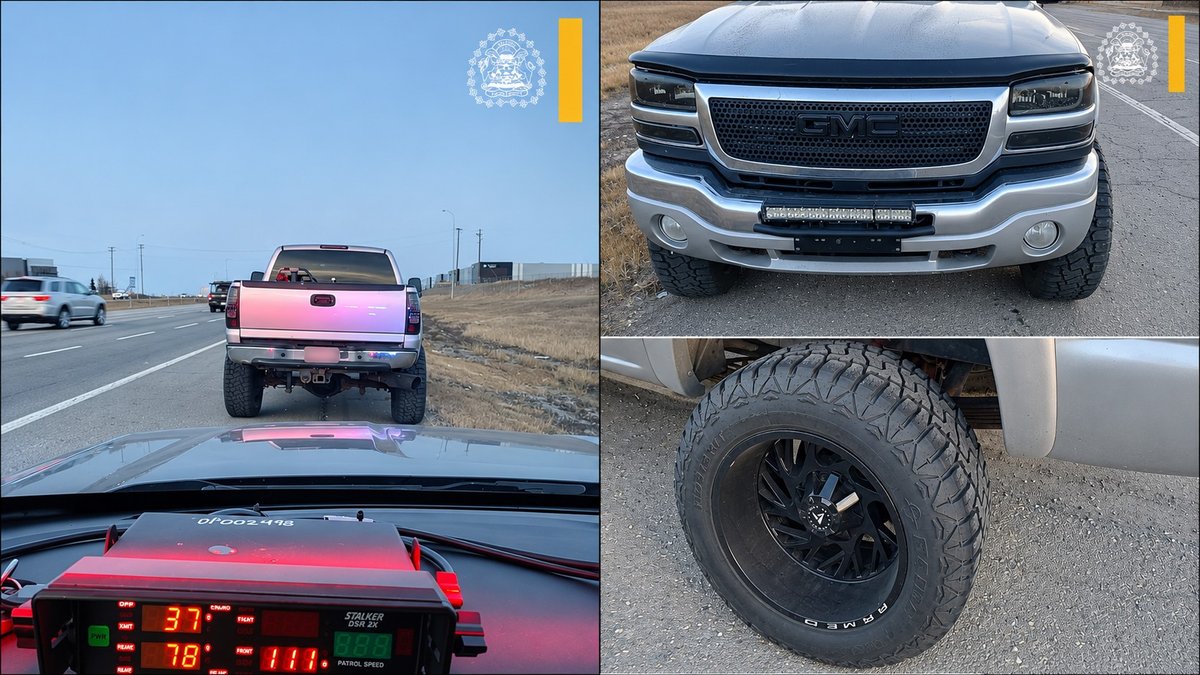
It started with the tint. It ended with a tow truck.
Calgary police pulled over a pickup on Friday, Nov. 13. The headlights were tinted. So were the tail lights. So were the front windows.
Then officers kept looking. No mudflaps. No front marker lamps. No rear marker lamps. No registration. No insurance.
That’s eight tickets worth $3,931. The driver also had to pay to have the truck towed.
“Illegal tint & missing required equipment can affect visibility & safety on the road,” police wrote on X.
Police didn’t say where the stop happened or release anything about the driver. None of the tickets has been proven in court.
Every ticket, and what it cost
| Violation | Fine |
|---|---|
| No insurance | $3,000 |
| No registration | $421 |
| Illegally tinted front windows | $105 |
| Illegally tinted headlights | $81 |
| Illegally tinted tail lights | $81 |
| No mudflaps | $81 |
| No front marker lamps | $81 |
| No rear marker lamps | $81 |
| Total (before the tow) | $3,931 |
The insurance ticket alone is more than three-quarters of the bill. The six equipment tickets add up to $510.
“Only the insurance matters”
That was the loudest reaction online. Plenty of people said the uninsured part was the real problem, and the tint and mudflap tickets were petty.
They’re right that insurance is the big one. Driving without it is the most expensive ticket on the list by far, and it’s what leaves other drivers on the hook if there’s a crash.
But police say the rest isn’t decoration. Each of the equipment rules is there because it affects whether other people can see you, or whether you can see them.
Is any front window tint legal in Alberta?
No. This is the part a lot of drivers don’t know.
In Alberta, you can’t put any tint film on the windshield or the front side windows, the ones beside the driver and front passenger. Not light tint, not “legal-looking” tint. None. Rear side windows and the back window are a different story.
Calgary police list three reasons:
Visibility. Tint makes it harder for drivers to see pedestrians and cyclists, and harder for them to see you, especially at night.
Eye contact. Pedestrians and other drivers can’t see if you’ve noticed them.
Safety. Police say film can keep glass from breaking into small pieces in a crash, leaving sharp hazards, and officers can’t see how many people are inside.
It’s not a theoretical risk. Lethbridge police said last year that illegal tint was a direct factor in two serious pedestrian crashes in that city in two years, one of them fatal. They launched a zero-tolerance tint crackdown in response.
The only exception is medical. Drivers with certain conditions, such as recurrent skin cancer, can apply to the province for a permit. Even then, the film has to be clear UV film that lets through at least half the light. Migraines and light sensitivity don’t qualify.
“Everyone in Calgary has tint”
It sure looks that way. Tinted front windows are common in Calgary, and several people said they see dozens of them every day.
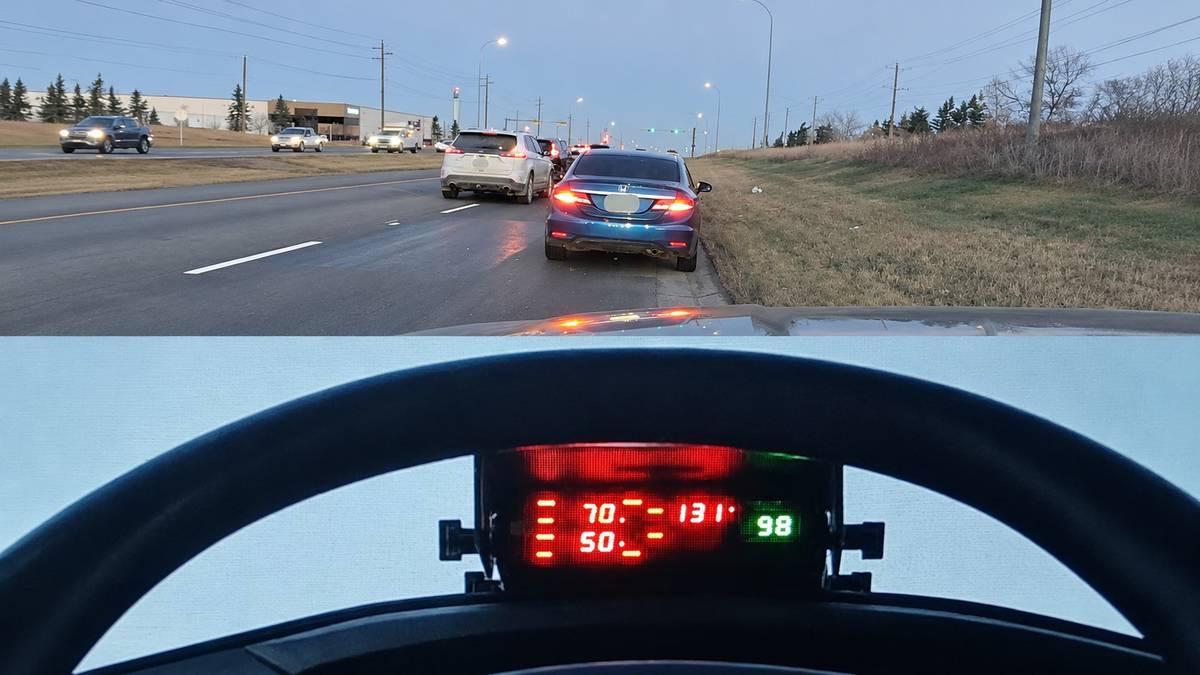
But how common it is doesn’t change the law. Calgary police have been ticketing front tint again and again this fall. A food delivery driver clocked at 131 km/h on McKnight Boulevard N.E. was also ticketed for tint. So was a BMW driver caught at 129 km/h on 96 Avenue N.E. in August.
Tinted headlights and tail lights
These are their own violations, separate from the windows.
Calgary police say headlights must be white, with clear, untinted lenses. Tinting them cuts how far you can see at night. Tail lights must show red and be visible from at least 150 metres. Smoke them out and the driver behind you may not see you braking.
Why mudflaps?
This one confused a lot of people.
Alberta’s rule isn’t really about flaps. It’s about covering the tire. A vehicle needs a fender, part of the body, or a mudguard that covers the full width of the tire and extends far enough behind the wheel to stop it throwing rocks, slush and gravel at the vehicles behind.
A stock pickup’s fenders may already do that. A lifted truck with wider tires that stick out often doesn’t, so it needs mudflaps.
On a Calgary road in November, that’s the difference between a car behind you getting a sprayed windshield and getting a cracked one.
Several truck owners online pointed out that staying legal isn’t hard. Big tires and mudflaps can go together.
What about police vehicles with tint?
A few people posted photos of police vehicles with dark front windows and asked whether the rules apply to police too.
Calgary police didn’t address that in their post, and the province’s tint page doesn’t mention police or emergency vehicles.
Part of a busy fall for Calgary traffic police
This is the latest in a long run of enforcement posts from Calgary police this fall:
Oct. 30: a commercial truck hauling 7,800 kg on a 4,500 kg limit, with three bad tires and no working parking brake
Oct. 25: a Kia clocked at 111 km/h in a 60 zone on 96 Avenue N.E.
Early November: a food delivery driver clocked at 131 km/h in an 80 zone on McKnight Boulevard, also ticketed for tint
Oct. 17: a driver clocked at 189 km/h on Stoney Trail near Glenmore Trail
The speeders get the headlines. Stops like this one show the other side of it: vehicles that aren’t safe, or legal, before they even pull out of the driveway.
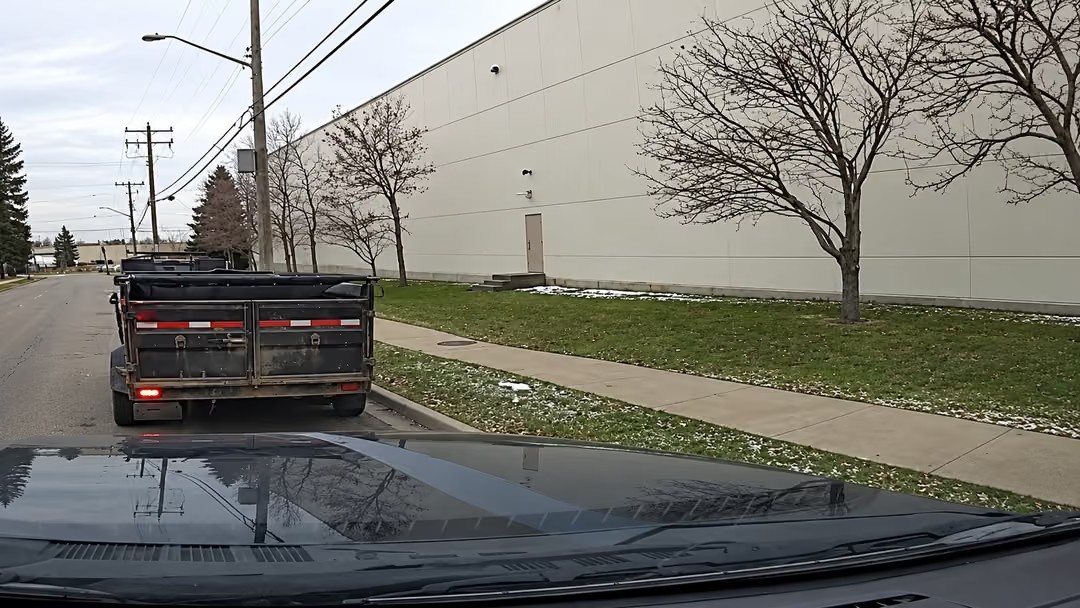
What happens if you get caught
Tint and equipment tickets don’t always end at the fine. According to Calgary police, drivers can be:
Given a vehicle compliance form with 60 days to fix the problem and show proof at a district office
Told not to drive the vehicle until it’s fixed
Have their licence plate seized until repairs are done
Drive to Zero
Police ended the post, as usual, with a link to the City’s Drive to Zero campaign, part of Calgary’s Vision Zero plan to end deaths and serious injuries on city roads.
The City says the need is real. In 2025, 15 pedestrians were killed on Calgary streets, the most in 11 years, and 20 motorists died.





Comments