
Calgary is getting ready to pump the brakes on giant AI data centres.
City council voted 13-2 on Tuesday, Nov. 17 to pursue a temporary pause on new applications for large data centres.
Nothing is paused yet. The city first has to change its land-use bylaw, and that change goes to a public hearing expected in March 2027.
Mayor Jeromy Farkas says his biggest worry is water.
"We're already struggling to keep up with the water needs of our growing city," Farkas said in a video posted the morning after the vote. "Adding massive new demands to that same system makes me really nervous."
It comes as Alberta's data centre boom gets closer to Calgary. Six projects are already built, under construction or proposed in and around the city, according to our Alberta Data Centre Tracker.
What council approved
Ward 2 Coun. Jennifer Wyness brought the motion. Farkas and councillors Raj Dhaliwal, Andrew Yule and John Pantazopoulos co-signed it. It had already cleared executive committee 10-3 earlier this month.
It has four parts:
New zoning rules. Calgary's bylaw doesn't define a data centre right now. Staff will create a zoning district that sorts them by size and sets out where they can go. It's due back by March. (Unanimous)
A study of the impacts. It covers electricity, water, noise, the environment, public safety and the economic benefits, and is due by the end of 2027. (Unanimous)
A closer look at water. This means the combined effect of several projects on Calgary's water system and on the neighbouring communities that depend on it. (Unanimous)
A temporary pause. The city will start the legal steps toward a moratorium on new large data centre applications. (Passed 13-2)

Why Calgary can't hit pause today
Wyness says Alberta's Municipal Government Act gives the city the power to issue a moratorium. But first, it has to close a gap in Calgary's land-use bylaw.
That's what the March hearing is for. Council will hear from the public and then decide whether to change the bylaw. Only after that could a pause take effect.
Wyness says the city needs clear rules so applicants know where they stand.
"You don't know how council is going to vote when there is no consistent policy," she said.
Who voted no
Councillors Myke Atkinson and Landon Johnston voted against the pause.
Atkinson's concern is that the bylaw change could let council pause applications for any new kind of land use in the future, not just data centres. If council takes on that power, he said, it "needs to own that responsibility."
Johnston said he isn't firmly against large data centres. He questioned how a moratorium could affect Calgary's economic growth.
"Open for business," but no "blank check"
Farkas says the goal isn't to shut the door.
"Calgary does need new jobs and new businesses," he said. "But I want to see how many permanent jobs these facilities would create. I want to understand their water and electricity demands, and I want developers to pay their fair share of the infrastructure costs."
"If private companies get the benefits while Calgarians get stuck with the bills, that's simply a bad deal."
He said about 80% of Canada's AI data centre development is expected to happen in Alberta, and that Calgary's plan would go "above and beyond" the province's new rules.
"Until we have the facts, I'm not comfortable giving these projects a blank check."
The industry pushes back
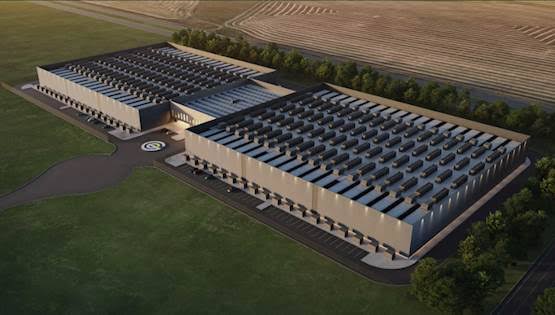
The Canadian Coalition for Digital Infrastructure, which represents the data centre industry, says a pause would "send the wrong signal" and put investment at risk.
The group says data centres bring jobs and investment, and that Calgary already has many that have run for years. It says many local data centres are cooled with systems similar to ordinary commercial buildings and use minimal drinking water.

Why water is the sticking point
Some data centres use large amounts of water to cool their servers. Others use very little. It depends on the cooling system.
Calgary is already spending hundreds of millions of dollars replacing aging pipes and has asked residents to conserve water. Farkas wants to know what happens if several large industrial users all draw from the same system.
For any proposal, council wants to know:
How much water would it use?
Where would that water come from?
What upgrades would the city need?
Who pays for them?
The northeast Calgary application already in the works
One application is already under review: a rezoning for a large data centre on undeveloped land east of 52 Street N.E. and north of Redstone, in the city's far northeast.
The file, LOC2026-0156, covers four parcels, including land at 14047 68 Street N.E. It was filed in August. City administration has asked for several studies before any decision.
The proposed pause wouldn't stop it. The application is still moving through the regular process.
Data centres already in and around Calgary
Calgary isn't starting from scratch. Our Alberta Data Centre Tracker, built from the province's Major Projects inventory, lists six projects in or near the city.
Under construction in Calgary:
eStruxture CAL-3, a $750-million data centre scheduled to finish in 2026
eStruxture CAL-1, where Phase 4 alterations are underway
Proposed around Calgary:
Beacon Indus Data Centre Hub, in Rocky View County southeast of the city
Beacon Chestermere AI Data Centre Hub, just east of Calgary
Beacon Foothills AI Data Centre Hub, listed at $4 billion
Prairie Sky Data Solutions Strathmore Data Center, east of the city
Calgary's pause would only apply to new applications for large data centres inside city limits. It wouldn't touch projects already being built, or anything in neighbouring municipalities.
On the same day as Calgary's vote, the Alberta Utilities Commission approved a 1,494-megawatt natural gas power plant for the Beacon Indus project, with conditions. Rocky View County says the project still needs a county development permit before it can go ahead.
Other cities have done this
The motion pointed to Canadian cities that have paused or restricted data centres, including Oakville and Mississauga in Ontario, Cumberland, N.S., and Saskatoon.
Closer to home, Rocky View County, Calgary's neighbour, recently put its own temporary freeze in place.
Alberta's own guardrails: Bill 42
The day after Calgary's vote, the province tabled Bill 42, its first set of rules for large data centres. If it passes, data centres drawing 10 megawatts or more would face:
A 600-metre buffer from homes. The regulator wouldn't consider applications any closer. A municipality could ask for a shorter distance only if affected landowners and the regulator agree.
A ban on prime farmland. About 14 million acres of Alberta's best farmland, plus currently irrigated land, would be off-limits.
A single regulator. The Alberta Utilities Commission would oversee large data centres, including noise and lighting.
Near-zero cooling water. Facilities would have to keep cooling water use close to zero and report how much they use. The detailed standard comes later.
Reusable waste heat. Data centres would have to be built so their heat can go to nearby greenhouses, industry or homes.
Developers paying for on-site power lines. The province says existing rules already require data centres to cut power in a grid emergency before homes are asked to.
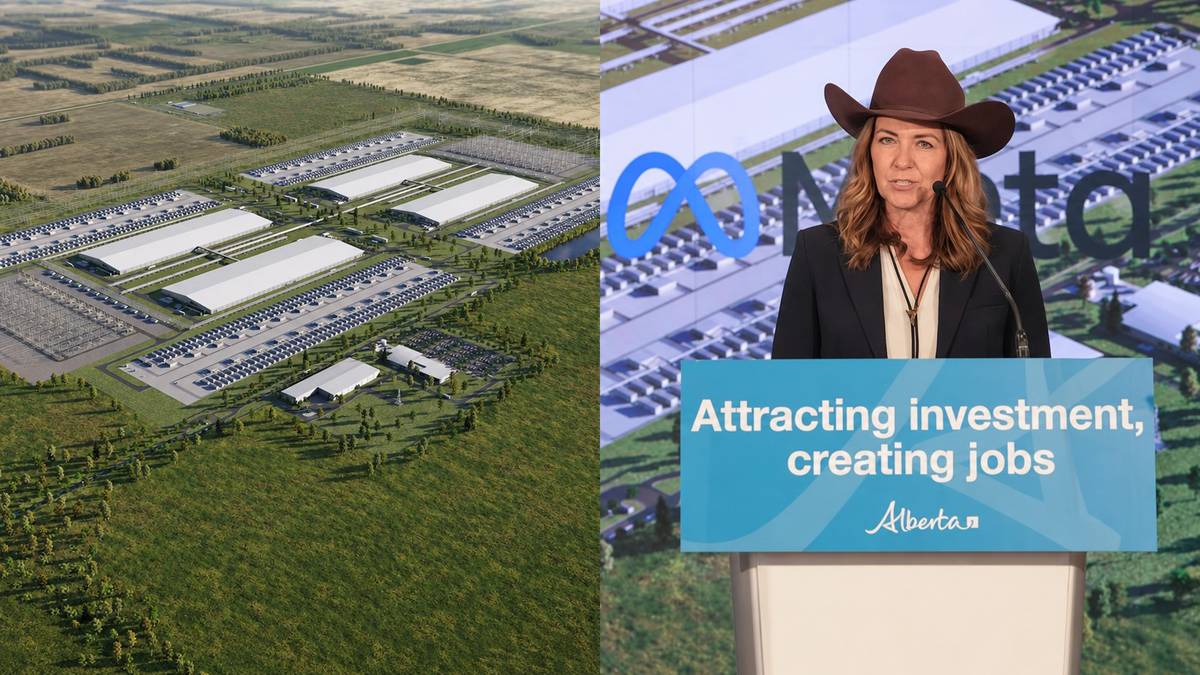
Some industrial areas could be exempt from the buffer, including the Alberta Industrial Heartland northeast of Edmonton and brownfield sites. The province estimates about 30% of current proposals would be affected. Projects that are already approved and underway, like Meta's $13-billion campus, don't have to follow the new rules.
Bill 42 is about where data centres can go across Alberta. Calgary's question is whether its own water system can handle them, and whether to pause new ones until it knows.
Read our full breakdown of Bill 42.

The bigger picture in Alberta
Across the province, our tracker lists 18 data centre projects:
6 under construction, including Meta's $13-billion campus in Sturgeon County, north of Edmonton
12 proposed, including Tourmaline's $20-billion Malachite One near Edson and Kevin O'Leary's $12-billion Wonder Valley first phase near Grande Prairie
The projects that list a price add up to more than $64 billion.
Elsewhere in Alberta:
Medicine Hat already has the province's largest data centre.
Newell County is reviewing a 1,200-megawatt proposal.
Brooks rewrote its zoning rules for data centres after residents raised concerns about water, noise and power.
How to have your say
The bylaw change is expected to go to a public hearing in March 2027.
Once it's on council's agenda, you can:
Send written comments through the City of Calgary's public submission form
Register to speak at the hearing
The northeast rezoning application has its own file and its own process.







Comments