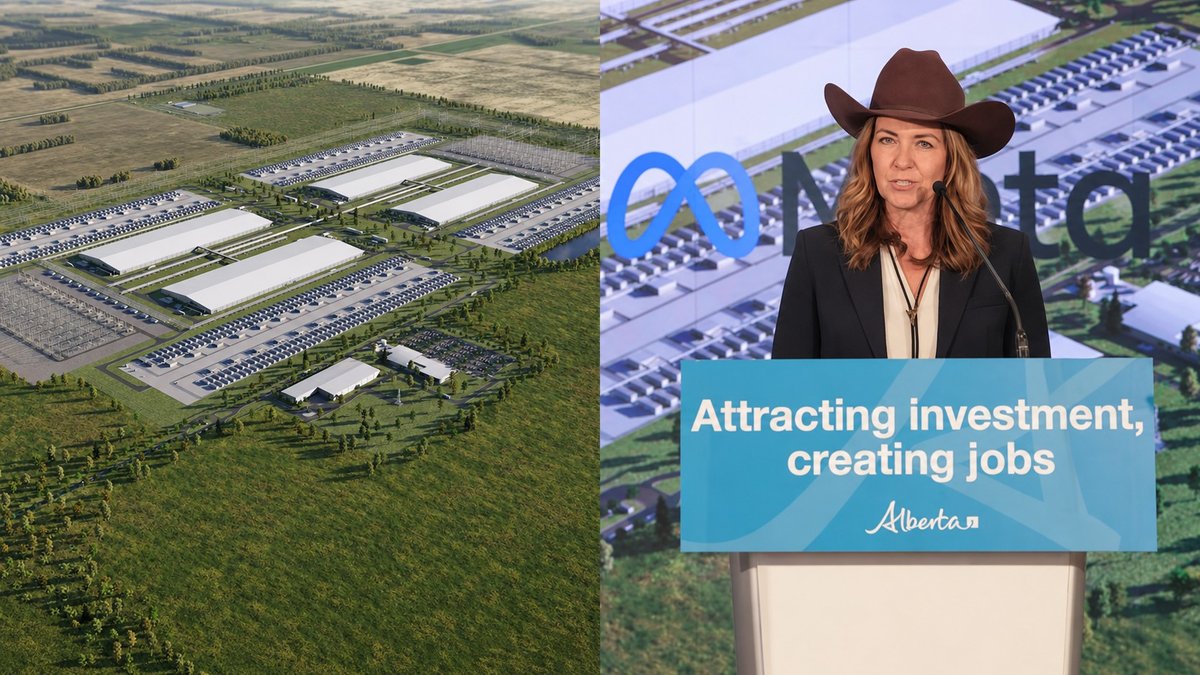
After a summer of packed town halls and protests, Alberta is putting limits on where AI data centres can go.
Bill 42, tabled Nov. 18, would stop large data centres from being built within 600 metres of the nearest home, on Alberta’s best farmland or on irrigated land. The rules would apply to any facility drawing 10 megawatts or more.
The province says about 30% of current proposals could be affected.
The biggest project in the province won’t be. Meta’s $13-billion campus in Sturgeon County is already approved and under construction, so the new rules won’t apply to it.
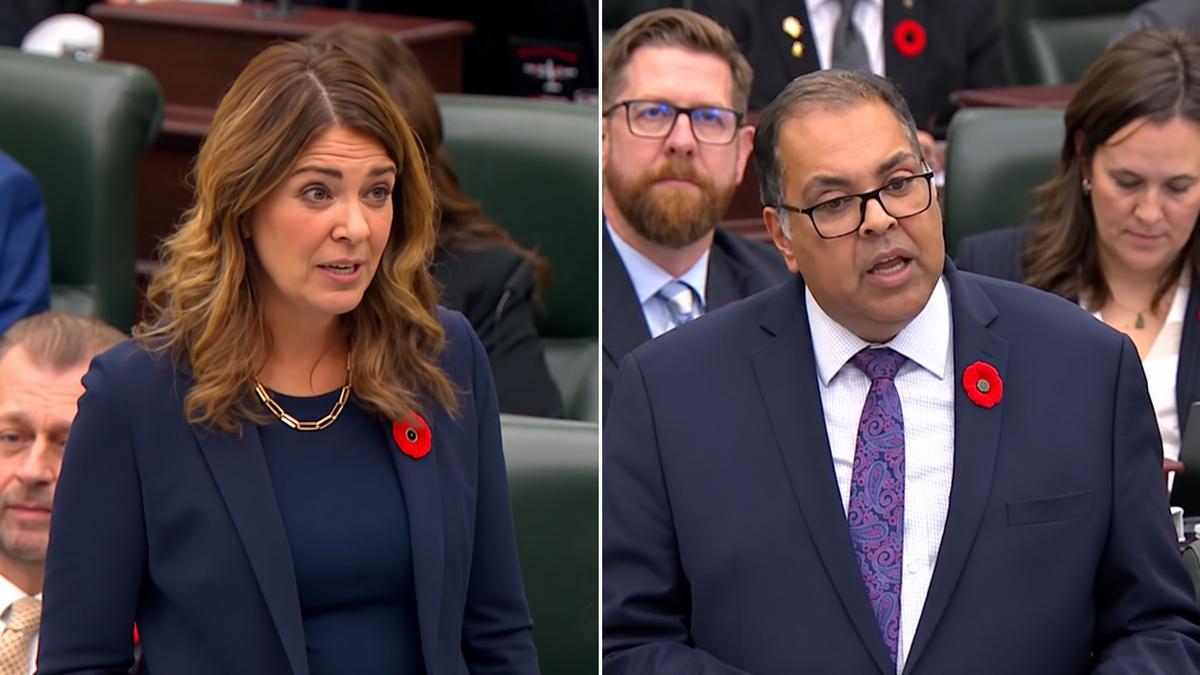
“We’ve heard from Albertans and municipalities that they still have questions,” Technology and Innovation Minister Nate Glubish said Wednesday.

What Bill 42 would change
The bill is called the Energy, Environment and Utilities Statutes Amendment Act, 2026. Here’s what it would mean for data centres:
A 600-metre buffer from homes. Data centres of 10 MW or more couldn’t be built within 600 metres of the nearest home. Glubish said the regulator “will not even consider an application that is inside of those boundaries.”
No building on prime farmland. The ban covers about 14 million acres: Class 1 and 2 farmland, plus some Class 3 land in municipalities that don’t have Class 1 or 2. Land currently under irrigation would also be off-limits.
A single regulator. The Alberta Utilities Commission (AUC) would oversee large data centres. The same noise limits that already apply to power plants would apply to them too.
Close to zero water for cooling. Facilities would have to use almost no water to cool their equipment and report how much they use. The detailed standard would come later. The water rules would not cover the gas plants that power the data centres.
Waste heat must be usable. Data centres would have to be designed so their heat can be captured and sent to greenhouses, industry or homes nearby.
Glubish said the goal is “the highest standards in all of North America.”
Where the 600-metre rule could bend
The buffer isn’t absolute.
A municipality could ask for a shorter setback, but only if affected landowners and the AUC agree.
Some areas could be exempt from the setback entirely:
The Alberta Industrial Heartland northeast of Edmonton
The Greenview Industrial Gateway near Grande Prairie
Brownfield sites, meaning land that has already been developed for industry
That first exemption matters more than it sounds. Some of Alberta’s biggest proposed AI campuses are in the Heartland.
Why Meta’s project doesn’t have to follow the rules
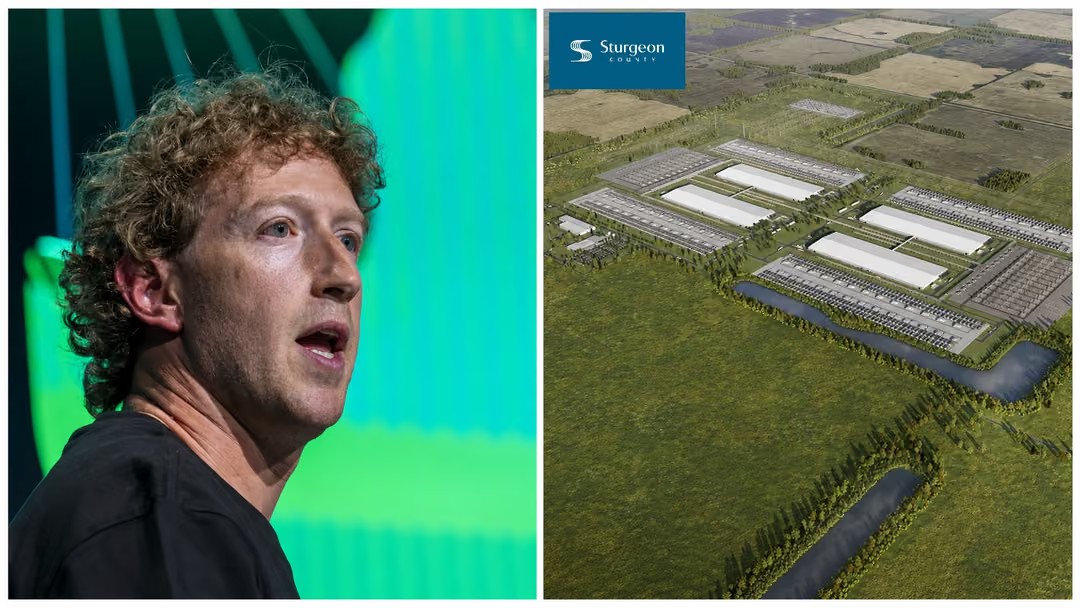
Meta announced its Sturgeon County campus in July. Site work had already started under a county permit, and the facility is expected to come online in two to three years.
Because the project already has approval, the new rules won’t apply to it. Projects that have development permits and are well underway are expected to be treated the same way. Exactly how far along a project has to be will be set later in regulations.
Sturgeon County Mayor Alanna Hnatiw welcomed the bill. The county is “encouraged by the progress on regulatory frameworks for data centre development,” she said in a statement.
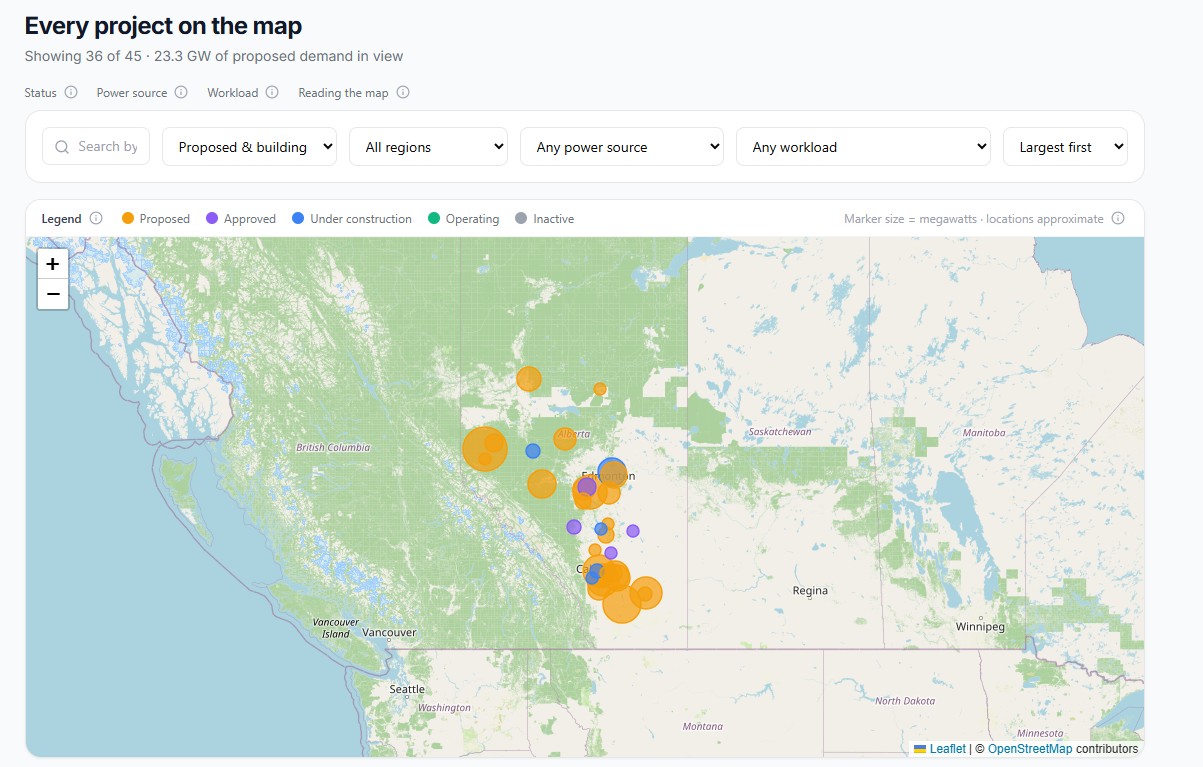
Want to see where every proposal stands? Our Alberta Data Centre Tracker maps the projects that are proposed, approved and under construction across the province.
What Bill 42 means for the projects we’ve been tracking
The province says about 30% of current proposals would be affected, but it hasn’t said which ones. For the biggest projects we’ve covered, the answer depends a lot on where they are.
Beacon Heartland, east of Gibbons (about 800 MW)
This is the Sturgeon County campus where Anthropic, the company behind Claude, is reportedly in talks to lease space. It’s planned for about 320 acres of heavy industrial land in the Industrial Heartland, one of the areas the province says could be exempt from the buffer. It’s also well along. The AUC approved its 920-megawatt gas plant, with conditions, on Oct. 23, and Sturgeon County has issued a master development permit. Whether that counts as “well underway” won’t be clear until regulations are written. Read our coverage.
Northeast Edmonton’s Energy and Technology Park
Arizona-based Walton Global wants to rewrite the planning rules for part of this park so data centres and power plants can go there, possibly creating one of North America’s largest data centre districts. It’s also in the Industrial Heartland, but that’s no free pass. The park includes the Alberta Railway Museum, Nanaksar Gurdwara and the Edmonton Institution, and much of the land is still farmland. Nothing has been approved, and its size, power use and water use haven’t been disclosed. Read our coverage.
Malachite One, southwest of Edson (up to $20 billion)
Tourmaline’s proposed campus near the hamlet of Robb in Yellowhead County would burn its own natural gas to make about a gigawatt of power. It’s one of the projects CBC listed as still in the works, and it sits outside the named industrial zones. That means it would have to meet the new buffer, farmland and noise rules unless it qualifies as already underway. Residents have already raised questions about water, noise and traffic on Highway 47. Read our coverage.
Other proposals CBC named: Beacon’s Indus Data Centre Hub in Rocky View County and the Mihta Askiy Data Centre in Northern Sunrise County.
The AUC has already shown it will say no. In August, it rejected a natural gas plant meant to power a large data centre in Olds, proposed by Synapse Real Estate Corp. “Synapse failed to demonstrate any compelling justification for selecting that location,” the commission wrote. Olds Mayor Dan Daley said the new measures strike a reasonable balance between protecting communities and keeping the power on.
Track every project on our Alberta Data Centre Tracker.
Why Alberta is doing this now
Developers want far more power than Alberta has.
As of October, data centre developers had asked the Alberta Electric System Operator for more than 25,000 MW of grid connections. That’s nearly double Alberta’s all-time peak demand of about 12,800 MW.
Albertans have been wary. A CBC poll in September found only 7% strongly support data centres, while 31% strongly oppose them. Another 26% mostly oppose them but think some should be built.
Glubish spent the summer at town halls in places like Ponoka, Sturgeon County and Grande Prairie, where hundreds of people raised concerns about water, noise, power bills and farmland.
What it could mean for your power bill
Bill 42 would make developers pay for electrical lines within their own sites. The province also says existing rules already require data centres to cut their power use in a grid emergency before homes or essential services are asked to.
The bigger question is the price of power itself. In August, a Pembina Institute analysis projected Meta’s campus could add $462 a year to typical household bills while it draws from the grid before its own power plant is built. Meta and the province disputed the analysis. The province says fees Meta pays could lower the transmission part of household bills.
What else is in Bill 42?
The bill isn’t only about data centres. It would also:
Require oil and gas companies to set aside money to clean up new wells, with the funds staying attached to each well if it’s sold
Raise the maximum fine for serious environmental contamination to $6 million for corporations
Repeal Alberta’s 2016 oil sands emissions limit law, which the province says was never put into effect through regulations
What happens next
Bill 42 has passed first reading. It still has to pass second and third reading before it becomes law, and much of the detail will come through regulations.
What to watch for:
The exact water standard
When municipalities can shrink the 600-metre buffer
How far along a project must be to avoid the new rules





Comments