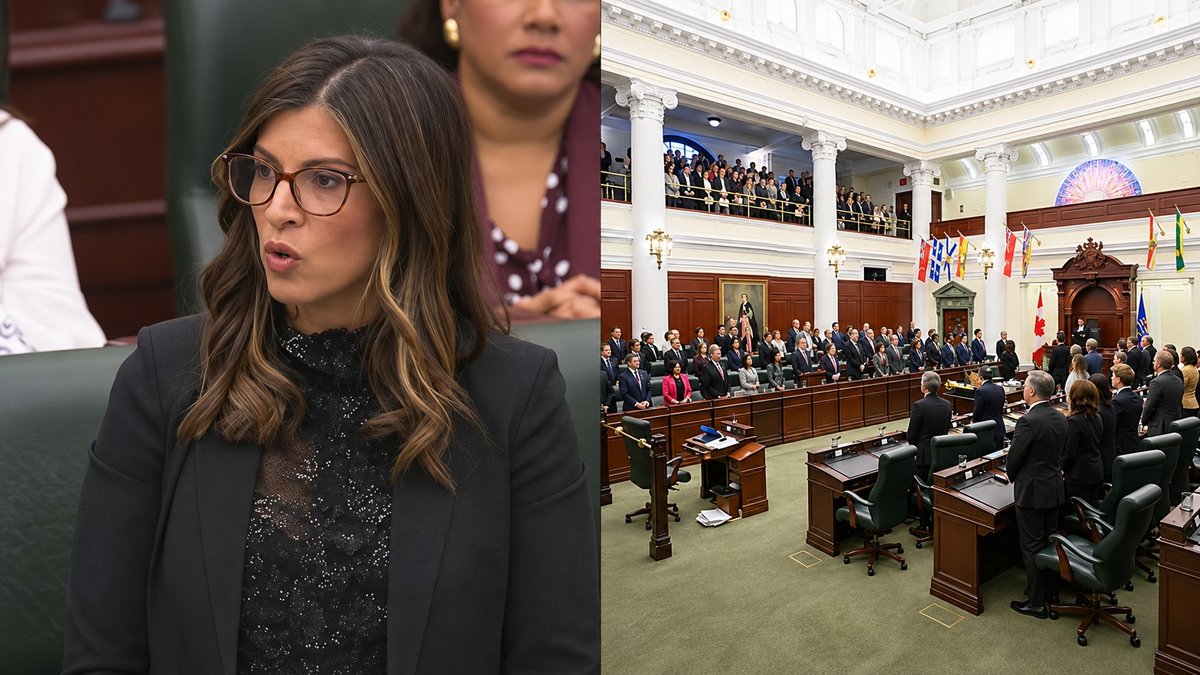
"The UCP have no problem with cheating. They just don't want anybody to call it that."
Alberta NDP deputy leader Rakhi Pancholi said it on the floor of the legislature on Wednesday, Nov. 25, during debate over the map that would set the boundaries for Alberta's next election.
Within a minute, she was ordered out of the chamber.
What happened in the House
Pancholi opened with a warning.
"Democracy is a living, breathing thing. If you ignore it, if you starve it, it will die," she said. "This government continues to break the democratic norms and values that make this province strong."
When she said "cheating," Speaker Ric McIver stepped in. "You need to sit down, honourable member," he said, twice.
Pancholi stayed on her feet. "I am standing up for Albertans, Mr. Speaker."
"I guess you want to be named, do you?" McIver asked. Then: "Remove the member, please."
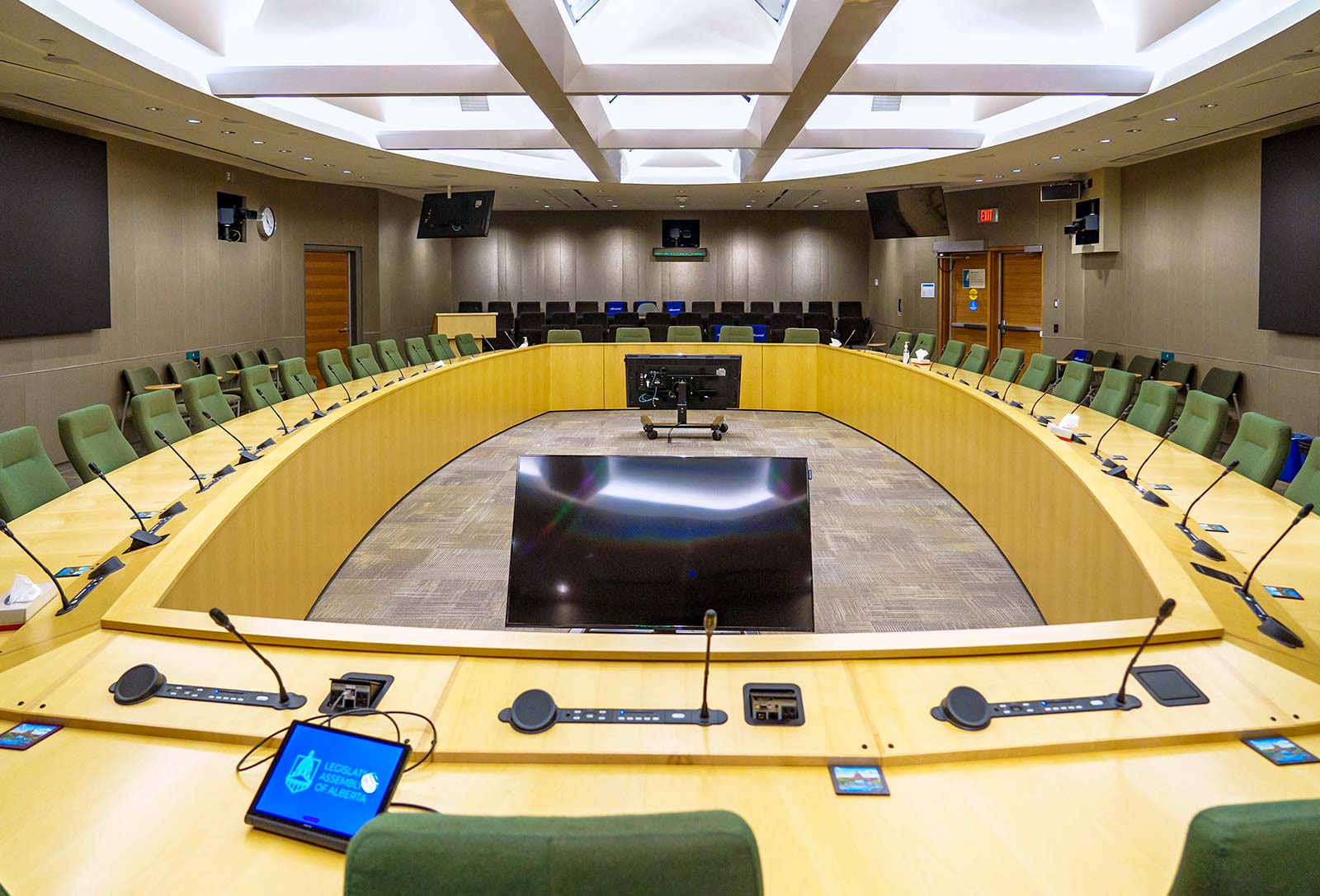
Why she was removed
Accusing another member or party of cheating counts as unparliamentary language in the legislature. A member who refuses to sit down or withdraw the remark can be "named" by the Speaker and ordered out of the chamber.
NDP Leader Naheed Nenshi said Pancholi was out for the day. "In order for her to be able to come back, she will have to withdraw those comments, unless the Speaker changes his mind," he told CityNews.
Pancholi, the MLA for Edmonton-Whitemud, said she did it on purpose. She told reporters she wanted to "draw attention to what's happening."
"We're hoping this will, for some Albertans, help them understand what this government is doing to win the next election, and that is cheating," she said.
What Bill 40 would change
Bill 40, the Electoral Divisions Act, would replace Alberta's current riding map. Justice Minister Mickey Amery introduced it on Nov. 16.
The big changes:
More seats: The legislature would grow from 87 to 91 ridings.
Lethbridge: The city now has two ridings. Under the new map, parts of the city would fall into four. One would sit entirely inside Lethbridge. The other three would pair city neighbourhoods with rural areas outside it.
Calgary: Some neighbourhoods would also share ridings with communities beyond city limits.
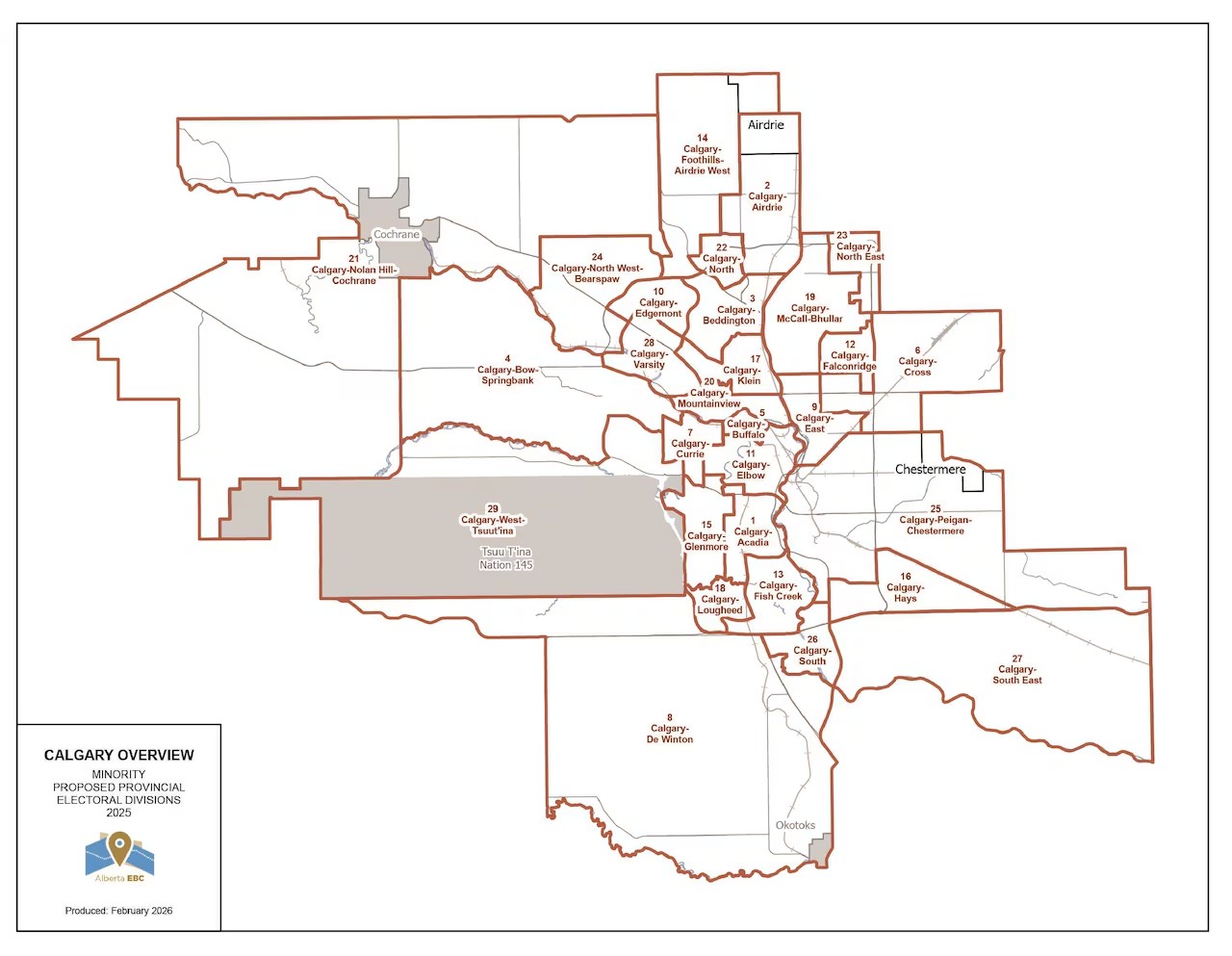
Ridings that mix city and country like this are called hybrid ridings.
Where the bill stands: The Assembly's record shows it passed second reading on Nov. 24 on a recorded vote, and cleared Committee of the Whole that night. CityNews reported the UCP passed the bill on Wednesday afternoon. It still needs royal assent to become law.
What it means for voters
For most Albertans, the change won't show up until they vote. If your neighbourhood moves into a new riding, you could see a different set of candidates on your ballot. Your MLA could also be someone who represents both city streets and farmland.
Lethbridge is where the change is sharpest. Right now, the NDP and UCP each hold one of the city's two seats. The UCP holds both rural ridings around the city. Under the new map, three of the four ridings covering Lethbridge would also include those rural voters.
That's why both parties are watching the Lethbridge lines so closely.
Why Alberta ended up with two maps
The map fight started in the spring.
March 26: Alberta's independent Electoral Boundaries Commission delivered its final report. Its majority recommended 89 ridings. Two of the five commissioners wrote a minority report calling for more hybrid ridings around cities.
May 13–14: The legislature passed Bill 32, which raised the number of ridings to 91 and set up a committee to work with a new advisory panel. It received royal assent on May 14.
Nov. 2: The advisory panel's report went to the Assembly. Its majority included the two UCP appointees, one of them former federal Conservative cabinet minister Monte Solberg, and a retired judge chosen by the UCP-majority committee.
Nov. 16: Amery introduced Bill 40 to adopt the panel's map.
The two sides
The NDP calls the new map gerrymandering, which means drawing boundaries to help one party win. It says putting parts of cities into large ridings with rural communities would weaken urban voters, where the NDP is strongest, and help the UCP. Nenshi has called the plan "very likely unconstitutional."
The government denies it's trying to rig the 2027 election. It says the map improves effective representation, and that Alberta already has ridings that mix urban and rural communities. Amery has called the NDP's planned court challenge "sour grapes" and said the government will defend the map in court.
Hybrid ridings themselves aren't new. The commission's 89-seat map included some too. The fight is over which communities get grouped together, and where.
When the new boundaries would take effect
The province says the new boundaries would take effect when the writ is issued for the next election. Alberta's fixed election date is Oct. 18, 2027.
The advisory panel's report and maps are public. You can look up your neighbourhood there.
What happens next
Court challenge: Nenshi says the NDP will challenge the map in court once the bill receives royal assent.
Thursday, Nov. 26: Nenshi has called a morning news conference to announce what the party calls plans to protect Alberta's democracy from "UCP election cheating."
Pancholi: She can return to the chamber if she withdraws the remark or the Speaker allows it.
We'll update this story after Thursday's announcement.
This is the latest fight ahead of a busy 2027. Two senior ministers, Nate Horner and Matt Jones, left cabinet ahead of the next election. This fall's separation referendum cost $84 million, more than double the 2023 general election.
Sources
Legislative Assembly of Alberta: Bill status report, 31st Legislature, 2nd Session
Government of Alberta: Making updates to Alberta's electoral boundaries
Government of Alberta: Updating electoral boundaries (April 23, 2026)
Legislative Assembly of Alberta: Select Special Committee on Electoral Boundaries



Comments