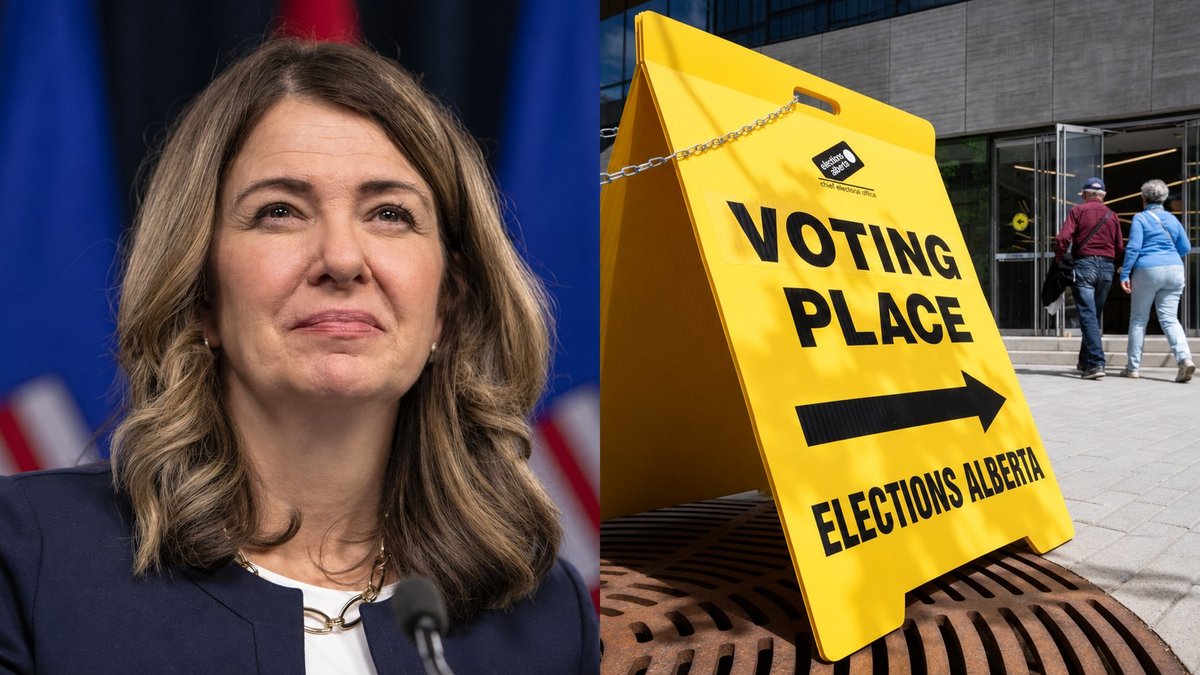
Albertans may need more than a driver's licence with their address on it to vote in the next provincial election.
Premier Danielle Smith says her government will likely bring in a law in the spring of 2027 requiring voters to prove they're Canadian citizens at the polls.
She made the comments Saturday at a virtual town hall for United Conservative Party members, The Canadian Press reported. Critics quoted in that report say the change would make voting harder and slower, and could open the door to racial or ethnic bias at polling stations.
"People need to get their papers in order," Smith told members.
"You'll have to prove that you have the right to vote as a Canadian citizen."
She named three documents voters could use:
A Canadian passport
A birth certificate
An updated Alberta driver's licence with a citizenship marker
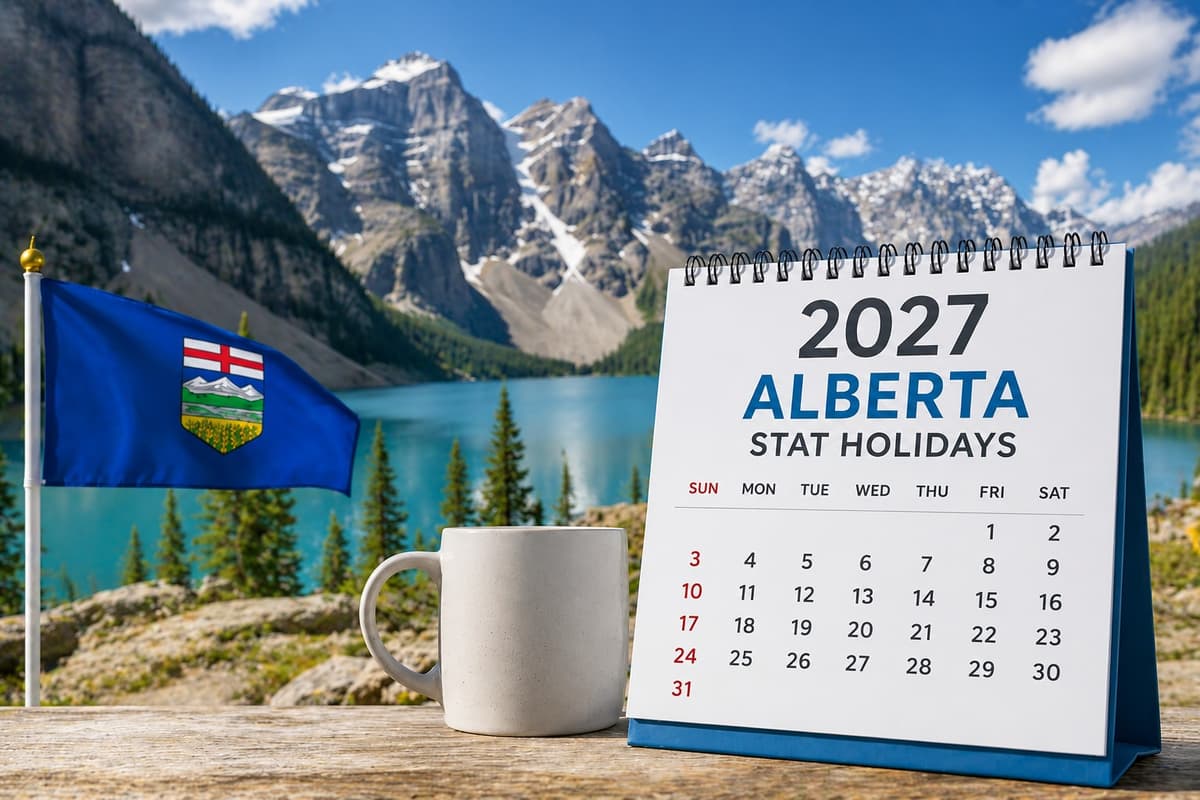
Elections Alberta lists Oct. 18, 2027 as the date of the next provincial general election.
Why Smith says she has a mandate
Albertans voted on the idea in October. Question 5 of the Oct. 19 referendum asked:
"Do you support the Government of Alberta introducing a law requiring individuals to provide proof of citizenship, such as a passport, birth certificate or citizenship card, to vote in an Alberta provincial election?"
Elections Alberta's final results:
| Votes | Share | |
|---|---|---|
| Yes | 1,200,838 | 58.06% |
| No | 867,525 | 41.94% |
Turnout on the question was 67.45%.
That makes 58% support a clear win, but not a landslide. On the night's headline question, about three in four voters chose to stay in Canada. The whole referendum cost $84 million, more than double the 2023 election.
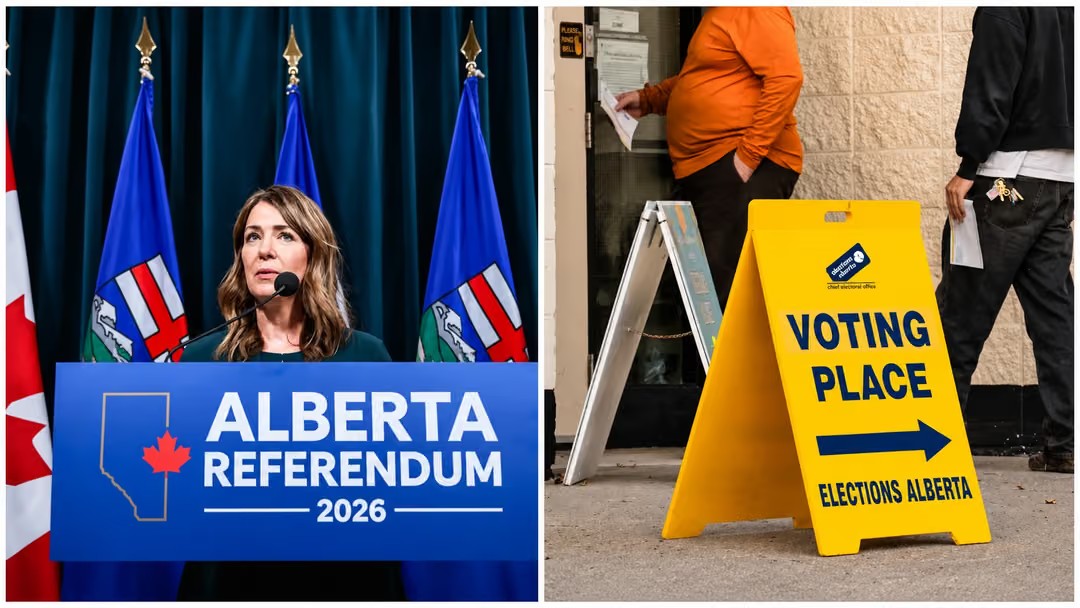
Smith calls the current system an "honour system"
Only Canadian citizens can vote in Alberta today. You also have to be at least 18 and ordinarily live in the province.
But polling stations don't check citizenship. Voters confirm they're eligible, and staff check their identity and address. Smith described that as an "honour system" and says proof of citizenship would protect the integrity of the vote.
What ID you need to vote in Alberta right now
Elections Alberta gives voters three options:
One piece of ID. An Alberta driver's licence or ID card, or other government photo ID, that shows your full legal name and current physical address.
Two pieces of ID. Both must show your name, and one must show your current address. Elections Alberta accepts more than 50 kinds, from utility bills to bank statements to student cards.
An attestation. This form is signed ahead of time by an authorized person. It's for people such as long-term care residents, students in residence, people living on a reserve, Métis settlement or colony, and tenants.
Here's a detail most people don't know. A Canadian passport can't be used on its own to vote in Alberta today. Elections Alberta says that's because the address inside is handwritten. It counts only as one of two documents.
So if a passport or birth certificate becomes proof of citizenship, many voters would likely still need something else to show where they live. How the bill handles that is one of the biggest open questions.
Mail-in voting could change too
Smith also floated changes to special ballots, Alberta's mail-in voting system. She suggested in-person verification, adding: "It may mean that there has to be some more restrictions on those who can order special (ballots)."
That could affect a lot of voters. Elections Alberta received 658,000 mail-in ballot applications for the referendum, 11 times as many as in the 2023 election.
The citizenship marker is already on Alberta licences
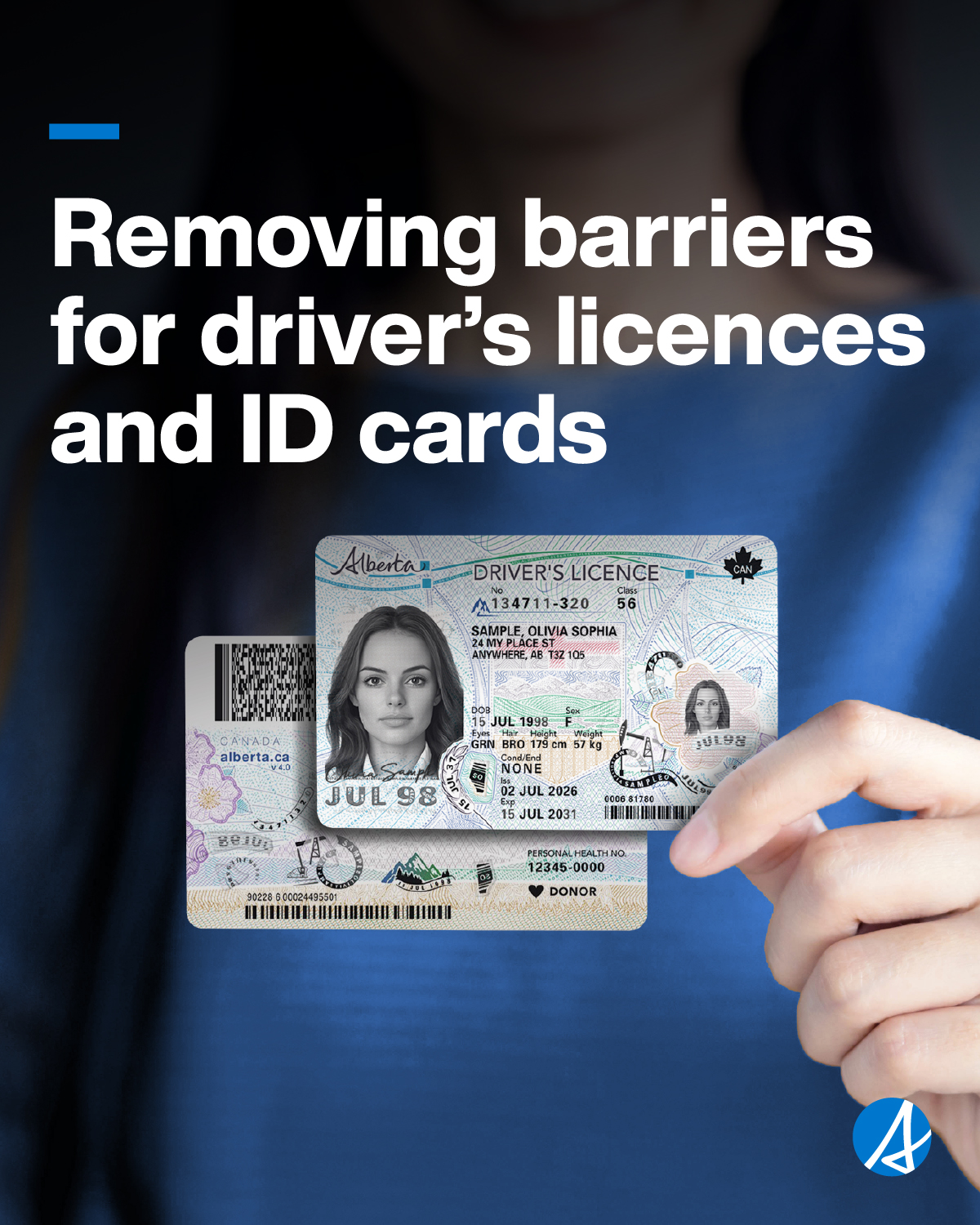
The updated licence Smith mentioned isn't hypothetical. It's already in Albertans' wallets.
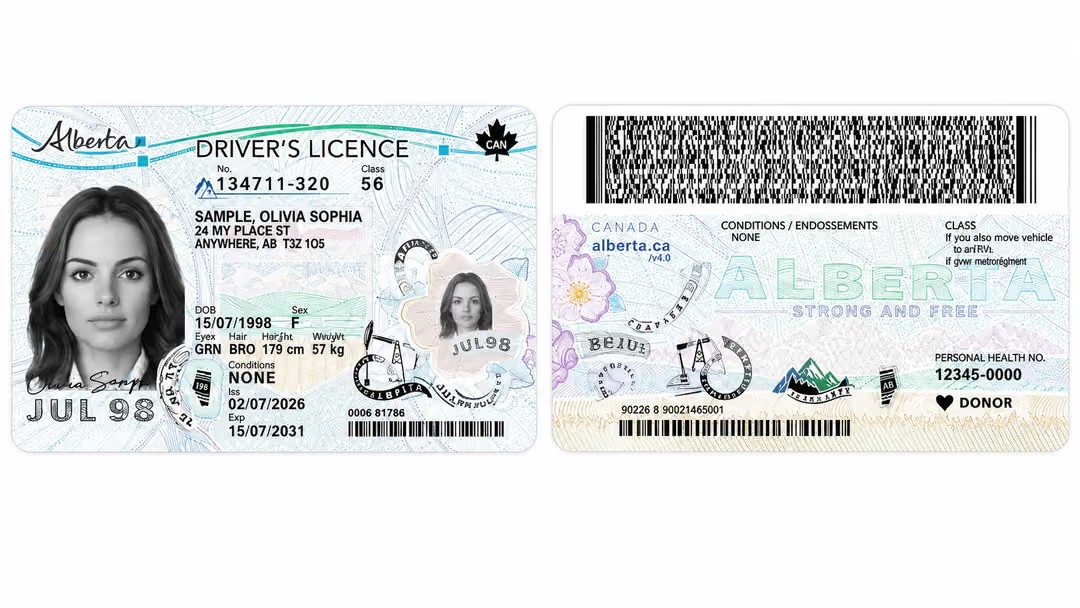
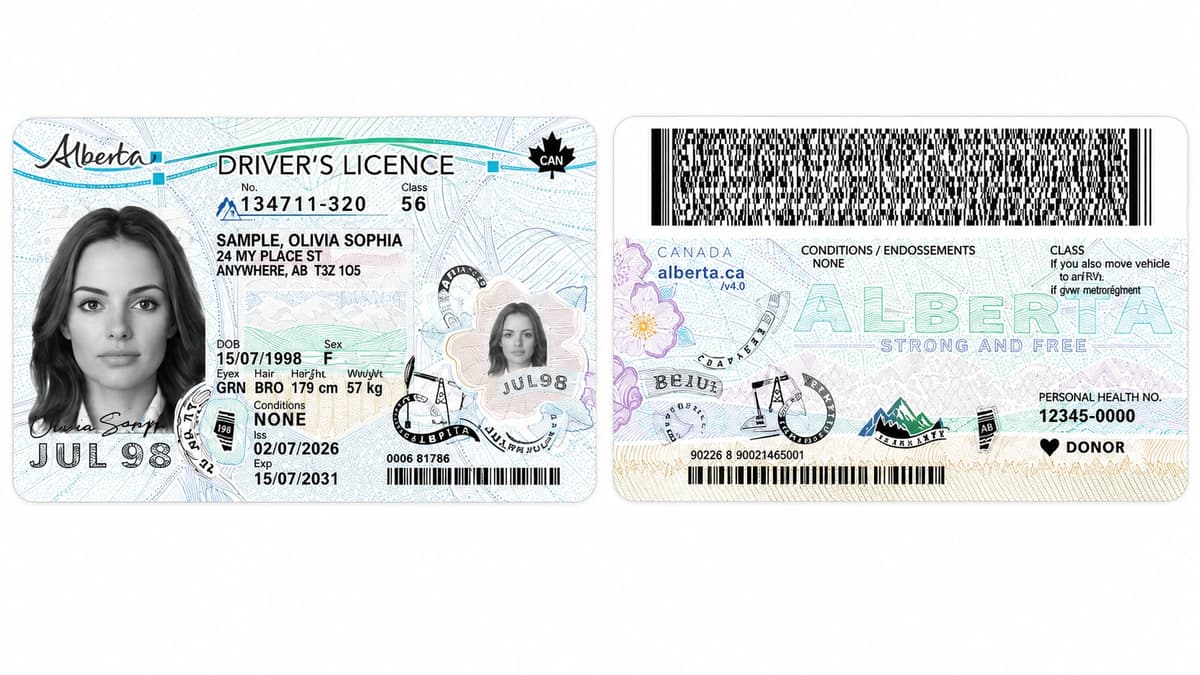
We first reported in June that Alberta was adding your health number and citizenship status to your driver's licence. The new cards went live July 2.
According to the province, the redesigned driver's licences and ID cards now show:
A Canadian citizenship marker, when applicable
Your Personal Health Number
How to get the marker
Bring an original proof-of-citizenship document to a registry agent when you apply for your first card, renew or exchange your card. Alberta accepts:
A Canadian birth certificate
A Canadian passport, including one that expired less than a year ago
A Canadian citizenship certificate or e-certificate
A NEXUS or FAST/EXPRES card that shows Canadian citizenship
What it costs
At renewal or a first application: nothing extra. Standard fees still apply.
As a standalone exchange: about $33.65 in the province's example, made up of a $20 government fee plus up to $13.65 in registry service charges.
You don't need to be a citizen to get an Alberta licence or ID card. Cards for non-citizens just won't carry the marker.
The health number on the licence is part of a wider overhaul. Alberta health cards also now expire for the first time. Smith called that change fraud prevention too.
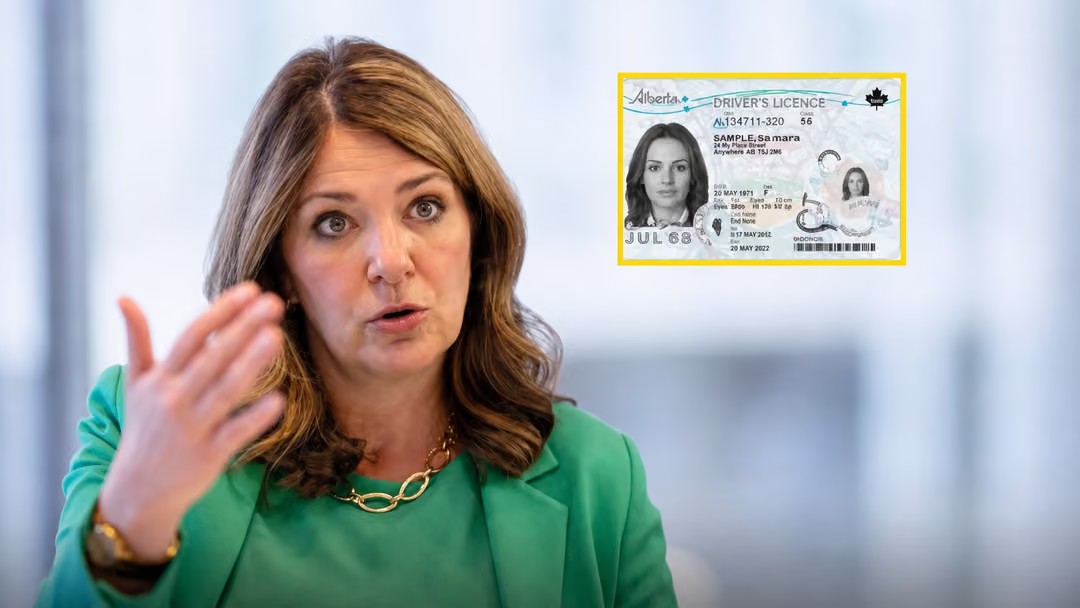
The rollout hasn't been smooth
Not everyone has been able to get the documents.
Last week, the province added three renewal exemptions for Albertans who can't get the paperwork. They cover:
Long-time residents whose older records are hard to find
People stuck waiting on federal processing
Cases of exceptional hardship
Licence renewals under the exemptions began Nov. 19.
There's a catch that ties straight into Smith's voting plan. Alberta says a card renewed under an exemption won't get a citizenship marker, and the exemption "does not verify you as a Canadian citizen."
If the new voting law accepts only a marked licence, a passport or a birth certificate, those Albertans would need another way to prove they're citizens.
When the marker was first proposed, Alberta's privacy commissioner also raised concerns about putting citizenship details on a card people show every day.
What we still don't know
There's no bill yet, so most of the details are still open:
Which documents will count. Smith named three. The referendum question also listed a citizenship card, which she didn't mention. It's also unclear whether a provincial ID card with the marker will count, or only the driver's licence.
What happens if you have none of them. Will there be a backup, like a sworn declaration or someone vouching for you?
Proof of address. Will voters still need a separate document showing where they live?
Mail-in voting. How would citizenship be checked for special ballots?
Timing. Will the rules be in place, and well known, before October 2027?
What's next
The bill would most likely come in the spring sitting of the legislature. That will be Albertans' first look at the actual rules.
It will land in a tight political race. One recent poll found the NDP would win an election held today.



Comments