Last updated: Tuesday, Oct. 20, 2026, 12:20 a.m. MT. Results are unofficial. Official results are scheduled for Oct. 29.
Albertans have overwhelmingly rejected starting the process to leave Canada.
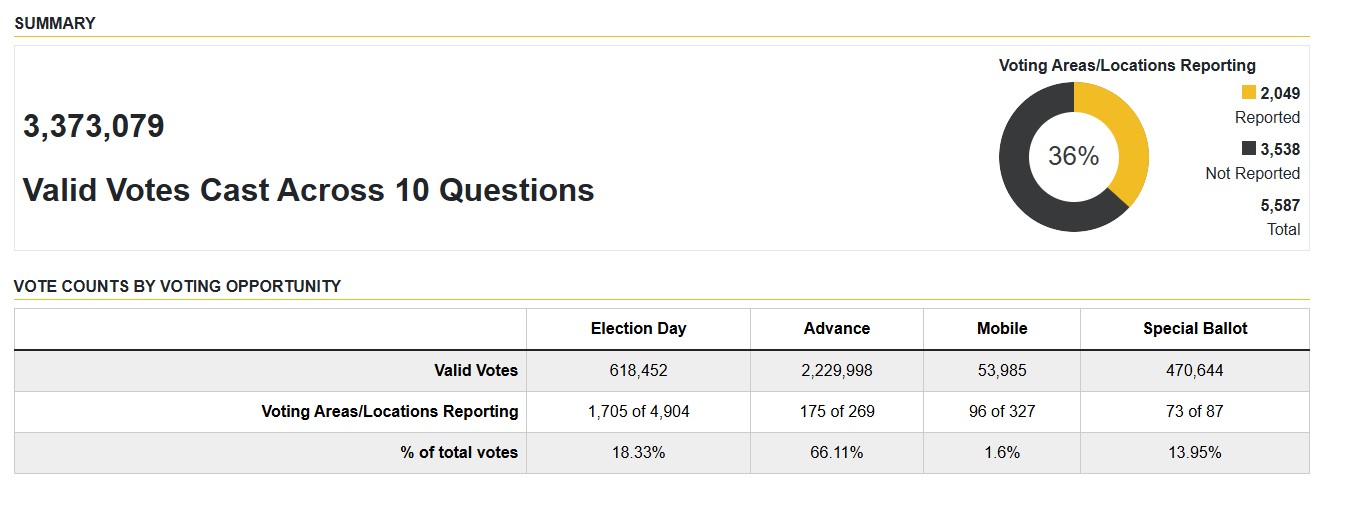
With about a third of voting areas counted early Tuesday, 76.1% of votes favoured remaining a province of Canada, according to Elections Alberta’s unofficial results. Just under 24% voted for the government to start the legal process toward a second, binding referendum on separation.
The margin was big enough that major Canadian outlets projected the result Monday night, with most ballots still uncounted.
“Above all, Albertans chose Canada,” Prime Minister Mark Carney said.
The referendum isn’t over, though. Albertans also voted on nine other questions about immigration, public services and the Constitution, and those are still being counted.
Alberta referendum results: 76% vote to remain
| Question 10 | Votes | Share |
|---|---|---|
| Remain a province of Canada | 954,297 | 76.4% |
| Start the process toward a separation referendum | 294,383 | 23.6% |
| Total | 1,248,680 |
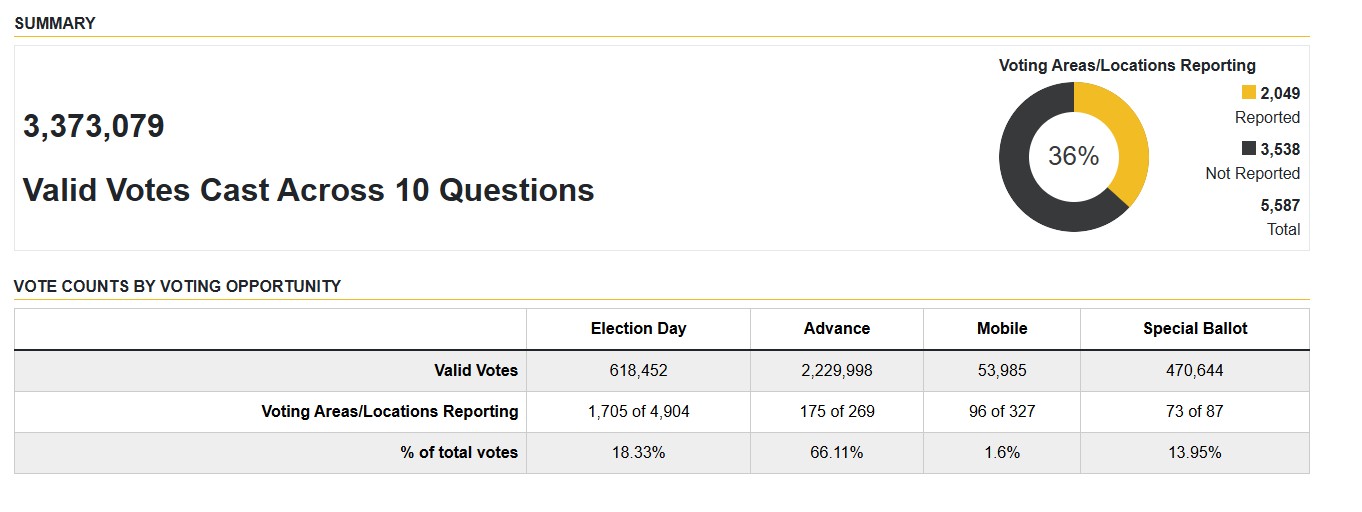
Elections Alberta, 12:11 a.m. MT, Oct. 20. 1,824 of 5,587 voting areas reporting.
Remain led by 604,838 votes. Advance ballots make up most of the count so far, and election day ballots are still coming in.
Remain also leads in every riding reporting so far. Partial numbers show it above 90% in parts of Calgary, and above 60% even in rural ridings like Athabasca-Barrhead-Westlock, where support for separation was expected to be strongest.
The question didn’t ask Albertans to vote for independence directly. It asked whether Alberta should stay in Canada, or whether the government should start the constitutional process toward a future binding vote on separation. A win for the second option still wouldn’t have taken Alberta out of Canada.
Carney: “Albertans made a clear choice”
Carney released a signed statement just after midnight.
“On October 19, Albertans made a clear choice. They chose unity, to build together, and to take care of each other,” he wrote.
He said the results on “the defining question of separation” mean “Albertans and all Canadians will move forward together with renewed purpose and high ambition.”
Carney pointed to new trade partners, fast-tracked major projects, and Canada becoming “a global energy superpower with Alberta at its core.”
Carney campaigned in Edmonton on Friday, where he called a vote against Canada “a dangerous bluff that will lead to years of deep uncertainty.”
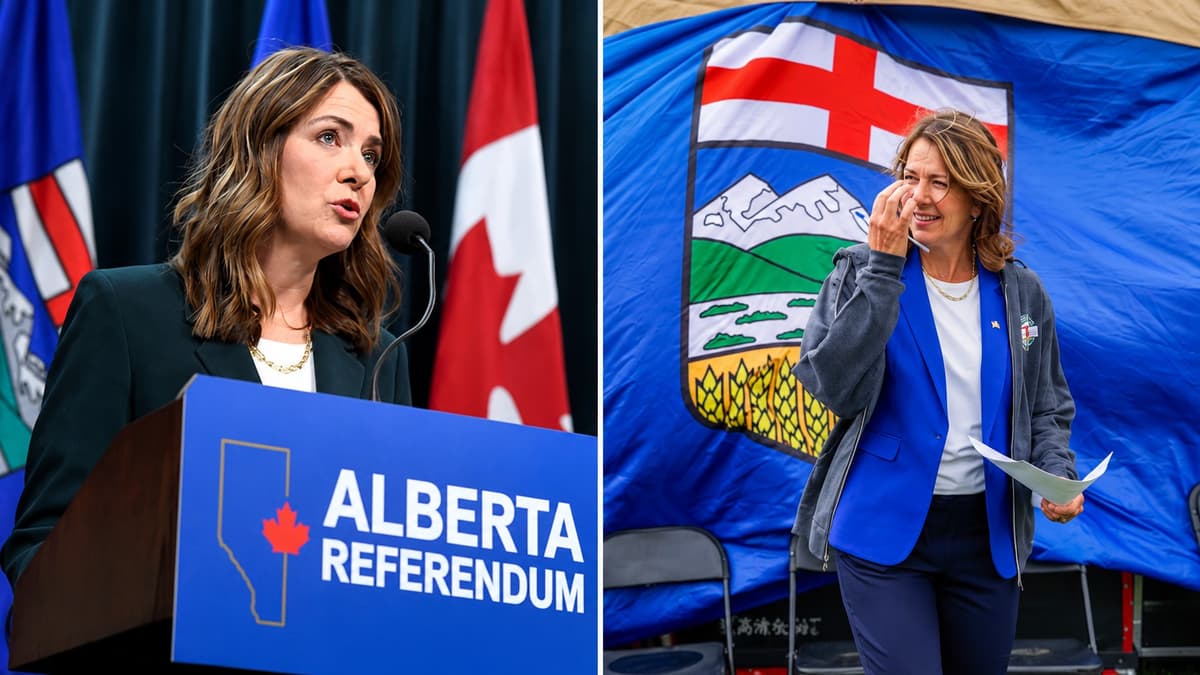
Danielle Smith: “A stronger Alberta in a united Canada”
Premier Danielle Smith posted her reaction shortly before midnight.
“I’m very pleased to see the initial results from Elections Alberta show widespread support for remaining in Canada,” she wrote. “Albertans have voted for a stronger Alberta in a united Canada.”
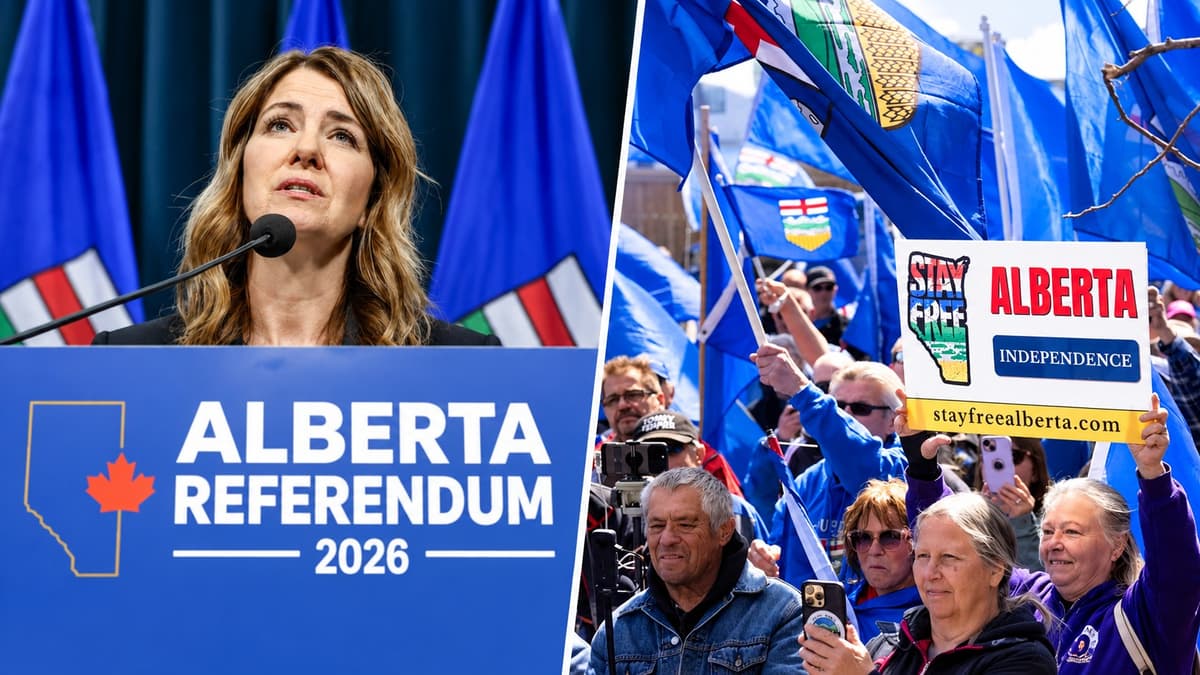
She will address Albertans live at 6:45 p.m. Tuesday to go over the results available by then “and where our province goes from here.”
Smith said Monday she voted to remain. She also campaigned for “yes” on the government’s nine other questions, which she said would give Alberta a stronger hand with Ottawa.
Alberta separatists fall well short
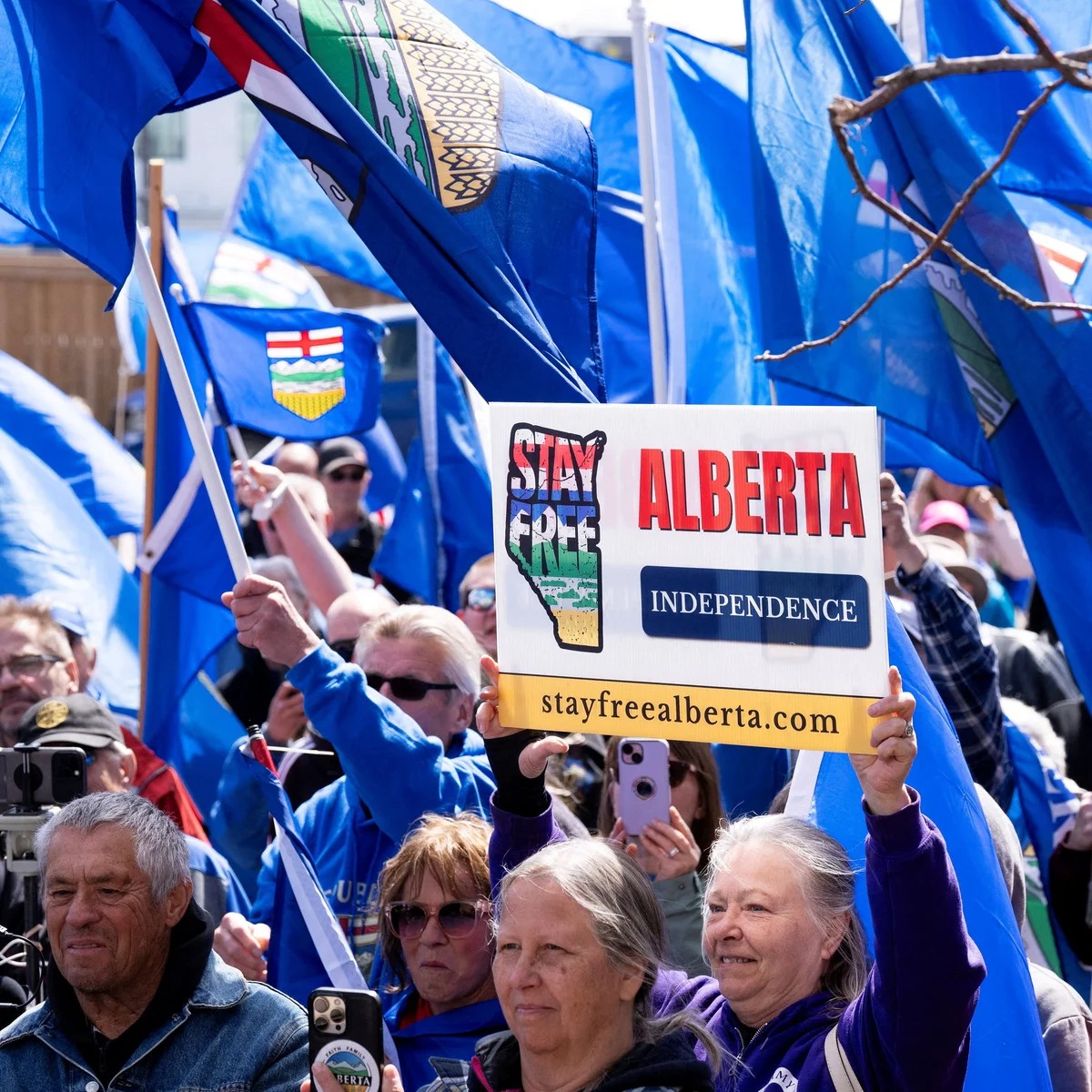
The result is far below what separatist organizers were aiming for.
Before polls closed, Alberta Prosperity Project leader Mitch Sylvestre set his own bar. “If we’re over 40 per cent, it’s game on,” he said, predicting strong rural support. The separation option came in around 24%.
Keith Wilson of the Let Alberta Decide campaign said the campaign succeeded by pushing “a serious, adult discussion” about Alberta’s place in Confederation.
The vote doesn’t make the grievances behind the movement disappear. Separatist leaders have argued for years over energy policy, equalization and Ottawa’s reach. Former premier Jason Kenney said he expects hardcore separatists to push the issue at the UCP’s convention in November.
Notley, Nenshi and Lukaszuk react
Former premier Rachel Notley said the vote showed “a strong majority of Albertans are proud Canadians and want to remain in Canada.”
NDP Leader Naheed Nenshi said Albertans “deserve a better government.” He called the nine other questions “dog whistles.”
Thomas Lukaszuk, the former deputy premier who led the Forever Canadian campaign behind the remain wording, noted that the referendum law leaves Smith to decide “what is and isn’t a win.”
Smith and Nenshi both said before the vote that they would not push for another referendum if Albertans chose to remain.
What were the other nine questions?
Separation got the attention, but it was one of 10 ballots each voter received. None of the other nine changes any law by itself. Several would need Ottawa or other provinces to agree.
Immigration and public services (Questions 1 to 5)
Should Alberta take more control over immigration to bring it down to “more sustainable levels,” prioritize economic migrants, and give Albertans first priority for new jobs?
Should provincially funded programs like health care and education be limited to citizens, permanent residents and people with an Alberta-approved immigration status?
Should people with temporary immigration status have to live in Alberta for 12 months before qualifying for provincial social support programs?
Should people with temporary status pay a “reasonable fee or premium” for their families’ use of health care and education?
Should voters have to show proof of citizenship, like a passport or birth certificate, to vote in provincial elections?
The Constitution (Questions 6 to 9)
Should provinces, not Ottawa, pick the judges for provincial King’s Bench and Appeal courts?
Should Alberta work with other provinces to abolish the Senate?
Should provinces be able to opt out of federal programs in areas like health care and education without losing the federal money?
Should provincial laws take priority over federal laws when they conflict in provincial or shared areas?
Elections Alberta counted Question 10 first. Questions 1 to 9 are being counted after it, and full unofficial results are expected Wednesday morning.
No leaders on stage
In 1995, Quebec’s referendum night ended with leaders on both sides speaking to crowds in Montreal. Alberta’s leaders didn’t do anything similar on Monday night.
“The fact that political leaders stayed home to watch the vote on TV is such an interesting signal to me,” posted 880 CHED host Courtney Theriault.
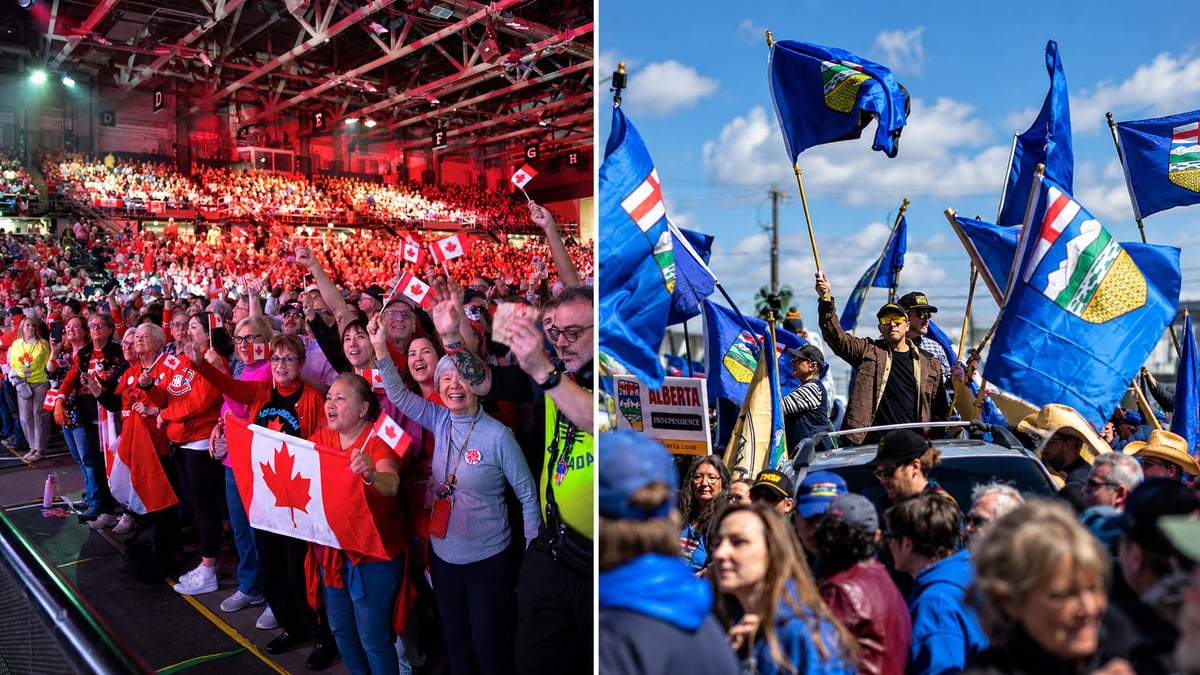
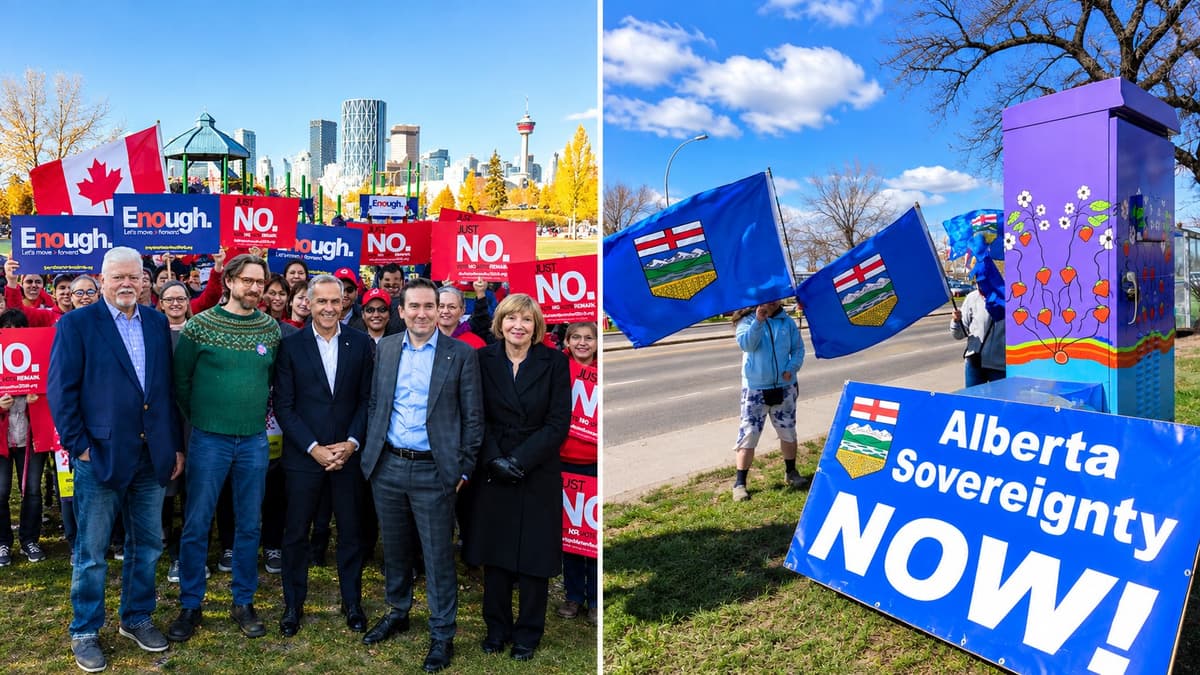
Rallies happened anyway. “United Canada” supporters gathered in Edmonton, and Let Alberta Decide held its own event.
Why did Alberta hold this vote?
The separation question started with citizen petitions. In 2025, the Smith government lowered the number of signatures needed to force a referendum. A separatist petition was struck down in court in May 2026 for failing to consult First Nations on treaty rights.
Smith then put a single remain-or-separate question on the ballot, based on the Forever Canadian wording, along with nine questions of the government’s own.
Every public poll before the vote had remain well ahead.
What happens next
Tuesday, 6:45 p.m.: Smith addresses Albertans.
Wednesday morning: Unofficial results expected for Questions 1 to 9.
Thursday, Oct. 29: Elections Alberta releases official results.
This story will be updated as more polls report.
Sources
Elections Alberta, 2026 Referendum Unofficial Results: https://results.elections.ab.ca/
Elections Alberta, referendum questions: https://www.elections.ab.ca/elections/referendum/
Prime Minister Mark Carney on X: https://x.com/MarkJCarney
Danielle Smith on X:
Courtney Theriault on X:
Comments
Conversation