Eighteen months after Calgary signed its first agreement of its kind with the Blackfoot Confederacy, both sides say it’s starting to produce results.
The City says the partnership has changed how it works with Indigenous housing applicants, helped move Indigenous-led housing forward, and supported travelling exhibitions and public art.
What the City didn’t say is just as notable. It hasn’t named the housing projects, said how many homes are involved or disclosed what’s been spent.
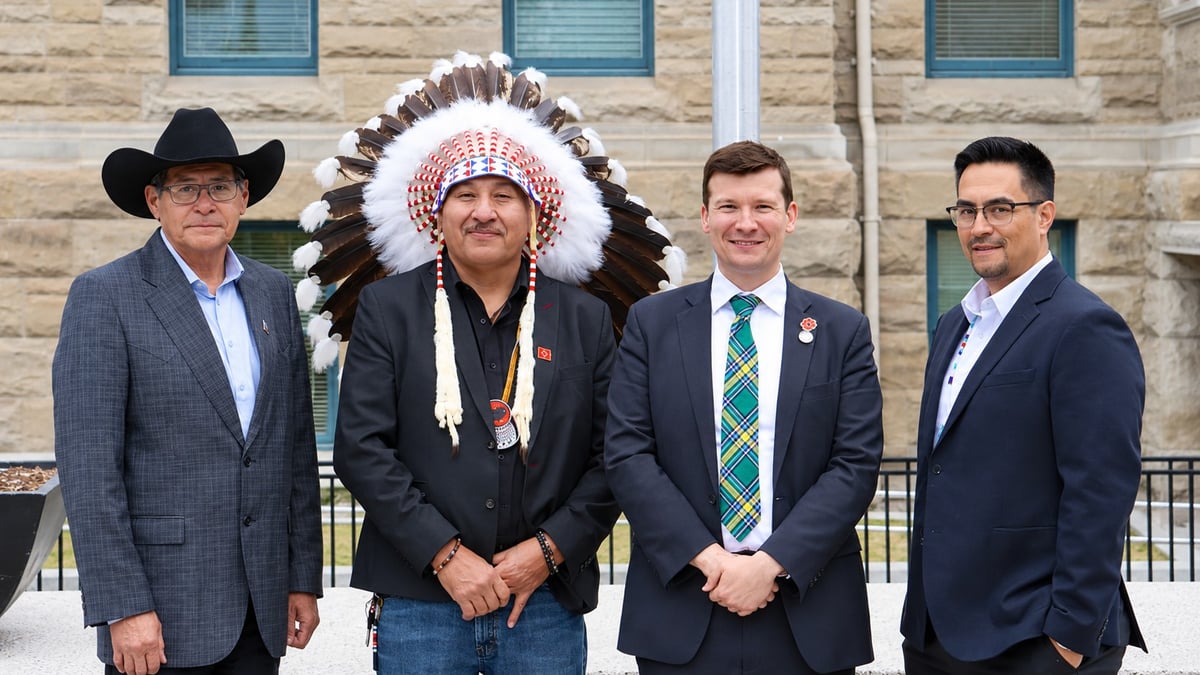
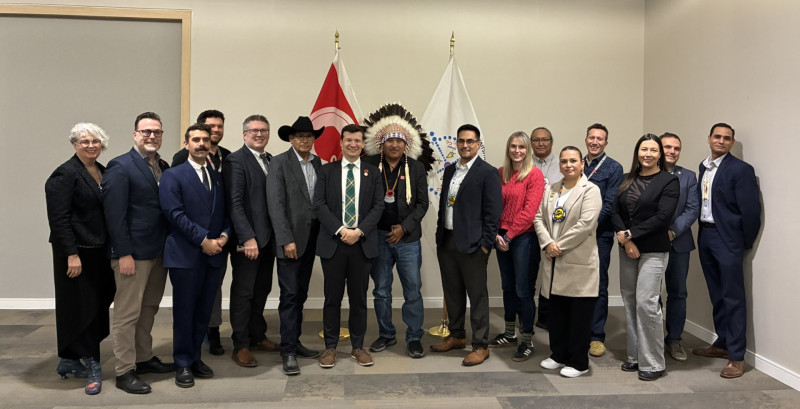
Mayor Jeromy Farkas marked the progress Monday with Piikani Nation Chief Troy Knowlton, Kainai Nation Chief Travis Plaited Hair and Siksika Nation Chief Samuel Crowfoot. The event included a flag raising.
“A year and a half into this agreement, we have built meaningful relationships, deepened our understanding of one another and identified opportunities to move forward together,” Farkas said. “There is still much work ahead.”
What has actually changed
The City listed three areas of progress, without much detail on any of them.
Housing applicants: the City says it has improved how it works with Indigenous housing applicants. It didn’t say which processes changed, or how many people have been helped.
Indigenous-led housing: the City says the partnership is “advancing” housing projects led by Indigenous groups. It named no developments, timelines or unit counts.
Arts and culture: the City pointed to travelling exhibitions and public art, but didn’t name the artists, sites or budgets.
“Advancing” a project and finishing one aren’t the same thing. The City itself calls these “early outcomes.”
“Mohkinstsis has always been an important place”
Knowlton, who is also president of the Blackfoot Confederacy, tied the partnership to a history much older than the city.
“Mohkinstsis has always been an important place for Niitsitapi, and our relationship with this city carries both history and responsibility,” he said.
Mohkinstsis is the Blackfoot name for Calgary, for the place where the Bow and Elbow rivers meet. Niitsitapi is what the Blackfoot people call themselves.
“What we are building now is a stronger way to work together on the issues that affect our people today and future generations,” Knowlton said. “This flag raising recognizes that relationship and the continued shared work that benefits our Blackfoot Nations and Calgarians.”
What the agreement is, and what it isn’t
City council unanimously approved the Memorandum of Understanding on Communication and Cooperation on April 29, 2025. It was signed on May 9, 2025.
The Blackfoot Confederacy is made up of four nations: Siksika, Piikani and Kainai (Blood Tribe) in Alberta, and Amskapi Pikuni in Montana. According to the Confederacy, all four signed:
Piikani: Chief Troy Knowlton.
Siksika: then-chief Ouray Crowfoot.
Kainai: former chief Roy Fox, signing for Chief Travis Plaited Hair.
Amskapi Pikuni: Pat Armstrong, signing for Chairman Rodney Gervais.
Then-mayor Jyoti Gondek signed for the City.
The MOU covers four areas:
Housing and homelessness
Arts and culture
Economic development and tourism
Events and communications
It isn’t legally binding. There are no required housing targets, spending commitments or deadlines. What it does do is put a formal structure behind the relationship: regular meetings, information-sharing and joint work, instead of one-off ceremonies.
That’s also why progress reports like Monday’s matter. With no binding targets, the public only learns what the agreement has produced when the two sides say so.
The agreement outlasted the people who signed it
Since the signing, both Calgary and Siksika have changed leaders.
Calgarians elected Farkas in October 2025. A month later, Siksika elected Samuel Crowfoot as chief, replacing his cousin Ouray.
The chiefs raised that change with the new mayor directly. At a June 1 meeting at City Hall, Confederacy leaders told Farkas the relationship built under former mayors Gondek and Naheed Nenshi should continue. According to Siksika Nation’s account, Farkas committed to keeping it going.
Monday’s update shows it has.
What comes next
The next phase covers housing and houselessness, economic participation, arts and culture, and communications. The City says it will also focus on how the partnership is run: building capacity, removing barriers and improving how decisions get made.
“Strong communities are built intentionally through relationships grounded in mutual benefit, accountability and respect,” said Katie Black, the City’s acting chief operating officer for City Services. She said the City has deepened its understanding of Blackfoot history and priorities, but “that learning is only beginning.”
The announcement set no date for the next progress report and committed no new funding.
Medicine Hat could be next
The Confederacy is building similar relationships across southern Alberta.
On April 30, it held its first formal meeting with the City of Medicine Hat, whose name comes from the Blackfoot word “Saamis,” loosely translated as “medicine man’s hat.” Both sides named fall 2026 as a possible timeline for an MOU, depending on how talks go. Neither side has announced a signed agreement.
Calgary sits in Treaty 7 territory, which the Siksika, Piikani and Kainai nations signed with the Crown in 1877. The Treaty 7 flag flies permanently at City Hall.







Comments