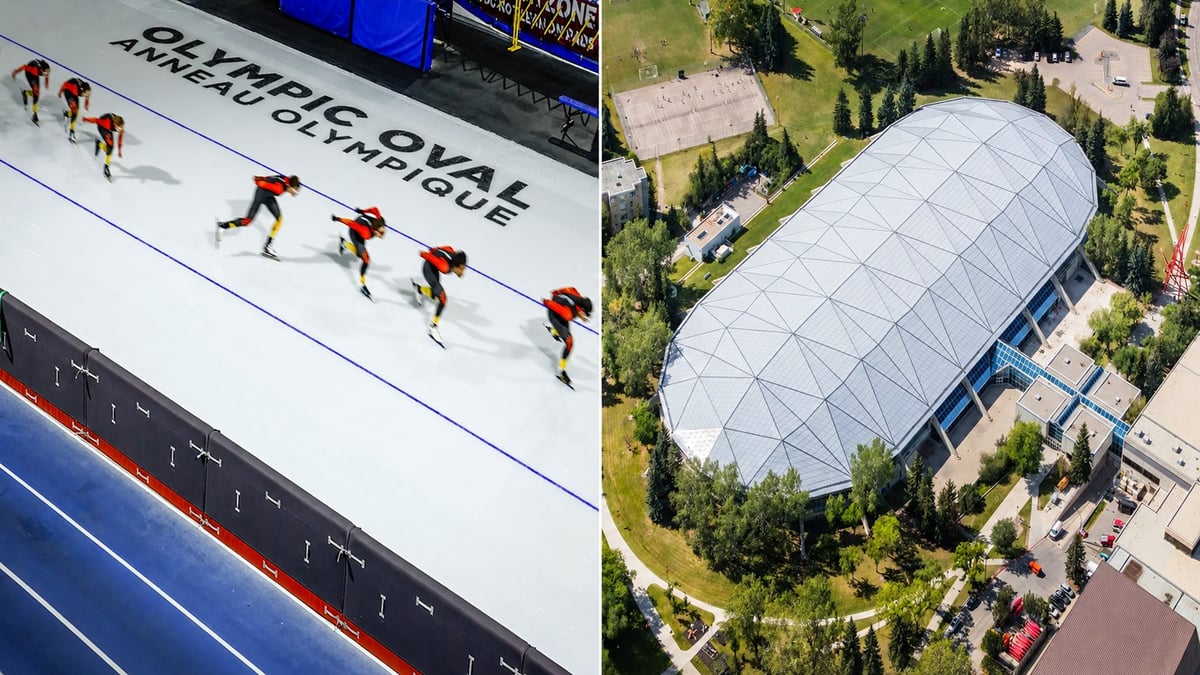
The building where Canada makes Olympic speed skaters was running out of ice.
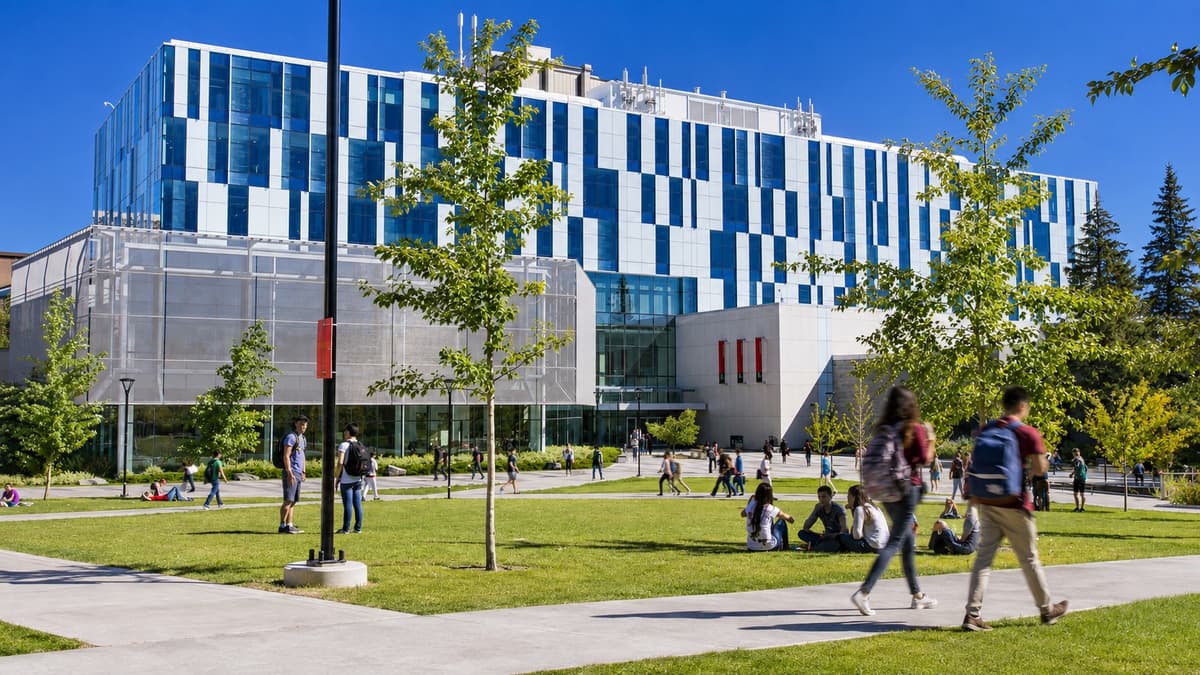
The federal and Alberta governments announced Monday they're splitting a $52-million investment, $26 million each, to overhaul Calgary's Olympic Oval, the University of Calgary venue built for the 1988 Winter Olympics and known worldwide as the "fastest ice in the world." The money replaces the original refrigerated concrete slab under the 400-metre oval and its two ice rinks, installs a new ice plant, and upgrades the mechanical, electrical, structural and life-safety systems that have kept the place running for nearly four decades.
For the athletes who train there, it wasn't a routine upgrade. It was a rescue.
Why the ice was running out
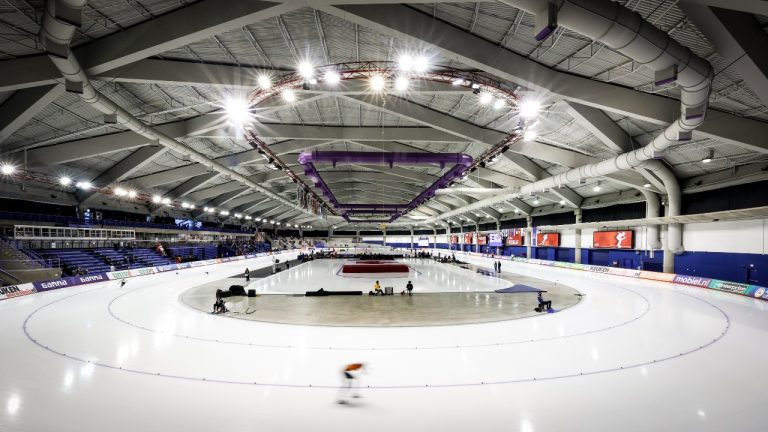
The Oval's problem was underneath the surface, in the plumbing. The slab that freezes the ice relies on roughly 400 pipe connections carrying cooling brine, and as the system aged, those connections started leaking, more of them every year.
Canadian Olympic champions didn't soften how close it came. Speed skater Ivanie Blondin said last year the Oval's ice-making capability was "on its last leg." Double Olympic gold medallist Isabelle Weidemann put the stakes plainly: "People came together to save this facility, and it would not have survived, and speed skating would have had to move out of Calgary." Without the fix, the fastest ice in the world was heading for the end of its life.
Why "the fastest ice in the world" is more than a slogan
The nickname is earned. Since opening in 1987, the Oval has seen more than 300 speed skating world records set on its surface by Canadian and international skaters.
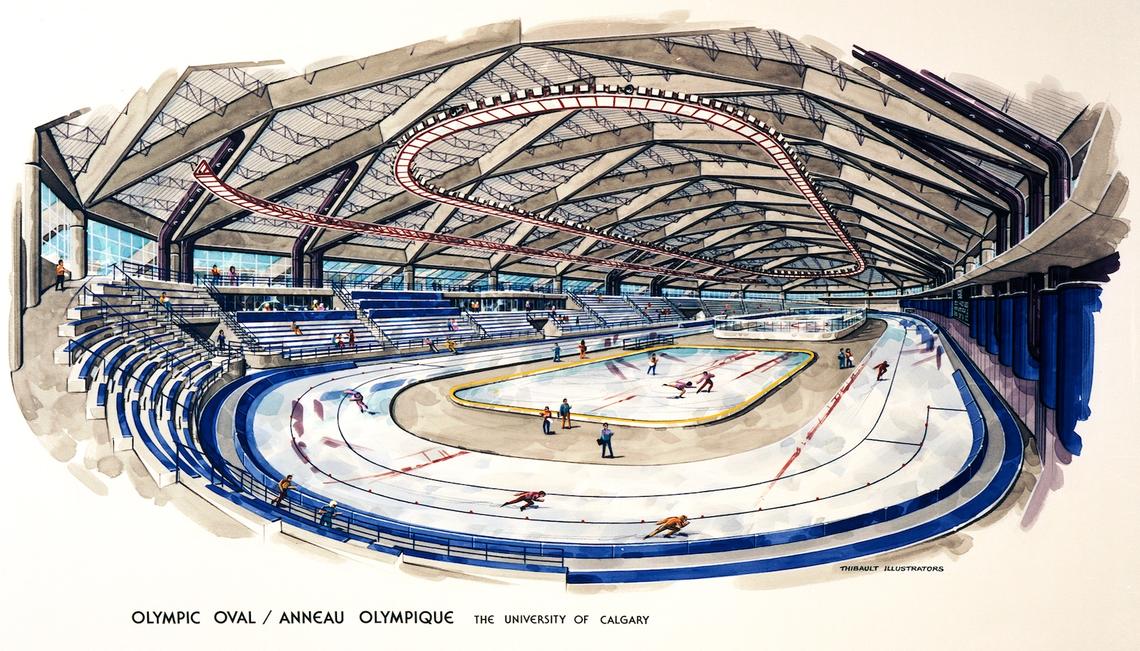
The speed comes from a combination the building didn't invent but perfected. Calgary's high altitude means thinner air and less drag on a skater, the dry climate helps the ice, and decades of expertise in maintaining the surface did the rest. That reputation made it an International Skating Union Centre of Excellence and the training home for a remarkable run of Canadian talent. Twenty-six Olympic medallists who have won 40 Olympic medals, including 12 gold, have trained on this ice, names like Catriona Le May Doan, Cindy Klassen, Clara Hughes and Christine Nesbitt among them.
The competition Calgary was at risk of losing to
There's a rivalry underneath the urgency. Calgary's Oval is the oldest of Canada's three indoor ovals, and lately it's been losing its edge.
Salt Lake City's oval has recently overtaken Calgary in the race for world records, and newer Canadian facilities have opened too, Quebec City's Centre de Glaces in 2021 for $68.7 million, and Fort St. John's Pomeroy Sport Centre in 2010. An aging, failing Calgary Oval risked slipping from world leader to also-ran, or closing outright. Part of what this investment buys is Calgary's place in a competition it used to dominate.
A funding fix years in the making
Getting the money wasn't simple, for a reason rooted in geography. Because the Oval sits on the University of Calgary campus, it's treated as part of an educational institution, which complicated applying for the usual streams of government infrastructure funding.
The workaround came through the federal government's Build Communities Strong Fund, which supplied the federal $26 million, matched by the province. It's the latest chapter for a facility that has needed public rescues before. Its operating model was restructured years ago to draw on the 1988 Games legacy endowment, and earlier funding rounds fixed problems like a leaky roof that used to drip onto the ice during training.
The real cost of keeping the '88 legacy alive
The Oval is one piece of a bigger, quieter question Calgary has been answering for almost 40 years: what does it cost to keep the 1988 Olympics standing?
The Games left the city a set of world-class venues, the Oval, the ski jumps and bobsled track at Canada Olympic Park, and more, that made Calgary a genuine winter-sport capital. But legacy facilities don't freeze in time. They age, their mechanical guts wear out, and each one eventually reaches the moment the Oval just hit, where a major public investment is the difference between keeping it and losing it. Some venues, like the bobsled and luge track, have faced exactly that reckoning and not always won it. The $52 million is a vote to keep the Oval on the winning side of that line, and a reminder that hosting an Olympics isn't a one-time cost. It's a bill that comes due, in pieces, for generations.
That context is also why the money isn't only about medals. The Oval anchors a sport ecosystem, coaches, sport science, the University of Calgary's research into human physiology and injury prevention, that would be expensive and slow to rebuild somewhere else if it were ever allowed to go.
What happens now, and what's still needed
The work has a timeline. Oval director Mark Messer said the floor replacement can't begin until January 2028, and once it does, it's expected to take about nine months, with the main surface out of commission during the work.
The $52 million doesn't cover everything, either. A new running track and improved accessibility for people using mobility aids are still needed, and fundraising for an additional $13 million to complete those elements is ongoing. But the core problem, the failing ice system that threatened the whole facility, is now funded.
A rink that belongs to everyone
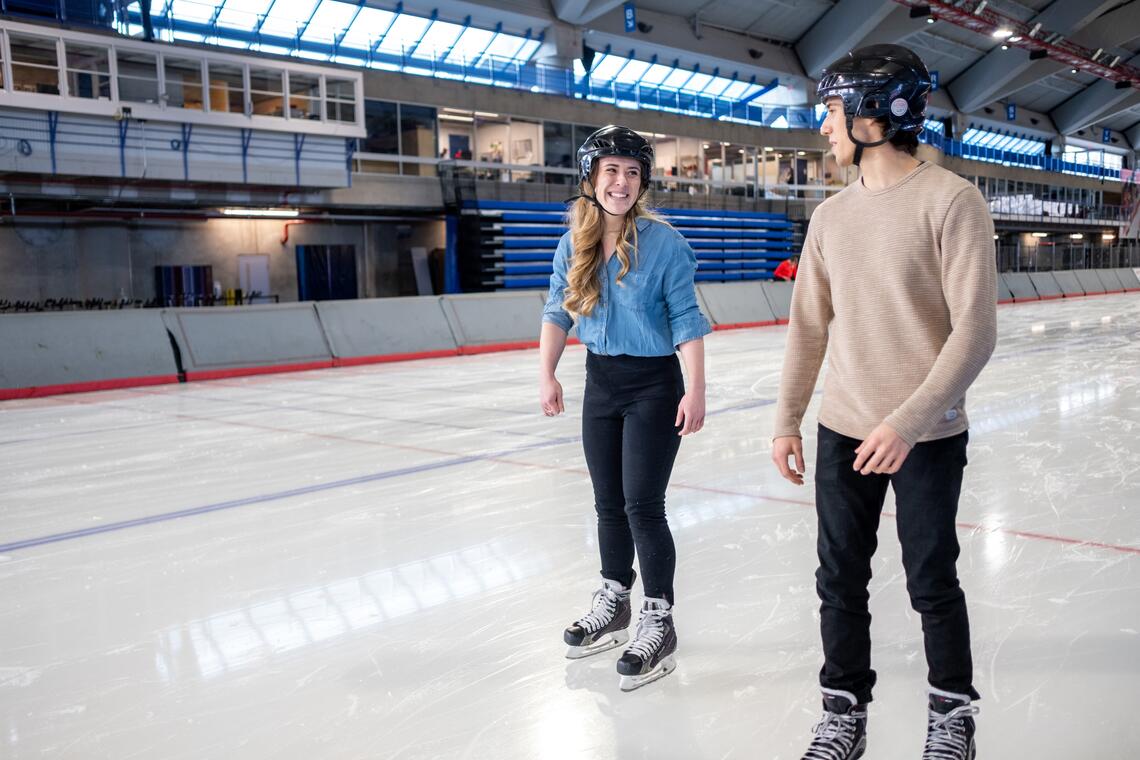
The building isn't only a high-performance bubble. The Oval welcomes more than 40,000 public recreational skaters every year, ordinary Calgarians learning to skate, staying active, and sharing ice with the national team.
Two-time Olympic champion Catriona Le May Doan described that dual role. The Oval helped her reach the top of the podium twice, she said, but some of her favourite memories are watching her own children learn to skate there. "It's a place that belongs to everyone." The $52 million keeps it both things at once, a world-class training centre and a neighbourhood rink, for the next generation.
Sources:
Government of Alberta, Funding for the next generation of Oval athletes, July 27, 2026: https://www.alberta.ca/release.cfm
Government of Canada, Build Communities Strong Fund announcement, July 27, 2026
University of Calgary, Olympic Oval


Comments
Conversation