
Canada's counter-tariffs take effect at 12:01 a.m. on September 8. Alberta's premier wants Ottawa to use the fourteen days before that to get back to the negotiating table.
Finance Minister François-Philippe Champagne announced Tuesday that Canada will match the new American tariffs dollar for dollar and rate for rate, hitting $27.6 billion worth of U.S. goods across roughly 700 products, alongside a $7.5-billion support package for workers and businesses.

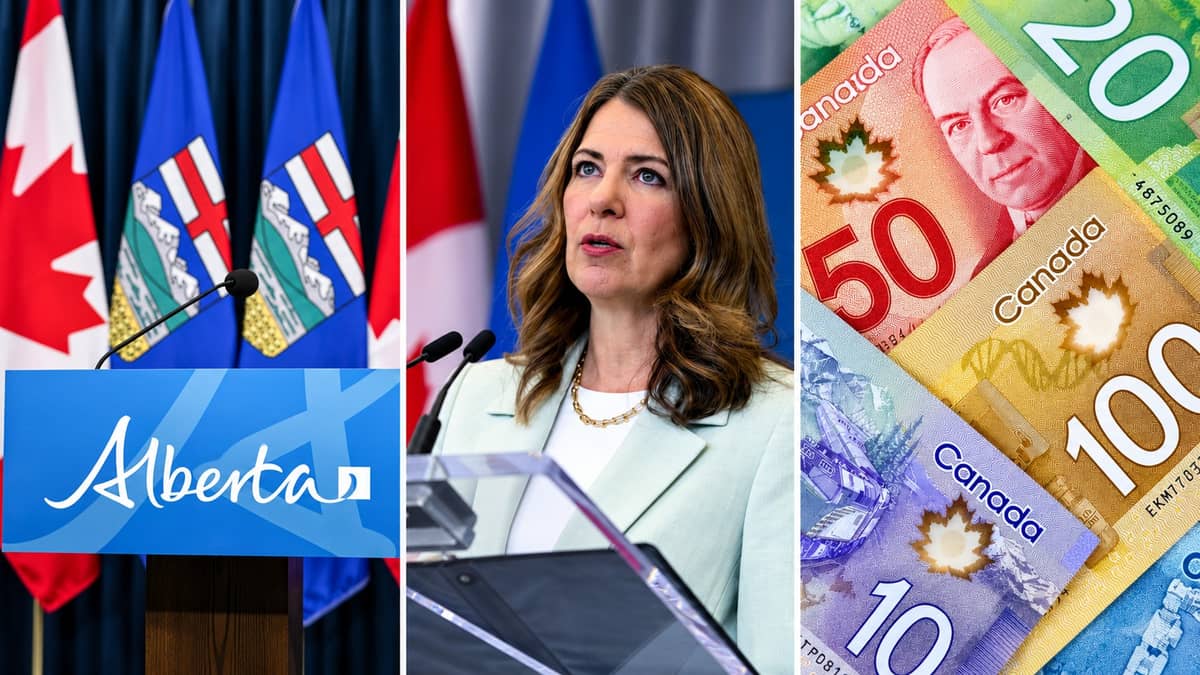
Premier Danielle Smith welcomed the support and criticized the retaliation.
"I appreciate the federal government's announcement that they will be providing businesses with greater access to liquidity, financing and other measures to help them withstand the impacts of the trade disruption," Smith said in a statement, noting the package also includes measures to help businesses diversify markets, strengthen supply chains and improve competitiveness.
"Alberta's government remains concerned that tariffs and counter-tariffs increase costs, disrupt supply chains, put pressure on businesses and workers, and ultimately risk escalation to even higher and broader tariffs that will impact even more Canadians. We should do all we can to avoid further escalation."
"There is still time before these counter-tariffs take effect on September 8, and I am urging the federal government to use that time to get back to the negotiating table with the United States."
Smith said Alberta will continue working directly with small businesses and industry to understand the pressures they face and determine whether additional provincial measures are needed. She made no commitment Tuesday to any.
The position is consistent with what she has said throughout. Smith has opposed countertariffs, including rejecting suggestions Canada target energy exports, and Alberta declined to ban American alcohol in this round.
What takes effect September 8
The counter-tariffs are tiered at 15, 25 and 50 per cent depending on the product, matching the rates the United States applied under Sections 338 and 232.
Fifty per cent applies to steel and aluminum products previously carrying a 25 per cent duty.
Twenty-five per cent covers appliances, dairy products including cheese, fish and seafood, and certain steel and aluminum derivative products.
Fifteen per cent covers a smaller category including electrical equipment and tools.
The targeted sectors overall are steel and aluminum, dairy, appliances, agricultural equipment, pulp and paper, plastics and electronics.
The tariffs apply only to goods originating in the United States, and goods already in transit on September 8 are exempt. Existing counter-tariffs, including on autos, remain in place, and Canada's tariff remission framework is still available for exceptional relief requests.
There are no energy-related countermeasures on the list.
What businesses can access
The $7.5-billion package sits on top of nearly $25 billion in tariff support implemented over the past 18 months. Officials say it's aimed particularly at small and medium-sized enterprises.
$3.5 billion through temporary employment insurance eligibility changes, so affected workers can access additional funding.
$1.5 billion through the Regional Tariff Response Initiative. The cap on non-repayable contributions rises from $1 million to $3 million.
$2 billion for the Canada Strong Diversification Fund, administered through the Strategic Response Fund, to help firms adapt to trade disruption.
$500 million in a new liquidity stream under the Business Development Bank of Canada's Pivot to Grow program, aimed at immediate cash-flow pressure, alongside targeted programs for the forestry, steel and aluminum sectors.
Broadened eligibility for BDC tariff-related programs through a lowered minimum threshold, plus changes to the Large Enterprise Tariff Loan facility.
For an Alberta business exposed to the counter-tariffs, the Regional Tariff Response Initiative and the BDC programs are the two starting points. The full product list is published on the Department of Finance website.
Where Smith sits among the premiers
Smith's position drew attention for its tone, but the split among premiers is narrower than it appears.
Saskatchewan's Scott Moe endorsed the federal measures as a focused and targeted response, saying he believes the Canadian response is appropriate while adding that he hopes both countries can get back to the table to negotiate a fair deal. That last part is what Smith is asking for.
Nova Scotia's Tim Houston backed Carney's decision to walk away from talks while sounding his own caution about retaliation. "Stick it to them, fight fight fight, that feels great in the moment," Houston said. "But we have to live with tomorrow and the next day and the day after. And this will have a massive impact on a number of Canadians and Nova Scotians who probably don't realize it yet."
Ontario's Doug Ford has gone the other way. He has said an electricity surcharge and cutting off Ontario's critical minerals are on the table, and has called for counter-tariffs on oil, gas and potash if the United States escalates further.
"It has to be a Team Canada approach," Ford said Monday in Hamilton. "Everyone has to be singing off the same song sheet and there can't be any detractors." He added that a couple of premiers hold significant leverage, which was read as a reference to Smith and Moe.
Smith has ruled out disrupting oil and gas exports as a countermeasure.
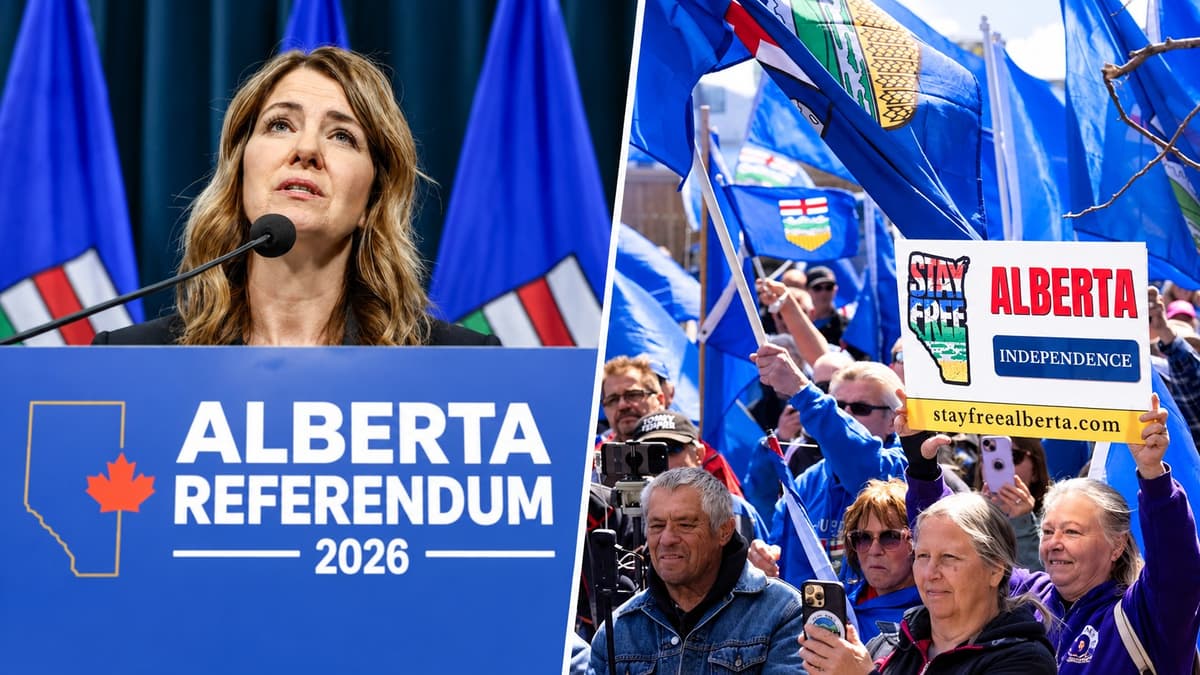
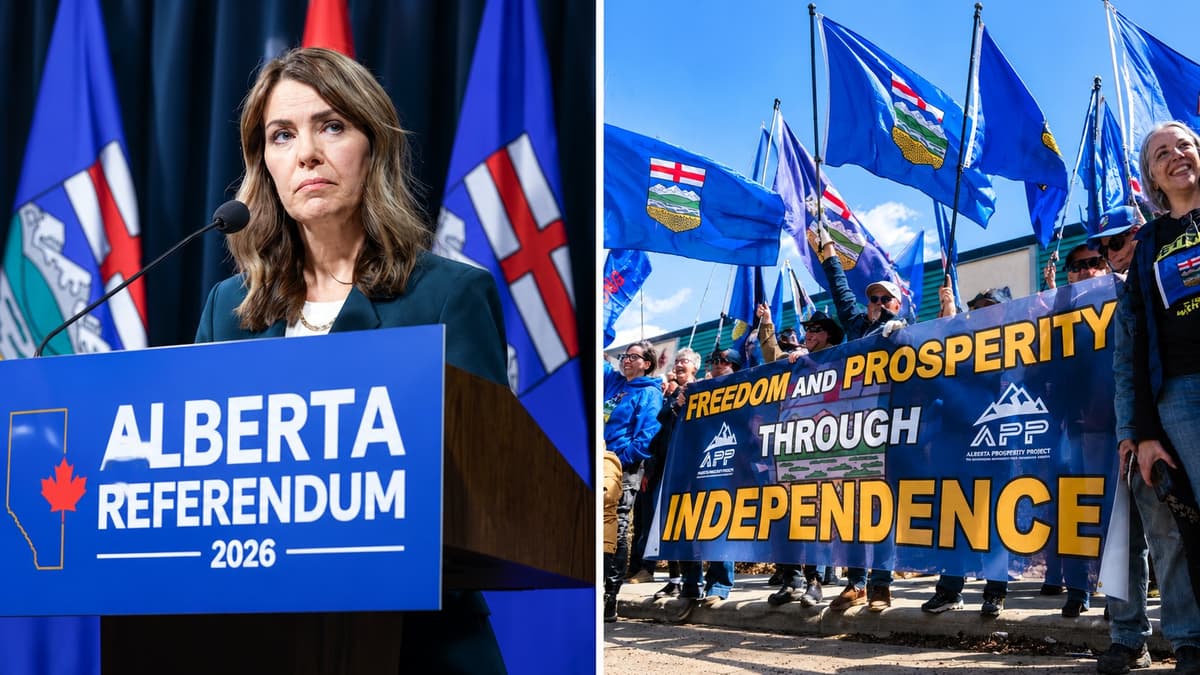
Smith's trade position also sits alongside a second one. Asked earlier this month whether the escalation was reason to delay Alberta's October 19 separation referendum, she said no, pointing to the citizen-initiative process and the petitions behind it. The Canadian Chamber of Commerce campaign co-chaired by Rachel Notley and Jason Kenney argues the referendum is badly timed during a trade war, and Notley said as much in announcing her role.
Smith's stated reasoning on both files is consistent: escalation, in either direction, is bad for Alberta business.
What it means in Alberta
Agricultural equipment is a particular concern in Alberta, where the tariffs arrive during harvest. Smith has raised it repeatedly since the escalation began.
Steel feeds construction and energy services across the province. Appliances and electronics reach households.
Excluding energy protects Alberta's largest export sector, but does not reduce the higher costs facing importers here.
How it got to this point
The United States imposed 50 per cent tariffs on $27.6 billion of Canadian goods effective August 22, after trade negotiations collapsed hours before the deadline.
"This is an unprecedented challenge imposed on Canada, but Canada will meet the moment, Canadians will meet the moment, we will meet the moment together," Champagne said at Tuesday's announcement, held at a roofing company in Ottawa.
On Monday, Trump announced new tariffs on Canadian autos that would double existing levies to 50 per cent starting January 1.
Smith is not the only Alberta voice on the file this week. The Canadian Chamber of Commerce announced Tuesday that former premiers Rachel Notley and Jason Kenney will co-chair a campaign to keep Canada united ahead of the province's October 19 referendum. Notley said in a statement that she and Kenney disagree on plenty but agree the referendum is bad for business in Alberta and badly timed during a trade war with the United States.
What comes next
Whether negotiations resume before September 8, which is what Smith is asking for.
Alberta could introduce provincial support of its own, although Smith made no commitment Tuesday.
And the auto tariffs in January, which would be a substantially larger problem than anything on the current list.
Sources
Canada announces targeted countermeasures and substantive support for workers and businesses in response to U.S. tariffs — Department of Finance Canada, August 25, 2026
Premier Danielle Smith, public statement, August 25, 2026
Canadian Chamber of Commerce, announcement of campaign co-chairs
Comments from François-Philippe Champagne and Rachel Notley as reported by The Canadian Press and CBC News.





Comments
Conversation