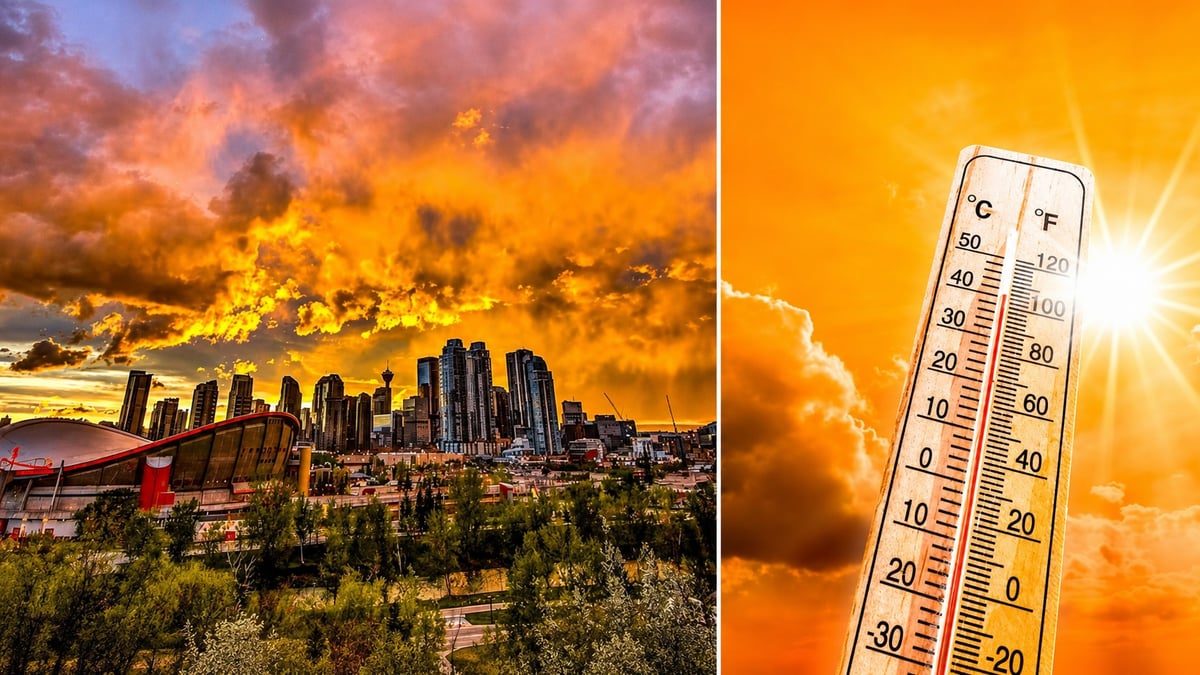
Southern Alberta's summer just tipped from hot into warned.
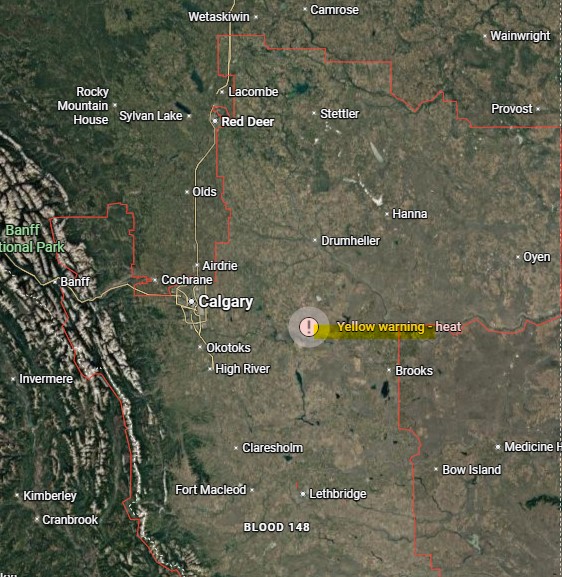
Environment Canada has placed Calgary, Lethbridge, Medicine Hat and a broad stretch of southern Alberta under heat warnings, with daytime highs in the low to mid-30s expected for at least the next three days and overnight lows only dropping into the teens. Lethbridge is forecast to peak around 36 C on Saturday, and the agency says warm conditions carry into next week across the region.
Medicine Hat drew the strongest language. Its alert calls for a long-duration heatwave, with highs ranging from 32 to 38 C lasting through next week. Not a hot weekend, a hot week-plus, and the duration is the part that matters most.
Why the length is the danger, not the number
Southern Alberta shrugs at 33 C days. What a heat warning actually flags is the stack: day after day of heat with nights that don't fully reset. When overnight lows hold in the mid-to-high teens, homes without air conditioning never cool all the way down, and the heat load on a body accumulates instead of clearing. Day one is uncomfortable. Day four of a bedroom that never dropped below 24 is when heat exhaustion finds people who were fine on Thursday.
That's also why the warning names who to watch: infants and children, seniors, people with heart, lung, kidney or diabetic conditions, people on certain mental health medications, outdoor workers, and anyone socially isolated. The isolated part is the quiet one. Heat emergencies disproportionately find people who live alone, which is why every heat warning includes the same unglamorous instruction: check on your neighbours. A knock on the door of the senior down the hall is genuine emergency preparedness.
Know the difference between a bad day and an emergency
Heat exhaustion looks like heavy sweating, dizziness, headache, nausea and fatigue, and the fix is immediate: cool space, water, rest. Heat stroke looks different and is a 911 call, not a lie-down: high body temperature with a lack of sweat, confusion, fainting or unconsciousness. The lack of sweating while visibly overheated is the tell people miss, it means the body's cooling system has failed.
The prevention list from Environment Canada and Alberta Health Services is short and works: shift outdoor activity to mornings and evenings, take breaks in cooled indoor spaces, and drink water steadily rather than waiting for thirst, skipping the alcohol and heavy caffeine that work against you. And the vehicle rule has no exceptions: no person or pet in a closed vehicle, for any length of time. A car in 34 C sun becomes lethal in minutes.
Free air conditioning exists all over your city
Nobody has to sweat this out at home. Every city under the warning runs on public cool space in a stretch like this: libraries are air-conditioned, free and happy to have you all afternoon, malls and rec centres carry the peak hours, and public pools, spray parks and splash pads are the family-sized version of relief, most municipal spray parks run daily through summer at no charge. Movie theatres remain the classic paid escape for the 2-to-6 p.m. furnace hours.
The pattern that works: outside before 11 a.m., somewhere cooled through the afternoon peak, back outside after 7. The evening is the reward, southern Alberta patio weather at 9 p.m. is what the rest of the country thinks our whole summer is.
Pets run the same schedule. Sidewalks that hold afternoon heat burn paws, so dog walks belong to the morning and evening shifts, with water down all day.

Getting through the nights, which is where this warning actually lives
The days are manageable, you can chase air conditioning. The nights are where a multi-day heat event does its quiet work, and most southern Alberta homes weren't built for teens-overnight-lows week after week.
The approach that works is running your house like the climate does: windows sealed and coverings closed through the day, especially on south and west faces, then everything open the moment outside drops below inside, usually mid-evening, with a fan in one window pulling cool air in and another pushing hot air out. A cross-breeze built that way can drop a bedroom several degrees by midnight, and it costs nothing.
For the sleep itself, the old tricks hold up because they work: a cool shower before bed, cotton sheets over anything synthetic, and moving your sleeping spot downstairs or to the basement level if you have one, since the temperature difference between floors on a hot night can be five degrees or more, the cheapest AC in the house. A damp cloth on the neck or feet buys the first half hour, which is usually the hard part.
And one more time for the people at highest risk: a fan alone isn't enough for a senior in a hot apartment on night four. If someone you know is riding this out without cooling, the check-in call belongs in the evening, when their unit is at its worst.
How long this actually lasts
The three named cities should plan for the warning through the weekend at minimum, with Medicine Hat and the southeast budgeting into next week per the long-duration wording. Warnings update as conditions shift, and the live version for your exact area is always at weather.gc.ca or the WeatherCAN app, worth checking before weekend plans, since heat warnings in this pattern sometimes make room for late-day thunderstorms too.
Alberta Health Services' full heat guidance is at albertahealthservices.ca/news/heat.aspx.
Sources:
Environment and Climate Change Canada, heat warnings for southern Alberta: https://weather.gc.ca
Alberta Health Services, heat safety guidance: https://www.albertahealthservices.ca/news/heat.aspx





Comments
Conversation