
A man authorities consider at high risk to reoffend against women has been released from an Alberta federal prison and will live in Winnipeg.
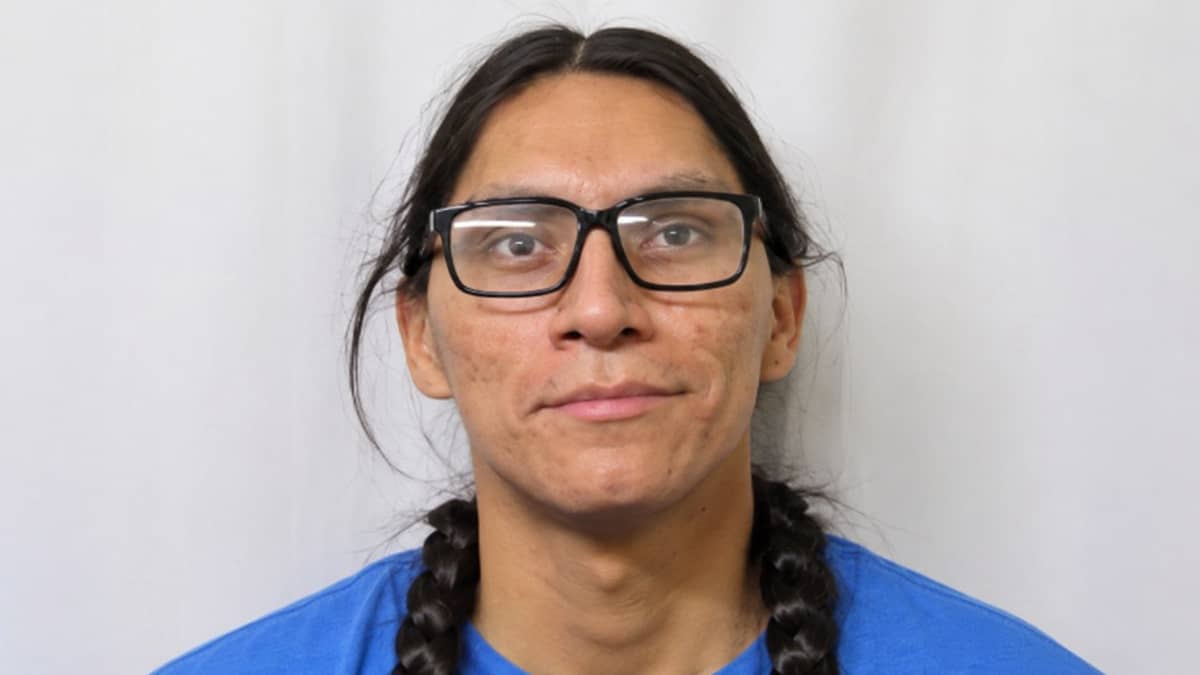
James Joseph O'Kane, 35, was released on statutory release from the Bowden Institution, a medium-security federal facility near Innisfail Alberta, on Monday.
He was sentenced in May 2021 to nearly six years for sexual assault, forcible confinement and uttering threats, in connection with an October 2016 attack on a stranger.
Police say he attacked a woman, dragged her down an alley, sexually assaulted her, choked her and threatened to kill her while holding a knife.
He is subject to conditions of parole and a lifetime weapons ban.
What statutory release is
Statutory release isn't parole, and it isn't discretionary.
Under federal law, most offenders serving a fixed-length sentence are released into the community after serving two thirds of it, with the final third served under supervision. It happens automatically unless the Parole Board of Canada intervenes to detain someone to the end of their sentence.
An offender on statutory release remains under the authority of Correctional Service Canada, must follow imposed conditions, and can be returned to custody for breaching them.
That distinction matters for understanding why the release happened on a set date rather than as the result of a hearing.
Why he was released if he's considered high risk
The release wasn't a judgment call. Statutory release is written into the Corrections and Conditional Release Act, and an offender serving a fixed federal sentence is released after two thirds of it by operation of law. Nobody assessed him and decided he was ready. The date arrived.
There is a mechanism to stop it. Correctional Service Canada can refer a case to the Parole Board of Canada for detention review, asking that an offender be held to the end of the sentence. The threshold is high and detention orders are the exception. Either no referral was made here or the Board didn't order one, and neither has been made public.
The alternative isn't as simple as it sounds either. A sentence has an end date, and holding someone to it means they walk out with no conditions and no supervision at all. Statutory release puts the final third under supervision, with conditions that can be enforced.
O'Kane remains under the authority of Correctional Service Canada until his sentence expires.
Where Bowden fits
Bowden Institution is a federal medium-security facility near Innisfail, roughly halfway between Calgary and Red Deer on the QEII.
It houses offenders serving sentences of two years or more from across the Prairie region, which is why people convicted in Manitoba and Saskatchewan frequently serve time there. Release from Bowden doesn't mean an offender is staying in Alberta, and in this case he isn't.
The offence, the conviction and the public warning are all Manitoba matters. Winnipeg Police Service issued the notification.
How these notifications work in Alberta
When an offender considered high risk is released into an Alberta community, the notification comes from the police service in that community rather than from Correctional Service Canada.
Edmonton Police Service and Calgary Police Service both issue public information warnings, typically naming the person, describing their conviction history and listing the court-imposed conditions attached to their release. Those conditions can include supervision by a specialized police unit, residency requirements and restrictions on contact.
Police issuing these warnings routinely state that the purpose is to allow people to take precautions, and that the notification is not intended to encourage vigilante action.
Alberta also maintains a public High-Risk Offender registry through the province, listing individuals subject to court-ordered supervision orders.
If you have concerns
In Manitoba, information about high-risk offender notifications comes from Winnipeg Police Service.
In Alberta, notifications are published by the police service in the community where an offender resides.
If you are experiencing sexual violence, the Alberta One Line for Sexual Violence is 1-866-403-8000, available by phone, text and chat.
Calgary Communities Against Sexual Abuse operates a 24-hour support line at 403-237-5888.
If you are in immediate danger, call 911.
Sources
Winnipeg Police Service, high-risk offender notification, August 2026
Correctional Service Canada, statutory release provisions
Government of Alberta, high-risk offender information







Comments
Conversation