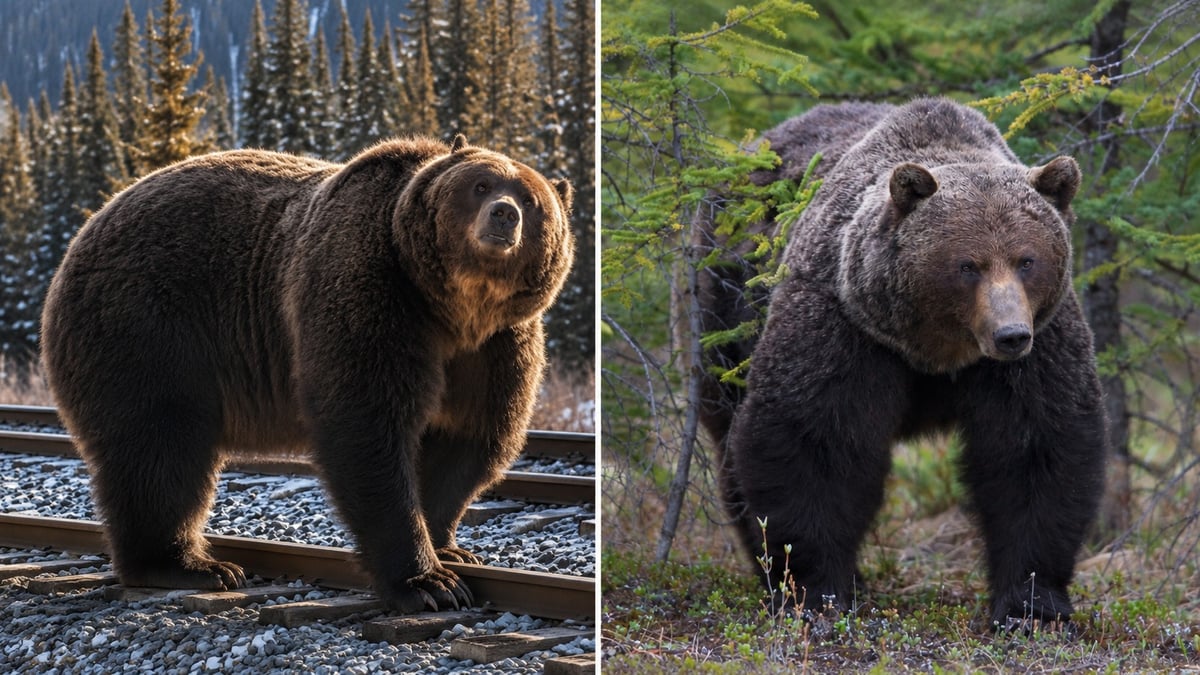
He's survived being hit by a train twice.
DNA testing found he fathered about three-quarters of the cubs sampled around Banff. He's recognizable by his facial scars and damaged right ear. At an estimated 25 to 30 years old, he's reached an age few male grizzlies do.
Bear 122, better known as The Boss, has roamed Banff National Park for more than two decades.
An internal Parks Canada email released this week shows wildlife staff have discussed what happens if he eventually has to be killed.
The email is from April 2025. He was photographed feeding in Banff last month.
What the email says
CTV News obtained it through an access to information request. It was sent by a Parks Canada wildlife ecologist and veterinarian to two other employees, calling for a more proactive discussion about how Bear 122 should be managed.
The concerns listed were his advanced age, declining physical condition, repeated access to unnatural food, high level of habituation and changing behaviour toward staff.
Then the line that drew the reaction.
Staff had begun preparing management and emergency-response teams for the possibility that Bear 122 might eventually have to be lethally removed because of public safety or welfare concerns.
That's preparation for a scenario, not a decision.
Parks Canada says it's a last resort
David Laskin, a Parks Canada wildlife ecologist who neither sent nor received the email, responded after it became public.
"The lethal removal of bears is a management tool that can be used, but that's something that is extraordinarily rare," Laskin said. He said other options would have to be exhausted first, "even more so in the case of 122."
He also pushed back on the idea that fame changes anything.
"He's no different than any other grizzly bear in the park," Laskin said. The goal is to let Bear 122 live out what he called his "retirement years" without an incident.
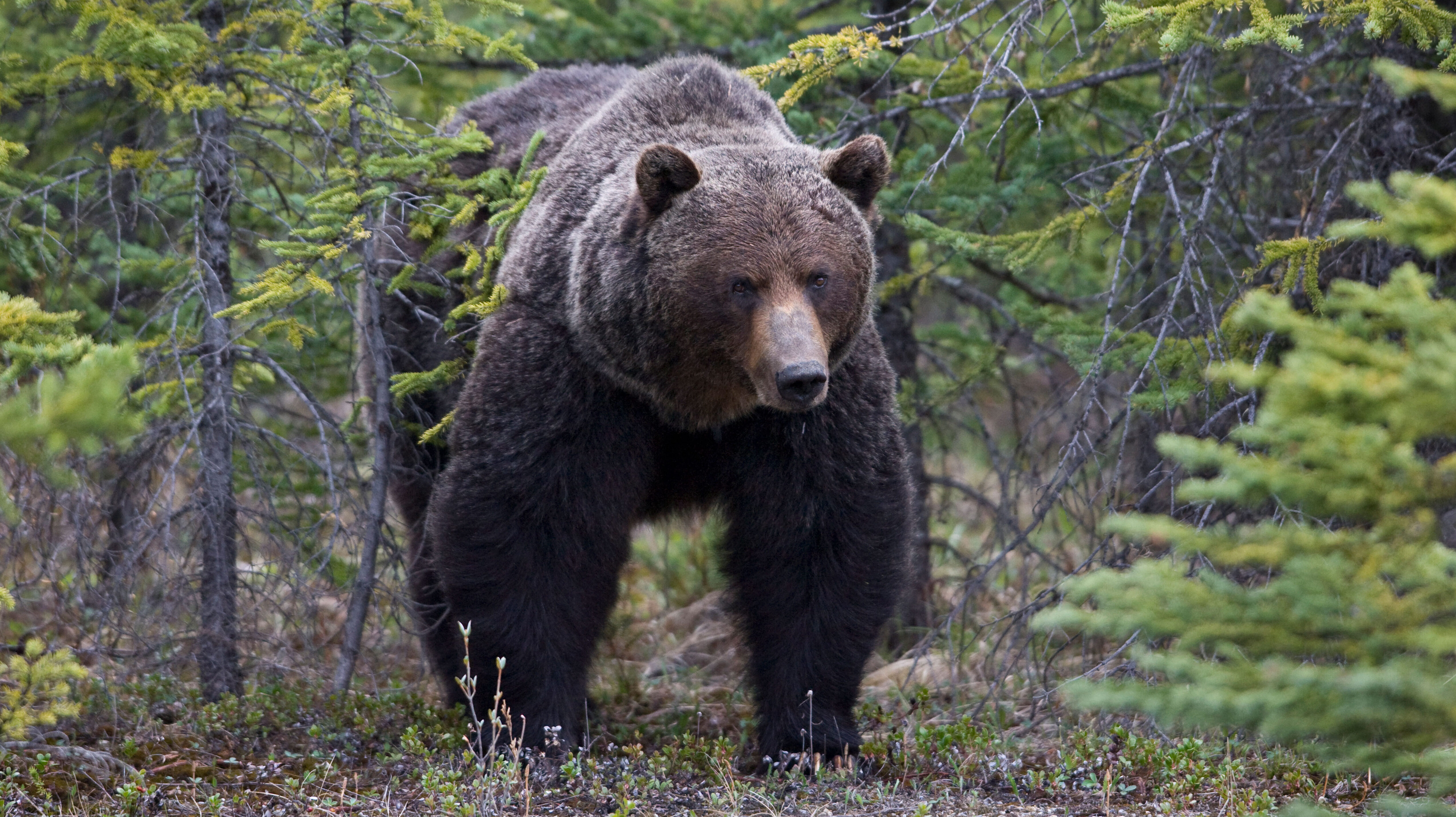
He ripped off the collar in a week
Parks Canada captured The Boss in a culvert trap on May 13, 2026 and fitted him with a GPS collar, part of a broader effort to understand how grizzlies use the landscape.
Within a week, he'd removed it. Spokesperson Justin Brisbane said that isn't unusual for a large male grizzly.
It cost Parks Canada a tool for tracking a bear that ranges across roughly 2,000 square kilometres of Banff, Yoho and Kootenay national parks and spends significant time near people.
The collaring did give staff a closer look at an aging animal. Reporting this summer indicated his teeth were badly damaged and deteriorating.
Why he matters to researchers
The Boss's reputation isn't just social media.
University of Alberta biologist Colleen St. Clair has described his survival of two train collisions as unusual. DNA samples collected during earlier research showed roughly 75 per cent of the cubs sampled were his offspring.
That doesn't mean three-quarters of every grizzly in the Bow Valley today descends from him. It does explain why he became important to researchers and recognizable to everyone else.
Thousands have signed a petition
Donna Buchanan started a petition after concerns about lethal removal surfaced this summer. It has collected more than 2,700 verified signatures.
It cites his longevity, his reproductive history and the fact he's never been known to attack a person.
The petition describes Parks Canada as having a plan to euthanize him. The email doesn't establish that.
People can increase the risk
Keeping The Boss alive isn't entirely up to Parks Canada.
Nick de Ruyter of the Biosphere Institute of the Bow Valley says the problems start when photographers, hikers and cyclists go looking for the bear, follow him or get too close.
The other problem is food. The Boss has come into Banff in previous years to eat crab apples.
The Town of Banff names him directly in its fruit tree information. In 2023, Bear 122 accessed crab apples at several properties along Marmot Crescent before Parks Canada hazed him out of town.
The town warns that bears that learn to find food in Banff come back, which can eventually lead to relocation or euthanasia.
So one of the things most likely to put The Boss in danger is what people do around him.
Banff will remove your fruit tree for free
Since 2015, the Town of Banff and Parks Canada have worked to remove fruit-bearing trees that draw bears into town.
The program covers 100 per cent of the cost of removing eligible trees and replacing them with non-fruit-bearing deciduous species.
47 trees have been removed since 2015. Hundreds remain.
For an aging bear with bad teeth that follows easy food into town, that's not abstract.
His fame is part of the problem
The Boss is a tourist attraction that never agreed to be one.
His image is on merchandise. A children's book was inspired by him. Banff Sunshine Village sells a mock fight-poster shirt featuring The Boss and a younger male grizzly, Split Lip. A restaurant on Banff Avenue is named after him, complete with bear-shaped ice cubes.
St. Clair has warned that people deliberately seeking out famous bears increase their exposure to humans and the odds of an encounter wildlife managers can't tolerate.
The more people love The Boss, the more important it becomes that they leave him alone.
What to actually do
Stay at least 100 metres from bears, whether it's The Boss or an unnamed grizzly.
Secure your food and attractants.
Don't stop to create bear jams or leave your vehicle to approach wildlife. Parks Canada imposed a no-stopping zone on part of the Bow Valley Parkway this summer after reports of unsafe parking and people approaching bears.
If you own a fruit tree in Banff, the replacement program covers the full cost.
Feeding, enticing or disturbing wildlife in a national park is illegal, with fines up to $25,000.
Where it stands
Seventeen months after that email was written, The Boss is still roaming.
He's old. His teeth are deteriorating. He no longer has the collar Parks Canada put on him in May. And he's still moving through a landscape shared with millions of visitors.
For more than two decades he's managed something increasingly difficult: living close to people while staying a wild grizzly.
How long that lasts depends partly on whether people return the favour.
Sources
Parks Canada
Fruit Tree Replacement Program — Town of Banff
Petition — Change.org



Comments
Conversation