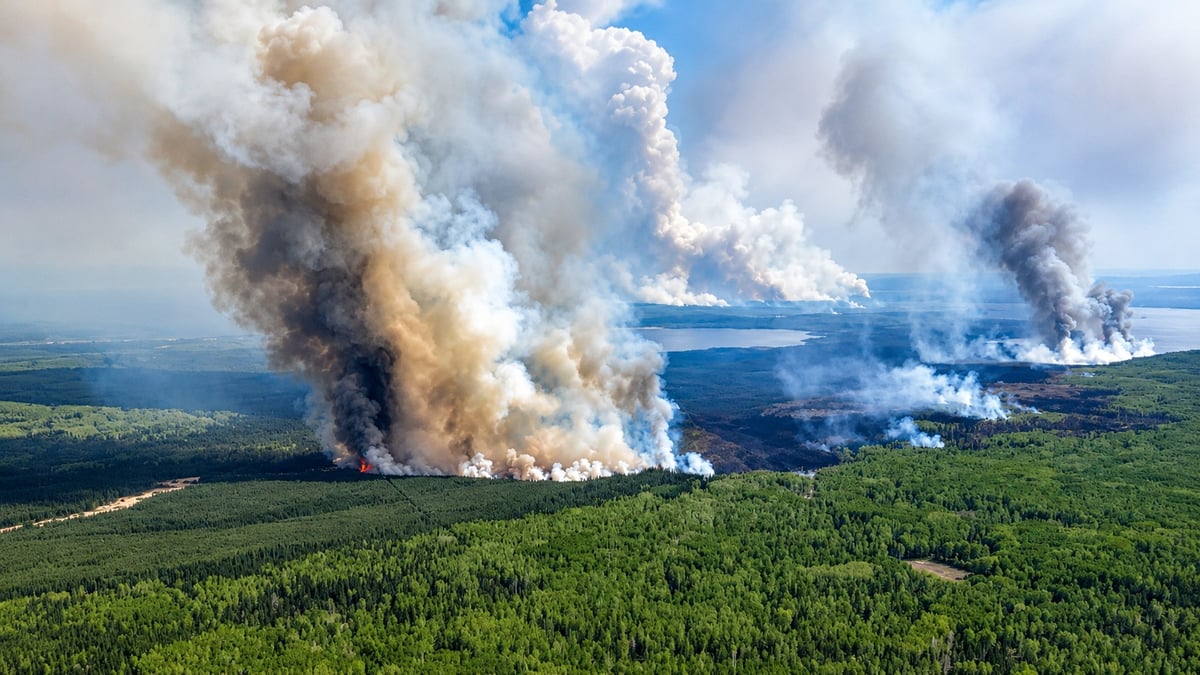
Southern Alberta is dry, hot, and primed to burn. It's the middle of July, the peak of the season, the grass is cured brown, and fire crews across the region have been busy. But whether you can legally light a campfire this weekend depends entirely on where you're standing, because the restrictions are a patchwork that changes town by town and county by county.
Here's where things actually stand.
Lethbridge: full fire ban in the River Valley
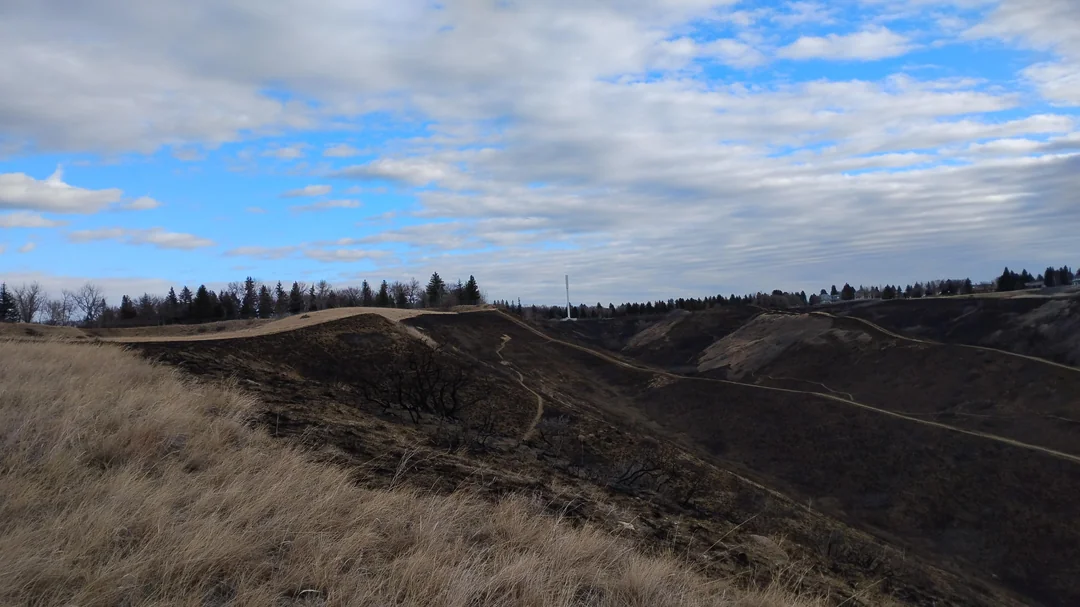
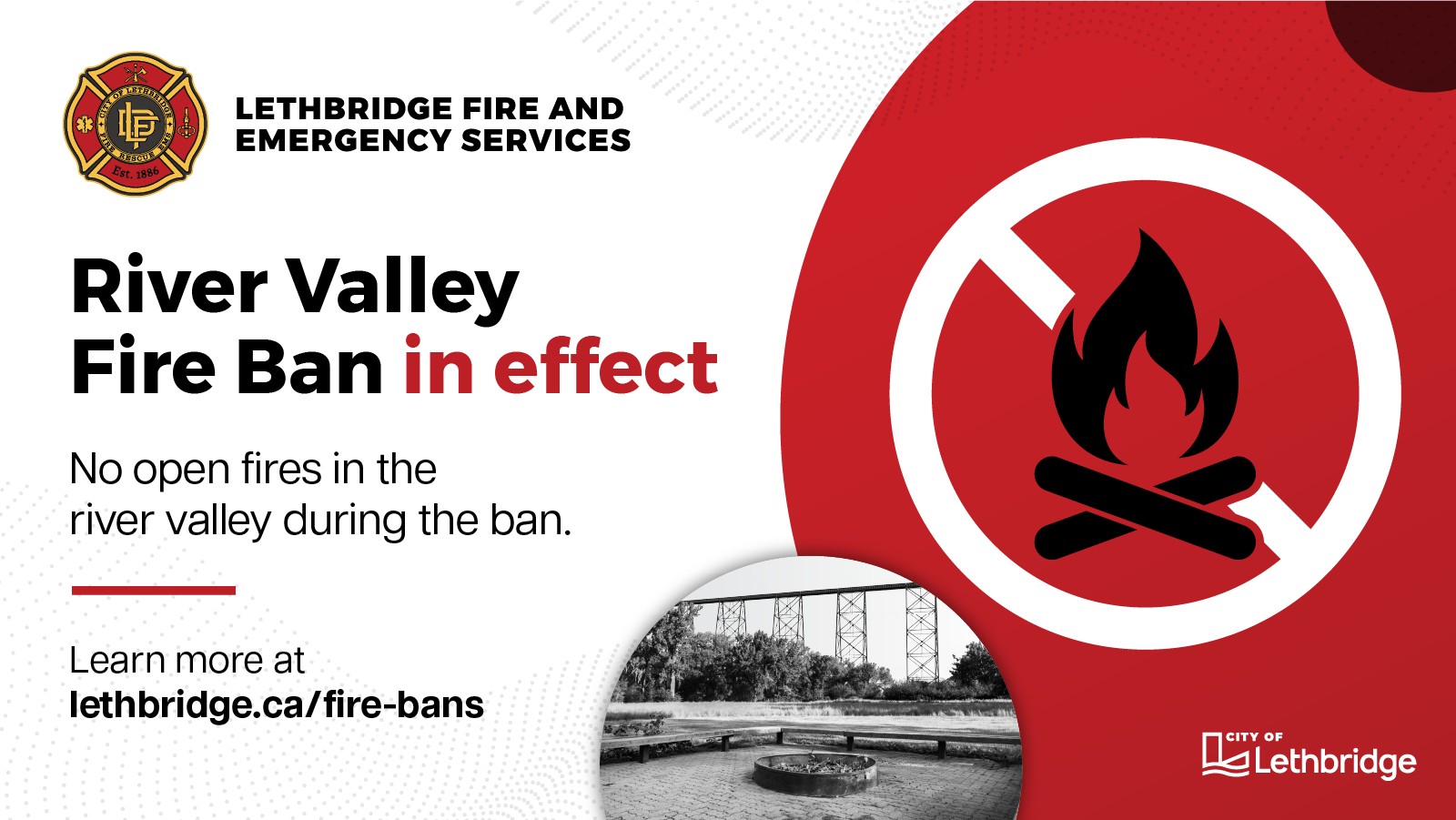
Lethbridge has the clearest restriction in the region. A fire ban has been in effect for the entire River Valley since July 7, with no end date announced. That means no open fires of any kind there, campfires, fire pits, charcoal barbecues, on public and private land alike.
The city imposed it after warm temperatures and low humidity created what it called a high risk for fast-moving, uncontrolled fires. "Even a small spark can quickly spread in dry grass and brush," the city warned. Lethbridge Fire and Emergency Services has rated the city's wildfire danger "very high" and said it could climb further as the summer heat holds.
Medicine Hat: no city ban, but a region that's been burning all year
Inside Medicine Hat's city limits, there are currently no fire restrictions. The city asks residents to use fire pits responsibly, dispose of cigarette butts in non-flammable containers, and keep barbecues clear of anything that can catch, but as of now, nothing is prohibited within the city.
That "no restrictions" line undersells what's happening around the Hat. The surrounding Cypress County has had one of its roughest fire seasons in years. It hit an "extreme fire danger" rating unusually early in 2026, weeks ahead of the usual late-summer window, after a low-moisture winter and a windy spring cured the grass fast. "The grass has cured incredibly quickly," county fire chief Jason Linton said as conditions worsened. His crews have fielded grassfire calls in every month of 2026, already trending past last year's total, including a pair near Irvine and Suffield that were the largest his department had seen in three or four years, and a fast-moving grassfire between Irvine and Dunmore that pushed smoke across the Trans-Canada and briefly closed a lane.
So while the city itself hasn't imposed restrictions, the country right around it has been primed and burning for months. Because Cypress County's status can shift fast, check it directly before burning anywhere outside city limits.
Everywhere else: check before you burn
Beyond those two, the southern Alberta map is a mix. Counties, towns and MDs each set their own status, and on any given week some are under advisories, some under restrictions, some under full bans, and some clear. It changes as conditions do.
The one reliable, current source is the province's live map at albertafirebans.ca. It shows every active fire advisory, restriction and ban in Alberta, colour-coded and searchable by location, and it's updated as each jurisdiction makes changes. It's the same tool the fire services point people to. Before you light anything this weekend, especially outside the two cities above, check it for your exact town or county rather than trusting what was true last week.
What the three tiers actually mean
"Fire ban" gets used loosely, but Alberta has three distinct levels, and the difference decides what you're allowed to do.
A fire advisory is the mildest. It signals fire danger has risen, and permits may be restricted, but safe campfires are still allowed in campgrounds, on public land, and in backyard fire pits.
A fire restriction is the middle tier. Wood campfires on public land are out, though they're still allowed in designated campgrounds and on private property. Existing permits may be suspended, and no new ones are issued.
A fire ban is the most serious. It prohibits wood campfires everywhere, public land, campgrounds, and private property, including backyard fire pits. Fireworks and charcoal appliances are out, and permits are cancelled. Propane and natural gas appliances with an on/off valve are still allowed even under a full ban, since you can shut them off instantly, worth knowing if you still want to cook outside.
Why it's this dry, and getting worse before better
This isn't a bad week in an otherwise normal summer. It's the peak of the season doing what it does in the south.
Southern Alberta is the hottest, most exposed corner of the province, and mid-to-late July is when heat, low humidity and wind line up most reliably. Medicine Hat hit 32 C this week with a humidex near 37, and while temperatures are set to ease into the high 20s in the coming days, the underlying dryness doesn't reset with one cooler afternoon. It takes sustained rain to bring fire danger down, and the south hasn't been getting it. As Cypress County's fire chief has put it, it would take two or three good storms, or one heavy rain, to reset conditions. Short of that, grass that's been baking for weeks stays ready to burn.
And there's a new threat moving in from the west. A weather system has been throwing dry lightning across British Columbia's southern Interior, strikes from storms so dry the rain evaporates before it reaches the ground, leaving only the spark. Environment Canada has called the severity and frequency of that lightning the main story of the week, and the threat area is forecast to expand eastward toward the Alberta boundary as the week goes on. For country this parched, dry lightning is the worst-case ignition source, fires starting in remote grass with no rain to slow them.
How these fires actually start
Most of what burns down here isn't nature's doing. In a recent provincial update, well over half of Alberta's wildfires this year were human-caused.
And the causes are more mundane than people assume. When a grass fire breaks out beside a highway, most people picture a tossed cigarette. That happens, but vehicles are one of the most common roadside ignition sources on their own: an overheated brake, a dragging trailer chain throwing sparks, hot exhaust metal touching dry grass when a car pulls onto the shoulder. Cypress County's fire chief specifically reminds drivers to keep vehicles in good repair and check that towed trailers aren't dragging chains on the pavement. The cigarette fires that do happen are usually butts stubbed into planter pots or flower beds that smoulder and catch, not flicks from a moving car.
Lightning starts fires nobody can prevent. Almost everything else on that list is a choice, which is the whole reason the bans exist.
The bottom line
Southern Alberta is dry, hot, and the risk is climbing rather than easing. Lethbridge's River Valley is under a full fire ban. Medicine Hat city is clear, but the county around it has been burning all year. Everywhere in between is a patchwork that can change fast.
Before you light a campfire, a fire pit, or anything else this weekend, take the ten seconds to check albertafirebans.ca for where you actually are. In conditions like these, a single spark is all it takes.
Sources:
City of Lethbridge, River Valley fire ban notice, July 7, 2026 (lethbridge.ca)
Lethbridge Fire and Emergency Services, wildfire danger rating, via CTV News
City of Medicine Hat, Fire Bans and Advisories page (current status)
Cypress County Emergency Services, statements from fire chief Jason Linton, via Medicine Hat News
Government of Alberta, fire ban tier definitions (alberta.ca/fire-bans) and albertafirebans.ca
Alberta Wildfire, human-caused wildfire figures
Environment and Climate Change Canada, Medicine Hat forecast and southern B.C. dry-lightning outlook (via The Canadian Press)




Comments
Conversation