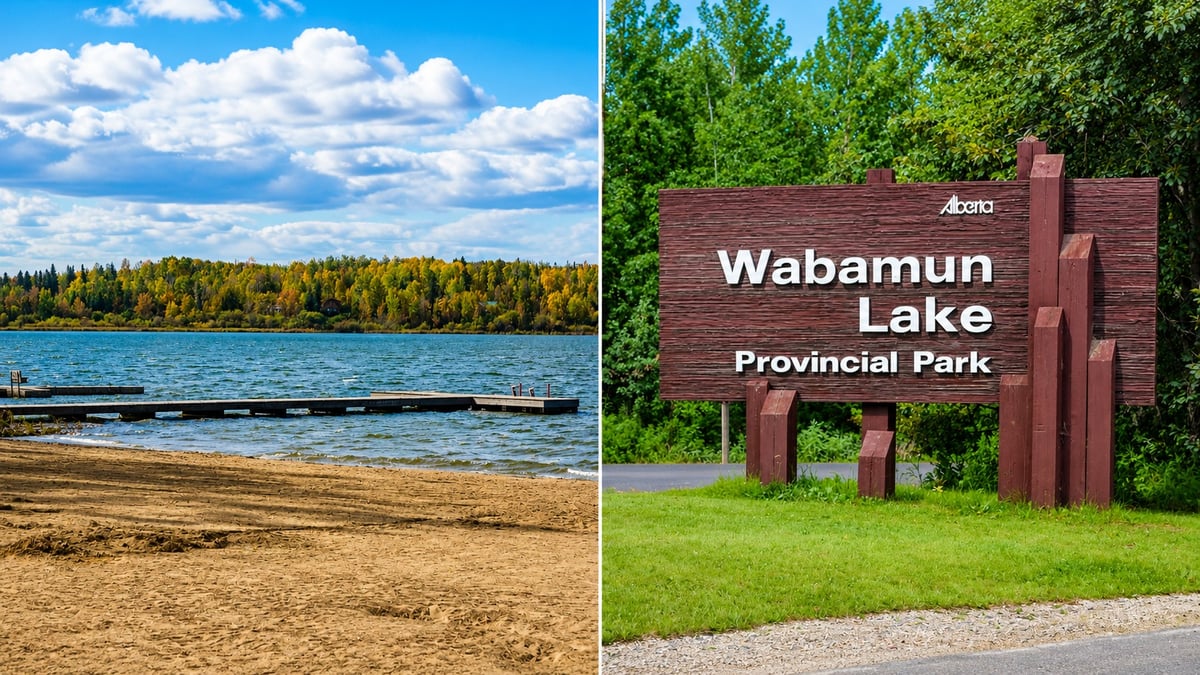
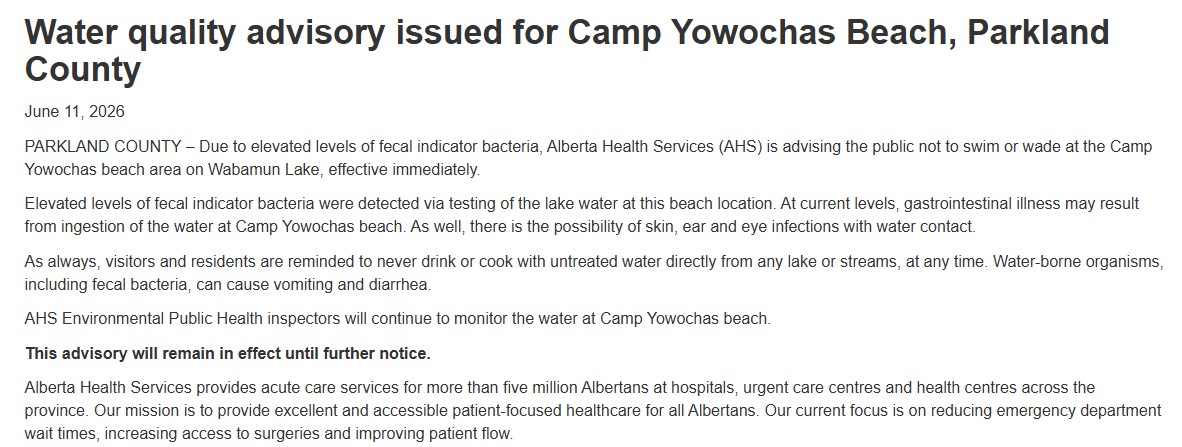
Alberta Health Services has told the public to stay out of the water at one of Wabamun Lake's beaches. In an advisory issued June 11, AHS said people should not swim or wade at the Camp Yowochas beach area in Parkland County, effective immediately, after tests found elevated levels of fecal indicator bacteria in the lake water at that location.
What the testing found and why it matters
AHS detected the elevated bacteria through testing of the lake water at the beach. At current levels, the agency says swallowing the water can cause gastrointestinal illness, and any contact with the water carries a risk of skin, ear, and eye infections. Water-borne organisms, including fecal bacteria, can cause vomiting and diarrhea.
The advisory applies specifically to the Camp Yowochas beach area, which sits on the north side of Wabamun Lake. AHS has not flagged other beaches on the lake under the same notice, so the warning is tied to that location rather than the lake as a whole.
Does the advisory affect drinking water, fishing, or boating?
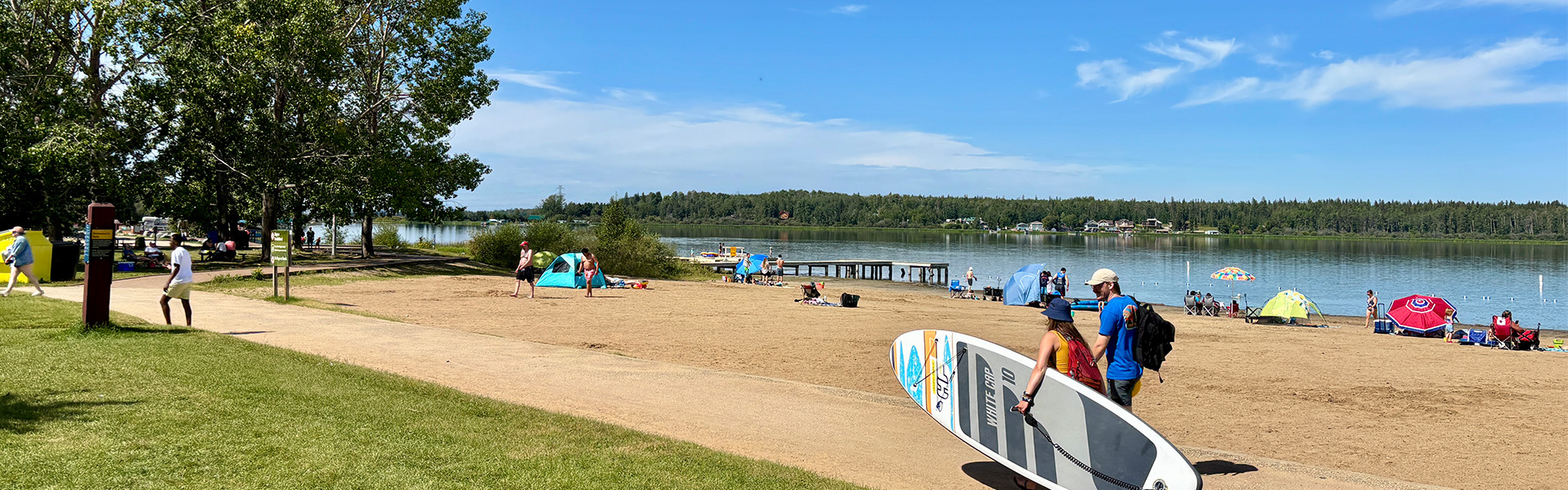
The notice is specific to swimming and wading at the Camp Yowochas beach, and to swallowing lake water. It is not a closure of the lake, and AHS has not placed restrictions on boating or other activities away from the affected swimming area. The agency's standing advice still applies anywhere on the water: do not drink or cook with untreated lake water at any time, and wash your hands after contact. Anyone fishing should follow the same caution about avoiding contact with the face and mouth and washing up afterward. Treated municipal drinking water supplies are a separate system and are not part of this recreational water advisory.
What to do if you visit the beach
AHS is advising people not to enter the water at the affected beach for now. Anyone who does go in should keep water away from their face and mouth and wash their hands afterward, which also helps guard against skin, ear, and eye infections. The agency also repeats a year-round reminder that applies to every lake and stream: never drink or cook with untreated surface water at any time.
What to watch for if you have already been in the water
Symptoms of water-borne illness usually appear within a few hours to a couple of days after contact. Stomach effects are the most common, including nausea, vomiting, diarrhea, and cramps, and some people may notice skin, ear, or eye irritation. Most cases are mild and pass on their own with rest and fluids. Anyone with severe or lingering symptoms, signs of dehydration, or illness in a young child, senior, or person with a weakened immune system should check in with a health provider. Albertans can also call Health Link at 811 at any time for free advice from a nurse or other health professional.
Where fecal indicator bacteria come from
Fecal indicator bacteria, such as E. coli and enterococci, are organisms used as markers that water may be contaminated with fecal matter. Their presence does not pinpoint a single source. Common contributors at Alberta lakes include waterfowl and other animal waste, stormwater and agricultural runoff, and warm, calm conditions that let bacteria concentrate near shore. Heavy rain followed by hot weather often pushes readings up. AHS has not identified a specific cause for the levels at Camp Yowochas.
How AHS tests the water and what counts as elevated
Through the summer, AHS Environmental Public Health staff collect water samples from monitored freshwater beaches and have them tested for fecal indicator bacteria. Results are measured against the thresholds set in provincial recreational water guidelines. An advisory is posted when a sample comes back above the level considered safe for swimming, which is what the agency means by elevated. The exact reading behind a given advisory is not made public, but the trigger is the same across the province: results that exceed the recreational safety guideline.
How long the advisory lasts
The advisory will stay in effect until further notice. AHS Environmental Public Health inspectors will keep monitoring the water at the beach, and these notices are typically lifted only once follow-up testing shows levels have returned to a safe range. Signage is generally posted at beach access points while an advisory is active.
Wabamun Lake and summer water monitoring
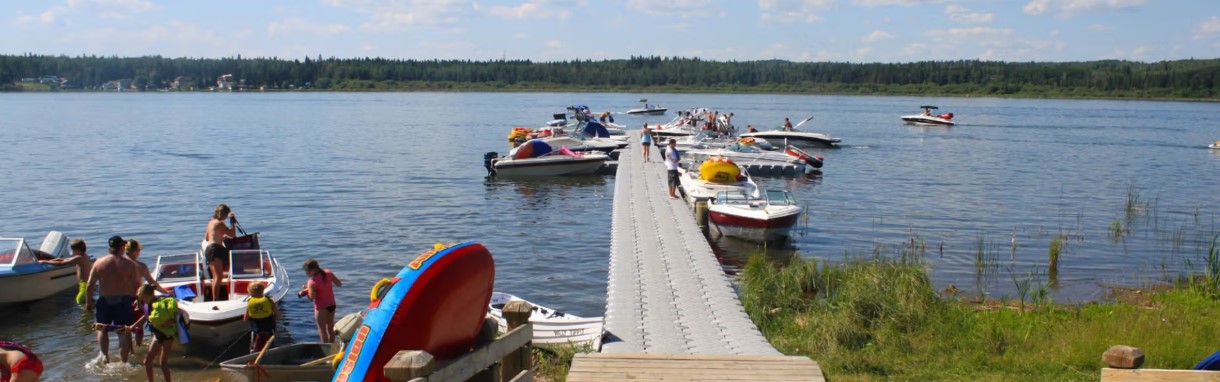
Wabamun Lake is one of the most popular recreation spots within an hour's drive west of Edmonton, drawing day-trippers and campers through the summer. The lake's name comes from a Cree word meaning mirror or looking glass.
Water quality advisories are a regular part of Alberta's beach season. Through the warmer months, AHS samples freshwater beaches across the province for both fecal indicator bacteria and blue-green algae, and issues location-specific advisories when results cross safe thresholds. A fecal bacteria advisory is separate from a blue-green algae advisory, which carries its own set of risks for people and pets.
SOURCES
Alberta Health Services, "Water quality advisory issued for Camp Yowochas Beach, Parkland County," June 11, 2026
Alberta Health Services active health advisories (albertahealthservices.ca/news)







Comments
Conversation