
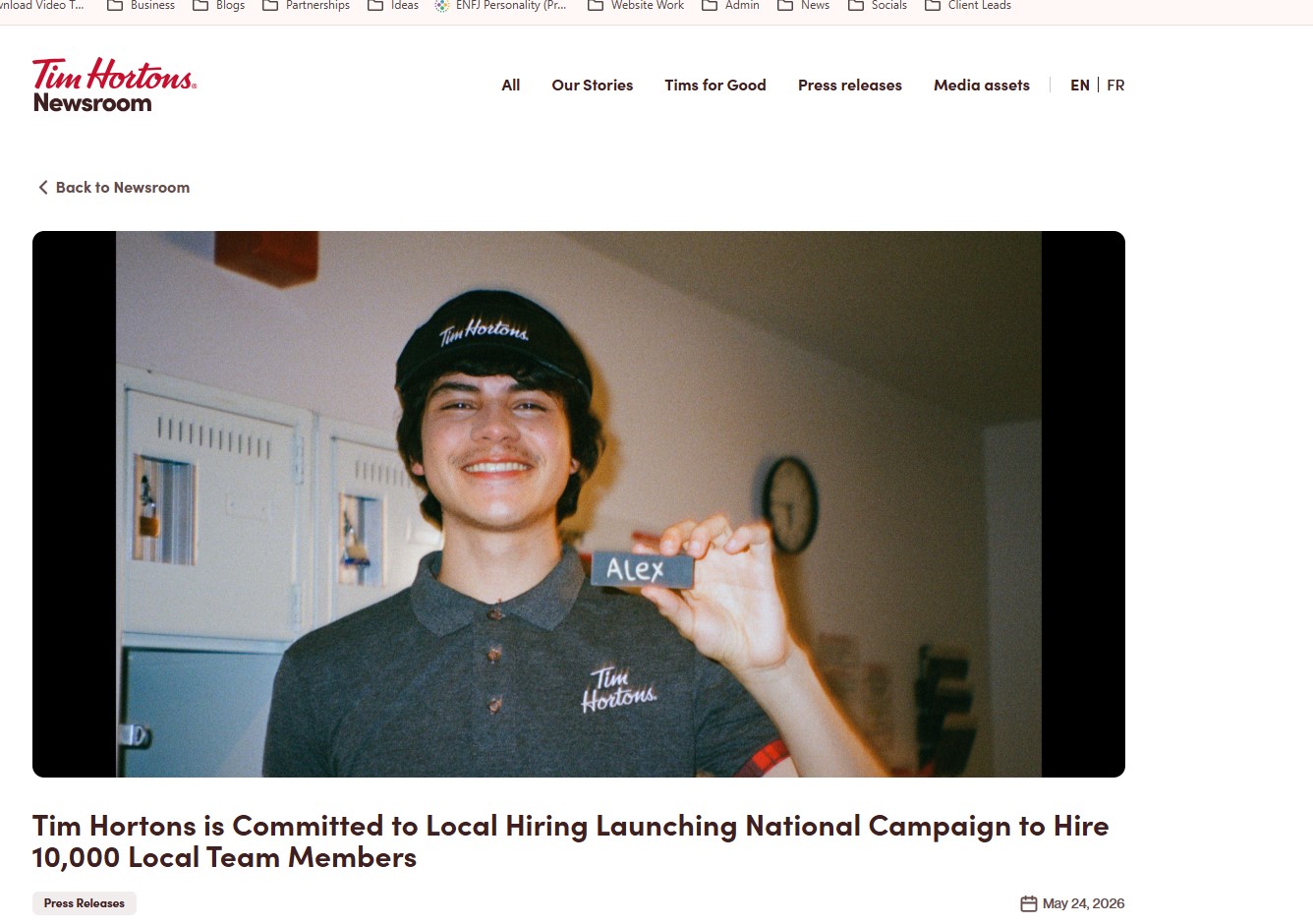
Tim Hortons announced Monday it's hiring 10,000 workers across Canada this summer. For Albertans, the job count is almost beside the point what's more interesting is what the company said alongside it.

For years, Tim Hortons lobbied Ottawa to expand access to the Temporary Foreign Worker Program. Post-COVID, with restaurants understaffed and franchise owners stretched, the company pushed back hard when the federal government moved to tighten restrictions. Now, launching a national local hiring campaign, it's publicly dropping that position.
"Today in 2026, with high youth unemployment nationally, lobbying for expanded access is no longer necessary," the company said Monday.
In Alberta, that line has some history behind it.
Alberta and the TFW fight
Alberta has been one of the heaviest users of the Temporary Foreign Worker Program in Canada for years. The oilsands, agriculture, and food service sectors have all leaned on it heavily sometimes out of documented labour shortages, sometimes in ways that drew real scrutiny from workers and the federal government.
The argument from employers has always been that local workers aren't available. Critics have always said the program undercuts wages and lets employers skip the harder work of recruiting locally. Both sides have had evidence on their side depending on the year.
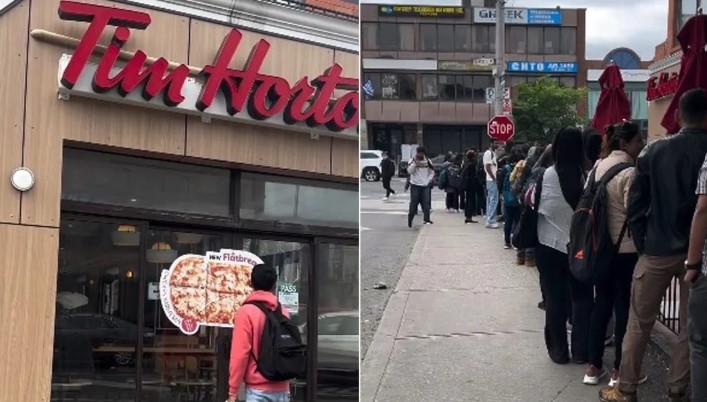
Tim Hortons was in the middle of it. After COVID, the chain pushed hard for easier TFW access, lobbied against restrictions, and framed the program as essential to keeping restaurants staffed. That position is now gone.
The company says roughly 4,000 of its 110,000 Canadian employees about 3.6% are currently on TFW permits, down steadily since 2024. Youth unemployment climbed. The political environment shifted. Local hiring became the easier argument, and the company made it.

What the hiring push actually looks like in Alberta
Tim Hortons is planning 80 new restaurant openings across Canada this year, backed by a $400 million combined investment to build and renovate 480 locations. Alberta's franchise community has been among the more active in western Canada and new locations here are part of that footprint.
Franchise owners already ran 400 local hiring events in March and April. More are scheduled through the rest of 2026.
The roles are counter work, drive-through, and kitchen entry-level positions that have always skewed young. About 45% of Tim Hortons' current Canadian workforce is between 15 and 24. For students finishing school in June with nothing lined up, or young Albertans caught between a tight professional job market and an inconsistent service sector, a chain actively recruiting at this scale is worth paying attention to.
The company is also specifically targeting new Canadians, international students, Indigenous workers, people with disabilities, and mature workers groups that often get passed over before they get a real look, particularly in smaller Alberta cities where Tim Hortons franchise owners are frequently among the bigger local employers.
Tim Hortons is expanding. So is its competition.
All of this is happening as Alberta's quick-service market gets more crowded.
Dunkin' is returning to Canada through a new national franchising deal between Foodtastic and Inspire Brands, with hundreds of locations planned across the country. The first Canadian opening is expected in late 2026 or early 2027. No Alberta locations have been confirmed yet but as Culture Alberta reported earlier this month, Calgary and Edmonton are natural markets to watch given their commuter density, drive-thru culture, and suburban retail corridors.
Dunkin' entering the market means more jobs and more pressure on Tim Hortons to compete on price, quality, and speed. Monday's announcement local hiring push, public TFW reversal, $400 million expansion is also a company making sure it's positioned as the local option before a rival shows up.

The financial backdrop
Tim Hortons just posted its 20th consecutive quarter of positive comparable sales. System-wide revenue hit $1.74 billion USD in Q1 2026, up 2.4%. The $400 million renovation and expansion investment announced last week is a company with money to spend, not one managing a crisis.
The bottom line
Tim Hortons dropping its TFW lobbying position isn't a policy shift it's a company adjusting to where things stand in 2026. Youth unemployment is up. TFW scrutiny is up. The jobs being posted are real, the expansion is real, and the shift away from foreign worker reliance is genuine even if the motivation is partly economic.
If you're looking for summer work in Alberta, or know someone who is, Tim Hortons franchise owners are actively hiring now through individual restaurant locations and ongoing local events.
Sources:
Tim Hortons news release, May 25, 2026
Restaurant Brands International Q1 2026 earnings release, May 6, 2026
Tim Hortons news release, May 22, 2026
Culture Alberta — Is Dunkin' Donuts Opening in Alberta? May 12, 2026









Comments
Conversation