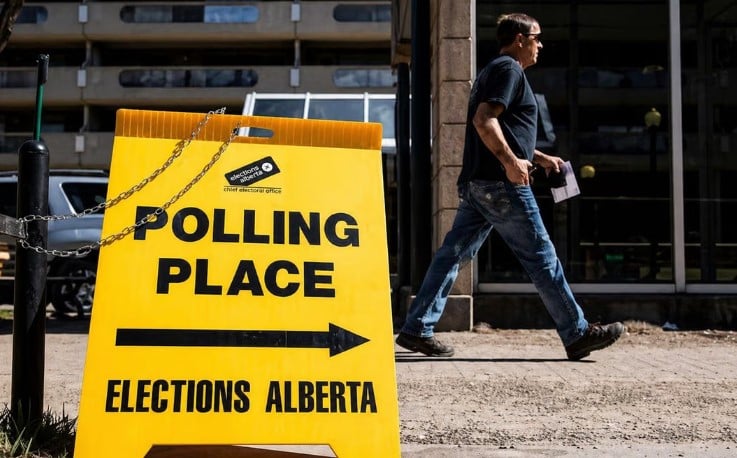
Elections Alberta has verified 222,597 signatures on the Stay Free Alberta petition, enough to clear the legal threshold for a referendum on Alberta independence.
The number sits comfortably above the 177,732 required under the Citizen Initiative Act. Elections Alberta counted 279,337 valid signatures, then applied random statistical sampling to reach the verified figure of 222,597. The campaign had submitted just over 301,000 in early May.
The path from that submission to today's number ran through two court rulings, a lowered threshold, and a data breach, and the verification lands in a political landscape that has already moved past it.
Why so many signatures were rejected
Nearly 80,000 signatures fell away between what was submitted and what was verified. Elections Alberta listed the common reasons: incomplete addresses, electors who didn't complete the declaration that they were eligible to vote, canvassers who signed their witness declarations before the elector signed, and people who gave a mailing address instead of a physical residential one.
None of it implies fraud. It's the normal attrition of a paper petition gathered across a province by volunteers. There was one added wrinkle this time. After an alleged breach of Alberta's voter data in late April, the chief electoral officer added a step to the process, checking for "seeded names," decoy entries used to catch a campaign improperly pulling from the voter list. That breach, which exposed the personal information of roughly 2.9 million Albertans and is now the subject of a proposed class-action lawsuit, is the reason the extra safeguard exists. Our coverage of that case is here: https://www.culturealberta.com/articles/class-action-lawsuit-launched-after-alberta-voter-list-breach-exposes-29-million-residents
The threshold everyone's fighting about was lowered last year
The 177,732 figure isn't a longstanding number. The UCP government lowered the bar for citizen-initiated referendums through Bill 54, passed in 2025, setting the requirement at 10 per cent of votes cast in the previous general election.
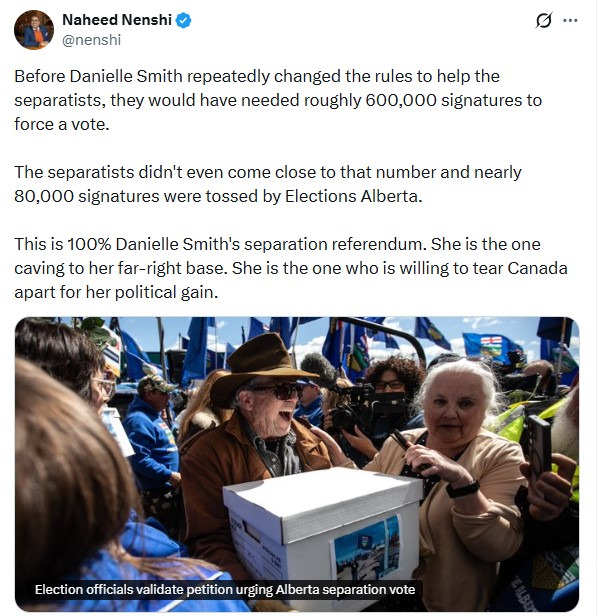
That change is itself a flashpoint. Supporters frame it as giving Albertans more direct democratic say. Critics, the NDP chief among them, argue it was engineered to make a separation question easier to force onto a ballot. "This isn't democracy. This is a premier grasping for power," NDP Leader Naheed Nenshi said of the reduced threshold. Whichever way you read it, the number today's petition cleared is a number the government itself set lower not long ago.
The petition was quashed once already
In May, two weeks after the petition was submitted, a Court of King's Bench judge quashed it. The ruling found the chief electoral officer erred in approving the petition without accounting for an earlier decision that separation would violate Indigenous treaty rights, and that a duty to consult First Nations hadn't been met.
The campaign appealed. In late June, the Alberta Court of Appeal granted a partial win, with Justice Alice Woolley ruling Elections Alberta could resume verifying signatures and report the results, noting lead organizer Mitch Sylvestre would suffer "irreparable harm" if verification waited for the full legal fight to end. Today's number comes out of that partial stay. Whether the petition is ultimately valid, given the treaty rights ruling, is still before the courts.
The referendum was already called
The verified signatures were meant to be what could force a referendum. That referendum already exists.
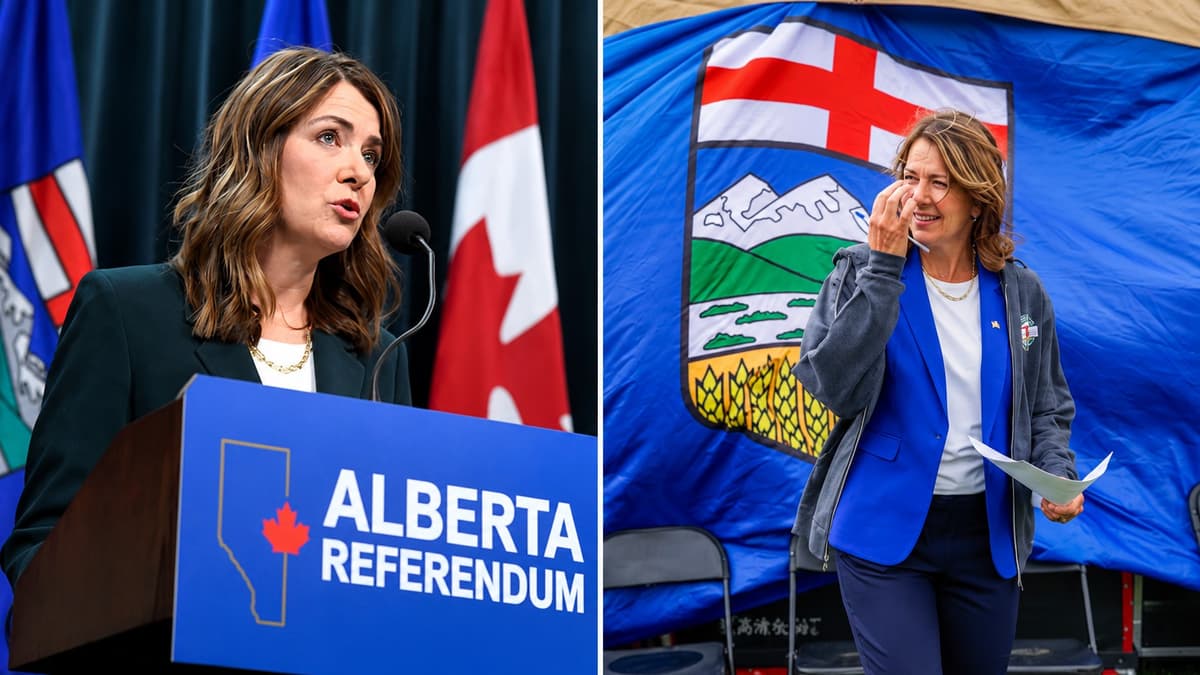
Premier Danielle Smith has set a provincial referendum for October 19 with 10 questions on the ballot, including whether Alberta should remain in Canada or begin the process toward a second, binding vote on separation. Smith has said the interest shown in both the Stay Free Alberta petition and the pro-Confederation Forever Canadian petition factored into her decision to include it. So the verified count doesn't trigger a vote. It confirms support for one that's already on the calendar.
What the October ballot actually asks
The separation question is narrower than the shorthand suggests. Voters won't be asked to leave Canada outright. The question, as the province has described it, asks whether Albertans want to remain in Canada or begin the process toward a second, binding referendum on separation. A vote for the separation side starts another referendum. It doesn't end Alberta's membership in the country.
The two-step structure reflects a legal reality. Canada's Clarity Act sets a high bar for a legitimate mandate to negotiate separation, a clear question and a clear majority, judged federally, not provincially. A vote on whether to proceed, rather than a vote to leave, is built around that. For a voter, October 19 is a fork in the road, not the destination.
What the NDP is saying
The Opposition has hammered the referendum on cost and motive. This week, Nenshi said freedom-of-information documents show the government has spent at least $365,000 just promoting the vote, on a televised address and social media videos, on top of a previously reported $1.5 million budget for referendum communication. He called it "an expensive political game for this premier," arguing most Albertans want to stay and that Smith called the vote as a pressure valve to satisfy separatists within her own party.
Smith's office has repeatedly countered that the government, caucus and party officially support Alberta remaining in Canada, and that the premier's own position is to stay. The disagreement isn't really about where Smith stands on separation. It's about whether holding the vote at all is leadership or a costly concession, and that argument will run straight through to October.
The other petition
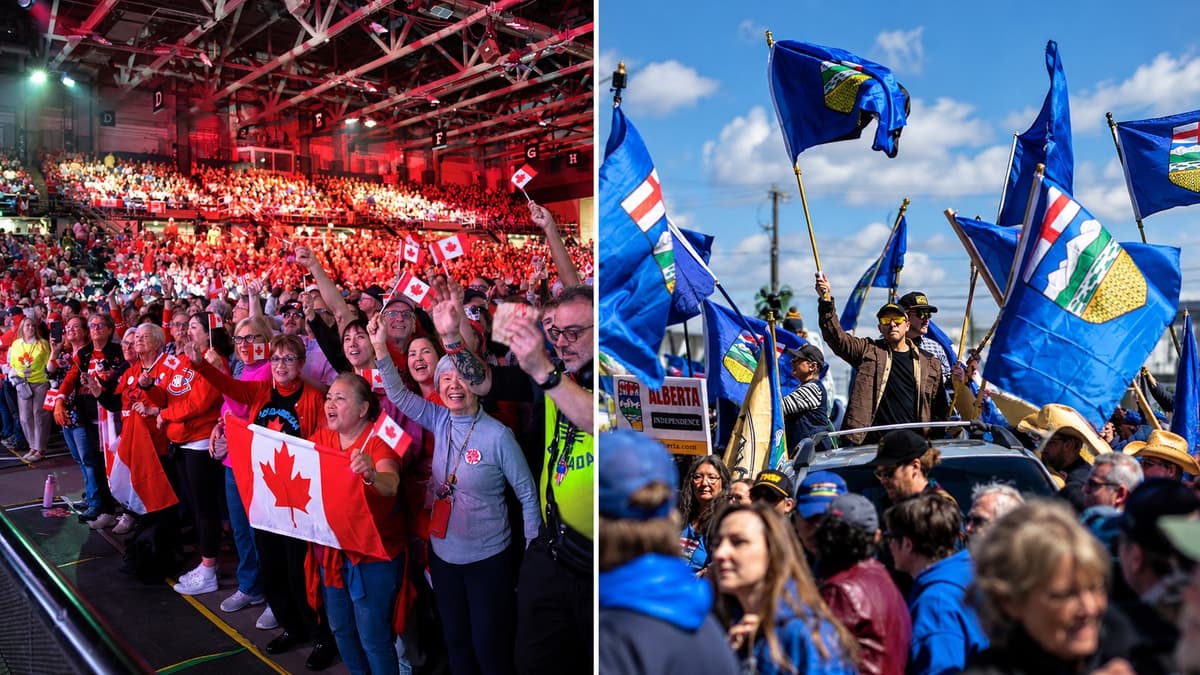
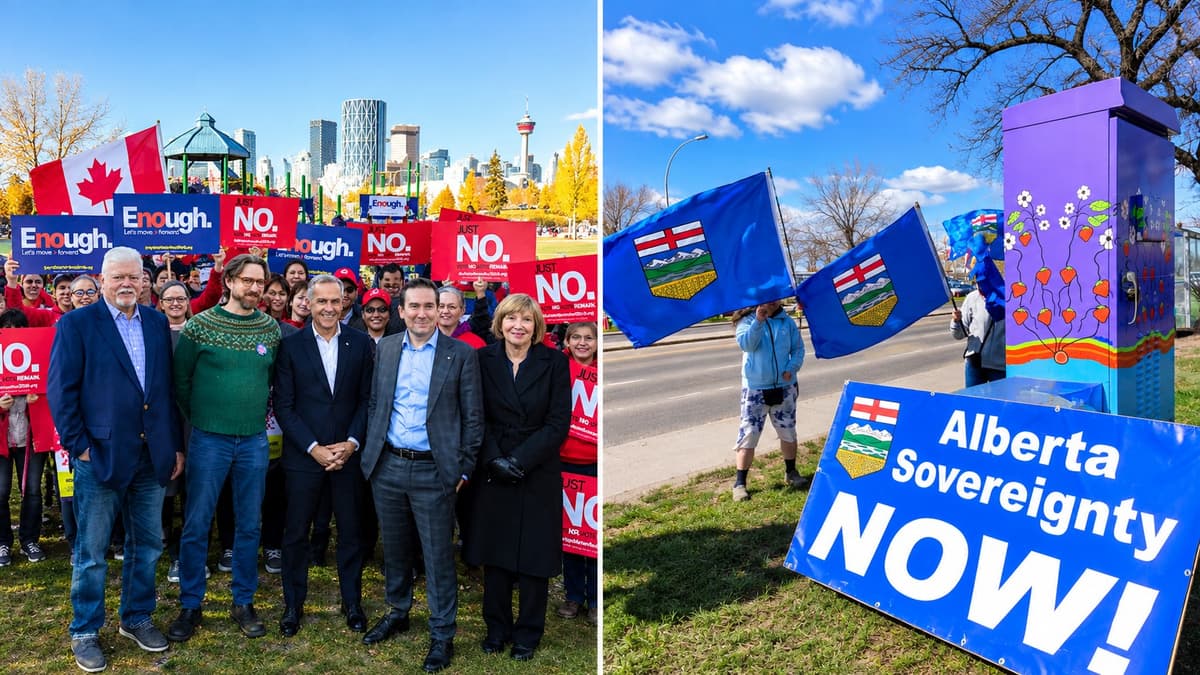
The Stay Free Alberta petition asks whether Alberta should leave Canada. A competing citizen initiative, the Forever Canadian petition led by former deputy premier Thomas Lukaszuk, asks whether it should stay, and it was verified in December with more than 400,000 signatures, nearly double the separation petition's total.
Smith has put the two together herself, noting roughly 700,000 Albertans signed one petition or the other asking for a vote. Between them, the petitions show how many Albertans on both sides want the question decided at the ballot box.
What happens next
The October 19 referendum is the main event now, and campaigns on both sides are already organizing and fundraising. The Stay Free Alberta petition's own legal status is still unresolved given the treaty rights ruling that quashed it the first time, but that fight now runs alongside a scheduled vote rather than determining whether one happens.
Sources:
Elections Alberta, citizen initiative petition results, July 24, 2026: https://www.elections.ab.ca/resources/media/news-releases/ci-results-announced-sylvestre/
Court of Appeal of Alberta, decision on signature verification, June 29, 2026
The Canadian Press / CBC, referendum cost and NDP response, July 23, 2026
Government of Alberta, Premier's address to the province, May 2026



Comments
Conversation