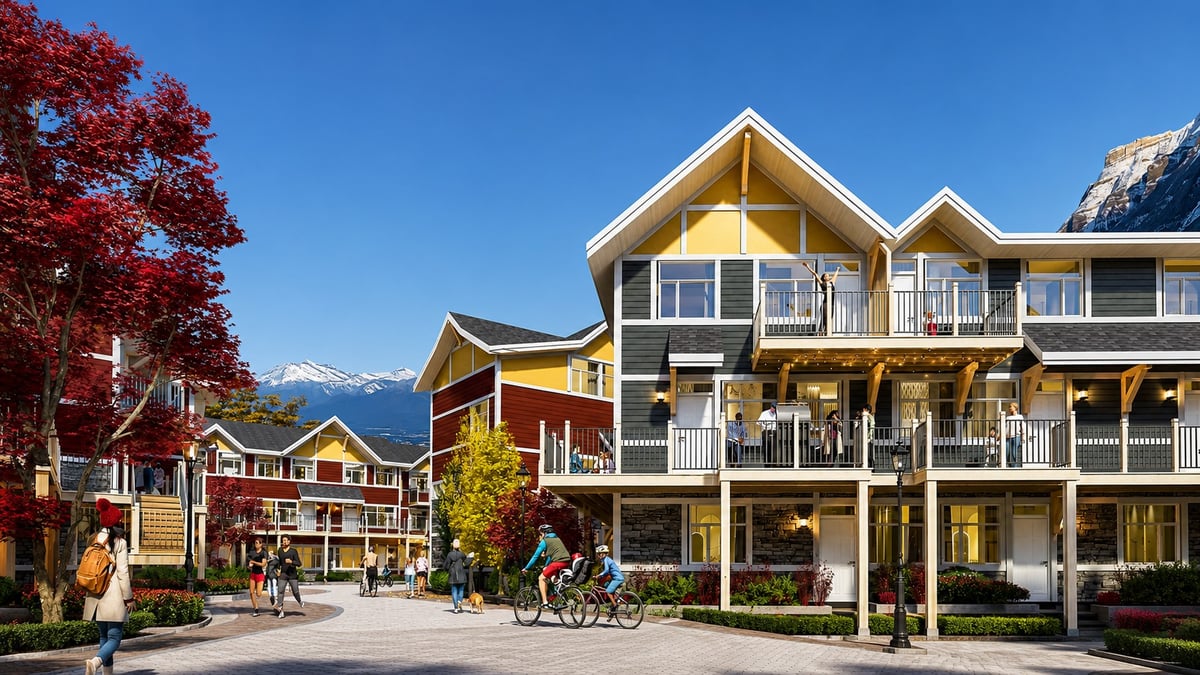
A kilometre from the gates of Banff National Park, in a hamlet most people only ever see through the windshield on the way to the mountains, someone is building 131 vacation rentals.
The Banff Legacy Inn has been in the works for years. It was marketed to open in spring 2026. That date has come and gone, and the developer's own website now lists occupancy in 2027. For a project this size, in a community this small, the delay is almost the least interesting thing about it. What matters is what's coming, and what the people who already live there make of it.
First, the name is doing some work
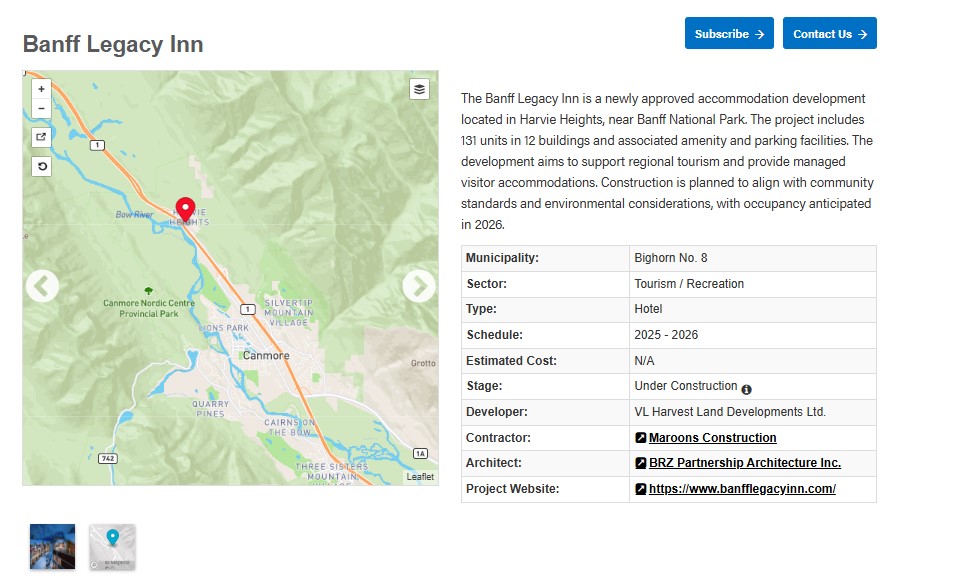
Worth clearing this up, because the branding is a little slippery. The Banff Legacy Inn is not in Banff. And it isn't an inn in the way you'd picture one.
It sits in Harvie Heights, a hamlet of roughly 160 people in the MD of Bighorn, right on the Trans-Canada about ten minutes west of Canmore and a kilometre from the park boundary. The community started life in the late 1950s and early '60s as a cluster of seasonal cottages. It's a quiet place, and it's the backdrop against which everything else here plays out.
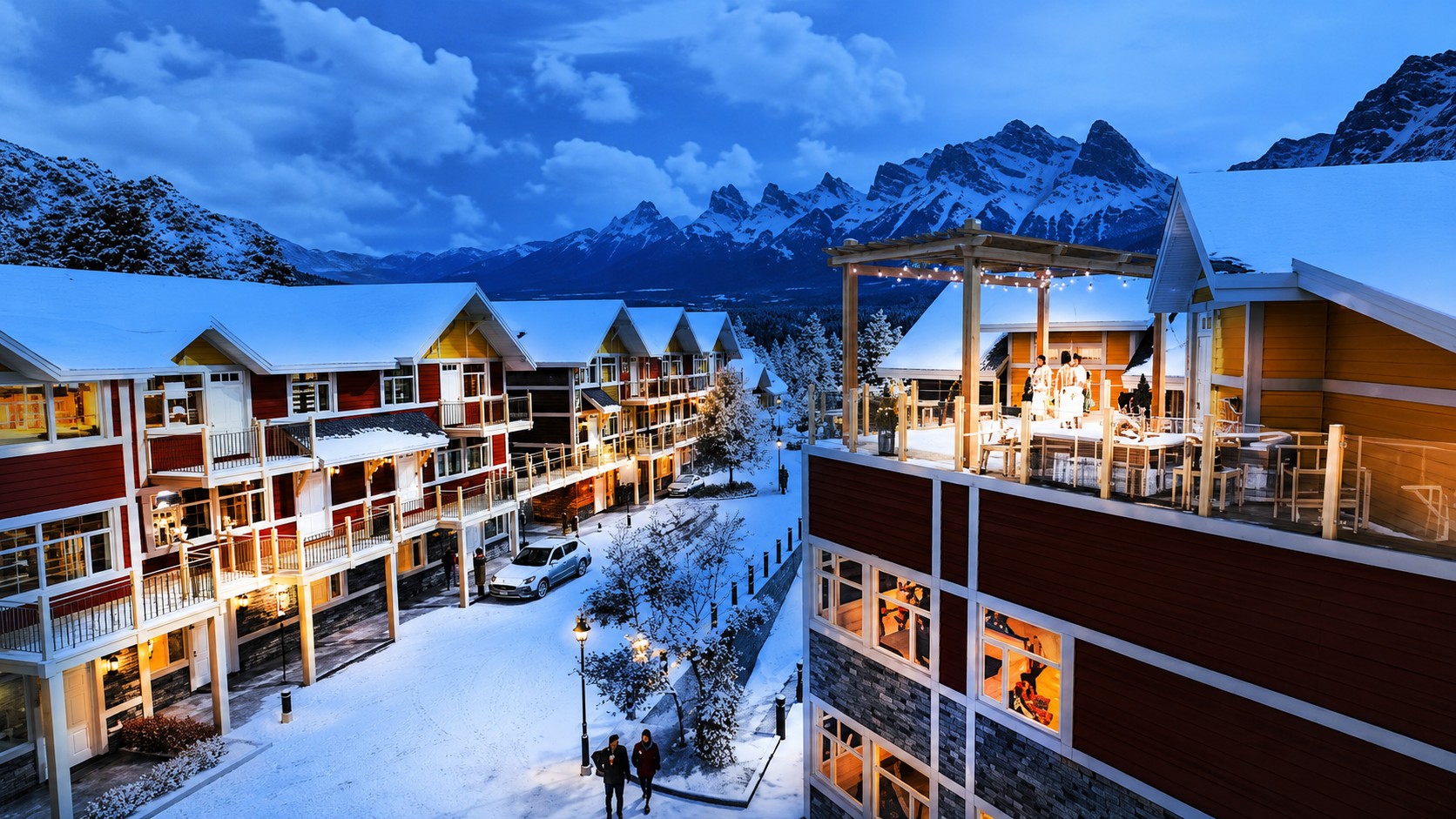
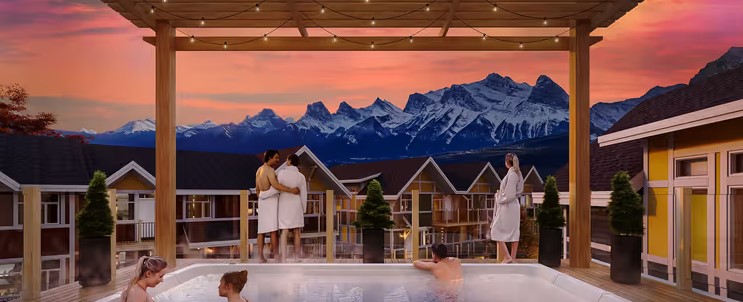
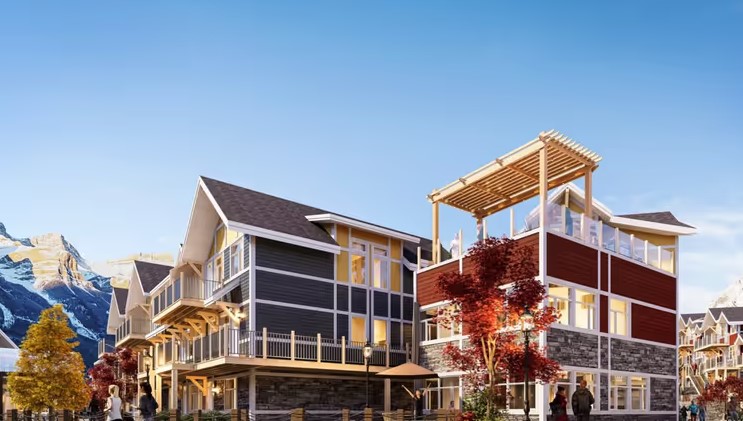
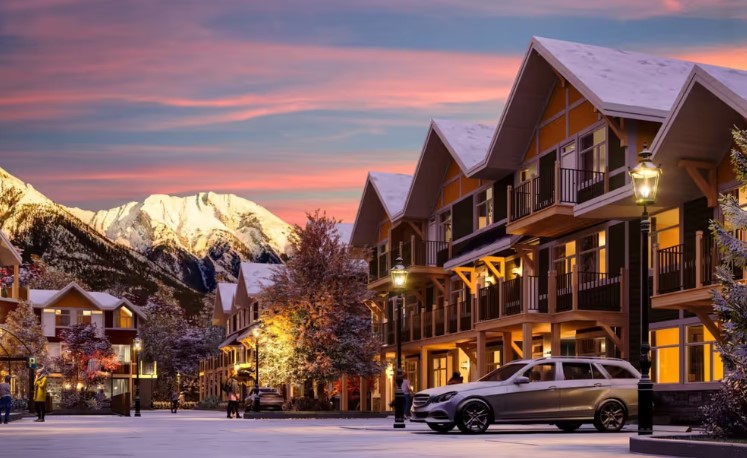
The project itself is a vacation-rental ownership development, not a hotel you book a night at. The 131 units, across 12 buildings, are being sold individually as investment properties starting around $590,000, with the expectation that owners rent them to visitors short-term. Units run from about 540 to 1,430 square feet, in one- to four-bedroom layouts. The amenities are aimed squarely at mountain tourists: a rooftop hot tub, a sauna, a gym, a café, ski-storage lockers, indoor parking, e-bike charging, and a terrace facing the Rockies.
Behind it is VL Harvest Land Developments Ltd., with John McIsaac's project management group overseeing the build.
Why the neighbours pushed back
Harvie Heights has about 160 residents. The Banff Legacy Inn could bring in a large number of short-term guests at once, turning over constantly. That's a big change for a quiet residential hamlet, and the people who live there said so, repeatedly, across multiple open houses.
Their two biggest concerns were the obvious ones: noise and parking. A development full of vacation renters, a lot of them there to unwind after a day in the mountains, sitting next to people's homes, raises the plain worry about late nights and packed streets.
The developer said the first open house sent them back to the drawing board. "We came away from that almost with the idea that we had to redesign the whole project because there were some major parking concerns and others," McIsaac told the planning commission. The fix was drastic: put all the parking underground. Of the 193 stalls, 180 went below grade, leaving just 13 above. That single change cost about $7 million.
They also brought in a new architect to redraw the project, and the company holding the land absorbed roughly $5 million in costs over the year it took.
The twist: the neighbours' fix made it bigger
Here's the part that's easy to miss, and it's the most telling detail in the whole story.
That $7 million parkade and the redesign costs had to be paid for somehow. So to offset them, the developer increased the project's density, more units to spread the cost across. In other words, the parking solution the community pushed for is part of what drove the unit count up. Residents wanted the development to have a lighter footprint. The mechanics of giving them the parking fix they asked for pushed it the other way.
The developer also committed to a permanent, full-time on-site manager whose job is specifically to control parking and parties, with a one-bedroom unit set aside on the property for that person to live in.
"We wanted to be good corporate citizens with the folks up in Harvie Heights," McIsaac said. He didn't pretend it had won everyone over: "We know that we're not going to make everyone happy up in Harvie Heights, we know the density is bigger than what they want."
There were environmental concerns too. Residents worried that excavating for the underground parkade could disturb the local aquifer, which the developer addressed through a geotechnical assessment.
This lot has seen this fight before
The Banff Legacy Inn isn't the first attempt to put tourist accommodation on this piece of land, and the same arguments came up last time.
In 2019, a 120-room Holiday Inn Express was proposed for the site. Residents objected then too, over noise and over a proposed entrance off a residential road. That project never got past the development-permit stage.
The Legacy Inn got further. The MD of Bighorn's municipal planning commission approved its development permit in 2023, including a height variance letting the buildings rise up to 2.7 metres above the usual 12-metre limit.
Where it actually stands
Approved, marketed, partly sold, but not open.
The province's stated case for it is straightforward: the Banff Legacy Inn, in Alberta's Major Projects registry, is described as supporting regional tourism and providing managed visitor accommodation. The registry still lists occupancy in 2026. The developer's own website now says 2027. When two official sources disagree on the date, the developer's is the one to trust, they're the ones building it, and the spring 2026 window that ran across the marketing has already passed with no opening.
A slip of a year or more between a pre-construction sales launch and real occupancy is common, so it isn't unusual. But it does mean anyone who saw "opening spring 2026" and planned around it is waiting on a date that has already moved once.
Why this matters beyond Harvie Heights
Step back and this is a small version of a fight happening all along the edge of Banff and Canmore.
Demand for places to stay near the park is enormous and still growing. The land to build them on is limited, and much of it sits beside small communities that were quiet long before the tourism boom. Every new development in that corridor hits the same question: the market wants more rooms near the park gate, and the people who already live near the park gate are the ones who absorb what that brings, the traffic, the noise, the sense of a place changing around them.
The Banff Legacy Inn is one project, on one lot, in one hamlet of 160 people. But the argument over it, more rooms for visitors versus the character of the community next door, is the argument the whole region is having. For now, it's still being built, and the date it opens has already slipped once.
Sources:
MD of Bighorn Municipal Planning Commission, development permit approval and height variance, 2023, as reported by the Rocky Mountain Outlook
Alberta Major Projects Registry, Banff Legacy Inn (project 11810)
Banff Legacy Inn developer materials (banfflegacyinn.com), unit details and occupancy timeline
Statements from developer John McIsaac, J.R. McIsaac Project Management Group; applicant VL Harvest Land Developments Ltd.
MD of Bighorn, Harvie Heights community profile
Town of Canmore / MD of Bighorn water and wastewater servicing agreements





Comments
Conversation