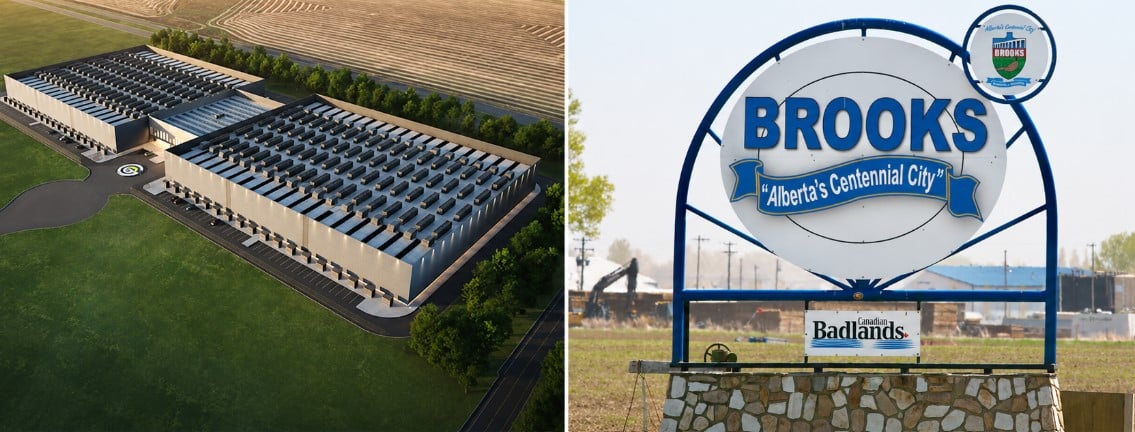
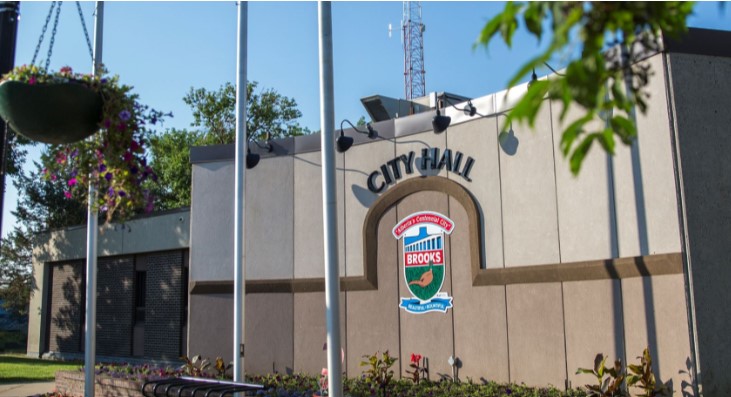
Brooks City Council approved a new land use category for data centres this week. Three residents showed up to oppose it.
The bylaw passed. The debate did not resolve the questions residents brought to the hearing. That is partly why the city is hosting a public information session on June 10.
What residents said
One resident did not mince words. A data centre can consume more water than a town or county can supply, she wrote. Noise pollution is constant. Multiple documents, witness accounts, and videos show how damaging these facilities are. Council should not allow one in Brooks because it would "kill the community."
Another called the water use and noise "outrageous" and said data centres "wreck the land they are on."
A third resident, Murray Denoudsten, supported the amendment but pushed council to strengthen it. His concern was specific: a developer could submit a large project in phases, with the first phase getting only a cursory review. The full buildout, presented at once, would face a much more rigorous evaluation. He argued the city needs scale categories in the bylaw to close that gap.
City staff said each phase of a project would undergo the same level of evaluation regardless of how it is staged.
"A good start," Denoudsten said but the bylaw needs more "oomph" and "teeth."
What data centres are
Data centres are facilities filled with rows of servers that store, process, and move digital information streaming, banking, artificial intelligence. They range from 100,000-square-foot campus builds down to shipping container installations on a half acre. Modern compact designs may suit Brooks, which has limited industrial land.
They create few permanent jobs. They can add to a municipality's tax base. They require substantial power and, depending on the cooling system, significant water.

The water concern
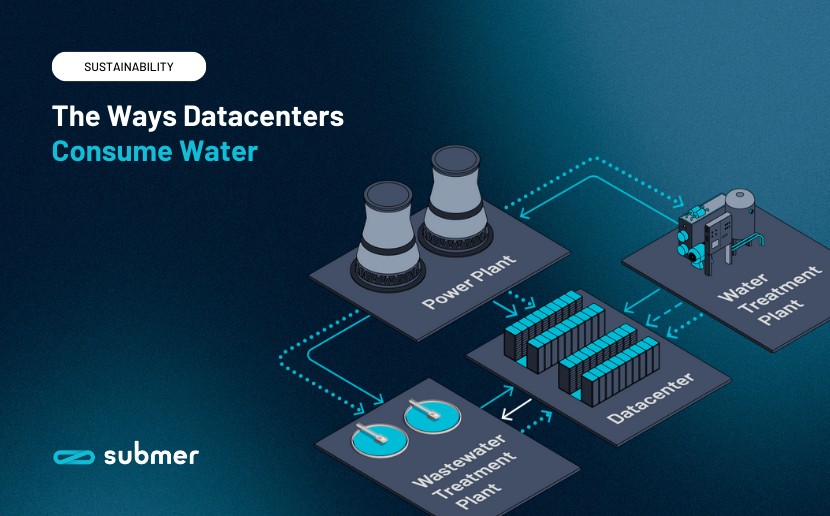
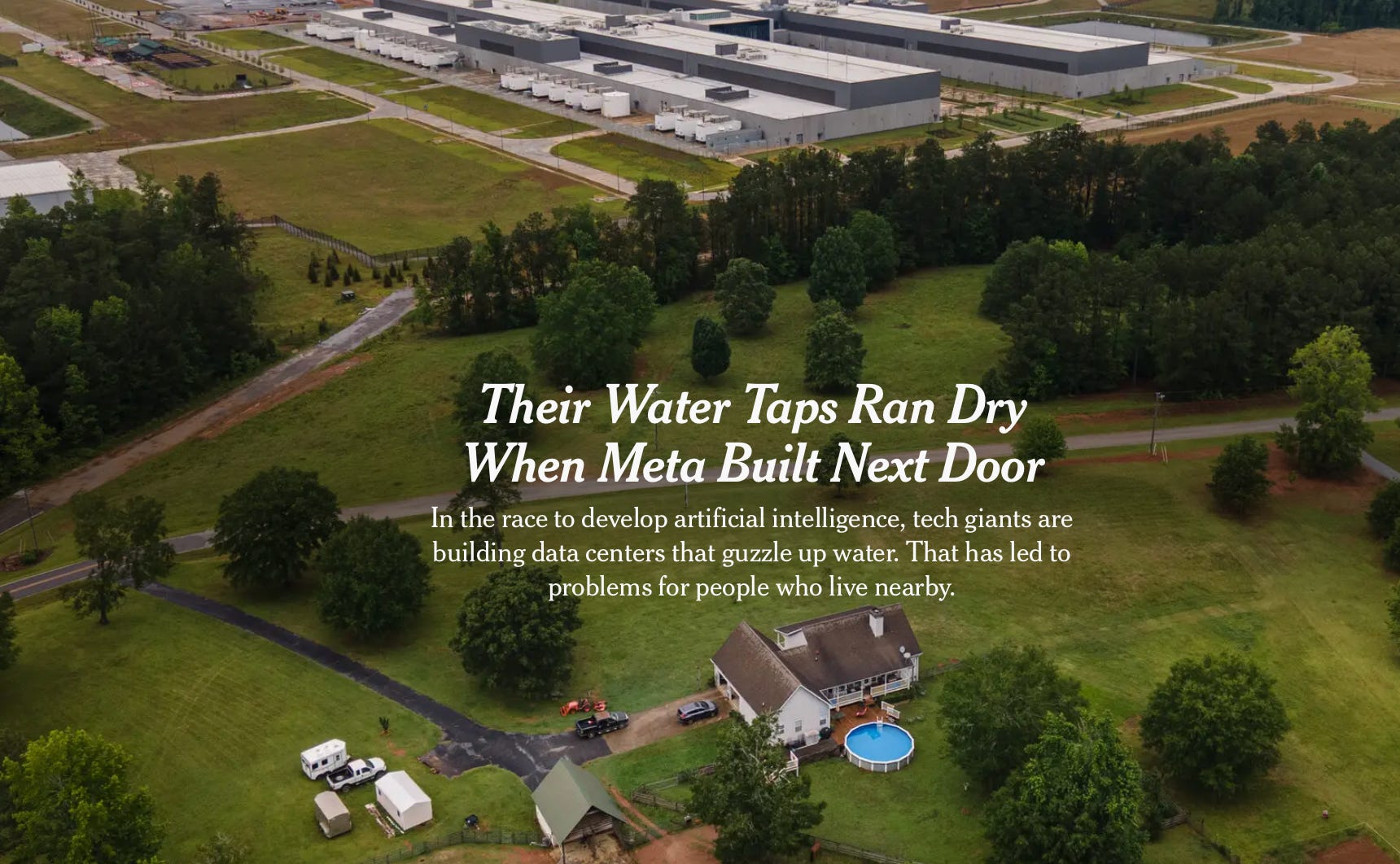
Servers must stay between 18 and 27 degrees Celsius. Traditional data centres cooled that heat with large volumes of water. A mid-size traditional facility can consume more than 110 million gallons per year. In Brooks, which draws its municipal water from the Eastern Irrigation District, that number is not abstract. The EID covers 113,000 hectares of agricultural land across Wheatland, Newell, and Cypress counties. Industrial water consumption at that scale competes with irrigation and municipal supply.
The industry is shifting toward closed loop and liquid cooling systems that use far less water. Whether any future Brooks proposal would use that technology is one of the questions the June 10 session needs to answer.
The regulatory gap
A data centre in Alberta does not automatically go through the Alberta Utilities Commission for approval. The AUC only gets involved when a project requires regulated utility infrastructure.
"The AUC's jurisdiction is triggered only when a project requires regulated utility infrastructure that falls under its authority," said Lauren Aspden, AUC spokesperson.
A data centre connecting to existing grid infrastructure without requiring new utility approvals faces no automatic provincial review of its water use, noise, or community impact. The municipal land use process is the primary gate. Brooks just opened that gate. What goes through it depends on how strong the bylaw turns out to be.
What happened in Olds
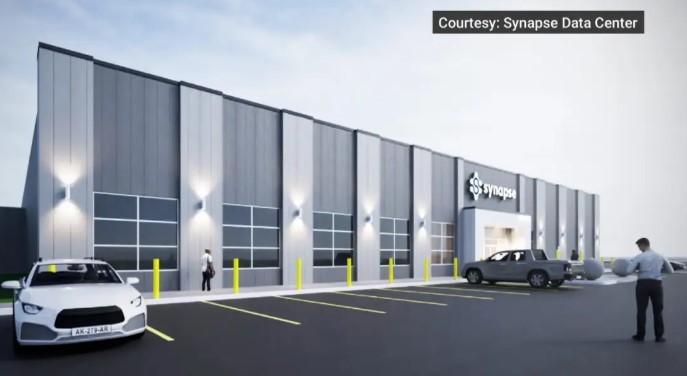
The closest Alberta precedent is Olds, where Synapse Data Centre Inc. proposed a $10 billion, 1,400-megawatt data centre complex in early 2026. Residents found out about it in January with almost no prior consultation and organized opposition immediately. In March, the AUC rejected the application not on the merits, but because it was technically incomplete, missing environmental assessments and sufficient public consultation. Synapse reapplied in April. The AUC is still reviewing it.
The lesson for Brooks: Olds had AUC involvement because the proposal included a power plant requiring utility approval. A data centre in Brooks connecting to existing grid infrastructure bypasses that review entirely. The bylaw is the protection. Which is exactly why strengthening it before a developer applies matters more than fixing it after.
What the tax revenue argument actually looks like
The provincial pitch to communities like Brooks is built on property tax revenue. Data centres of 75 megawatts or greater will be recognized as designated industrial properties starting December 31, 2026, with land and buildings subject to municipal taxation. Alberta Municipal Affairs has told councils that assessed data centres across the province could generate over $2.2 billion in municipal tax revenue if current proposals proceed.
For a small city like Brooks the numbers depend on the facility size, assessed value, and local mill rate. The jobs created once construction ends are typically minimal most data centres run with a handful of full-time technical staff.
One detail worth raising at the June 10 session: municipalities can offer property tax incentives or deferrals for up to 15 years under the Municipal Government Act. A city that agrees to a deferral to attract a developer may not see meaningful tax revenue for over a decade.
June 10 information session
The Connected Communities session runs June 10 from 6 to 8 p.m. at the Heritage Inn Hotel and Convention Centre in Brooks. Presenters include a city representative, representatives from Ascent Energy and Corvus, and a representative from eStruxture whose Cal-3 data centre is under construction near Calgary. Residents and media can ask questions directly. No registration required.
Sources:
Brooks Bulletin, Data centre would kill the community, says resident, June 3, 2026 (brooksbulletin.com)
City of Brooks, Land Use Bylaw amendment public hearing, June 2026
Medicine Hat News, Information session in Brooks will offer answers on data centres, June 2, 2026 (medicinehatnews.com)
Alberta Utilities Commission, Lauren Aspden spokesperson statement, June 2026
The Albertan, Synapse plans to reapply for Olds data centre approval, March 7, 2026 (thealbertan.com)
Lexpert, Alberta government to implement levy framework for large-scale data centres, August 2025 (lexpert.ca)
Government of Alberta, Alberta Municipal Affairs assessment services briefing, 2026








Comments
Conversation