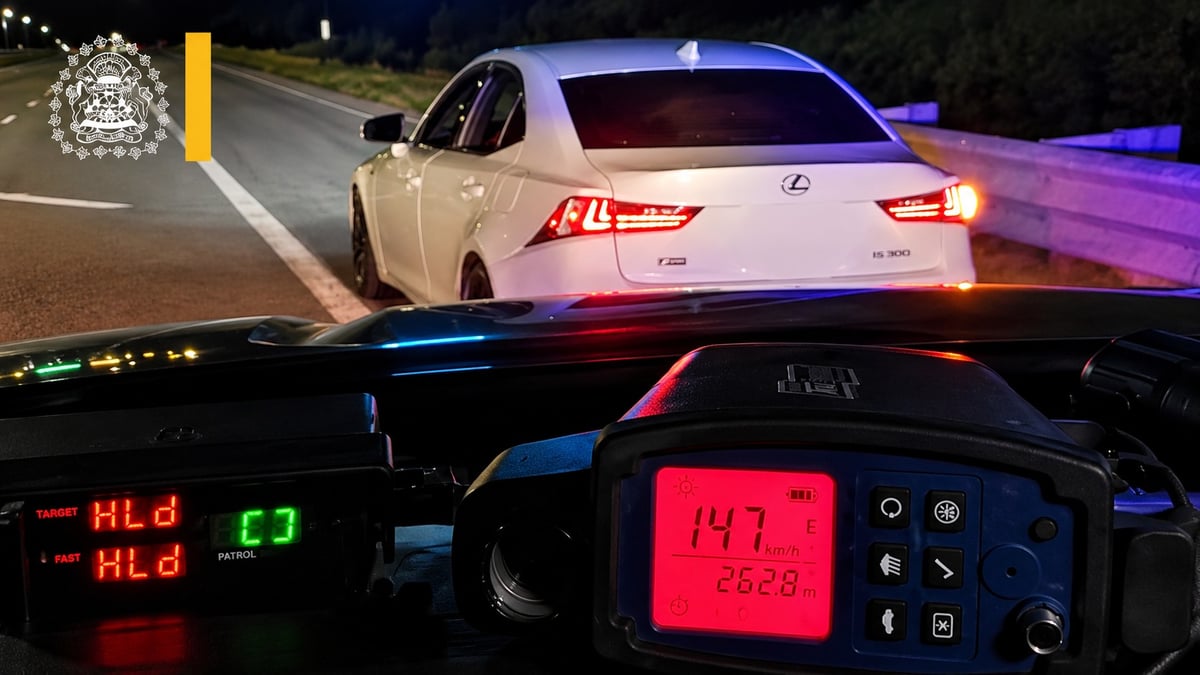
It was 1:40 on a Saturday morning.
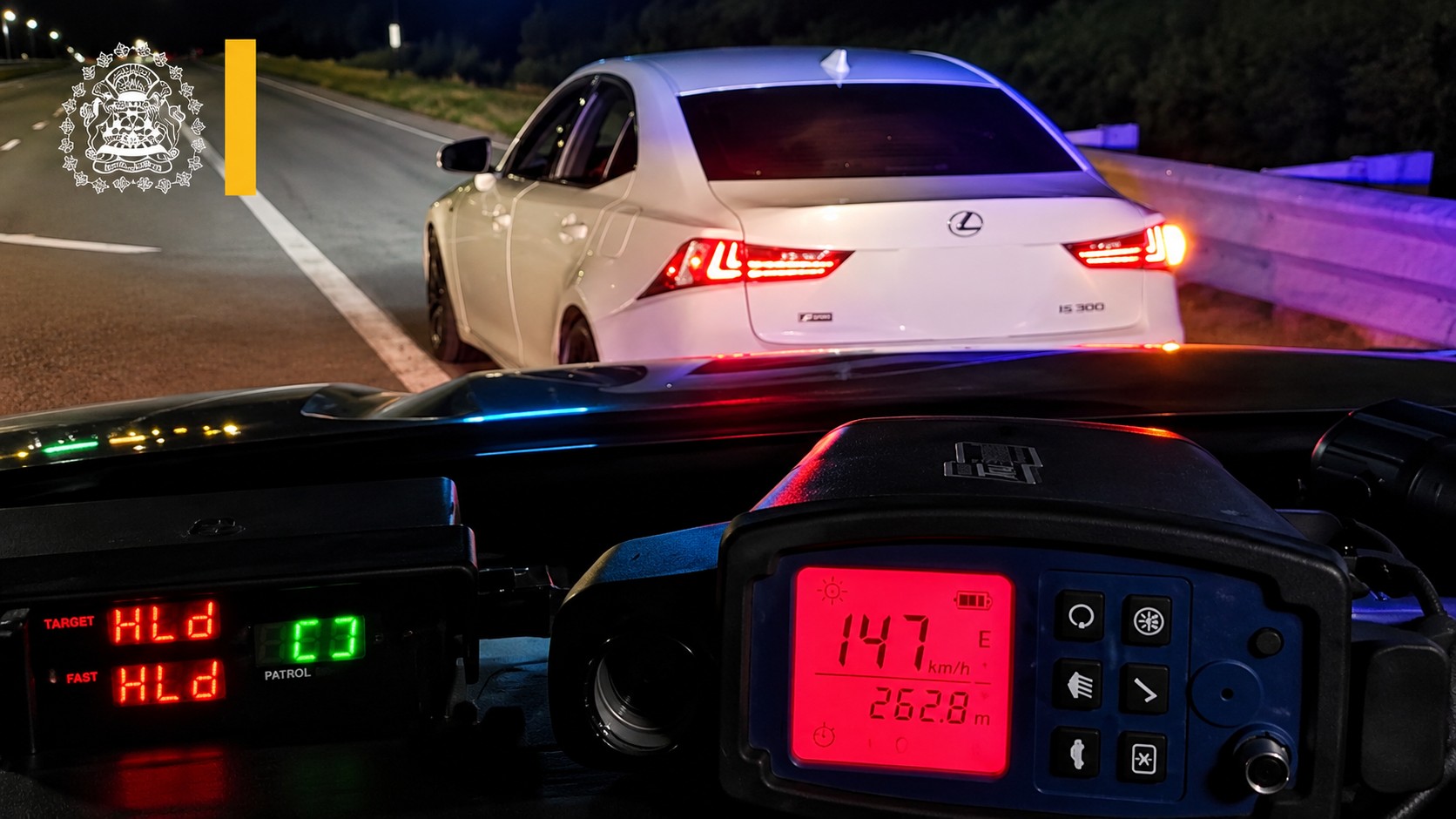
On southbound Deerfoot Trail near McKenzie Lake Boulevard S.E., Calgary police stopped a car travelling 147 km/h.
The speed limit was 100.
The driver was 18. The passenger was 17. Both left with tickets.
The stop happened on Saturday, Sept. 19. Police said the driver was issued $687 in fines for two things:
Speeding.
Illegally tinted windows.
The passenger was fined $211 for not wearing a seatbelt.
What 147 km/h actually means
At 147 km/h, a car travels about 41 metres every second.
Road safety experts often use about a second and a half as the time it takes a driver to see something and react. At 147 km/h, that's roughly 60 metres covered before the brakes are even touched. Then the car still has to stop.
At 1:40 in the morning, in the dark, on one of Calgary's busiest highways, that's a lot of road to cover blind.
"Safe roads start with responsible choices," Calgary police said.
Four km/h below Alberta's court threshold
147 km/h in a 100 zone is 47 km/h over.
That's close to a line that changes everything in Alberta. Once a driver is 51 km/h or more over the limit, there's no ticket to pay and move on from. It's a mandatory court appearance, and a judge decides the fine. A licence suspension is possible too.
In a 100 zone, that line is 151 km/h. This driver was four kilometres per hour under it.
The province's fine schedule tops out at $744 for exactly 50 over. Alberta raised traffic fines across the board on March 13, 2026, including for speeding.
What a ticket like this really costs
The fine is the part people see. It isn't the part that lasts.
Demerit points. Speeding 31 to 50 km/h over carries four demerit points in Alberta. More than 50 over carries six.
The limit is lower for new drivers. A fully licensed Alberta driver has their licence suspended at 15 demerit points. A driver in the graduated licensing program, which includes many drivers who are 18, is suspended at just 8. One ticket like this can get a new driver halfway there.
Insurance. Speeding convictions go on your driving record, and insurers look at that record when they set rates. For young drivers, who already pay some of the highest premiums in the province, a conviction can raise costs for years.
So the $687 may end up being the cheapest part of that night.
Why the passenger got their own ticket
This is the part most people don't know.
In Alberta, the driver is responsible for making sure passengers under 16 are buckled up.
Once a passenger turns 16, the seatbelt ticket is theirs. At 17, this passenger got the $211 ticket personally, not the driver.
"Slow down, buckle up and follow the rules of the road, whether you're driving or riding as a passenger," police said.
About those tinted windows
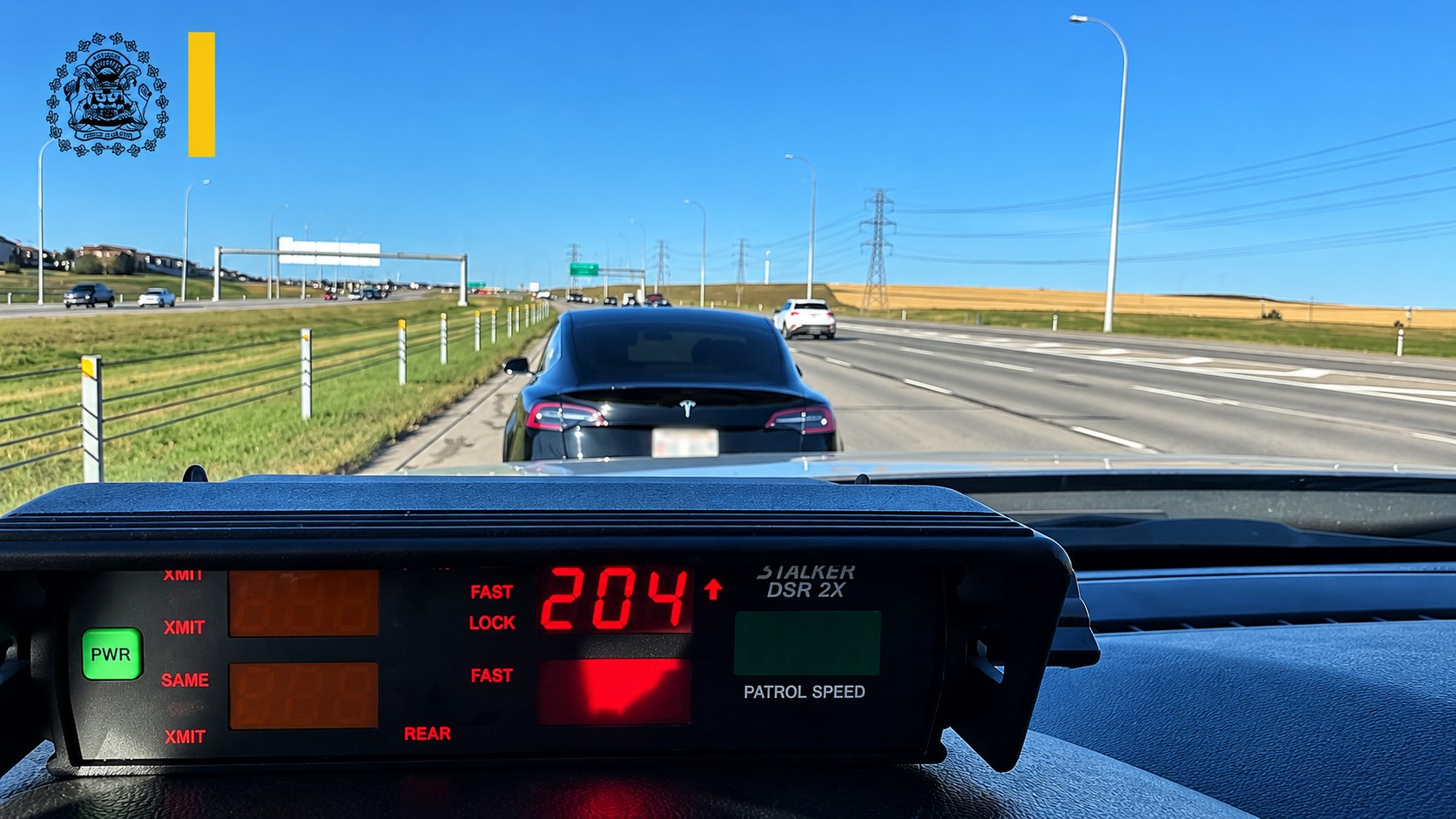
The driver was also ticketed for illegally tinted windows, the same charge that came up in a 204 km/h stop on Stoney Trail the next day.
Alberta's vehicle equipment rules generally don't allow aftermarket tint on the windshield or the front side windows, the ones beside the driver and front passenger.
Windows behind the driver are treated differently, as long as the vehicle has side mirrors on both sides.
Factory glass is fine. It's darker film added to the front windows that gets drivers ticketed, and it can be written up on its own, even without a speeding stop.
Is extreme speeding getting worse in Calgary?
There's no public data in these police releases showing that extreme speeding is increasing across the city.
What's clear is that police have publicized several big speeding stops.
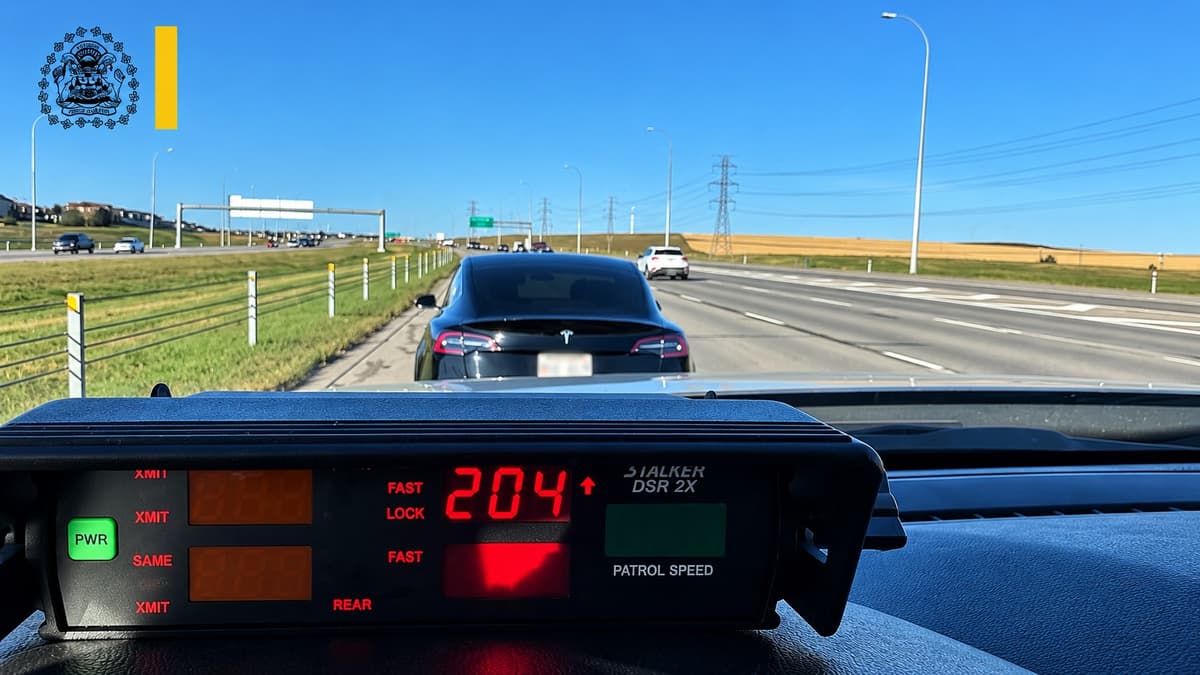
The Deerfoot stop came one day before officers caught another driver going 204 km/h in a 100 km/h zone on Stoney Trail N.E. near Deerfoot Trail. That driver was ticketed for speeding, careless driving and tinted windows. Our coverage is here.
Earlier, police arrested a driver after clocking 218 km/h on Stoney Trail. And inside the city, a driver caught doing 129 km/h in a 60 zone faces a $1,200 fine and a 30-day suspension.
Those cases don't prove speeding is becoming more common. They do show the kinds of speeds Calgary police are running into, on the city's biggest roads.
The bigger push
Calgary police tied the stop to the city's Vision Zero strategy, which aims to eliminate deaths and serious injuries on Calgary roads.
How to report a dangerous driver in Calgary
If a driver is creating an immediate danger, call 911. Don't follow or chase the vehicle. Pull over somewhere safe to make the call, or have a passenger do it.
If you can, note:
The licence plate.
The make, model and colour.
Where you are and which way it's heading.
What you saw: speed, weaving, tailgating.
For something that's already over and no longer an immediate danger, use the Calgary Police non-emergency line at 403-266-1234.
If you have dashcam footage, keep the original recording.
Sources
Calgary Police Service, social media post, September 2026
Fines for speeding, Government of Alberta
Occupant restraint laws, Government of Alberta
Demerit points, Government of Alberta
Vision Zero, City of Calgary







Comments
Conversation