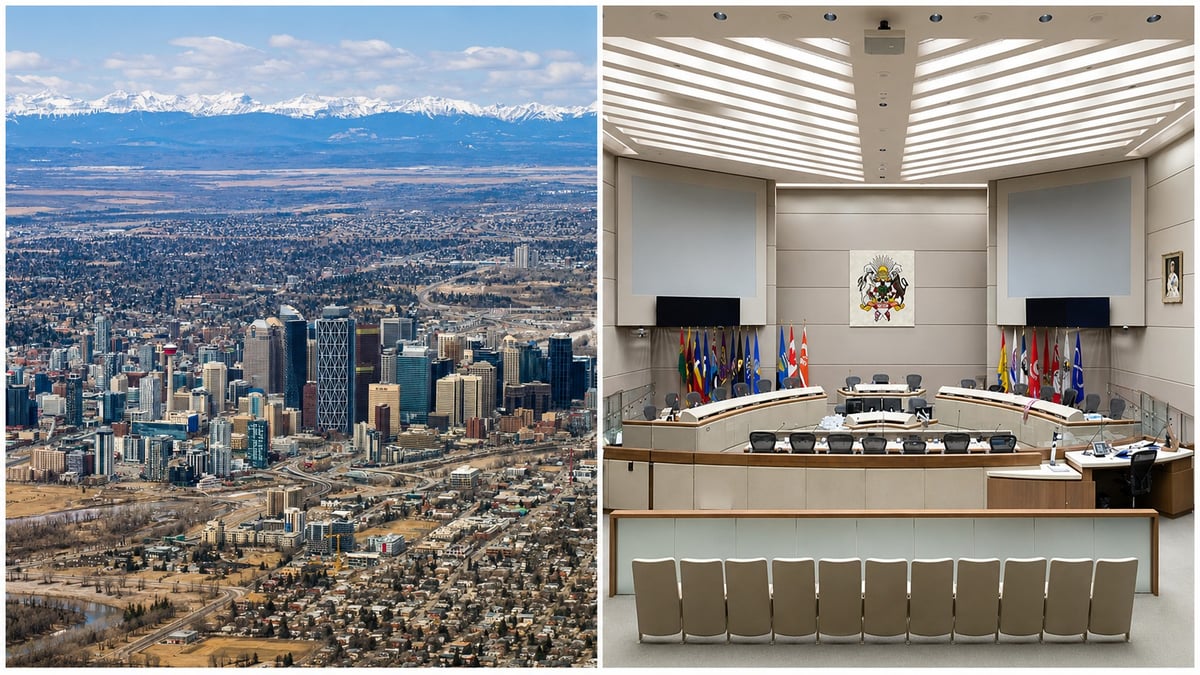
Calgary property tax bills arrived this week. Most people will look at the total and assume City Hall is responsible.
That is not the whole story.
Your bill includes two separate taxes on the same notice: the city's municipal tax and the province's education property tax. The city raised its portion by 1.2 percent. The province raised its portion by 21 percent. Together that is the largest property tax increase in Calgary's history roughly $400 more per household per year.
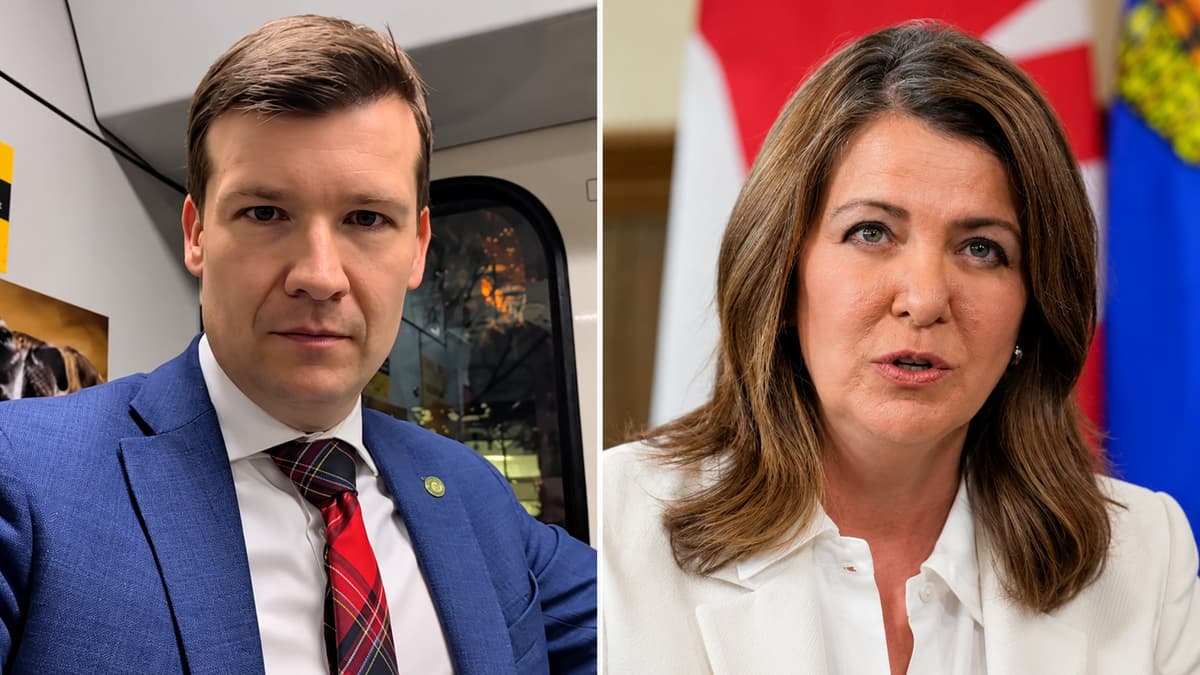
Mayor Jeromy Farkas posted a video this week to say it out loud.
"Many people understandably assume that every increase comes from City Hall when a growing share is actually coming from elsewhere. This can create a stealth tax increase that may mistakenly be attributed to the city rather than the province."
One bill, two governments
The 1.2 percent municipal increase funds police, firefighters, transit, roads, parks, and water services. Council approved it.
The 21 percent education tax increase was set by the Government of Alberta. Calgary did not approve it, cannot reduce it, and cannot redirect it. The city just collects it.
For a typical Calgary home assessed at the median value of $706,000, that breaks down as roughly $49 more from the city and $338 more from the province. The provincial education tax rate went from $2.72 per $1,000 of assessed value to $2.84. Across the city, Calgary property owners are collectively sending $468 million more to the province this year than last year.
"We need to understand what we're getting when we're paying nearly $350 a year more for the average Calgary home. That's money a family can't use on hockey equipment, on groceries, or on taking the kids to a movie," Farkas said in February when the provincial budget landed.
What the education tax pays for
The education property tax goes into Alberta's provincial education funding pool and is distributed to school boards across the province — not exclusively in Calgary. The province sets the rate. Calgary has no input. The 45 schools currently under construction in the city are funded partly through this pool, as are schools in every other Alberta community.
The province's stated goal is to fund 33.4 percent of its education operating costs through this tax. Calgary's high property assessments mean the city contributes a disproportionately large share of the provincial total.
Education Minister Demetrios Nicolaides pointed to those schools and other Calgary investments as evidence the money is being reinvested locally, also noting Farkas had supported teachers during a strike and called for increased education funding himself.

How Calgary compares
Edmonton's 2026 combined property tax increase was 6.9 percent roughly $245 more per year for the average homeowner, driven primarily by municipal costs rather than provincial. Toronto's combined increase was 2.2 percent, adding about $92 per year. Calgary's 8.1 percent combined increase, driven primarily by the provincial portion, is among the highest of any major Canadian city in 2026.
What is coming next year
Another increase is already built into the province's fiscal plan. Over the last four years the provincial education property tax on Calgary properties has risen nearly 60 percent. Finance Minister Nate Horner signalled another rate increase for 2027 when the 2026 budget was tabled. If the pattern holds, next year's bill will be higher again.
Since 2016, Calgary has also absorbed more than $1 billion in costs previously covered by other levels of government services the city argues are provincial responsibilities delivered without adequate funding. A City of Calgary report presented to Executive Committee on June 9 projects those downloaded costs will reach $145 million in 2027 alone. That bill lands on property taxpayers too, whether they own or rent.
Farkas said Calgarians deserve to know who made which decision.
"When one government raises taxes and another collects them, taxpayers deserve transparency."
Sources:
Mayor Jeromy Farkas, video statement to Calgary residents, June 2026
Mayor Jeromy Farkas, statement to media, February 28, 2026
City of Calgary, Municipal Fiscal Gap 2026 Update Report EC2026-0284 (calgary.ca)
City of Calgary, About Property Tax page (calgary.ca/property-owners/taxes/about-property-tax)
City of Calgary, Financial Facts page (calgary.ca/our-finances/facts)
Government of Alberta, Budget 2026 Education Property Tax rates (alberta.ca)




Comments
Conversation