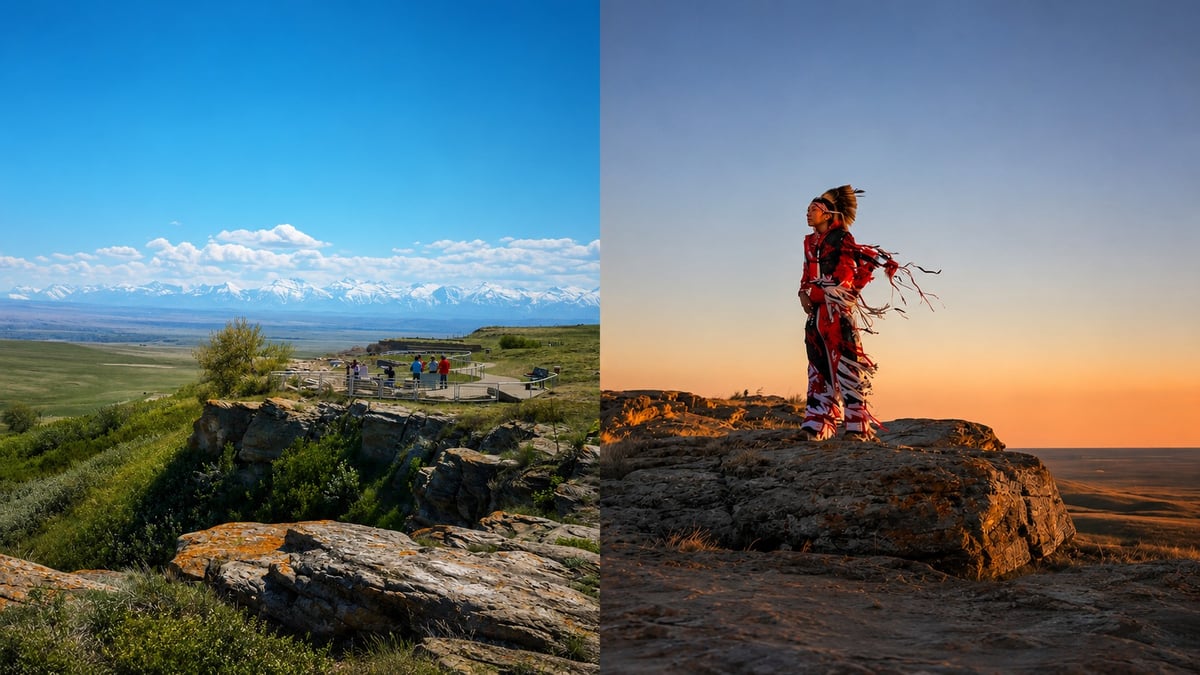
Canada signed the UNESCO World Heritage Convention 50 years ago, and out of the country's 22 World Heritage sites, only three get to throw the anniversary party. One of them is a cliff in southern Alberta.
Head-Smashed-In Buffalo Jump hosts its celebration on Wednesday, July 29, and it's free and open to everyone. The National Trust for Canada, which organized the national series, says the day features drumming and dancing performances, guided tours and interactive activities built around what the World Heritage designation means, both for the site and for the Blackfoot culture it preserves.
There's a fitting bit of scheduling luck in the date. Wednesdays in July and August are already the site's traditional drumming and dancing days, with performances at 11 a.m. and 1:30 p.m., so the anniversary lands on the richest day of the site's regular calendar.
Why this site made the list of three
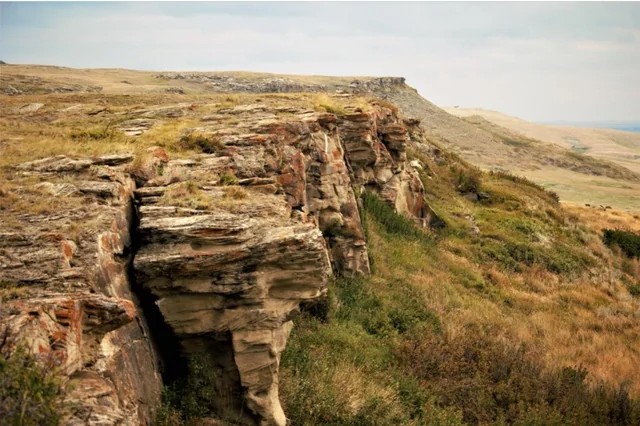
Head-Smashed-In was inscribed by UNESCO in 1981, and the reason is what's in the ground. For close to 6,000 years, Plains people hunted buffalo here using the landscape itself: herds driven along marked drive lanes from the gathering basin to the west, funnelled toward a cliff edge that stays invisible to a running animal until the ground disappears. Below the kill site, the bone deposits run metres deep, and everything from the drive lanes to the processing camp survives.
It's one of the oldest, largest and best-preserved buffalo jumps anywhere, and its Blackfoot name, Estipah-skikikini-kots, and the story behind it are told properly at the interpretive centre, a building worth the trip on its own, built into the cliff so well it won architectural awards for barely being visible.
The elder most responsible for the site becoming what it is, Piikani ceremonial elder Joe Crowshoe Sr., is honoured in the centre's lodge that bears his name. The interpretive centre marks its own 40th anniversary next year.
The Hollywood moment
This has also, improbably, been the year TV found the place. The Golden Globe-winning medical drama The Pitt name-dropped Head-Smashed-In Buffalo Jump in a January episode, and the shout-out did real work, Travel Alberta leaned into the moment, site visits got a bump, and a landmark most Americans had never heard of spent a news cycle being explained to them. If July 29 is your first visit because a TV doctor mentioned it, the staff have heard that one before and they'll take it.
Alberta owns more of these than anywhere in Canada
Here's the fact the anniversary is a good excuse to learn: no province touches more World Heritage sites than Alberta. Six of Canada's 22 are wholly or partly here. Head-Smashed-In and Dinosaur Provincial Park in the badlands. Writing-on-Stone Áísínai'pi, southeast of Lethbridge, added in 2019. Waterton, as half of the Waterton-Glacier International Peace Park. The Canadian Rocky Mountain Parks, covering Banff and Jasper. And Wood Buffalo National Park in the far north.
Three of the six sit within about 90 minutes of Lethbridge, which quietly makes southern Alberta one of the densest World Heritage neighbourhoods on the continent. Most residents have been to one. Almost nobody has done all three.
Planning the trip
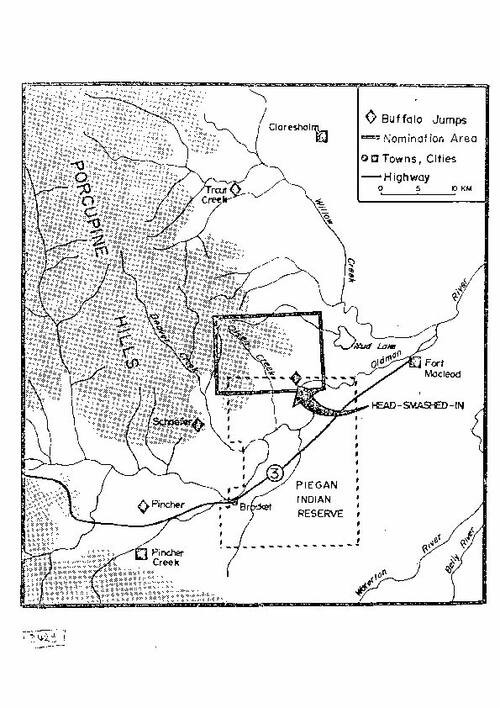
The site sits 18 kilometres northwest of Fort Macleod on Highway 785, paved the whole way, about 45 minutes from Lethbridge and roughly two hours from Calgary. It's open year-round, and the full experience runs two to three hours: the interpretive centre's five levels, the cliff-top trail with its view across the plains, and the lower trail to the kill site.
For the anniversary event itself, admission to the celebration is free. Regular admission rates, current hours and family pricing are posted at headsmashedin.ca, and July Wednesdays are the busiest good-weather days, so arriving for the 11 a.m. performance and beating the midday tour buses is the veteran move. Bring water and a hat, the cliff top is exposed prairie, and July here does not negotiate.
For Lethbridge families especially, this is the rare World Heritage site that works as a casual half-day trip, close enough to leave after breakfast and be home for supper with the full site done properly. Pair it with the Fort Museum of the NWMP in Fort Macleod for a full day, or fold it into a Waterton run and put two World Heritage sites in one weekend.
The other World Heritage site an hour from Lethbridge that nobody visits
While July 29 puts the spotlight on Head-Smashed-In, the newest entry on Alberta's World Heritage list sits in the opposite direction from Lethbridge, and it might be the most underrated place in the province.
Writing-on-Stone Áísínai'pi, about an hour southeast of the city along the Milk River, earned its UNESCO designation in 2019 for holding the largest concentration of Indigenous rock art on the North American plains, thousands of petroglyphs and pictographs carved and painted into sandstone hoodoos over millennia. To the Blackfoot it remains a sacred living landscape, and the guided rock art tours into the restricted archaeological preserve, led by park interpreters, are the way to see carvings most visitors never reach.
It draws a fraction of Head-Smashed-In's traffic, which is exactly the appeal. The hoodoo valley at golden hour, the Milk River for a swim or a paddle, and a campground that books out summer weekends for those who know, it's the site locals keep quiet about. If the anniversary event puts you in a World Heritage mood, this is the follow-up trip, and doing both in one summer means you've seen more UNESCO sites than most Canadians manage in a decade.
Sources:
National Trust for Canada, World Heritage 50th anniversary events announcement, July 2026
Head-Smashed-In Buffalo Jump, visitor information: https://headsmashedin.ca
UNESCO World Heritage Centre, Head-Smashed-In Buffalo Jump: https://whc.unesco.org/en/list/158





Comments
Conversation