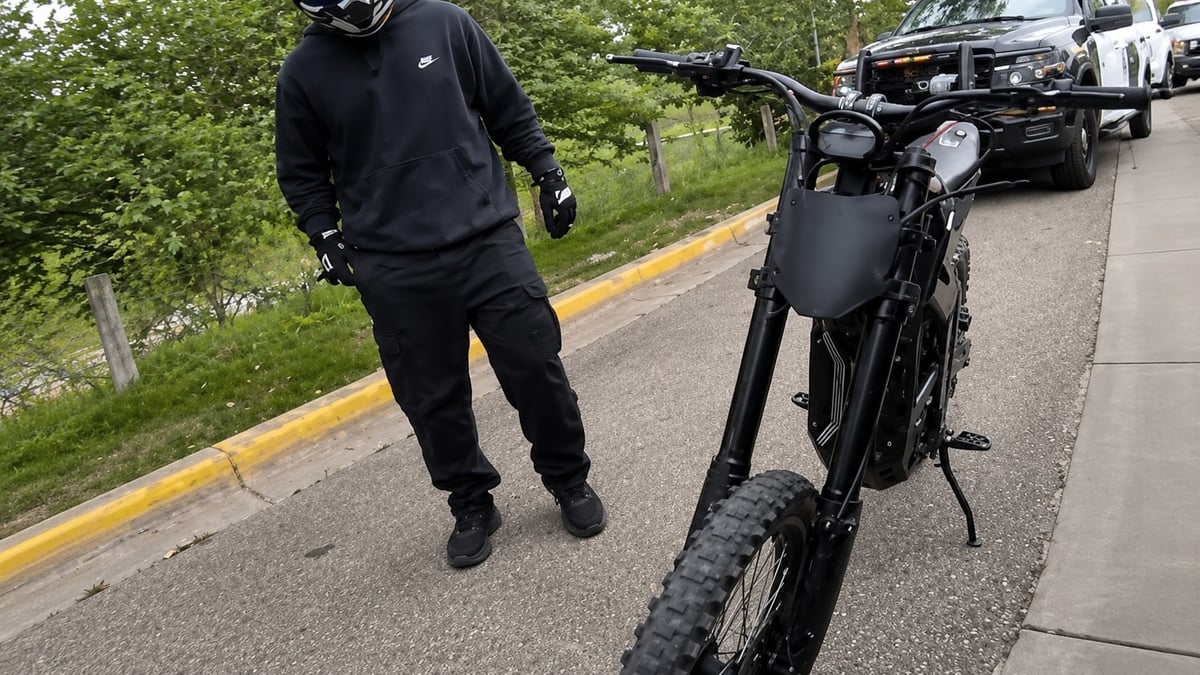
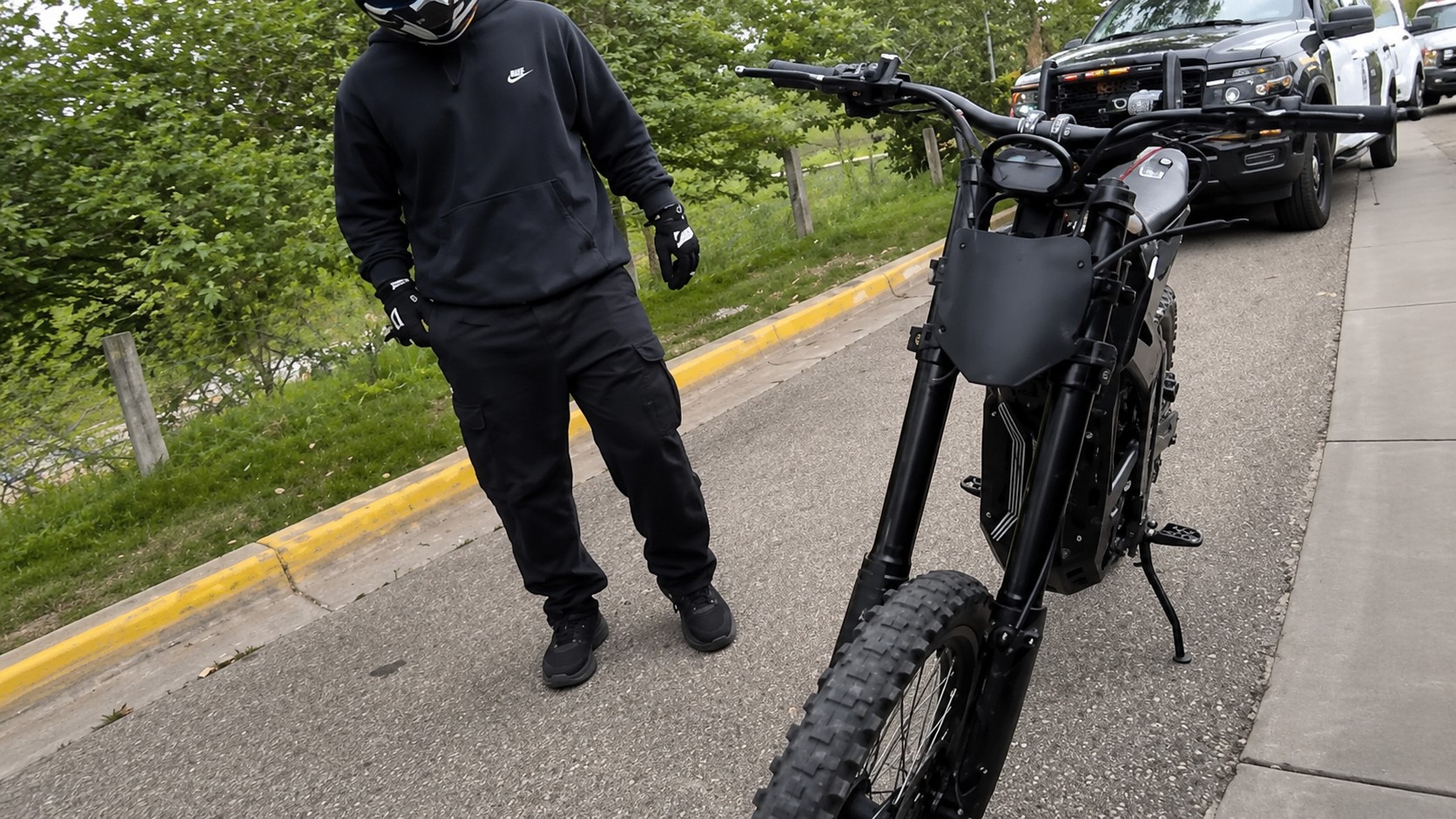
An electric motorcycle went through the northwest community of Citadel at more than 70 km/h on Saturday, August 8, at 8 p.m.
Calgary police say it crossed green spaces, used walking paths, travelled on the wrong side of the road and passed vehicles in the residential neighbourhood.
The rider, a youth, had no proper licence, no insurance and no registration.
Police issued seven tickets and charged the youth with dangerous driving.
The criminal charge is the part to notice
Seven tickets are Traffic Safety Act violations. Dangerous driving is not.
Dangerous driving is a Criminal Code offence. It carries a possible criminal record, and it's prosecuted rather than paid.
Because the rider is a youth, the case proceeds under the Youth Criminal Justice Act and the identity is protected. But a dangerous driving charge on a 15-year-old is a different order of consequence than a speeding ticket, and it follows them into travel, employment screening and border crossings depending on the outcome.
None of the allegations has been tested in court.
Where an electric motorcycle can legally go
Police put it in one sentence: electric motorcycles are only permitted to be operated on private property.
Alberta classifies electric dirt bikes and electric motorcycles as off-highway vehicles under the Traffic Safety Act. They can't be operated on public roads unless they meet full motorcycle safety standards, lights, mirrors, plates and insurance, and have been approved by Transport Canada for on-road use.
Most of them haven't been.
That leaves three legal places to ride: private property with permission, designated OHV trails such as McLean Creek and Waiparous, and rural routes where local bylaws specifically allow off-road vehicles.
A residential street, a sidewalk, a pathway and a green space are none of those.
If you bought one for your kid, read this
This is where families get caught, and it usually isn't deliberate.
Alberta calls a legal e-bike a power bicycle, and it has to meet three conditions:
A motor of 500 watts or less. A maximum assisted speed of 32 km/h. Operable pedals.
Meet all three and you need no licence, no insurance and no registration. Power bicycles are explicitly excluded from the definition of motor vehicle under the Traffic Safety Act.
Fail any one of them and the machine stops being a bicycle. It becomes a motor vehicle, classed as a moped or a motorcycle depending on its specifications. A motorcycle requires a Class 6 licence in Alberta, which no 14-year-old holds.
The trap is that these things are sold beside e-bikes, look like e-bikes to anyone not reading the spec sheet, and are frequently advertised at 1,000 watts or more with no pedals at all. A rider on one of those, on a public street, is riding an unregistered, uninsured motorcycle without a licence.
Check the wattage. Check the top speed. Check whether it has working pedals.
All three are on the box or the manufacturer's page, and it takes two minutes.
There's an insurance problem too
If a youth on an unregistered electric motorcycle hits a pedestrian on a pathway, there is no policy behind them.
Alberta courts have found that standard auto insurance Section B benefits generally aren't available to operators of private e-scooters, and the same logic applies to machines that fall outside the power bicycle definition. Most home policies don't cover them either.
That exposure lands on a parent.
The third in a week
This is the third Alberta traffic enforcement story in seven days where the vehicle, the speed and the consequences didn't line up the way people expect.
Calgary Driver Caught at 129 km/h in a 60 Zone Faces $1,200 Fine and 30-Day Suspension
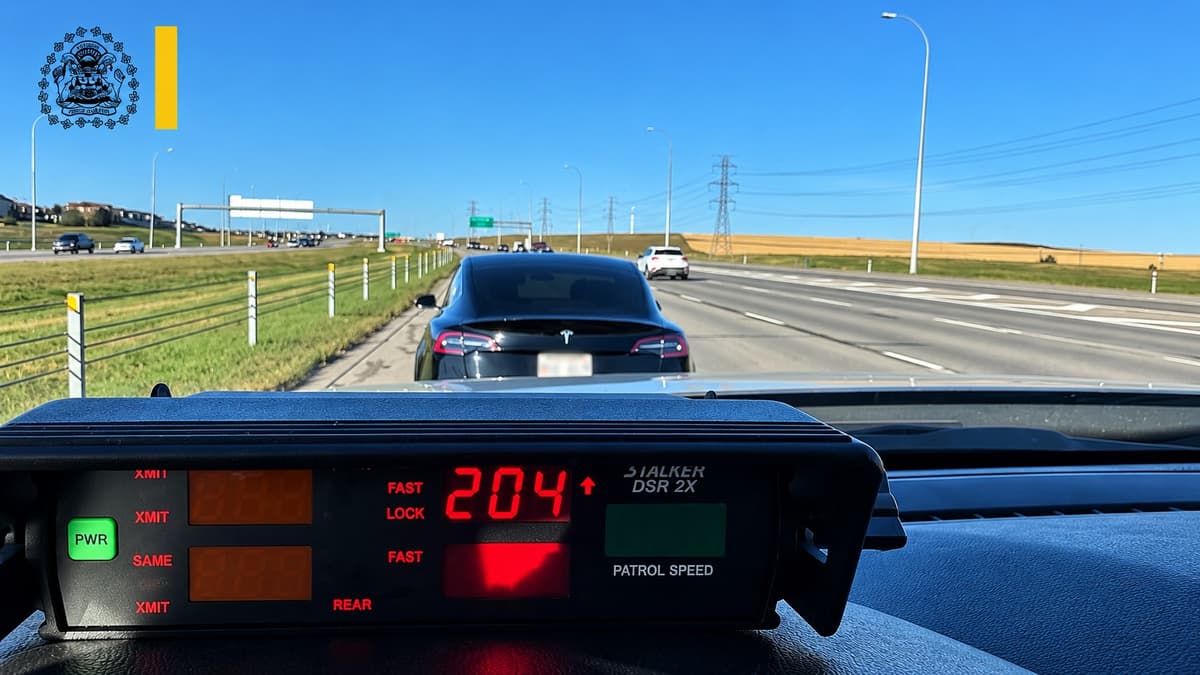
A Driver Was Clocked at 212 km/h on Edmonton's Anthony Henday Drive. Alberta Law Let Him Drive Away.
A Mustang doing 212 on the Henday left with a court summons and its keys. A BMW doing 129 in a 60 got the same. A youth doing 70 through a residential neighbourhood on the wrong side of the road picked up a criminal charge.
The difference isn't speed. It's what the driving looked like, and whether the vehicle had any business being there at all.
Reporting it
Calgary police point drivers to the city's Vision Zero program at calgary.ca/visionzero.
Dangerous driving in progress is a 911 call. Non-emergency reports go to 403-266-1234.
Sources
Calgary Police Service, statement, August 2026
Alberta Traffic Safety Act, power bicycle and off-highway vehicle definitions
Criminal Code of Canada, dangerous operation
Government of Alberta, Power Bicycles and Mopeds





Comments
Conversation