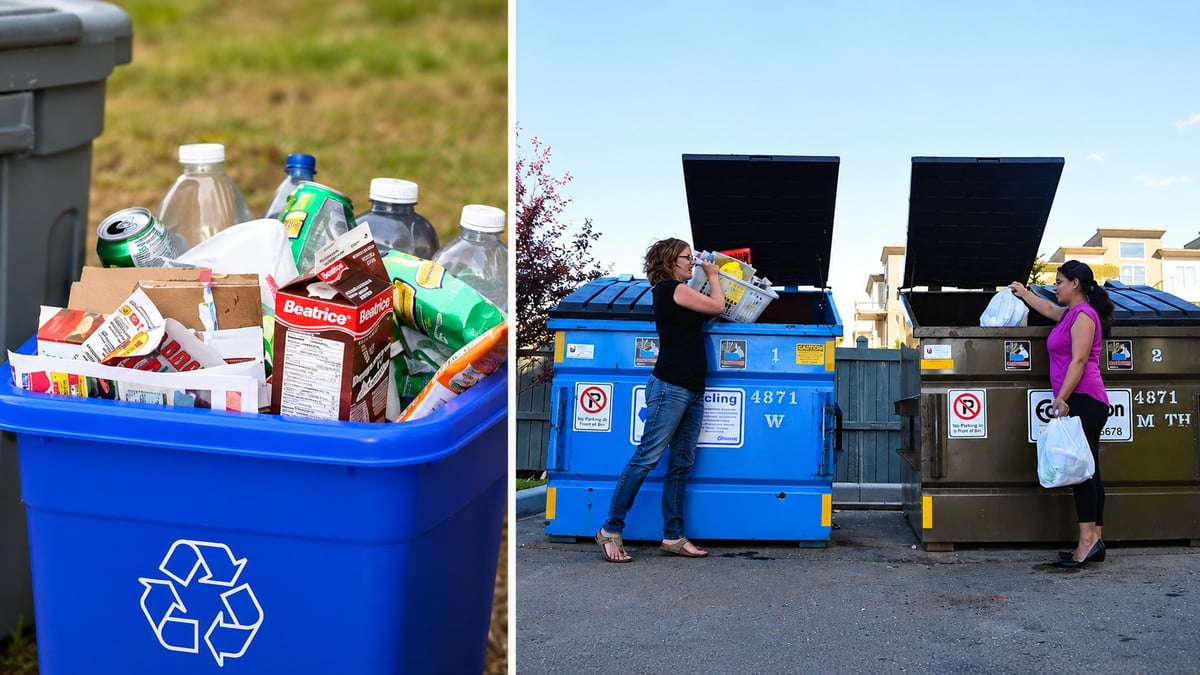
Starting October 1, the coffee cup you've been throwing in the garbage can go in Edmonton's recycling.
So can the Styrofoam packaging from a new TV.
And the empty chip bag, bubble wrap and takeout container.
Edmonton's recycling list is getting significantly bigger on October 1, 2026, as the second phase of Alberta's Extended Producer Responsibility program takes effect.
But there's a bigger change behind the new list.
Companies that supply packaging and paper products are now responsible for funding the provincial system that handles those materials, rather than municipalities carrying those costs.
And for the first time, Alberta will have a common province-wide list of designated materials residents can recycle.
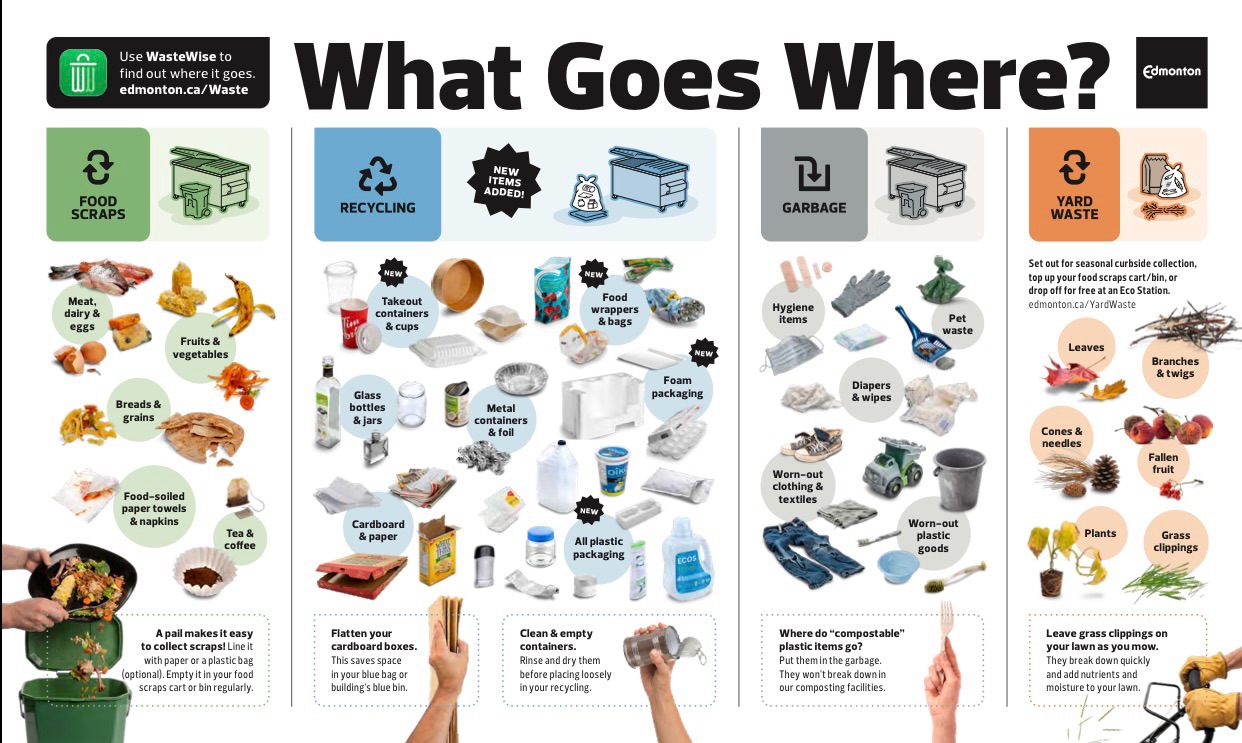
What can you recycle in Edmonton starting October 1?
The City of Edmonton says several categories that previously couldn't go into household recycling are being added.
Takeout containers and to-go cups. That includes coffee cups and other disposable beverage cups.
Foam packaging. Yes, this includes Styrofoam, such as foam meat trays and takeout containers.
Flexible plastic packaging. One of the biggest changes. Chip bags, bubble wrap, bread and produce bags, snack and granola bar wrappers, cereal liner bags, resealable pouches, pet food bags and other flexible plastic packaging are being added.
Glass containers.
Empty aerosol containers. Non-hazardous ones, such as empty cooking sprays and personal-care products. Hazardous aerosols still don't belong in household recycling.
Laminated paper and plastic packaging.
The simplest version from the City: Edmonton residents will be able to recycle paper and packaging under the expanded system.
Yes, that means your coffee cup
Coffee cups are worth singling out because they're the kind of item people stand between two bins arguing about.
Beginning October 1, Edmonton specifically lists takeout food containers and to-go cups, including coffee cups, among the newly accepted items.
The same goes for Styrofoam and chip bags. These are materials many Edmonton households have been trained specifically not to put in their recycling.
They aren't mistakes in the new list. They're among the materials being deliberately added.
The bigger change: producers are paying for the system
The expanded list is part of something much larger than a change to Edmonton's blue bags and bins.
Alberta introduced Extended Producer Responsibility, usually shortened to EPR, for packaging and paper products.
The idea is straightforward. Companies supplying packaging and paper products take responsibility for funding their recycling after consumers are finished with them.
The Alberta government describes EPR as shifting many recycling costs away from municipalities and onto producers.
Circular Materials, the not-for-profit managing Alberta's packaging-and-paper recycling system, says that portion of the program is 100 per cent funded by producers.
That's an important distinction.
It doesn't mean an Edmonton household will suddenly see a recycling charge disappear on October 1. The Alberta government says savings vary between municipalities and can take time to show up on utility bills.
But who finances the provincial packaging-and-paper recycling system has changed.
So does everything actually get recycled?
It's a fair question, especially when the new list includes things like chip bags and flexible plastics that Edmontonians have spent years being told to keep out.
The short answer is that no recycling system turns everything residents put out into a new product.
Different materials have different recovery rates and markets.
Paper, cardboard, metals and some rigid plastics have well-established recycling streams. Flexible plastics and packaging made from multiple bonded materials are considerably harder to sort and process.
That's one reason new sorting infrastructure matters.
Circular Materials has selected WM to build a preconditioning recycling facility in Edmonton that will use mechanical and optical sorting technology. That facility isn't expected to open until early 2027.
So putting something on the accepted list doesn't guarantee every individual piece becomes a new product. It means the material is now part of the recycling system, and residents should put it out according to the new rules.
Alberta is getting one recycling list
This is another major change.
Recycling rules have historically varied between municipalities. One city might accept something another wouldn't.
Beginning October 1, Circular Materials says Albertans will be able to recycle the same designated materials no matter where they live in the province.
That means the common provincial list applies in Edmonton, Calgary, Red Deer, Lethbridge, Grande Prairie and participating smaller communities.
There can still be local differences outside that provincial list. Individual communities may accept additional materials or have different collection instructions, so unusual items are still worth checking locally.
But the days of basic packaging being recyclable in one Alberta city and excluded in another are changing.
Don't put a dirty takeout container straight in
A bigger list doesn't mean everything goes in exactly as it is.
Circular Materials gives three basic instructions:
Empty it. Clean it. Put it in loose.
Containers should be emptied of food and liquid and rinsed when necessary.
Recyclables go in loose rather than stuffed inside another bag. Cardboard should be flattened, while lids and labels can generally stay on.
So the greasy takeout container with half your dinner still inside isn't ready just because takeout packaging made the list.
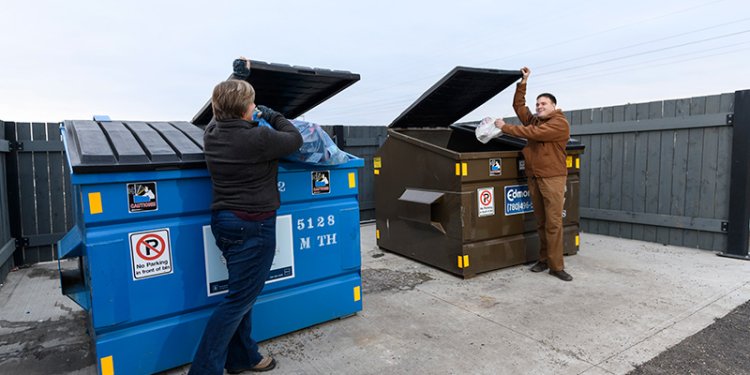
Apartments and condos are part of it too
The expansion isn't limited to detached houses.
Circular Materials is expanding recycling collection to registered multi-family residential properties across Alberta as part of Phase 2. That includes eligible apartment, condo and other multi-family buildings.
The important word is registered.
If you're in a multi-family building and aren't sure whether it's participating, ask your property manager or condo board rather than assuming your building's collection changes automatically.
What still shouldn't go in Edmonton recycling?
A bigger list doesn't turn the recycling stream into a catch-all.
Hazardous materials, including batteries, medical sharps and hazardous aerosol containers, should not go into household recycling.
And something being made of plastic doesn't mean it belongs there.
The program is focused on packaging and paper. Circular Materials specifically excludes durable products intended for long-term use, including toys, reusable water bottles, cookware and reusable food-storage containers.
If you're standing over the bins with something unusual, Edmonton's WasteWise tool remains the easiest way to check.
This change actually started in 2025
October 1 isn't the beginning of Alberta's transition to Extended Producer Responsibility.
Phase 1 launched April 1, 2025, initially covering more than 90 per cent of Albertans. A second intake followed in July 2025.
October 1, 2026 is Phase 2. That's when the remaining communities enter the system and changes including the expanded material list and multi-family expansion take effect.
So what Edmonton households see this fall is the most noticeable part of an overhaul that's already been underway for about a year and a half.
What to remember
For most people, October 1 doesn't mean learning a complicated new sorting system.
It means several things you've spent years putting in the garbage now have somewhere else to go.
Coffee cups. Styrofoam. Chip bags. Bubble wrap. Takeout packaging.
Empty and clean them first, and follow Edmonton's collection instructions.
Sources
Recycling — City of Edmonton
Recycling in Alberta — Circular Materials
Extended Producer Responsibility — Government of Alberta
Circular Materials and WM announce new recycling facility — Circular Materials





Comments
Conversation