
Your electricity rate in Medicine Hat is 7.000 cents a kilowatt-hour. In Calgary and Edmonton, the default rate is 12.01.
That gap is not a promotion and it is not luck. It is a bylaw, a decision made in 1910, and an exemption from provincial law that no other city in Alberta has.
It is also, right now, a rate you are paying above what the City's own math says the power is worth. Here is how all of that fits together, and what the October 1 reset does and does not change.
The number behind the number
When the City of Medicine Hat set its electricity rate for July, August and September, it ran the calculation it always runs: a twelve-month, volume-weighted forecast based on the ICE-NGX wholesale electricity market.
That calculation produced $0.0447 per kilowatt-hour. Four and a half cents.
You are not paying four and a half cents. Under Electric Utility Bylaw 2244, the residential rate cannot fall below 7 cents or rise above 11 cents. The calculation came in under the floor, so the floor is what you pay.
This is not a one-off. The calculated rate for April, May and June was $0.0449 — also under the floor. Two consecutive quarters where the wholesale market said one thing and the bylaw said another.
The floor and the ceiling do opposite jobs. The ceiling protects you when wholesale prices spike. The floor protects the utility, and the dividend it pays the City, when prices collapse. At the moment you are on the side of that deal which costs you money.
What everyone else in Alberta is paying
Alberta's Rate of Last Resort replaced the old Regulated Rate Option on January 1, 2025, and it is fixed for two years, through December 31, 2026. The current rates:
ENMAX — 12.01 cents per kWh
EPCOR — 12.01 cents per kWh
Direct Energy Regulated Services — 12.06 cents per kWh
City of Medicine Hat — 7.000 cents per kWh
Run the arithmetic on a home using 600 kWh a month. At 7 cents that is $42 on the commodity line. At 12.01 cents it is $72.06. Roughly $30 a month, about $360 a year — before distribution charges, fixed charges and the Going Green surcharge, which is 0.43 cents per kWh in Medicine Hat.
One wrinkle worth knowing: large commercial, industrial and street lighting customers in Medicine Hat do not get the local rate. They pay $0.12025 per kWh, set as the average of the Alberta Utilities Commission-approved regulated rates. The biggest power users in the Hat pay the Alberta number.
Why Medicine Hat is the only city that can do this
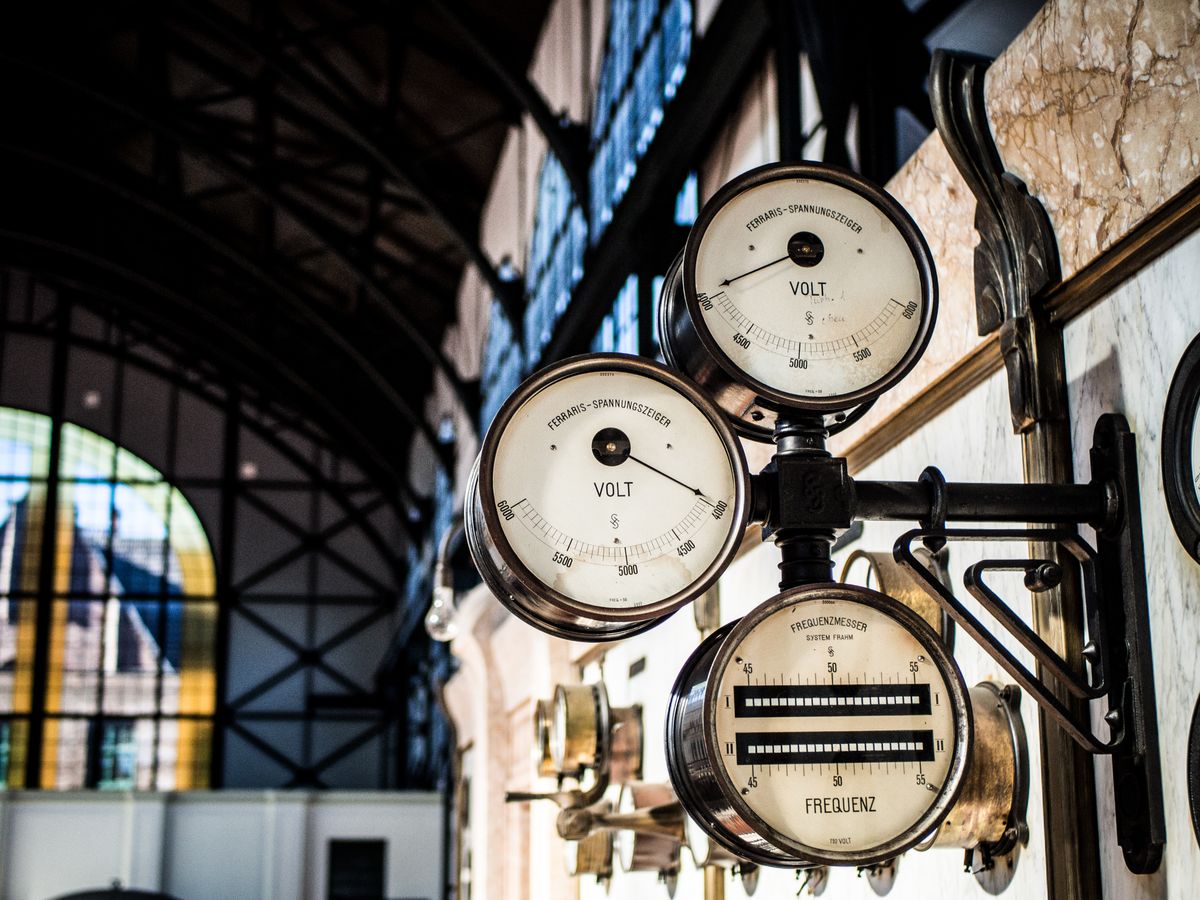
Most Alberta cities buy power from somebody. Medicine Hat generates it, moves it and sells it. The City owns the generation, owns the distribution system that carries electricity to your house, and is the retailer that bills you. All three. No other municipality in the province does all three.
Part 8 of the Electric Utilities Act gives Medicine Hat an exemption from retail competition, on the grounds that it is self-sufficient in generation. That exemption is why the City can write its own rate bylaw instead of applying to the province like everyone else.
The utility serves roughly 30,000 customers — Medicine Hat, Redcliff, Dunmore, Veinerville and the surrounding rural area. The City has run its own power utility since 1910, with generation capacity approaching 300 MW as of 2022. The gas utility dates to 1912, when residents voted down a private company's bid to buy the franchise.
What it was worth in 2025, by the City's own numbers
Between January and December 2025, the City says Medicine Hat residential customers paid $1,029 less than customers in other Alberta cities. The breakdown:
Electric distribution — $519
Natural gas distribution — $218
Electric commodity — $150
Municipal Consent and Access Fee — $138
Natural gas commodity — $4
Read that list carefully, because it says something people usually get backwards. Only $154 of the $1,029 came from cheaper energy itself. The other $875 came from distribution, administration, service and fee lines — the cost of the wires and the pipes, not the cost of the gas and the electrons.
Medicine Hat's advantage is mostly about who owns the infrastructure. That matters a great deal for what comes next.

Your bill is also a dividend
Because the calculated rate is sitting below the floor, the utility is currently collecting more than its forecast wholesale cost on residential power. That margin does not vanish. It goes back to the City.
Working from a dividend policy principle of "the greater of $7M or 30% of net income," the City's own financial modelling forecast dividends of $7 million in 2026, $7.6 million in 2027, $10.6 million in 2028 and $7 million in 2029.
That money offsets what would otherwise come from property taxes. It is a real part of how Medicine Hat funds itself, which is exactly why the floor exists and why it is unlikely to be lowered.
Council did approve a roughly three per cent increase to 2026 utility bills in December 2025. The average residential electric bill went up $3.06 a month year over year.
What actually happens on October 1
The electricity rate recalculates on the first business day of January, April, July and October. This year that is Thursday, October 1, and the new number covers October through December.
For the residential rate to move off 7 cents, the twelve-month ICE-NGX forecast would have to climb above 7 cents — roughly a 57 per cent jump from the 4.47 the City calculated for this quarter. After two straight quarters near 4.45, that is a stretch. It is a forecast and not a promise, but the realistic expectation is that residential customers stay at the floor into the new year.
Natural gas is a separate system and it moves faster. It resets on the first business day of every month, based on the weighted average cost of the gas the City actually bought, plus $0.07 per GJ. August came in at $1.537 per GJ, up from July's $1.362. September's rate lands on the first business day of the month.
The date that matters more is December 31
The 12-cent comparison Hatters enjoy is a frozen number. Alberta's Rate of Last Resort is locked until December 31, 2026. When it unfreezes, the gap could widen or narrow, and nobody in Medicine Hat controls that.
Meanwhile the City's own costs are heading up. Its public engagement material says the City "could require nearly $500 million to meet the needs of our existing energy business" over the next 10 years, before anything is spent on energy transition. CBC has reported that roughly $190 million of that is for planned or expected electric distribution upgrades, and that city energy staff have warned the cost advantage could be threatened by aging distribution infrastructure.
There is a carbon line too. The City's forecast has carbon compliance costs quadrupling, from $9.7 million to $42.4 million a year by 2030. The City has applied to develop up to 75 MW of solar in an initial phase, which it describes as less than five per cent of its annual energy supply capability.
Council has also paused exploring an arm's-length municipally controlled corporation to run the electric utility. So for now, the rate you pay stays a decision made at City Hall.
What to watch
First business day of September: September's natural gas rate is published at medicinehat.ca.
Thursday, October 1: the electricity rate recalculates for the final quarter of 2026. Expect the 7-cent floor to hold.
December 31, 2026: Alberta's Rate of Last Resort fixed period ends. This is the one that could change the comparison.
Budget season: how council handles that 10-year, roughly $500-million capital requirement for the energy business is the question that decides whether the Hat's rate advantage survives the decade.
Current rates are always posted at medicinehat.ca/EnergyPlans.
Sources:
City of Medicine Hat, "Gas, electric, wind energy rates set for August 2026" (medicinehat.ca/news)
City of Medicine Hat, Energy Plans & Pricing, Electric Utility Bylaw 2244 and Gas Utility Bylaw 2489 rate rules (medicinehat.ca)
City of Medicine Hat, Electricity page, Part 8 Electric Utilities Act exemption, customer count and generation capacity (medicinehat.ca)
City of Medicine Hat, Utilities page, 2025 savings comparison and breakdown (medicinehat.ca)
Shape Your City Medicine Hat, Municipally Controlled Corporation FAQs, dividend forecast and 10-year capital requirement
Shape Your City Medicine Hat, The Business of Energy FAQs, carbon compliance forecast and solar application
Alberta Utilities Consumer Advocate, Rate of Last Resort and default rates (ucahelps.alberta.ca)
CBC News, "Medicine Hat has utility rate advantage in Alberta, but city staff say that could change"
Medicine Hat News, December 16, 2025, on the 2026 utility bylaw changes and the $3.06 monthly increase









Comments
Conversation