Alberta's municipalities are staring down an infrastructure bill they cannot pay with the tools they currently have. The province is now asking a council of municipal leaders and industry representatives to find new ones.
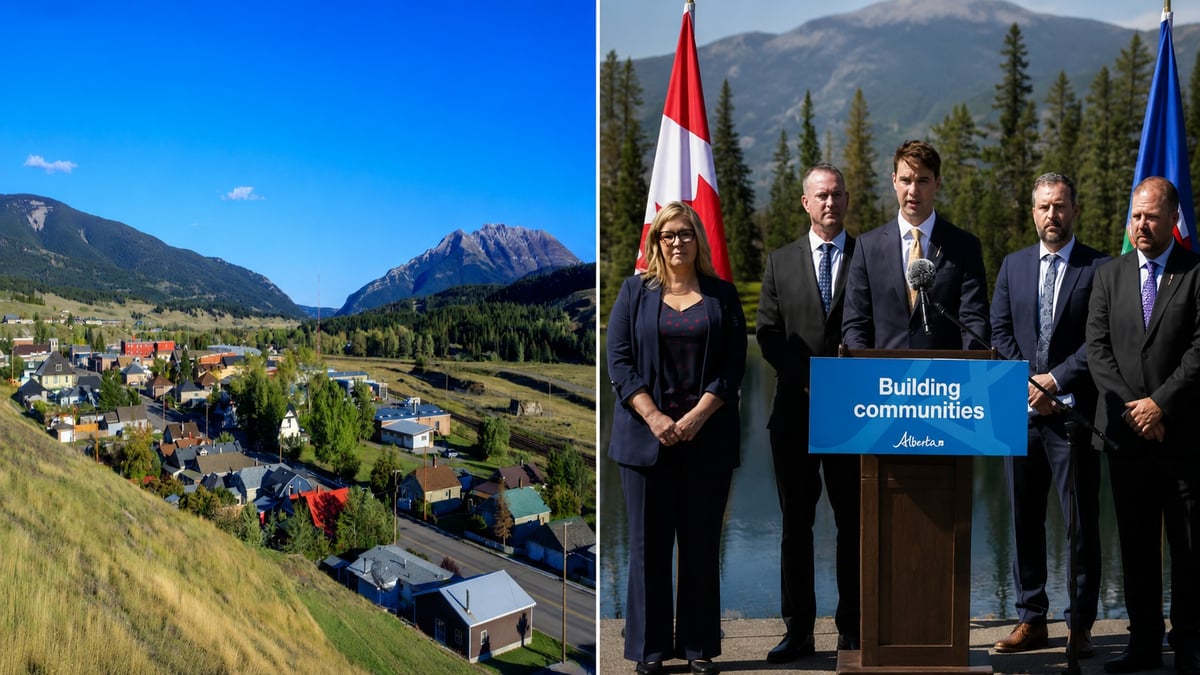
Municipal Affairs Minister Dan Williams announced the Minister's Council on Infrastructure Financing on June 23 in Jasper. The council will bring together representatives from Calgary, Edmonton, the Alberta Mid-sized Cities Mayor's Caucus, Alberta Municipalities, the Rural Municipalities of Alberta, and BILD Alberta — the provincial association representing land developers and homebuilders — to explore alternative ways to fund the roads, water systems, transit lines, and community infrastructure that Alberta's growing communities need.
The province wants recommendations before the end of 2026. It provided $50,000 to support research through BILD Alberta, the University of Alberta Cities Institute, and the broader council.
No new infrastructure funding was announced.
How big the problem actually is
Rural Alberta alone faces an infrastructure deficit estimated at $17 billion a figure that could balloon past $25 billion without significant new investment. That number covers roads, bridges, culverts, water systems, and wastewater infrastructure managed by rural municipalities. Rural municipalities manage 75 percent of Alberta's bridges, 135,000 kilometres of roads, and 30 percent of water and wastewater systems and they do it on budgets where transportation infrastructure already consumes more than half of their total spending.
Provincial funding covers less than 3 percent of the $5.55 billion needed annually just to maintain rural roads at their current condition.
Urban municipalities face a different version of the same problem. Calgary has documented a $49 billion infrastructure need over the next decade. Fast-growing mid-sized cities like Spruce Grove, Airdrie, and Grande Prairie are building new communities faster than they can fund the roads and pipes to service them.
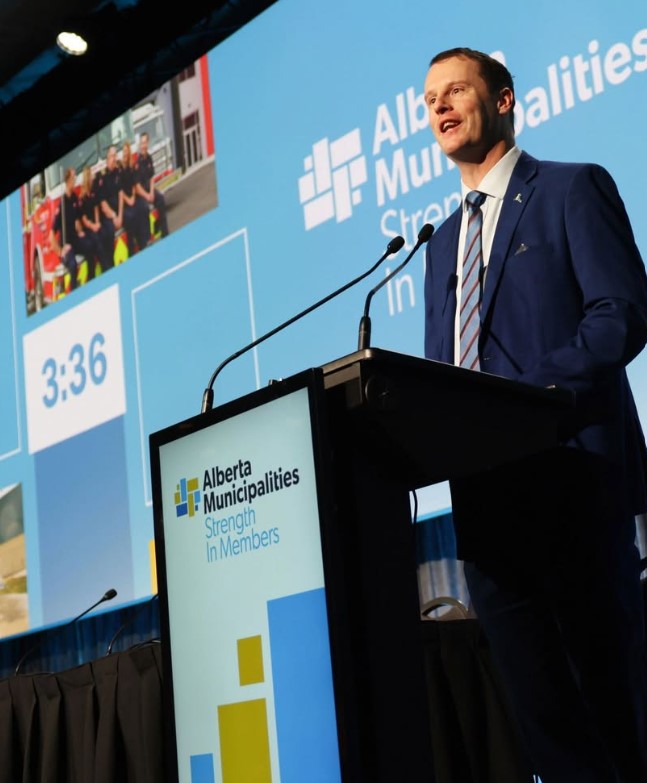
"Our kids are going to have to pay if we allow our roads to crumble and our pipes to collapse," said Dylan Bressey, president of Alberta Municipalities.
What the council will actually explore
The announcement is light on specifics by design the point of the council is to generate them. But the phrase "innovative financing tools" points toward mechanisms other Canadian provinces and international jurisdictions have used with varying degrees of success.
Development charges fees levied on new construction to fund the infrastructure growth requires — are used in Ontario and BC. Tax increment financing captures increased property tax revenue generated by new development to repay infrastructure debt. Infrastructure bonds and public-private partnership models are also on the table.
The council will work with BILD Alberta's existing working group on alternative infrastructure financing, which has already been studying these questions from the development industry's perspective.
What other provinces have done
Alberta is not the first Canadian province to hit this wall.
Ontario introduced development charges in the 1980s and has expanded them repeatedly since — municipalities like Brampton and Mississauga now collect thousands of dollars per new home to fund roads, transit, and water infrastructure that growth demands. BC has a similar system. Both provinces have also used tax increment financing — a mechanism that captures the property tax uplift generated by new development and redirects it to pay for the infrastructure that made that development possible.
Alberta has been more cautious. The province has historically resisted tools that could be characterized as new taxes on growth, even when those tools fund the infrastructure growth requires. The council's mandate to examine mechanisms "successfully used in other jurisdictions" is a direct reference to Ontario and BC's playbooks — and an acknowledgment that Alberta may need to borrow from them.
Why property taxes cannot solve this alone
Alberta municipalities have one primary revenue lever: property taxes. Unlike the federal and provincial governments, they cannot run deficits, cannot levy income taxes, and cannot capture sales tax revenue. When infrastructure costs exceed what grants and reserves cover, the only option is to raise property taxes or cut services — and both have limits.
Property taxes in Alberta are already under pressure from multiple directions. The provincial education property tax increased 21 percent in 2026 alone, landing on the same bill as municipal taxes and drawing public anger toward city halls that had no role in setting it. Adding significant infrastructure levies on top of that is politically difficult for councils that are already fielding complaints about affordability.
The deeper problem is structural. Property tax revenue grows incrementally as assessments rise. Infrastructure costs grow with population, inflation, and the compounding effect of deferred maintenance. In a fast-growing province those two curves do not track each other. The gap between them is precisely what the minister's council is being asked to close — without simply adding more pressure to the one tool municipalities already have.
The money that is already flowing
The council does not replace existing provincial infrastructure funding. Budget 2026's three-year capital plan includes $7.1 billion for municipal infrastructure. The Local Government Fiscal Framework provided $820 million to municipalities in 2025 and $800 million in 2026 though that figure was reduced by $20 million from the previous year because it is tied to provincial revenues that fluctuate with commodity prices. The federal Building Communities Strong Fund provided an additional $276 million to Alberta municipalities in both 2025 and 2026.
The gap between what those programs provide and what municipalities actually need is why the council exists.
What municipalities are saying
Every quote from municipal leaders welcomes the initiative while implying the current funding model is not working.
"Alberta's mid-sized municipalities are growing rapidly, creating new demands on local infrastructure and services," said Jeff Acker, chair of the Alberta Mid-sized Cities Mayor's Caucus and mayor of Spruce Grove. "We look forward to partnering with Minister Williams to explore and champion innovative solutions."
"Municipal leaders in Alberta have a long history of innovation and we welcome this initiative to explore additional practical infrastructure financing tools," said Bressey of Alberta Municipalities.
Neither quote says the existing funding is adequate. Both say they welcome new tools. That gap is why the council exists.
The bigger picture
Alberta is the fastest-growing province in Canada. Its population grew by more than 200,000 people in 2023 alone. Every one of those new residents needs roads to drive on, pipes to deliver water, sewers to handle waste, and eventually transit, recreation facilities, and community spaces.
The Minister's Council is a study, not a solution. But formally acknowledging that the current toolkit is insufficient and bringing developers, builders, and municipal leaders to the same table to find alternatives is a meaningful step in a province that has historically been reluctant to expand the financing mechanisms available to local governments.
What the government does with the recommendations will matter more than the council itself.
Sources:
Government of Alberta, Minister's council on infrastructure financing, June 23, 2026 (alberta.ca)
Rural Municipalities of Alberta, Closing the Gap: The Rural Infrastructure Funding Deficit campaign, January 2026 (rmalberta.com)
Rural Municipalities of Alberta, Transportation and Municipal Infrastructure Position Statement (rmalberta.com)
Alberta Municipalities, president Dylan Bressey statement, June 23, 2026
OkotoksOnline, Province studies new ways municipalities could pay for growth infrastructure, June 23, 2026 (okotoksonline.com)
CBC News, Alberta budget fails to close infrastructure deficit, February 28, 2026 (cbc.ca)







Comments
Conversation