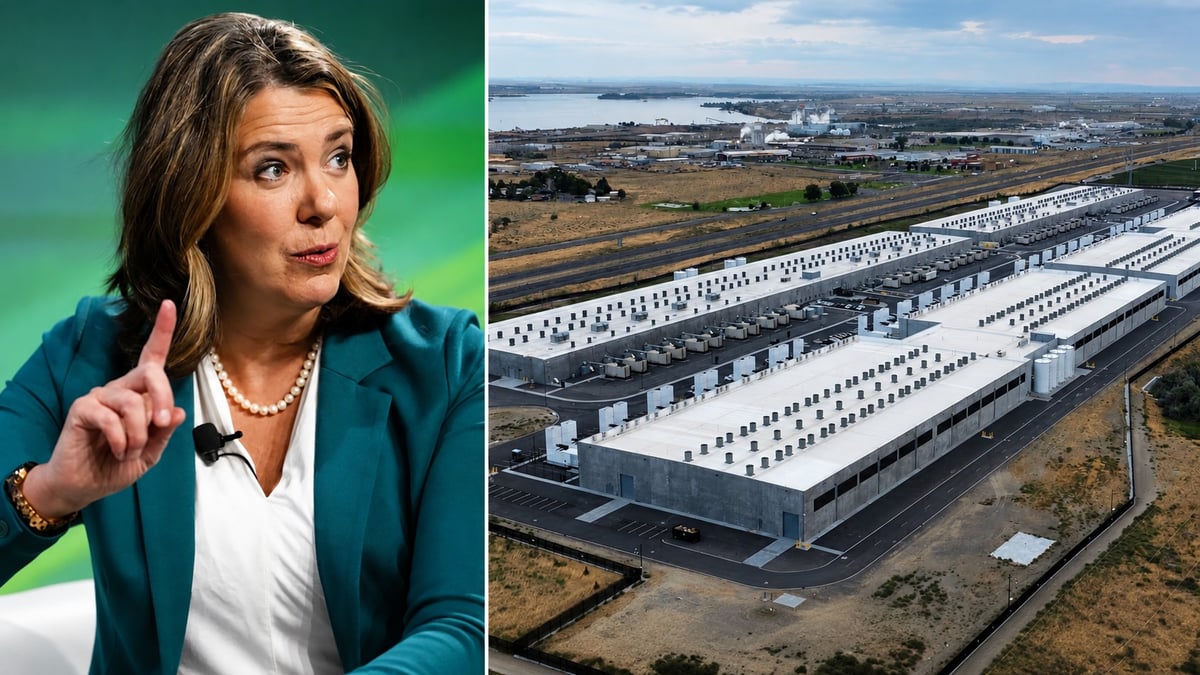
Technology and Innovation Minister Nate Glubish will hold public town halls on AI data centres in three Alberta communities this month and next, and Premier Danielle Smith joins him for a virtual session.
All four are open to the public.
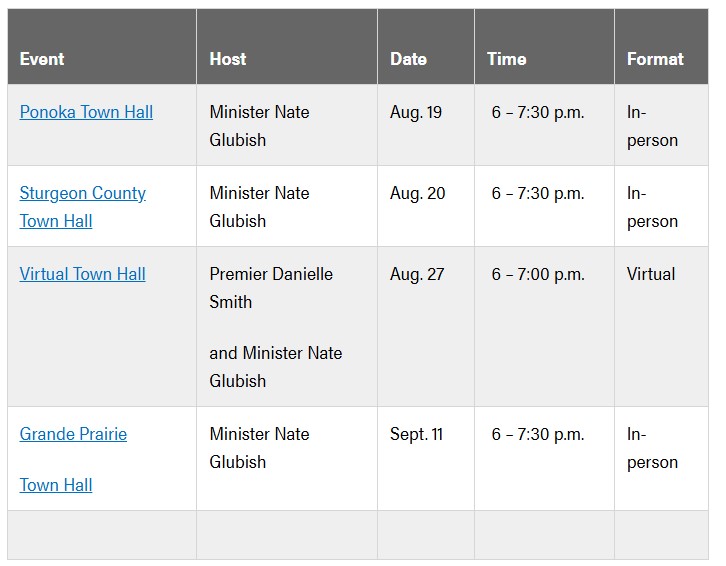
The dates
Ponoka, August 19, 6 to 7:30 p.m., in person, hosted by Glubish.
Sturgeon County, August 20, 6 to 7:30 p.m., in person, hosted by Glubish.
Virtual, August 27, 6 to 7 p.m., hosted by Smith and Glubish.
Grande Prairie, September 11, 6 to 7:30 p.m., in person, hosted by Glubish.
Registration details are at alberta.ca/datacentres.
Sturgeon County is the one to watch
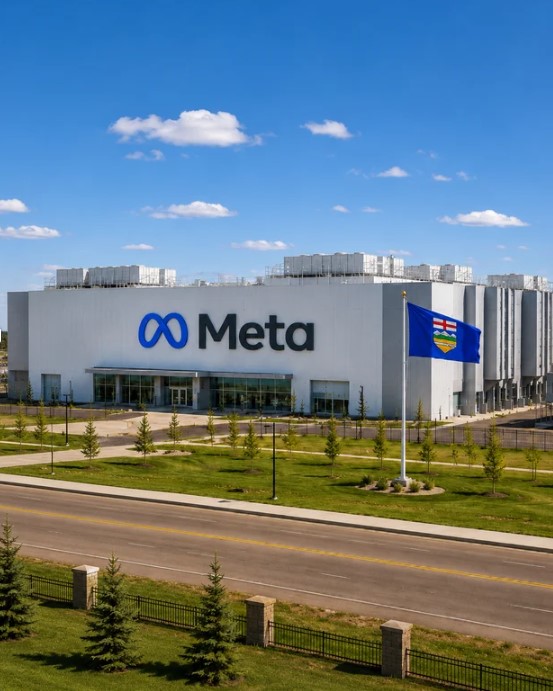
That's where Meta is building its $13 billion campus, and where dozens of people gathered outside the county centre in Morinville on August 2 to protest it.
The province's town hall lands 18 days later. Organizers of that protest have separately said they're planning a public town hall of their own this month.
Protest organizers have also said their opposition committee includes people who disagree with each other on nearly every other political question, which is unusual in Alberta and suggests these rooms may not divide the way the province expects.
What the province is arguing
Alberta's position rests on four commitments: that Albertans won't pay for these projects, that the grid comes first, that water use is tightly controlled, and that Albertans share the upside through municipal taxes, royalties and a levy on data centre computing equipment.
"Albertans deserve real answers on what these new infrastructure investments mean for them," Glubish said. "This website puts the facts about power, water and community impact in one place, so people can see for themselves how Alberta is responsibly developing AI data centres on our own terms."
The province says the strategy has already attracted roughly $100 to $200 billion in potential private investment, and cites projections that the AI economy could contribute up to US$15.7 trillion globally by the 2030s.

What the town halls are for
The province describes the sessions as a chance for Albertans to provide input, alongside a website that puts the facts in one place.
The framing of that website is worth noticing. Its stated job is to explain what data centres are, why they're being built here, the opportunities they create, how Alberta's approach differs from other jurisdictions and the safeguards in place. Every one of those is a case for the projects rather than a question about them, and the release announcing the town halls is titled "Leading AI Development Responsibly."
Whether a town hall is consultation or explanation usually comes down to whether anything can still change. The Meta campus in Sturgeon County has its development permit, its zoning was settled in 2022, and construction is underway. Nothing said in a room in August alters that.
What could still change is what happens to the more than 30 projects sitting in AESO's queue, and to the framework governing them. That framework isn't final. Draft AESO rules on grid access are still in draft.
So the question worth taking to a microphone isn't whether Meta should have been approved. It's what the rules look like for the next thirty.
The two things nobody has answered
The first is power bills. The province says the transmission portion of household bills should fall, because large customers spread fixed grid costs across a bigger base. But an AESO spokesperson has told Canada's National Observer that bridging load, the arrangement letting a data centre draw from the existing grid before its own generation is built, is anticipated to increase pool prices while reducing transmission costs. Pool prices drive the energy portion of a bill.
Transmission down, energy up. Nobody has published what the two together do to a total bill.
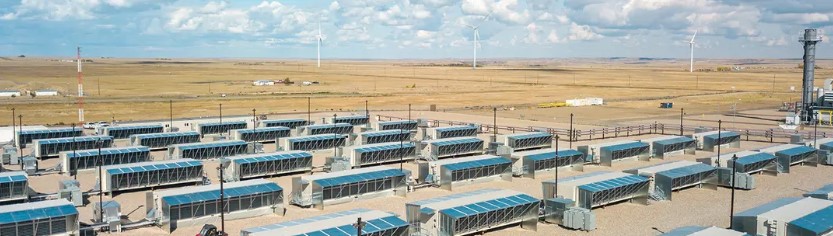
The second is scale. AESO had more than 30 data centre projects in its queue as of February, and reporting has put the proposed load at roughly 20,000 megawatts against only about 4,000 megawatts of proposed own-generation. Draft AESO rules would open an additional 1.6 gigawatts of grid capacity for up to three years while developers build their own supply, limited to gas-fired thermal generation and explicitly excluding renewables.
Why Ponoka and Grande Prairie
Ponoka sits in central Alberta between Edmonton and Red Deer. Grande Prairie anchors the Peace region. Neither is where the marquee project is going, which suggests the province expects more of these to be proposed outside the Industrial Heartland and is getting ahead of the conversation in communities that could host them.
For Grande Prairie, a September 11 town hall is the province coming north before anything has been announced there.
How to actually participate
The website sets out three routes beyond the town halls.
Municipal councils hold public meetings before rezoning, though whether that applies depends on the local land use bylaw. In Sturgeon County, data processing facilities were made a permitted use in 2022, which meant no rezoning hearing was required for Meta's project.
Provincial applications post public notice, and filing a statement of concern during that window is what preserves a right to appeal later. Miss the window and the appeal right generally goes with it.
Regulators accept input directly.
Alberta's Expedited 120-Day Approvals Act, 2026 requires decisions on each permit within 120 days for designated projects over $250 million, which makes those windows short.
Sources:
Government of Alberta, "Leading AI Development Responsibly," August 6, 2026
Government of Alberta, AI Data Centres in Alberta: https://www.alberta.ca/datacentres/index.html
Alberta Electric System Operator statements to Canada's National Observer, July 2026
Expedited 120-Day Approvals Act, 2026


Comments
Conversation